
To secure fragile items during transit, choosing the right bubble wrap packing requires understanding two primary specifications: bubble diameter and plastic film thickness (measured in mils). These two variables dictate how well a package survives drops, vibrations, and punctures. Selecting the wrong combination can lead to damaged goods from under-packing, or unnecessary shipping expenses from over-packing.
By matching the bubble size to your item’s shape and the film thickness to the item’s weight, you can create a highly protective barrier. This guide breaks down these technical specifications so you can make an informed purchasing decision and ensure your items arrive safely at their destination.
Why Bubble Size and Thickness Matter in Bubble Wrap Packing
Bubble wrap packing is not a one-size-fits-all solution. The protection level of any wrapped package depends on the interplay between the diameter of the individual bubbles and the thickness of the plastic film. While it is tempting to assume that any air-filled plastic will protect any item, using the wrong specifications often results in damaged goods or wasted packaging materials.
Products mentioned in this guide
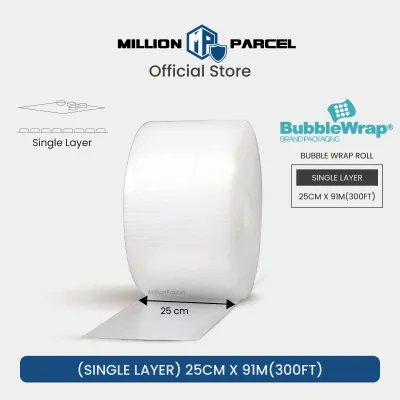
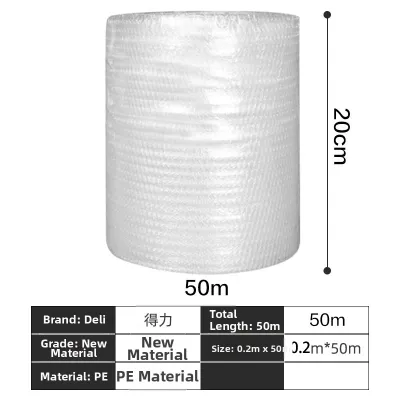
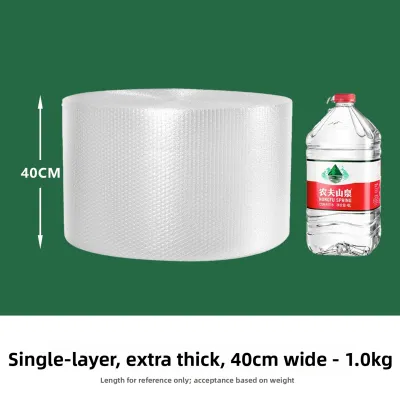
![91m/20m/10m BubbLest™ [FREE PENKNIFE] Bubble Packaging Material Direct Singapore Manufacturer | Clingwrap | Plasticwrap | Cling Wrap | Plastic Wrap | Bubble Roll |](https://img.lazcdn.com/g/p/118908581c7285d2410f3d4422311ca0.png_400x400q80.png_.webp)
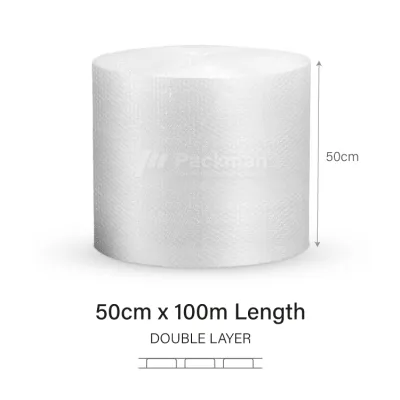
Prices are valid at publication and may change. Please refer to the product page for the latest price.
Bubble diameter dictates the type of cushioning provided. Smaller bubbles sit tightly together to offer excellent surface protection against scratches and minor abrasions, whereas larger bubbles contain more air volume to absorb heavy impact shocks. On the other hand, the thickness of the plastic film determines the wrap’s overall durability, tear resistance, and weight-bearing capacity. If the plastic is too thin, the bubbles will pop under the weight of the item, rendering the wrap useless.
Understanding these specifications also helps you manage shipping efficiency and costs. In Singapore, where domestic and international courier services often calculate shipping fees based on volumetric weight, over-packing with unnecessarily bulky bubble wrap can quickly inflate your shipping expenses. Conversely, under-packing to save space increases the risk of product damage, leading to costly returns and replacements. Reading product labels and specifications correctly ensures you strike the perfect balance between safety and cost-efficiency.
Decoding Bubble Diameter: Small vs. Large Bubbles
Bubble wrap is categorized by the diameter of its bubbles, which typically ranges from 3/16 inch (approximately 4.8 mm) up to 1 inch (approximately 25.4 mm) or larger. Choosing the correct bubble size is the first step in tailoring your packaging to the specific fragility and shape of your items.

Small Bubbles for Surface Protection and Detail Wrapping
Small-diameter bubbles, typically measuring 3/16 inch or smaller, are designed primarily for surface protection. Because these tiny bubbles are packed closely together, they create a smooth, highly conforming surface that wraps tightly around intricate shapes. This makes them exceptionally good at preventing scratches, scuffs, and minor abrasions during handling and transport.
This size is ideal for wrapping delicate items with sensitive surfaces, such as polished wooden decor, glassware, porcelain figurines, and electronic screens. Because the wrap is highly flexible, you can easily fold it around corners and secure it with packing tape without creating awkward, bulky edges.
However, small bubbles have a distinct limitation: they compress very quickly under heavy weight. Because each bubble holds a relatively small volume of air, a heavy item will easily flatten the bubbles upon impact, transferring the force of a drop directly to the item. For this reason, small bubbles should not be used as the sole cushioning material for heavy or bulky goods.
Large Bubbles for Shock Absorption and Void Filling
Large-diameter bubbles, usually measuring 1/2 inch to 1 inch, are engineered to absorb severe shocks, drops, and vibrations. The generous volume of air trapped inside each bubble acts as a heavy-duty shock absorber, keeping the wrapped item suspended and protected from external impacts.
This specification is highly suited for protecting heavy items, cushioning the corners of bulky household appliances, or wrapping larger electronics. Additionally, large bubble wrap is an excellent material for void filling—filling the empty spaces inside a shipping box to prevent items from shifting around during transit.
Despite their superior impact absorption, large bubbles are not suitable for every scenario. They are stiff and do not conform well to small, intricate shapes, which can leave unprotected gaps against flat surfaces. If used as the only inner layer for delicate items, the large bubbles may slide against the item’s surface, potentially causing minor surface scratches.
Understanding Mil Thickness and Ply Count
While bubble size determines the style of cushioning, the plastic film’s thickness and construction determine whether those bubbles will actually stay inflated under pressure. This is where mil thickness and ply count come into play.
Plastic thickness is measured in “mils,” where 1 mil is equal to 1/1000 of an inch (approximately 25.4 microns). It is important to clarify that mil ratings measure the thickness of the flat plastic film itself, not the physical height of the inflated bubble. Standard light-duty bubble wrap typically ranges from 1 to 1.5 mil, which is suitable for lightweight retail items. Medium-duty applications require 2 to 3 mil, while heavy-duty industrial shipping often utilizes film thicknesses of 4 mil to 5 mil or more. Thicker plastic provides high tear resistance and prevents the bubbles from popping when subjected to sharp edges or heavy compression.
Ply count refers to the number of layers used to construct the bubble wrap. Single-ply wrap consists of a single sheet of shaped plastic laminated to a flat backing sheet, leaving the bubbles exposed on one side. Double-ply (or cap-sheet) bubble wrap features a second flat layer of plastic laminated over the bubbles, sandwiching the air pockets between two flat sheets. This double-layer construction significantly increases the tensile strength of the wrap, prevents air from slowly escaping over time, and allows the wrap to be reused multiple times without losing its cushioning properties.
Before purchasing, always check the product specifications for these metrics. If you are shipping items with sharp corners, such as metal tools or heavy acrylic stands, opting for a higher mil thickness and a double-ply construction is essential to prevent the packaging from puncturing during transit.
Matching Bubble Wrap Specs to Your Packing Scenarios
To simplify your purchasing decision, use the table below to match your specific packing scenario with the recommended bubble size and plastic thickness.
| Item Type / Scenario | Recommended Bubble Size | Recommended Thickness / Ply | Why This Works |
|---|---|---|---|
| Lightweight, scratch-prone items (e.g., picture frames, small ceramics, delicate glassware) | Small bubbles (3/16") | 1 to 2 mil, single ply | Conforms tightly to intricate shapes to prevent surface scratches without adding unnecessary bulk. |
| Medium-weight, fragile items (e.g., mugs, standard glassware, small electronics) | Medium or Small bubbles (3/16" to 5/16") | 2 to 3 mil, double ply | Balances surface protection with enough structural cushion to absorb moderate drops and handling shocks. |
| Heavy or sharp-edged items (e.g., auto parts, metal tools, heavy wooden frames) | Large bubbles (1/2" to 1") | 3 to 5 mil, heavy duty | Thick plastic prevents punctures from sharp corners, while high air volume absorbs heavy drop impacts. |
| Void filling in large shipping boxes (e.g., filling empty space around pre-boxed items) | Large bubbles (1" or larger) | 1 to 2 mil, single ply | A highly cost-effective way to block item movement inside the box; high thickness is unnecessary since it does not bear direct weight. |
When packing, always verify your roll dimensions (such as width and total length) to ensure the wrap fits your shipping boxes without requiring excessive cutting. For optimal protection, always combine your chosen bubble wrap with a properly sized, sturdy corrugated cardboard box, leaving at least two inches of space on all sides to be filled with cushioning.
Common Spec Misconceptions to Avoid When Buying
One common misconception is that “bigger is always better” when it comes to bubble size. Using large 1-inch bubbles to wrap a small, delicate porcelain figurine will leave massive air gaps and fail to support the item’s delicate limbs or edges. In this scenario, multiple layers of small bubble wrap are far superior because they conform directly to the item’s shape, leaving no room for movement.
Another frequent mistake is assuming that thicker plastic is always the superior choice. While heavy-duty 4 mil or 5 mil plastic offers incredible puncture resistance, it is also stiff and highly resistant to bending. Trying to wrap a small, complex item in ultra-thick bubble wrap makes it difficult to fold, wrap, and tape securely. In Singapore’s warm and humid climate, the high spring-back tension of stiff, thick plastic can cause standard packaging tape to peel away over time, causing the wrap to unravel in transit. For intricate items, a more flexible 1.5 to 2 mil wrap secured with high-tack acrylic or hot-melt adhesive tape is much more reliable.
Finally, avoid relying solely on visual estimates when purchasing bubble wrap online. Product photos on e-commerce platforms can be highly misleading regarding scale. Always read the manufacturer’s listed bubble diameter, roll width, and mil thickness to ensure you are getting the exact protection level your items require.
Frequently Asked Questions (FAQ)
Is thicker bubble wrap always better for fragile items?
No, thicker plastic is not always better. Thickness primarily prevents the plastic film from tearing or the bubbles from popping under heavy weight or sharp edges. For highly fragile but lightweight items, multiple layers of standard-thickness (1.5 to 2 mil) small-bubble wrap provide much better, more conforming cushioning than a single layer of stiff, ultra-thick wrap, which can put unnecessary pressure on delicate parts.
How do I measure the thickness of bubble wrap I already have?
To identify the specifications of unmarked bubble wrap, you can use a digital caliper or a micrometer. Measure the flat, un-inflated edge of the plastic film to find the mil thickness (remembering that 1 mil equals 0.0254 mm). To measure the bubble diameter, simply place a standard ruler across the widest part of a single inflated bubble from one sealed edge to the other.
Does the color of the bubble wrap affect its protection level?
Standard color variations, such as pink or green, do not change the physical cushioning properties, bubble size, or mil thickness of the wrap. However, these colors often indicate specific functional additives. For example, pink bubble wrap is treated with an anti-static agent to prevent electrostatic discharge, making it essential for shipping sensitive electronic components like computer processors and circuit boards.
Community discussion
Share your experience or ask a question. Comments are reviewed before publication.