
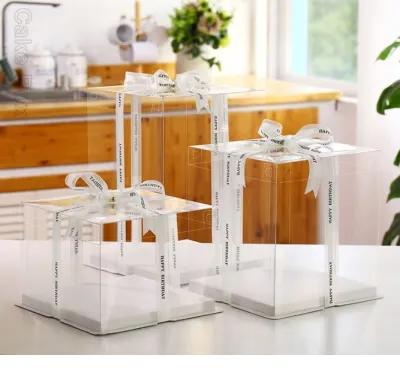
Selecting the right transparent cake box requires matching the box’s internal dimensions to the outer limits of your cake board and the highest point of your decorations. A box that is too small will smudge delicate buttercream, while a box that is too large allows the cake to slide during transport, risking structural collapse. To find the perfect fit, you must measure the cake board—not just the cake itself—and add a standard clearance margin of at least 1 to 2 centimeters on all sides.
Transparent packaging offers an elegant, high-visibility presentation, but its rigid plastic walls are unforgiving when pressed against soft frosting. By systematically measuring your cake’s footprint, accounting for vertical toppers, and understanding how manufacturers list box dimensions, you can ensure your baked goods arrive at their destination in pristine condition.
Measuring Your Cake for the Perfect Fit
To determine the minimum box size you need, start by measuring the cake board rather than the cake itself. Bakers typically use a cake board that is 5 centimeters (about 2 inches) larger than the diameter of the cake sponge to allow room for frosting, borders, and safe handling. For example, an 8-inch cake is usually assembled on a 10-inch cake board, meaning you must search for a box designed to accommodate a 10-inch base.
Products mentioned in this guide
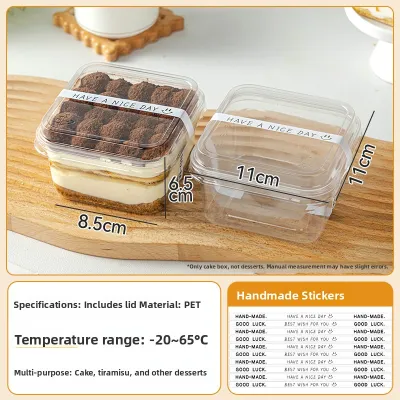
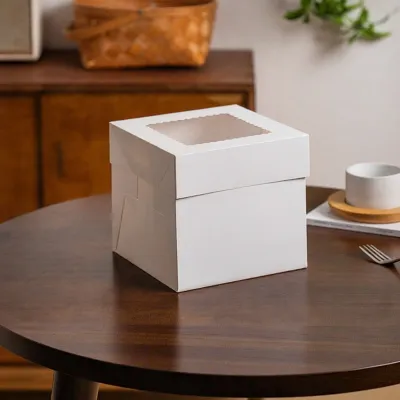
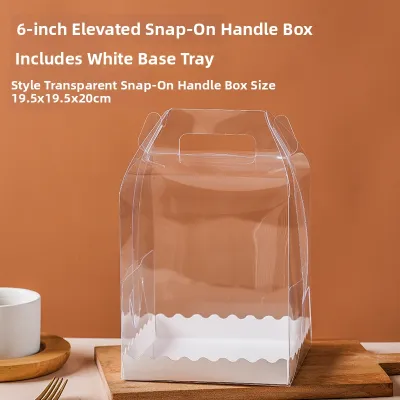
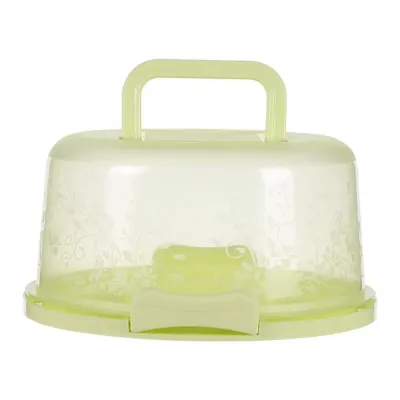
Prices are valid at publication and may change. Please refer to the product page for the latest price.
Next, measure the absolute highest point of your cake. This measurement must include the cake board’s thickness, the cake tiers, piped borders, frosting swirls, and any decorative elements like fresh flowers, chocolate sails, or custom toppers. If you plan to insert a tall acrylic or wooden topper, measure the cake with the topper fully inserted to find the true maximum height.
Once you have these raw dimensions, you must calculate the necessary clearance margins. For a standard cake, adding a clearance of 1 to 2 centimeters around the sides and at least 2 to 3 centimeters at the top is highly recommended. This buffer zone prevents the delicate outer edges of your design from brushing against the plastic walls during assembly, transport, or delivery.
Understanding Standard Box Dimensions and Capacities
Transparent cake boxes are generally sold by their base dimensions and height, listed either as Length x Width x Height for square boxes, or Diameter x Height for cylindrical options. When browsing online marketplaces or packaging suppliers, pay close attention to whether the listed measurements refer to the external dimensions of the box or the internal usable space. The thickness of the plastic walls, interlocking tabs, and the recess of the cardboard base can reduce the actual internal space by several millimeters.

Many transparent boxes feature a three-piece construction consisting of a heavy-duty cardboard base, a clear plastic middle wrap, and a solid lid. The base often has a shallow groove or lip designed to hold the plastic wrap securely in place. This lip slightly reduces the usable diameter of the base, so a box labeled as “10 inches” might only comfortably fit a cake board that is exactly 10 inches or slightly smaller. Always verify the manufacturer’s detailed specification sheet to confirm the exact internal clearance.
Additionally, check the product specifications for weight capacity and tier recommendations. Transparent boxes are often categorized by the number of tiers they can accommodate, such as single-tier, two-tier, or extra-tall multi-tier boxes. While a single-tier box might stand around 15 to 20 centimeters tall, a double-tier box can reach 30 centimeters or more. Ensure the structural integrity of the base board is rated for the weight of your cake, especially for heavy mud cakes or multi-layered designs.
Calculating Clearance for Decorations and Safe Transport
The primary purpose of a transparent cake box is to showcase your artistry while protecting it from external elements. To achieve this, you must evaluate the specific decorative elements of your cake. Buttercream swirls, fondant drapes, delicate sugar flowers, and fresh fruit arrangements that extend past the edge of the cake board require extra side clearance to prevent friction damage.
Top clearance is equally critical for protecting structural elements. If a heavy lid rests directly on or too close to a tall topper, any downward pressure on the box during stacking or carrying can compress the topper, potentially cracking the fondant or destabilizing the cake’s internal dowel system. Leaving a generous gap of 3 to 5 centimeters between the top of the decorations and the lid ensures that minor shifting during transport does not result in a ruined centerpiece.
You must also evaluate the rigidity and material thickness of the transparent box. Most clear boxes are made from polyethylene terephthalate (PET) or polyvinyl chloride (PVC). Thinner plastic sheets are prone to bowing inward, especially when exposed to warm, humid climates like Singapore’s, or when carried by the outer ribbon. If the plastic walls bow, they can easily make contact with the sides of your cake. Opting for boxes with thicker, food-grade PET walls provides better structural stability and keeps the protective barrier rigid. To verify the quality before use, perform a quick visual check for clarity and scratch resistance, and ensure you peel off any protective film layers on both sides of the plastic sheet before assembly.
Common Sizing Mistakes to Avoid
One of the most common mistakes bakers make is selecting a box based solely on the nominal size of the cake. Purchasing an 8-inch box for an 8-inch cake leaves zero room for the cake board, which is almost always larger than the cake itself. This mistake usually results in a box that cannot close, or a cake board that must be forcefully trimmed, risking damage to the cake’s structure.
Another frequent error is choosing a box that fits too tightly around the cake board. While it might seem ideal to have a snug fit to prevent sliding, a tight fit makes it incredibly difficult to lower the cake into the box or slide the transparent sleeve over the cake without scraping the frosting. A tight fit also increases the risk of static electricity pulling loose decorations or lightweight sprinkles toward the plastic walls.
Conversely, selecting an excessively large box presents its own set of hazards. If the cake board is significantly smaller than the base of the box, the cake will slide freely during transport. Every turn, sudden stop, or acceleration in a vehicle will cause the cake board to slam against the inner walls, which can cause tiers to shift, decorations to fall off, or the cake to slide off its board entirely.
Frequently Asked Questions (FAQ)
Can I use a square transparent box for a round cake?
Yes, using a square transparent box for a round cake is a highly popular and visually striking choice. When doing so, you must ensure that the diameter of your round cake board is equal to or slightly smaller than the width of the square box. For example, a 10-inch round cake board will fit perfectly inside a 10-inch square box, as the circular board will touch the flat sides of the square box at its widest points.
This setup leaves empty triangular spaces in the four corners of the box. You can leave these corners empty to create a clean, modern aesthetic, or use them creatively to enhance your presentation. Many bakers fill these corner gaps with decorative elements such as silk flowers, fairy lights, or branded tissue paper, which also helps to visually anchor the cake.
How do I secure a cake inside a box that is slightly too large?
If you must use a transparent box that is larger than your cake board, you must secure the board to prevent it from sliding during transit. A highly effective and food-safe method is to apply a small amount of removable, non-toxic adhesive to the bottom of the cake board before placing it in the box. Double-sided food-safe tape, silicone glue dots, or a small piece of non-slip drawer liner placed underneath the board work exceptionally well.
Avoid using strong, permanent adhesives or wet glues that could seep through the cardboard base or emit strong chemical odors inside the sealed box. Additionally, ensure that whatever securing method you choose does not leave unsightly residues on the clean, transparent base of the box, as this would compromise the professional, high-end presentation that transparent packaging is designed to deliver.
Community discussion
Share your experience or ask a question. Comments are reviewed before publication.