
Selecting a physical habit tracker planner in Singapore requires balancing layout design, paper resilience against local humidity, and binding styles. For those seeking pre-printed formats that eliminate the need for tedious manual setup, several international stationery brands offer exceptional, ready-to-use tracking frameworks. Brands like Hobonichi, NOLTY, Leuchtturm1917, Lihit Lab, and Kokuyo lead the market, each catering to distinct tracking styles ranging from minimalist professional grids to highly modular disc-bound systems.
By choosing a planner with a pre-printed layout tailored to your daily routine, you can maintain consistency without the friction of drawing grids from scratch. Whether you prefer tracking micro-habits on a daily basis or monitoring long-term patterns over a month, understanding how these brands design their layouts will help you select the ideal tool for your personal development journey.
How to Evaluate Pre-Printed Habit Tracker Layouts
When assessing different planners, the structure of the pre-printed layout dictates how naturally you will integrate tracking into your daily routine. Different formats serve different psychological and practical purposes, making it essential to match the layout to your specific goals.
Products mentioned in this guide
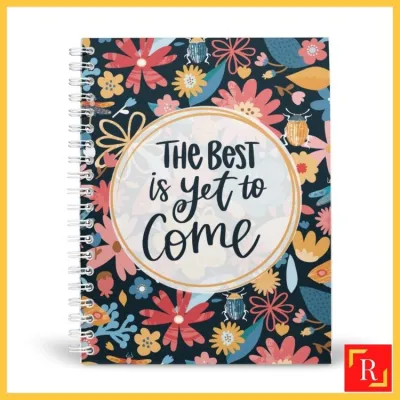
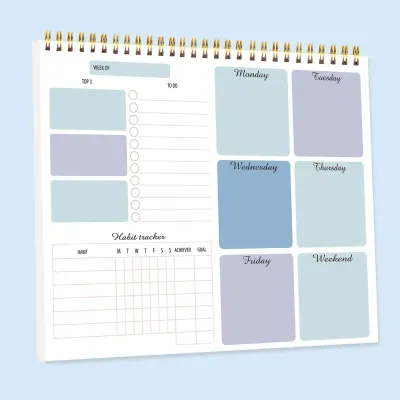
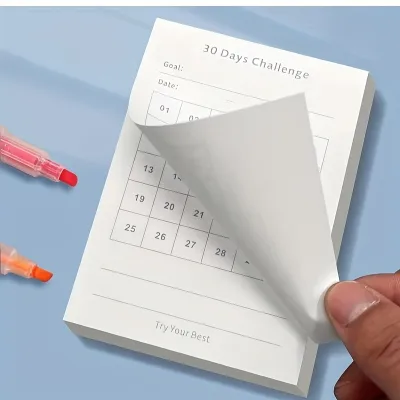
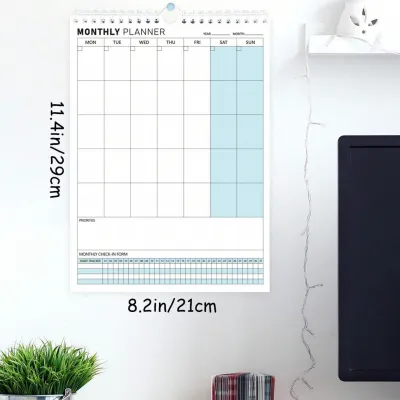
Prices are valid at publication and may change. Please refer to the product page for the latest price.
Layout Formats Pre-printed tracking layouts generally fall into three categories: daily grids, weekly checklists, and monthly overviews. Daily grids are ideal for high-frequency micro-habits, such as drinking water or stretching, where immediate visual reinforcement is needed every few hours. Weekly checklists align habit tracking with your weekly task management, making them excellent for medium-frequency activities like visiting the gym three times a week. Monthly overviews, often styled as horizontal Gantt charts or block calendars, provide a bird’s-eye view of long-term consistency, helping you spot monthly trends and seasonal patterns.
Tracking Capacity Before purchasing, calculate the number of habits you plan to track simultaneously. A layout that is too small will force you to cram multiple items into a single line, causing visual clutter that discourages regular logging. Conversely, an overly large tracker with twenty empty rows can feel intimidating and lead to tracking fatigue. Look for layouts that comfortably accommodate your core habits—typically between five and ten items—with clear, pre-printed dividers that allow you to read your progress at a glance without constant page-turning.
Paper Performance In Singapore’s humid climate, paper quality is a critical factor that directly influences your writing experience. High-quality planners specify their paper weight in grams per square meter (gsm), alongside details about coating and tooth (surface texture). If you prefer using fountain pens, wet gel pens, or creative markers, you must verify that the paper is engineered to resist ink bleed-through, ghosting (where writing is visible on the reverse side), and feathering (where ink spreads along the paper fibers). Smooth, coated papers slow down ink absorption, which preserves crisp lines but requires a brief drying time, whereas uncoated, toothy papers absorb ink quickly but are more prone to ghosting.
Binding and Usability How a planner lies on your desk affects how often you will use it. Thread-bound (Smyth-sewn) planners are highly prized because they can open completely flat, allowing you to write comfortably across the entire page, including the inner margins. Disc-bound and ring-bound systems offer a different advantage: they allow you to fold the planner completely in half to save desk space, and you can easily remove pages to write on a flat surface before popping them back into the binder. Avoid tight, glued bindings that constantly snap shut, as the physical resistance makes quick daily check-offs frustrating.
Best Planner Brands for Pre-Printed Habit Tracking in Singapore
Different stationery manufacturers approach habit tracking through distinct design philosophies. Below is an analysis of the top planner brands available in Singapore that feature dedicated pre-printed tracking layouts.

Hobonichi Techo (Cousin and A6 Editions)
Hobonichi planners are famous for their highly adaptable grid layouts, which provide a subtle structure that accommodates both structured tracking and creative journaling. The Cousin (A5) and Original (A6) editions feature a signature 3.7mm light-grey grid that is gentle on the eyes while providing clean alignment for writing.
Rather than forcing you into a single rigid template, Hobonichi utilizes its monthly index pages and vertical weekly columns as ready-made habit trackers. The monthly index, located at the front of the book, presents vertical columns for each day of the month, allowing you to track up to ten parallel habits simultaneously over a 30-day period. For daily tracking, the 3.7mm grid on the daily pages lets you easily draw small custom check-boxes or use icon stamps to mark your progress.
Hobonichi planners use specialized ultra-thin paper, historically Tomoe River and currently Sanzen Tomoe River S. Despite its lightweight feel, this paper is highly resistant to ink bleed-through and feathering, making it a favorite for fountain pen users. However, due to Singapore’s ambient humidity, wet inks may take slightly longer to dry on this coated paper, so using blotting paper is highly recommended.
- Ideal User: Creatives and journal enthusiasts who want to track multiple detailed daily habits alongside long-form journaling, sketching, or memory-keeping.
NOLTY
NOLTY, a historic Japanese brand, focuses on clean, professional, and highly structured layouts designed for business efficiency. Their planners are engineered to eliminate setup time entirely, offering ready-to-use frameworks that fit seamlessly into a professional environment.
Many NOLTY weekly editions feature integrated horizontal tracking grids at the bottom of the weekly spreads or dedicated Gantt-chart pages at the start of each month. These pre-printed columns and checkboxes are clean and minimalist, allowing you to log professional goals, project milestones, or personal routines without any decorative distractions. The layout is designed to be highly functional, prioritizing rapid data entry and clear readability.
NOLTY uses its own proprietary, high-grade paper designed specifically to minimize bleed-through and ghosting. The paper has a slight tooth that provides excellent feedback for standard ballpoint pens, fine-liner gel pens, and multi-functional pens, ensuring that your quick daily check-offs remain crisp and smudge-free.
- Ideal User: Professionals, corporate workers, or students who require a rigid, distraction-free structure that requires zero preparation before logging daily routines.
Leuchtturm1917 (Bullet Journal and Daily Planner Lines)
Leuchtturm1917 bridges the gap between structured planners and blank notebooks, offering specialized editions that cater specifically to the bullet journaling community. Their official Bullet Journal editions feature pre-printed structural elements that save you the trouble of measuring and drawing grids.
These planners include dedicated pre-printed habit tracking templates, built-in index pages, and pre-numbered dot-grid pages. The pre-printed tracking sections allow you to list your habits and check them off across a clean, monthly matrix, while the adjacent dot-grid pages give you the freedom to design custom charts or write detailed reflections when needed. This hybrid approach ensures you get the time-saving benefits of a pre-printed layout without losing the creative flexibility of a bullet journal.
Leuchtturm1917 offers different paper weights across its product lines. While their classic notebooks feature 80 gsm paper, their specialized Bullet Journal Edition 2 boasts a heavy-duty 120 gsm paper. This thicker paper is highly resistant to ghosting and bleeding, making it compatible with a wide variety of writing instruments, including heavy gel pens, brush pens, and artistic markers. Always verify the paper weight on the product label before purchasing to ensure it matches your preferred pens.
- Ideal User: Bullet journal enthusiasts who want a professional, structured foundation with pre-printed tracker pages to save setup time, while retaining dot-grid space for custom layouts.
Lihit Lab (Smart Ring and Disc-bound Systems)
For those who find a fixed, bound book too restrictive, Lihit Lab offers a modular alternative. Utilizing a proprietary smart ring or disc-binding system, these planners allow you to completely customize your page layout and order.
Instead of committing to a single layout for the entire year, you can purchase dedicated pre-printed habit tracker sheet refills and insert them exactly where you need them—whether that is at the start of each month or alongside your weekly to-do lists. If your routine changes mid-year and you need to track more habits, you can simply add more refill sheets. Conversely, you can remove completed months to keep your daily carry planner light and compact.
Lihit Lab’s refill paper is smooth, durable, and designed to withstand frequent page turning and ring adjustments. The pre-printed layouts are clean and functional, featuring clear grids and checkbox columns. Because the sheets can be removed entirely from the rings, you can write on a completely flat surface, eliminating the discomfort of writing near a bulky spine.
- Ideal User: Highly organized individuals, students, or project managers who frequently adjust their routines and require a flexible, modular system over a fixed-bound book.
Kokuyo Jibun Techo
Kokuyo’s Jibun Techo is designed around a three-book system (“DIARY”, “LIFE”, and “IDEA”) designed to organize your entire life. The “DIARY” book features a highly detailed, vertical weekly layout that integrates time-blocking with habit tracking.
The weekly pages feature a 24-hour vertical time axis, allowing you to schedule your day down to the hour. At the bottom of each vertical day column, Kokuyo includes pre-printed checkbox spaces specifically designed for daily habit logging. This allows you to visually tie the execution of your habits to specific times of the day, helping you analyze how your schedule impacts your consistency. Additionally, the planner features dedicated monthly Gantt charts at the front, perfect for tracking long-term habits over several months.
Jibun Techo planners utilize Kokuyo’s proprietary THIN paper or MIO paper. These specialized papers are incredibly lightweight yet engineered to minimize ink bleed-through and ghosting. The paper surface is exceptionally smooth, allowing gel pens and fountain pens to glide effortlessly, which is ideal for quick, precise logging in tight grid spaces.
- Ideal User: Strict time-blockers, analytical planners, and individuals who want to track their daily habits alongside a detailed, hourly schedule.
Quick Comparison of Habit Tracker Layouts and Paper
To help you decide which brand fits your tracking style and writing tools, this table summarizes the core design and paper characteristics of each recommended planner.
| Brand | Primary Layout Style | Paper Characteristics | Best Suited For |
|---|---|---|---|
| Hobonichi Techo | Monthly index columns & 3.7mm daily grid pages | Ultra-thin Sanzen Tomoe River S; high bleed resistance; slow drying time | Creative journaling combined with multi-habit tracking |
| NOLTY | Integrated weekly checklists & monthly Gantt charts | Proprietary high-grade paper; slight tooth; excellent for ballpoints and gel pens | Busy professionals seeking an efficient, zero-setup layout |
| Leuchtturm1917 | Pre-printed monthly tracker pages & dot-grid hybrid | 120 gsm paper (in BuJo Ed. 2); highly resistant to ghosting and markers | Bullet journal fans wanting structured templates with creative freedom |
| Lihit Lab | Modular, insertable pre-printed tracking sheets | Smooth, durable refill sheets; designed for frequent page removal | Dynamic planners who want to swap, add, or remove layouts mid-year |
| Kokuyo Jibun Techo | 24-hour vertical time axis with daily bottom checkboxes | Proprietary THIN or MIO paper; ultra-smooth; high bleed resistance | Time-blockers who align habit tracking with daily hourly schedules |
Where to Find These Planners in Singapore
Finding these specialized international planner brands in Singapore is straightforward if you know where to look. Visiting physical retail stores is highly recommended, as it allows you to feel the paper texture, test the binding, and inspect the pre-printed layouts in person.
Physical Retail Options
- Books Kinokuniya: The flagship store at Ngee Ann City offers the most extensive selection of Japanese and Western planners in Singapore. Starting around September each year, they set up dedicated planner sections featuring the latest Hobonichi, NOLTY, and Kokuyo Jibun Techo lineups.
- Popular Bookstore: Select larger branches carry a reliable range of functional planners, student diaries, and modular systems like Lihit Lab, along with various refill sheets.
- Specialty Stationery Boutiques: Hands (formerly Tokyu Hands) outlets stock a curated selection of high-quality Japanese planners, including Kokuyo and NOLTY, along with specialized tracking stamps and accessories.
Online Channels If you prefer shopping from home or are looking for specific regional editions, official brand storefronts online and major e-commerce marketplaces offer a wide selection. When purchasing online, always verify that you are buying from authorized distributors to ensure product authenticity, particularly for premium brands like Hobonichi and Leuchtturm1917.
Stock Availability and Release Cycles Planners for the upcoming calendar year typically launch in the third or fourth quarter (typically starting in September). Popular layouts, limited-edition covers, and specialized paper versions tend to sell out quickly in Singapore. To secure your preferred layout, plan your purchase early in the launch season, and always check the publisher’s release calendar for exact dates.
Frequently Asked Questions (FAQ)
Can I use fountain pens on these pre-printed habit trackers?
Yes, but performance depends heavily on the specific paper used by each brand. While Hobonichi (Sanzen Tomoe River S) and Kokuyo (THIN/MIO paper) use specialized papers engineered to handle fountain pen ink beautifully without bleeding, they are coated papers, meaning wet inks will take longer to dry. Leuchtturm1917’s 120 gsm paper handles fountain pens well with minimal ghosting. To avoid smudging your daily tracker, always check the manufacturer’s paper specifications, use fine or medium nibs with well-behaved inks, and perform a quick pen test on a blank back page before writing on your main tracking layouts.
What if I need to track more habits than the pre-printed layout allows?
If you outgrow your planner’s pre-printed layout, you do not need to buy a new book. For modular systems like Lihit Lab, you can simply open the rings and insert additional pre-printed tracking sheets. For bound planners like NOLTY or Leuchtturm1917, you can expand your tracking space by using transparent sticky notes or tip-ins (folding an extra sheet of paper and taping it to the page edge). Alternatively, you can use specialized grid washi tape or small habit tracker stamps to add extra tracking rows directly onto your daily or weekly pages without disrupting the planner’s original binding.
Community discussion
Share your experience or ask a question. Comments are reviewed before publication.