
Selecting the right lamination machine requires balancing the physical properties of your documents, your operational environment, and your long-term budget. The core distinction between thermal and cold lamination lies in how the adhesive is activated: thermal machines use heat to melt a dry adhesive polymer, while cold machines use mechanical pressure to bond a pressure-sensitive adhesive.
For standard office paperwork, classroom materials, business cards, and robust printed photographs, a thermal lamination machine is the most efficient and cost-effective choice. It delivers a rigid, permanent, and highly clear protective seal that resists daily wear and tear. However, if you regularly work with heat-sensitive materials—such as thermal paper receipts, ultrasound scans, historical manuscripts, or wax-based drawings—a cold lamination machine is mandatory to prevent your documents from turning entirely black or melting under high temperatures.
While thermal machines are the industry standard for general use, cold lamination remains a critical specialized tool for preservation, archival work, and environments where heating elements pose a safety hazard. Understanding the mechanics, costs, and material compatibility of each system ensures you make a practical investment that protects your documents without causing accidental damage.
Products mentioned in this guide
![[✅SG Ready Stock] Laminator A4 Laminating Machine Hot Cold Laminating Film Laminator Home School Office Supplies过塑机覆膜机](https://img.lazcdn.com/g/p/d8772e1b033d1181e4175e47b7bfdf6c.jpg_400x400q80.jpg_.webp)
![[SG] A4 Laminating Machine Professional Laminator 320mm for Paper Pictures Documents Photo](https://img.lazcdn.com/g/p/f39f3725850ced7b02145d6fd93fb98e.jpg_400x400q80.jpg_.webp)
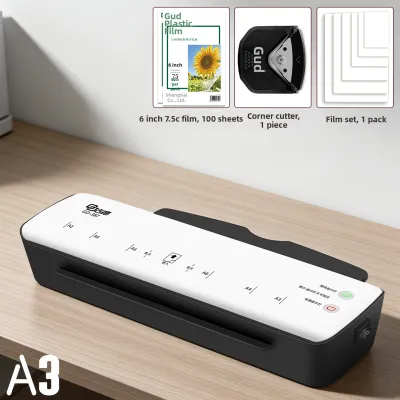
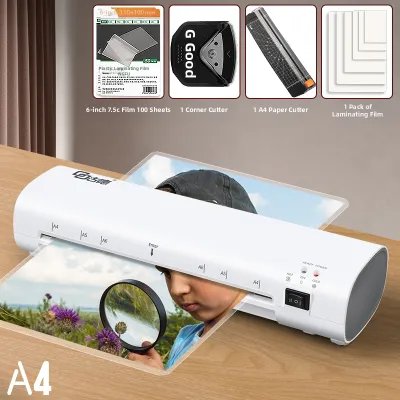
Prices are valid at publication and may change. Please refer to the product page for the latest price.
How They Work: Thermal vs Cold Lamination Mechanisms
To understand why these two technologies cannot be used interchangeably, it is necessary to examine their mechanical and chemical operations. Thermal lamination relies on a combination of heat and pressure. The consumables used in this process—typically thermal laminating pouches or rolls—consist of a base layer of clear plastic, usually Polyethylene Terephthalate (PET), coated internally with a dry, non-tacky layer of Ethylene-Vinyl Acetate (EVA) copolymer.
When passed through a thermal lamination machine, the rollers, which are heated by internal heating elements to temperatures typically ranging from 100°C to 150°C, melt the EVA adhesive. As the adhesive transitions into a liquid state, the pressure of the rollers forces it into the microscopic fibers of the paper document. Once the laminated sheet exits the machine and cools down, the EVA copolymer solidifies, creating a permanent, hermetic, and rigid structural bond. Because of this heating step, thermal machines require a warm-up period of anywhere from one to five minutes before they reach operational temperature.
In contrast, cold lamination operates entirely at room temperature, relying solely on mechanical pressure and pressure-sensitive adhesives (PSA). Cold laminating films are coated with an aggressive, tacky acrylic adhesive that is protected by a release liner. As the document and the cold film pass through the rollers of a cold laminator, the rollers apply high, uniform pressure. This pressure forces the viscoelastic adhesive to flow and conform to the surface of the paper, creating a strong mechanical bond without any thermal input.
Because cold lamination does not require heating elements, these machines are ready to use instantly without any warm-up or cool-down cycles. However, this mechanical difference means that using the wrong consumable in the wrong machine can be catastrophic. Running a cold, pressure-sensitive pouch through a heated thermal machine will cause the tacky adhesive to melt completely, liquefying inside the machine, coating the rollers, and causing severe, irreversible jams. Conversely, running a thermal pouch through a cold machine will result in no adhesion at all, as there is no heat to melt the dry EVA layer.
Key Comparison Dimensions for Your Decision
When choosing between these two systems, you must evaluate several distinct operational and financial factors. The table below outlines the primary functional differences between thermal and cold lamination systems to help guide your initial assessment.

| Feature / Dimension | Thermal Lamination | Cold Lamination |
|---|---|---|
| Adhesive Activation | Heat (100°C–150°C) and roller pressure | Mechanical roller pressure only |
| Warm-Up Time | Required (typically 1 to 5 minutes) | Instant (0 minutes) |
| Document Safety | High risk for heat-sensitive materials | Safe for all document types |
| Seal Rigidity | High (creates a stiff, durable barrier) | Flexible (conforms to the document shape) |
| Consumable Availability | Extremely common, widely stocked | Specialized, often limited to specialty shops |
| Primary Use Cases | Office documents, menus, ID cards, classroom aids | Receipts, thermal prints, outdoor vinyl, stickers |
Document Compatibility and Finish Quality
The chemical composition of your document’s medium dictates which lamination method is safe to use. Heat-sensitive materials will be permanently ruined if subjected to the high temperatures of a thermal laminator. For example, thermal paper—commonly used for sales receipts, shipping labels, and medical diagnostic prints like ultrasound scans—relies on a heat-sensitive chemical coating to produce text and images. Running these through a thermal machine will turn the entire page completely black, erasing all information. Similarly, wax-based crayons, oil pastels, and certain historical inks can melt, bleed, or discolor under heat, making cold lamination the only viable preservation method for these items.
For standard papers, cardstocks, and modern digital prints, thermal lamination offers exceptional finish quality. The melting process of the EVA adhesive ensures that it fills every micro-crevice of the paper, resulting in superior optical clarity, deep color contrast, and a highly rigid, protective shell. Thermal pouches are widely manufactured in both high-gloss finishes, which enhance color vibrancy, and matte finishes, which reduce glare in highly lit environments.
Cold lamination, while highly versatile, requires careful handling to achieve a flawless finish. Because the adhesive is tacky at room temperature, there is a higher risk of trapping air bubbles or dust particles during the feeding process. If the rollers do not apply perfectly even pressure, or if the document is fed at an angle, the film can wrinkle, which is difficult to correct once the pressure-sensitive adhesive has bonded. Additionally, cold lamination films are more flexible and do not provide the same level of structural stiffness as thermal pouches, meaning they are better suited for items that need to remain pliable, such as outdoor banners, vehicle graphics, or flexible labels.
Upfront Budget and Running Costs
The total cost of ownership for a lamination machine consists of the initial hardware purchase and the recurring cost of consumables. Because thermal lamination is the dominant technology for home, school, and standard office environments, these machines are mass-produced on a massive scale. This high volume drives down hardware costs significantly. Entry-level, consumer-grade A4 thermal laminators can easily be found for under S$30, while heavy-duty, multi-roller A3 office machines generally range from S$80 to S$250.
In comparison, cold lamination hardware presents a different cost structure. Basic, manual hand-crank cold laminators designed for crafting or small-format prints are relatively inexpensive, often costing between S$40 and S$100. However, professional, motorized, roll-based cold laminators used in commercial print shops for large-format signs and outdoor displays are specialized industrial equipment, with prices often starting at S$300 and reaching well into the thousands.
When evaluating running costs, thermal lamination is overwhelmingly more economical. Standard thermal laminating pouches are a highly commoditized stationery item. You can purchase bulk packs of 100 thermal A4 pouches from local Singapore stationery suppliers or online marketplaces for as little as S$10 to S$20. Cold lamination consumables, however, carry a premium. Pressure-sensitive adhesive films and sheets are more complex to manufacture due to the protective silicone release liner and the specialized acrylic adhesive. As a result, cold laminating sheets can cost two to five times more per page than their thermal counterparts, and they are significantly harder to find in local retail stationery shops, often requiring orders from specialty sign-making or drafting suppliers.
Safety, Heat, and Workspace Constraints
The physical environment in which you plan to operate the machine introduces important safety and practical considerations. Thermal lamination machines contain heavy-duty heating elements that draw significant electrical power. Because they operate at high temperatures, the external casing of cheaper models can become warm to the touch, and the laminated document exiting the rear of the machine is hot enough to cause discomfort.
Furthermore, thermal laminators can emit a distinct plastic odor, especially when new or during prolonged high-volume runs. This odor is caused by the heating of the EVA copolymer and PET film. In small, poorly ventilated workspaces, this can cause mild irritation. There is also a continuous fire risk if a thermal pouch misfeeds, wraps around the hot rollers, and melts inside the housing, which requires immediate shutdown and manual intervention. Consequently, thermal machines require close adult supervision when used in classrooms or homes with young children.
Cold lamination machines completely eliminate these safety and environmental concerns. Because they operate entirely at room temperature, they present zero burn hazards, emit no chemical odors or volatile organic compounds, and consume minimal to no electrical power (manual hand-crank models require no electricity at all). This makes cold laminators exceptionally safe for unsupervised use by children in schools, libraries, or home crafting areas. Additionally, because there is no warm-up or cool-down period required, a cold laminator can be pulled from a cupboard, used to laminate a single sheet instantly, and immediately stored away, making it highly efficient for sporadic, on-demand tasks in busy or space-constrained environments.
Decision Framework: Choose Thermal, Cold, or Neither
To finalize your purchasing decision, evaluate your specific operational profile against the following diagnostic criteria.
Choose Thermal if:
- Your documents are standard: You primarily laminate standard printer paper, cardstock, classroom flashcards, menus, ID badges, or inkjet and laser photos.
- You need high rigidity: You require a stiff, unbending protective layer that allows signs or menus to stand upright or withstand heavy, daily physical handling.
- You are budget-conscious: You want to minimize ongoing running costs and prefer to buy widely available, inexpensive consumables in bulk.
- You have a dedicated workspace: You have a stable desk near an electrical outlet where the machine can safely warm up, operate, and cool down without interference.
Choose Cold if:
- Your materials are heat-sensitive: You regularly laminate thermal receipts, medical scans, glossy photos prone to thermal bubbling, historical documents, or wax-based art.
- Safety is your top priority: The machine will be used in an elementary school, a children's craft room, or a confined space with poor ventilation.
- You need flexibility: You are laminating stickers, decals, vehicle graphics, or large banners that must remain pliable and conform to curved surfaces.
- You require instant operation: You do not want to wait for a machine to warm up and prefer a system that is ready to perform on-demand lamination instantly.
Neither may fit if:
- Your volume is extremely low: You only need to protect two or three documents a year. In this scenario, purchasing a dedicated machine is unnecessary. You can easily outsource the task to a local commercial print shop in Singapore or use simple, self-adhesive laminating sheets that can be applied manually with a plastic ruler or squeegee.
- You require archival reversibility: Lamination of any kind is generally permanent. If you are preserving highly valuable, irreplaceable historical documents or family heirlooms, laminating them can permanently alter or damage the paper fibers. Instead, use archival-grade polyester sleeves or top-loaders, which protect the document while allowing it to be safely removed in its original state.
Verify first if:
- You are unsure of the document's composition: Before running an irreplaceable document through a thermal laminator, check the manufacturer's specifications of the printing medium. If you cannot verify the material, perform a test by running a small, non-critical scrap or a similar sample through the machine first to observe how the paper and ink react to the heat.
Essential Specifications to Verify Before Buying
If you decide to purchase a lamination machine, you must verify several key technical specifications on the product packaging or manufacturer’s datasheet to ensure it matches your workflow.
Size and Format Compatibility
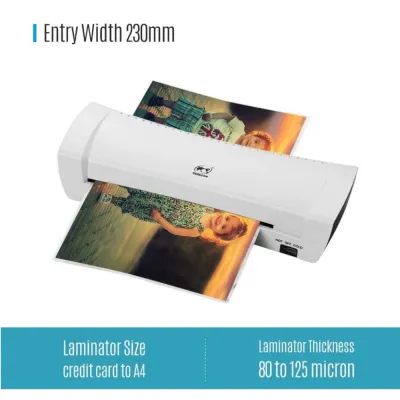
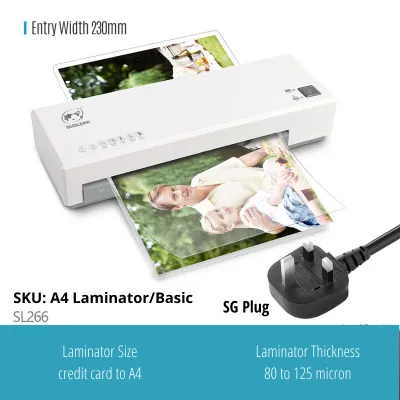
Lamination machines are categorized by their maximum entry width, typically designated by standard paper sizes such as A4 or A3. An A4 laminator has an entry width of approximately 230mm to 240mm, which is perfect for standard letters, flyers, and smaller items like ID cards. An A3 laminator has a wider entry path of around 320mm to 340mm.
Always remember that size compatibility is backward-compatible: an A3 machine can easily laminate A4 sheets, A5 cards, and small business cards, but an A4 machine cannot accommodate an A3 poster. If you anticipate ever needing to laminate larger classroom posters, instructional charts, or ledger-sized office documents, investing in an A3 machine upfront is highly recommended, as it offers maximum operational flexibility.
Pouch vs. Roll Systems
For home, school, and standard office environments, pouch laminators are the most practical choice. These machines accept individual, pre-cut plastic pouches that hold a single document. They are clean, easy to feed, and require virtually no setup or technical expertise.
Roll laminators, on the other hand, use two continuous rolls of laminating film that feed through the machine simultaneously, encapsulating documents as they pass through. Roll systems are highly specialized and are designed for high-volume environments, such as commercial print shops or school district media centers, where continuous banner printing or high-speed, automated lamination of hundreds of sheets is required. Roll systems require careful alignment and threading, making them less practical for casual users.
Pouch Thickness Compatibility (Microns)
The thickness of laminating pouches is measured in microns (one-millionth of a meter, often abbreviated as mic) or mils (thousandths of an inch). Standard pouch thicknesses include:
- 75 to 80 microns: Ideal for standard office documents, letters, and notices that require basic protection against dust and moisture while remaining relatively flexible.
- 100 to 125 microns: Provides a medium-duty, semi-rigid barrier. This is the standard choice for classroom flashcards, restaurant menus, and frequently handled reference sheets.
- 150 to 250 microns: Creates an extremely thick, rigid, and virtually unbending plastic shield. This thickness is typically used for ID badges, luggage tags, and outdoor signage.
Before buying a machine, verify its maximum supported pouch thickness. Many entry-level thermal laminators can only handle pouches up to 100 or 125 microns. If you attempt to feed a heavy 250-micron pouch through a low-powered machine, the internal heating element will fail to melt the thick adhesive layer completely, resulting in a cloudy, semi-opaque finish that easily peels apart. Ensure the machine’s technical specifications explicitly state support for your desired micron rating.
Jam Release and the ABS Button
One of the most common failure points in both thermal and cold lamination is a document jam, which occurs when a pouch is fed at an angle, folded, or if the adhesive wraps around the internal rollers. To prevent permanent damage to the machine and save your document from being destroyed, ensure the laminator is equipped with an Anti-Blocking System (ABS) or a manual jam release lever.
When a jam occurs, pressing the ABS button or engaging the lever mechanically disengages the drive gears and separates the rollers. This allows you to safely and smoothly pull the misaligned pouch backward out of the entry slot. Without an ABS feature, a jammed pouch will continue to wrap around the hot rollers, melting permanently onto the mechanism and rendering the machine completely unusable.
Frequently Asked Questions (FAQ)
Can I use cold lamination pouches in a thermal machine?
No, you should never run cold lamination pouches through a heated thermal machine. Cold lamination pouches use a pressure-sensitive adhesive that is highly tacky at room temperature. When exposed to the intense heat of a thermal laminator’s heating elements, this adhesive will liquefy instantly, seeping out of the edges of the pouch and coating the silicone rollers. This will cause severe, irreversible jams, ruin the roller mechanism, and potentially create a fire hazard. Always match your consumable type to the specific operational mode of your machine.
Which method provides better protection against high humidity?
Thermal lamination provides superior protection against high humidity, which is particularly important in tropical climates like Singapore. The heat-activation process melts the EVA adhesive, forcing it to fuse deeply with the paper fibers and creating a completely airtight, hermetic seal around the edges of the document. This prevents ambient water vapor from penetrating the paper substrate. Cold lamination also offers good moisture protection, but because pressure-sensitive adhesives rely on a physical rather than a thermal bond, the edges of cold-laminated documents are more susceptible to minor lifting and moisture ingress over time if exposed to constant high humidity and frequent handling.
Community discussion
Share your experience or ask a question. Comments are reviewed before publication.