
Finding the right table calendar planner is not about finding a universally perfect brand, but rather aligning layout structures, paper specifications, and physical dimensions with your daily workflow and desk environment. In Singapore, where desk space in home offices or study alcoves can be highly constrained, selecting a planner with the wrong footprint or a binding that refuses to lie flat can disrupt your entire productivity setup. By focusing on verifiable manufacturer specifications and performing simple, observable tests on paper quality, you can bypass vague marketing claims and select a planner that reliably supports your writing instruments and scheduling habits.
Understanding Layout Formats for Daily Planning
Layout formats dictate how you visualize time and manage tasks throughout the year. Monthly grid layouts are ideal for high-level project tracking, milestone planning, and noting major deadlines, offering a broad bird’s-eye view of your commitments. However, if your day-to-day work involves back-to-back meetings or precise time-blocking, a weekly or daily layout is essential. Weekly layouts allow you to balance daily schedules alongside weekly goals, while daily formats provide the granular hourly blocks needed for intensive time-management strategies.
Beyond the primary calendar grid, the allocation of secondary space determines how well a planner integrates into your broader productivity system. Look closely at how a brand structures its margins and auxiliary pages. Some planners dedicate substantial space to unstructured notes, dot-grid sections, or dedicated to-do lists, which are invaluable for capturing fleeting thoughts during calls. Others incorporate structured habit trackers or monthly reflection prompts, which can help you maintain personal goals alongside professional tasks.
Products mentioned in this guide
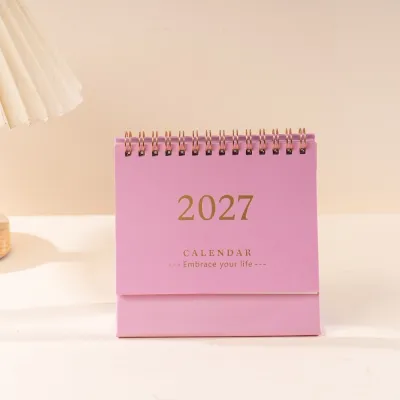
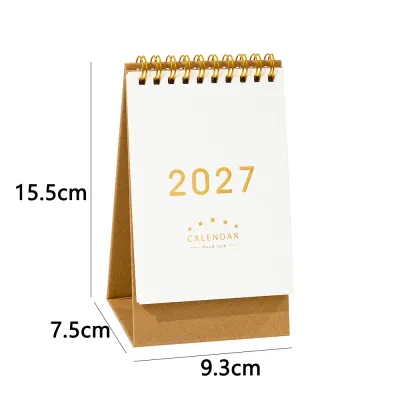
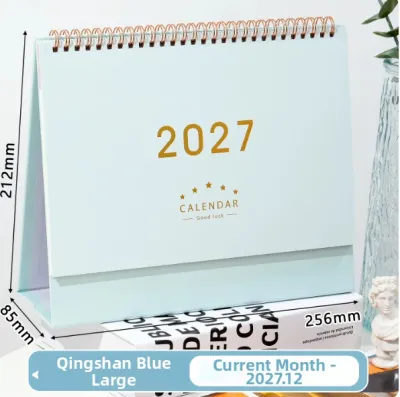
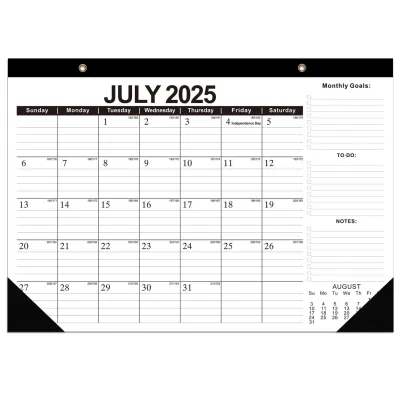
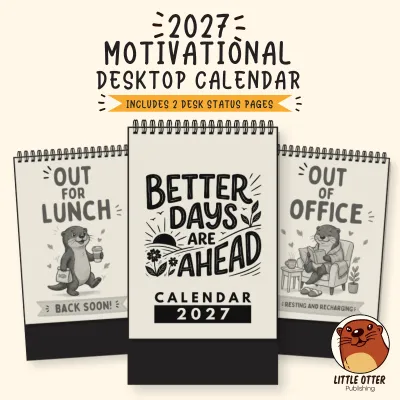
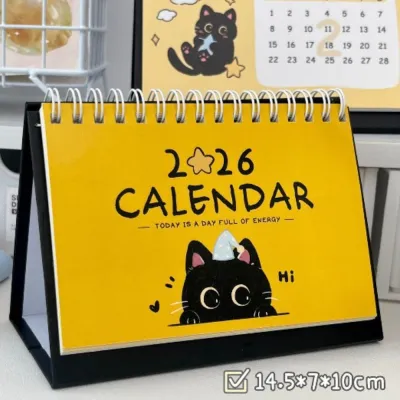
Prices are valid at publication and may change. Please refer to the product page for the latest price.
The physical binding of your planner directly influences how easily you can write in it and how much space it occupies on your desk. Double-loop wire-o and spiral bindings are highly favored for desktop use because they allow the planner to fold back completely on itself, effectively halving its physical footprint when space is tight. This 360-degree rotation also ensures a completely flat writing surface, eliminating the annoying slope near the margins.
In contrast, glued, perfect-bound, or thread-stitched planners offer a cleaner, book-like aesthetic and greater spine durability, making them less prone to snagging on other items in a bag. However, these bindings often require some breaking in to lie flat, and they cannot be folded back, meaning they will always occupy their full open width on your desk. If you frequently write near the center seam, a stitched binding that opens flat without forcing you to hold the pages down is a critical requirement.
Evaluating Paper Quality and Ink Compatibility
Paper quality is a multi-dimensional characteristic that cannot be judged solely by terms like premium or luxury. The most reliable starting point for evaluation is the paper weight, measured in grams per square meter (GSM). Standard office paper typically ranges from 70 to 80 GSM, which is prone to ghosting and bleeding when used with wet inks. For a table calendar planner, look for paper weights of 100 GSM or higher if you want to minimize the shadow of your writing showing through on the reverse side of the page.

The finish of the paper—whether it is coated, uncoated, smooth, or slightly textured—profoundly affects both the writing experience and ink behavior. Highly smooth, coated papers slow down ink absorption, which can result in exceptionally crisp lines and vibrant colors, but this also significantly increases drying times. In humid climates, slow-drying ink on coated paper is highly susceptible to smudging when you turn pages or close the planner quickly. Uncoated, slightly textured papers absorb ink faster, reducing smudge risks, but they may cause broader line widths and minor feathering.
To verify how your specific writing instruments interact with a planner’s paper, perform a simple, low-risk test on an inconspicuous area, such as a notes page at the back of the book. Write a series of lines using your daily pens—such as gel pens, ballpoints, fountain pens, or highlighters—and observe the drying time by gently touching the ink at progressive intervals. Flip the page to check for ghosting (where the writing is visible through the paper) and bleeding (where the ink physically penetrates to the other side).
Fountain pen users, in particular, must look beyond basic GSM ratings and verify the paper’s sizing and coating specifications. Sizing is a manufacturing treatment that controls how water-resistant the paper is; highly sized papers prevent ink from soaking too deeply into the fibers, which preserves sharp line edges and prevents feathering. If the manufacturer does not explicitly state fountain pen compatibility, look for papers specifically designated as fountain pen friendly or request a physical sample sheet from a local stationery boutique before purchasing.
Choosing the Right Size for Your Desk Space
Selecting the physical dimensions of your table calendar planner requires a careful balance between your writing requirements and the physical limits of your workstation. Standard paper sizes provide a helpful reference point when comparing options. An A4 planner offers an expansive writing area, making it excellent for detailed project planning, multi-column scheduling, or shared family calendars, but its large footprint can easily overwhelm a compact desk.
For most individual workstations, intermediate sizes like A5 or B5 strike an ideal balance. An A5 planner is compact enough to sit comfortably alongside a computer keyboard and mouse without crowding your workspace, yet it still provides sufficient room for daily lists and weekly overviews. The B5 size offers a slightly more generous writing canvas than A5 while remaining significantly more manageable and portable than a full A4 layout.
If your daily routine involves moving between a home office, a corporate workplace, or hot-desking environments, portability and weight become decisive factors. A heavy, hardbound A4 planner is cumbersome to carry and can add noticeable weight to your commuter bag. In these scenarios, a slim, lightweight A5 planner with a flexible cover or a monthly-only layout is much easier to transport, ensuring you always have your schedule on hand without sacrificing mobility.
Decision Framework: Matching Features to Your Workflow
To finalize your choice, apply a systematic decision framework based on your primary writing tools, desk space, and scheduling style. If your daily routine is highly dynamic and requires frequent adjustments, prioritize a weekly or daily layout with ample space for task lists, paired with a fast-drying paper that accommodates quick gel pen entries. If you primarily use fountain pens or wet rollerballs, prioritize paper with high sizing and a weight of at least 100 GSM, even if it means choosing a slightly larger planner size to accommodate the slower drying times.
When desk space is your primary constraint, prioritize wire-o or spiral binding over stitched bindings, as the ability to fold the planner in half will save valuable desktop real estate. Do not let aesthetic cover materials or trendy designs overshadow these functional requirements; a beautiful planner that bleeds through or crowds your keyboard will ultimately hinder your productivity.
If you are purchasing online and cannot physically handle the planner, check the retailer’s return policy or look for community-driven stationery forums where users share close-up photos of paper tests. Many specialized stationery brands offer downloadable, printable PDF samples of their layouts, allowing you to print a page at home to test the layout’s scale and usability before committing to the physical product.
Frequently Asked Questions (FAQ)
Can I use fountain pens on standard table calendar planner paper?
Standard planner paper, especially under 90 GSM, often lacks the necessary sizing and density to handle wet fountain pen inks, leading to feathering and bleed-through. To ensure compatibility, verify that the manufacturer specifies fountain pen friendly paper, or look for weights of 100 GSM and above with a smooth, coated finish. Always perform a small test stroke on a back page with your finest nib and driest ink before writing extensively.
What is the best binding type for a table calendar planner?
The ideal binding depends entirely on how you use your desk space. Wire-o and spiral bindings are excellent for active, space-constrained writing because they lie completely flat and fold back 360 degrees. Stitched or book-bound planners are better suited for users who prefer a durable, elegant spine that won’t catch on fabrics, provided they have enough desk space to accommodate the planner fully opened.
Community discussion
Share your experience or ask a question. Comments are reviewed before publication.