
Selecting the right superglue for school projects depends on matching the adhesive’s physical properties with a student’s motor skills, the materials they are bonding, and the necessary safety precautions. While standard liquid superglue is a classic choice for quick fixes, gel formulas and precision-tip applicators offer distinct advantages in control and safety that align with different educational stages. Choosing the correct variant ensures that school crafts, dioramas, and design models hold together securely without causing unnecessary mess or accidental skin bonding.
Understanding Superglue Variants for School Use
Superglue, or cyanoacrylate, is a fast-acting adhesive that forms an incredibly strong bond. However, not all superglues behave the same way, and understanding their physical differences is key to selecting the right one for a student’s pencil case. Manufacturers formulate these adhesives into distinct types, primarily categorized as gels, liquids, and precision-tip systems, each suited to specific tasks and materials.
Gel superglue features a thicker, high-viscosity consistency that does not run or drip easily. This makes it highly manageable for vertical surfaces and porous materials such as cardboard, paper, balsa wood, and terracotta. Because it stays exactly where it is placed, gel glue gives students a few extra seconds to align their pieces before the bond sets, reducing the risk of accidental finger contact.
Products mentioned in this guide
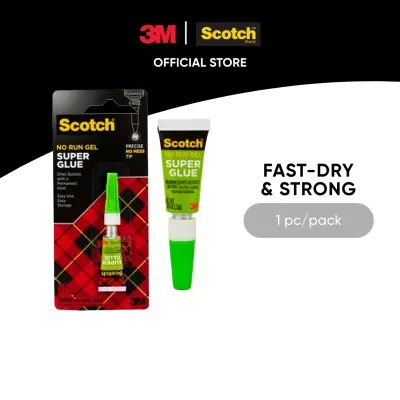
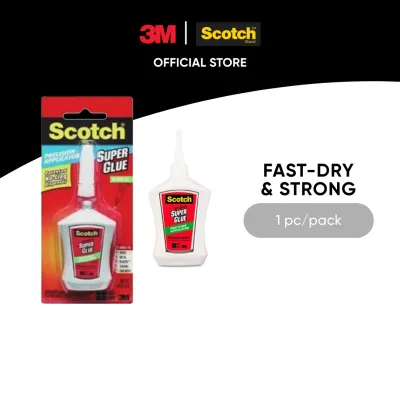
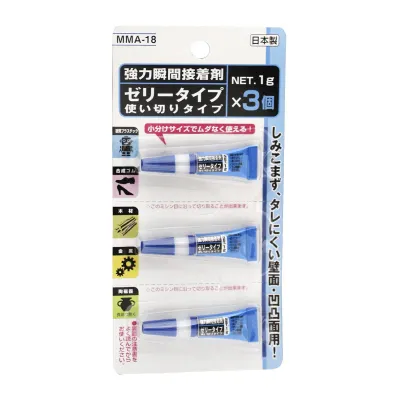
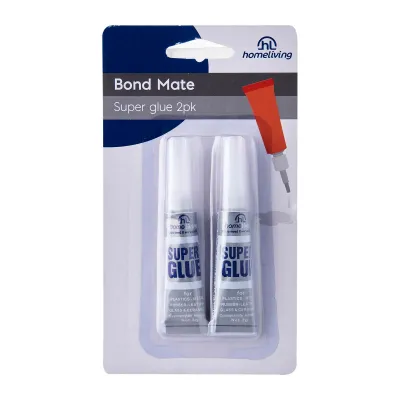
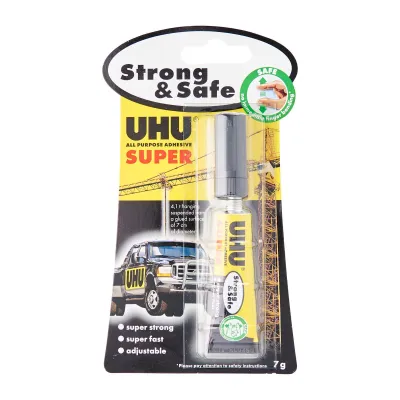
Prices are valid at publication and may change. Please refer to the product page for the latest price.
Liquid superglue, by contrast, has a very thin, low-viscosity consistency that flows rapidly into tight spaces. It sets almost instantly, making it highly effective for non-porous, close-fitting materials like hard plastics, ceramics, and metals. However, its runny nature requires careful handling to prevent spills, drips, and immediate skin bonding.
Precision-tip applicators are specialized delivery systems rather than a separate glue formula. These bottles feature long, narrow nozzles or micro-dropper tips designed to dispense tiny, controlled amounts of either liquid or gel adhesive. They are particularly useful for intricate assemblies, allowing students to apply glue to tiny components without over-saturating the joint or creating a sticky mess on their hands.
Before purchasing any superglue, parents and students should check the product packaging for material compatibility, curing times, and specific safety warnings. Some formulas are optimized for flexible materials, while others are strictly for rigid plastics, and verifying these details beforehand prevents project failures.
Matching Superglue to Grade Levels and Project Types
As students progress through school, their project requirements and fine motor skills evolve significantly. Matching the adhesive’s viscosity and dispensing method to the student’s grade level ensures a balance between structural success and physical safety.

Lower Primary: Safety and Simple Crafts
In lower primary school, students are still developing their fine motor coordination and spatial awareness. Typical classroom activities involve simple cardboard dioramas, basic wood crafts, and paper-mâché structures that require a reliable bond but present a high risk of spills.
For this age group, gel superglue is the most appropriate choice if a cyanoacrylate adhesive is required. The thick, non-drip formula stays in place on vertical cardboard joints and does not run down a child’s fingers. This significantly lowers the chance of accidental skin bonding, which can be distressing for younger children.
Despite the safety advantages of gel formulas, direct adult supervision is absolutely necessary whenever lower primary students use superglue. Cyanoacrylate bonds skin almost instantly, and a parent or teacher must be present to manage the application and handle any accidental contact immediately.
Upper Primary: Precision and Mixed Materials
Students in upper primary school frequently tackle more detailed models, such as historical dioramas, basic science displays, and simple architectural structures. These projects often combine diverse materials, including balsa wood, plastics, and lightweight metals, requiring more versatile bonding solutions.
At this stage, precision-tip applicators become highly beneficial. Older primary students have developed the dexterity needed to control a fine-nozzle bottle, allowing them to apply tiny dots of glue to intricate parts, such as model airplane wings or small decorative elements, without excess squeeze-out.
For these mixed-material projects, a combination of gel and liquid formulas provides the most versatility. Students can use gel superglue for structural bases where gap-filling is needed, and liquid superglue with a precision tip for tight-fitting plastic joints. Teaching students to use the absolute minimum amount of glue is crucial, as excess cyanoacrylate actually weakens the bond and extends the drying time.
Secondary: Heavy-Duty and Technical Projects
Secondary school students often engage in advanced design and technology, physics experiments, or competitive STEM projects. These assignments involve technical materials like acrylic sheets, carbon fiber, and metals, which demand high bond strength and rapid curing times to withstand structural testing.
Standard liquid formulas are well-suited for these heavy-duty applications. The thin liquid penetrates deeply into smooth, non-porous joints, creating a nearly instantaneous, rigid bond that is highly effective for load-bearing structures or fast-paced classroom competitions where waiting for glue to dry is not an option.
Because secondary students typically work more independently, they must be taught proper safety protocols for handling high-strength adhesives. This includes working in well-ventilated classrooms to avoid inhaling fumes, wearing eye protection when working with liquid formulas, and knowing how to safely debond skin without panicking.
Key Selection Criteria and Safety Checks
When selecting superglue for school use, parents should look beyond the brand name and carefully evaluate the product label. Check for specific material compatibility to ensure the adhesive works on the plastics or woods required for the project. Additionally, review the cure time and shelf life, as older glue can become thick and ineffective inside the tube before it is even opened.
Skin contact is the most common hazard associated with cyanoacrylate adhesives, making a clear safety protocol essential. If a student’s fingers accidentally bond together, they must never pull or tear the skin apart forcefully, as this can cause painful skin tears. Instead, the bonded area should be soaked in warm, soapy water or massaged gently with a safe oil, such as petroleum jelly or mineral oil, to gradually break down the adhesive bond.
Proper ventilation and storage are critical for maintaining both safety and product longevity. Superglue should always be used in well-ventilated areas, such as near an open window or outdoors, to prevent the buildup of irritating fumes. Store the adhesive upright in a cool, dry place away from direct sunlight, and keep it out of reach of very young children or pets.
Finally, parents must check individual school policies regarding adhesives. Some schools in Singapore prohibit students from bringing cyanoacrylate glues to class due to safety concerns, or they may require specific non-toxic certifications for any adhesives used on school grounds. Verifying these rules beforehand prevents students from having their stationery confiscated.
Practical Tips for Storage and Handling in a School Bag
Carrying superglue in a school bag requires extra care to prevent disastrous leaks that can ruin textbooks, uniforms, and electronic devices. The first rule of maintenance is to always wipe the nozzle clean with a dry cloth or paper towel before replacing the cap. This simple step prevents the cap from gluing itself permanently to the tube, which often leads to students trying to puncture or squeeze the bottle with excessive force.
To protect the contents of a school bag, students should store the superglue bottle upright inside a sealed plastic bag or a dedicated hard-sided plastic case. This secondary containment ensures that even if the cap comes loose or the tube is punctured by a sharp pencil, the adhesive will not escape into the main compartments of the backpack.
Over time, superglue can degrade, especially when exposed to the warm, humid climate of Singapore. Students should learn to recognize the signs of expired or crystallized glue, such as a cloudy appearance, a thick and stringy consistency, or a completely hardened nozzle. When these signs appear, the tube should be safely disposed of in the household trash and replaced with a fresh bottle to ensure reliable performance on the next school project.
Frequently Asked Questions (FAQ)
Can superglue be used on school uniforms or fabric?
Superglue should not be used on school uniforms or any cotton and wool fabrics. Cyanoacrylate chemicals react exothermically when they come into contact with natural fibers like cotton, which can generate significant heat and potentially cause skin burns or permanently scorch the fabric. For clothing repairs or fabric-based school projects, students should use specialized fabric glue or iron-on adhesive tape instead.
How do I safely remove superglue from a student's skin?
To safely remove superglue from skin, gently massage the affected area with warm, soapy water or a mild oil, such as vegetable oil or petroleum jelly. This helps to loosen the adhesive’s grip without damaging the skin. Avoid pulling the skin apart forcefully, and do not use harsh chemical solvents like acetone on sensitive skin or near the face unless the product safety label explicitly permits it and adult supervision is present.
Community discussion
Share your experience or ask a question. Comments are reviewed before publication.