
Finding the right strip magnet for daily office use in Singapore requires looking beyond simple brand names and focusing on material composition, thickness, and surface compatibility. While many brands promise a permanent hold, the actual performance of a strip magnet depends heavily on whether you choose a flexible rubber composite or a rigid ceramic alternative, and how well that choice matches your specific office tasks. To secure everything from single-sheet memos on a whiteboard to heavy laminated project planners on a steel cabinet, you must evaluate the physical properties of the magnet rather than relying on generic marketing claims.
Understanding What Determines Strip Magnet Hold Strength
Flexible rubber magnets are made by mixing magnetic powder, usually ferrite, with a synthetic rubber or plastic binder. This composition makes them highly pliable and easy to cut, but it also dilutes their magnetic density. Consequently, flexible rubber strips have a lower baseline pull force compared to rigid ceramic or neodymium magnets of the same size. Rigid ceramic or ferrite strip magnets, on the other hand, consist of sintered iron oxide and barium or strontium carbonate. They are brittle and cannot be bent or cut, but they offer a significantly stronger magnetic field, making them ideal for heavier loads.
The physical dimensions of a strip magnet directly dictate its total pull force. Thickness is the most critical dimension for magnetic strength; a thicker strip allows for a deeper magnetic field that can penetrate multiple layers of paper or cardstock. Width and length determine the total surface contact area. A wider strip distributes the magnetic force over a larger area, preventing heavy documents from sliding down a vertical surface. When evaluating options, remember that doubling the thickness of a flexible magnet often yields a more noticeable increase in holding power than simply doubling its width.
Products mentioned in this guide
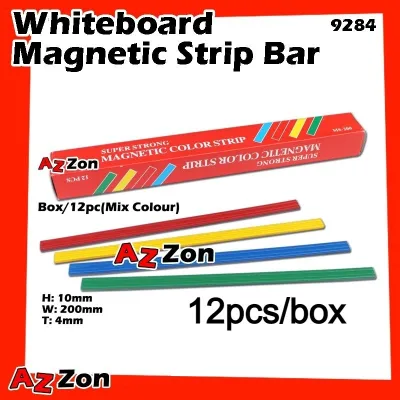
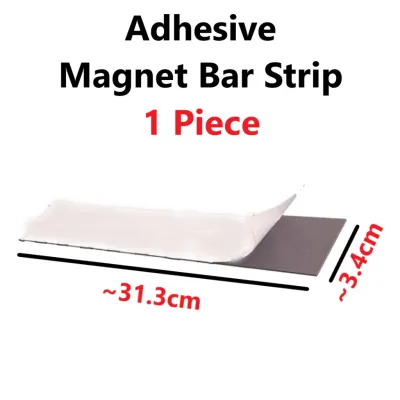
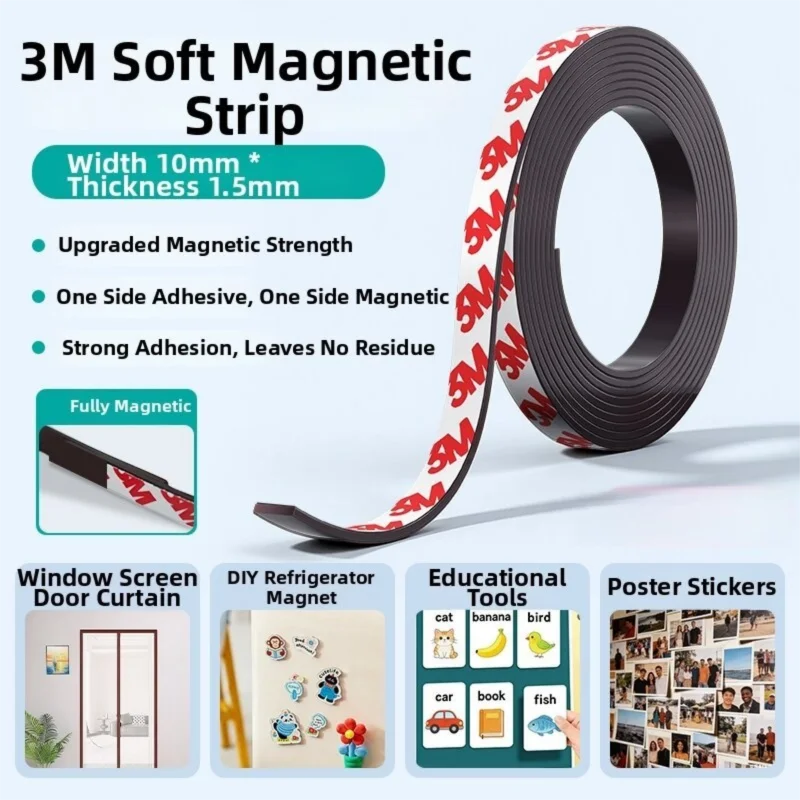
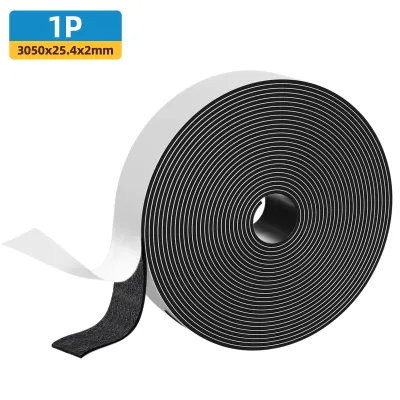
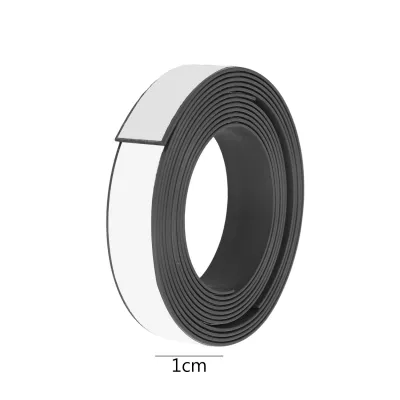
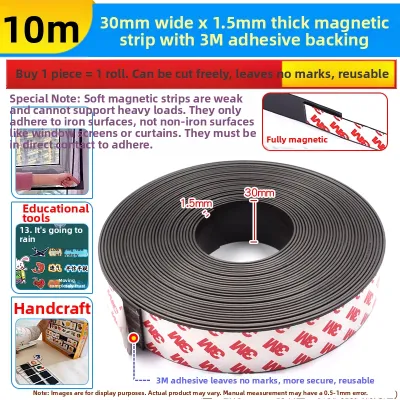
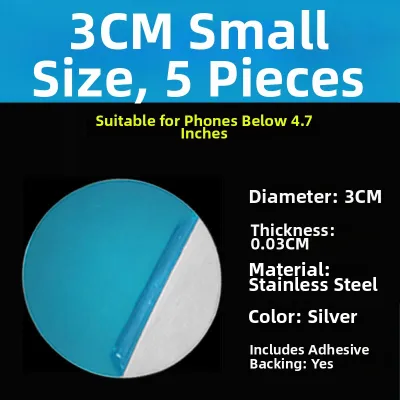
Prices are valid at publication and may change. Please refer to the product page for the latest price.
Strip magnets are magnetized in specific patterns, most commonly multi-pole magnetization on one face. This means the magnetic north and south poles alternate in narrow, parallel stripes across the width of the strip. This concentrated pole spacing maximizes the holding power when the magnet is in direct contact with a flat steel surface, such as a whiteboard or a metal filing cabinet. However, if there is a gap—such as a thick stack of paper—the magnetic field from these closely spaced poles can short-circuit, rapidly reducing the effective pull force. Understanding this behavior helps you select the right thickness and pole configuration for your specific office setup.
Evaluating Durability and Longevity for Daily Office Use
The durability of a strip magnet in a busy office environment depends largely on its protective coating. Many flexible strip magnets feature a laminated vinyl or PVC top layer, which can be color-coded or written on with dry-erase markers. Over time, frequent handling and exposure to friction can cause these outer layers to peel, crack, or fray at the edges. When selecting magnets, inspect the bond between the magnetic core and the outer coating; high-quality options feature co-extruded or securely laminated surfaces that resist delamination even after repeated bending and repositioning.

For applications where you need to mount a non-magnetic item to a steel surface, or vice versa, adhesive-backed strip magnets are highly convenient. However, the adhesive layer is often the first point of failure. Low-grade adhesives can dry out, lose their tackiness, or leave a stubborn, sticky residue on office walls, whiteboards, and glass partitions when removed. To avoid this, look for strips that utilize high-shear acrylic adhesives, which are designed to withstand constant downward pulling forces without sliding or peeling away from the substrate.
Office environments present subtle challenges to magnetic longevity. While indoor temperatures are generally stable, placing strip magnets near heat-emitting office equipment—such as laser printers, laminators, or desktop computers—can accelerate the degradation of both the adhesive backing and the flexible binder material. Furthermore, repeated physical impacts, such as slamming cabinet doors or dropping rigid ceramic magnets on hard office floors, can cause micro-fractures that permanently weaken the magnetic field. Choosing impact-resistant flexible strips for high-traffic areas helps mitigate these risks.
How to Compare Strip Magnet Specifications and Brand Claims
When browsing local stationery shops or online marketplaces in Singapore, you will often see pull-force ratings expressed in grams or kilograms per linear centimeter. It is crucial to understand that these ratings are typically measured under ideal laboratory conditions—using a thick, polished steel plate with direct, perpendicular pull. In a real office setting, factors like paint thickness on whiteboards, surface texture, and the thickness of the paper being held will significantly reduce this holding capacity. To verify these claims, perform a simple trial: test a small sample strip against the actual number of paper sheets you intend to secure to ensure it does not slide.
High-quality flexible strip magnets should exhibit consistent thickness and width throughout the entire roll or pre-cut strip. Variations in thickness can lead to uneven contact with the steel surface, creating weak points where the magnet can easily be dislodged. If you plan to customize the lengths for organizing whiteboard schedules or labeling metal shelving, verify that the material can be cleanly cut with standard office scissors or a utility knife without crumbling, cracking, or separating from its adhesive backing.
Since you cannot always test magnets before purchasing, analyzing user reviews on ecommerce platforms can provide valuable insights into long-term performance. Look for specific feedback regarding whether the magnets lose their grip over several months of use, if the adhesive backing fails under tropical humidity conditions common in Singapore, or if the material becomes brittle and snaps when bent. Avoid products with widespread complaints about curling edges, as a strip that refuses to lie flat will never achieve optimal surface contact or holding strength.
Decision Framework: Choosing the Right Strip Magnet for Your Needs
If your primary goal is to create custom labels, interactive whiteboard elements, or lightweight crafts, flexible rubber strip magnets are the most suitable choice. Their pliable nature allows you to cut them to precise lengths with standard stationery tools, and many varieties feature a write-on dry-erase surface. These strips conform easily to slightly curved surfaces, making them highly versatile for creative office displays, agile project management boards, and classroom learning aids.
For demanding tasks, such as holding thick laminated charts, multi-page reports, or heavy cardboard signs on steel whiteboards and filing cabinets, you should opt for thicker, high-grade flexible strips or rigid ceramic magnets. These options provide the deep magnetic penetration required to clamp through multiple layers of paper without sliding. When maximum hold is required, prioritize strips with a thickness of at least 1.5mm to 2mm, as thinner utility strips will likely fail under the weight of substantial document stacks.
When you need to display non-magnetic items—such as plastic signs, wooden pointers, or acrylic pockets—on a steel surface, adhesive-backed magnetic strips are essential. In this scenario, the strength of the adhesive is just as important as the strength of the magnet. Ensure the target surface is thoroughly cleaned and dried before application to guarantee a secure bond, and allow the adhesive to cure for at least 24 hours before subjecting it to any load or magnetic pull.
Before purchasing any non-adhesive magnetic strips, it is vital to verify that your target surface is actually ferromagnetic. Many modern office whiteboards are made of painted glass, aluminum, or non-magnetic stainless steel, which will not attract standard magnets. You can easily test this by attempting to attach a known magnet to the surface; if it fails to stick, you will need to use adhesive-backed magnetic strips on both the wall and the item you wish to display to create a functional magnetic mounting system.
Storage and Maintenance to Preserve Magnetic Strength
To prevent your spare strip magnets from weakening during storage, it is important to store them correctly. When stacking flexible magnetic strips, always place them magnetic-side to magnetic-side, aligning the poles so they naturally attract and cling together. Stacking them in a way that forces opposing poles together can gradually demagnetize the material over time, leading to a noticeable loss of holding power when you finally deploy them in the office.
Store your unused magnetic rolls and strips in a cool, dry place away from direct sunlight and high-heat sources, such as window sills or the tops of office appliances. Prolonged exposure to heat and ultraviolet light can dry out the synthetic binders in flexible magnets, making them brittle, prone to cracking, and less effective. Additionally, keep your magnets at a safe distance from strong electromagnetic fields generated by large speakers, uninterruptible power supplies, or specialized industrial equipment to prevent accidental demagnetization.
Over time, strip magnets used on whiteboards can accumulate dry-erase marker dust, oils from hands, and airborne grime, which reduces surface friction and causes sliding. To clean coated or vinyl-faced magnetic strips, wipe them gently with a damp microfiber cloth and a mild soap solution. Avoid using harsh chemical solvents, alcohol-based cleaners, or abrasive scrubbing pads, as these can degrade the protective outer coating, dissolve the adhesive backing, or damage the flexible magnetic composite itself.
Frequently Asked Questions (FAQ)
Can strip magnets lose their magnetism over time?
Yes, strip magnets can experience a permanent loss of magnetic strength under certain conditions. While high-quality magnetic materials naturally retain their strength for decades, exposure to extreme heat, strong opposing magnetic fields, and repeated physical impacts can accelerate demagnetization. In an office environment, the most common culprits are placing magnets near hot office machinery or storing them improperly with opposing poles forced together, which slowly degrades the alignment of the magnetic domains.
Are flexible strip magnets strong enough for heavy office documents?
Standard flexible strip magnets are generally designed for lightweight applications, such as holding single sheets of paper, photos, or lightweight cardstock. For heavy office documents, thick laminated charts, or multi-page reports, standard thin flexible strips may not provide sufficient hold and can slide down the surface. To secure heavier items, you should select high-density, extra-thick flexible strips (at least 1.5mm to 2mm thick) or utilize rigid ceramic magnetic strips, which offer the necessary magnetic depth to penetrate multiple layers of paper.
Community discussion
Share your experience or ask a question. Comments are reviewed before publication.