
Choosing the right wrapping film is a critical decision that directly impacts product safety, presentation, and shipping costs. The choice between stretch wrap and shrink wrap depends entirely on your product’s physical form, your shipping method, and your packaging volume. While both films are essential in packaging and logistics, they serve fundamentally different purposes and cannot be used interchangeably without risking product damage or operational inefficiency.
Stretch wrap is the industry standard for palletizing and securing heavy, uniform loads. It relies on tension and elastic memory to bind items tightly together on a pallet for transit. Conversely, shrink wrap is ideal for bundling smaller items, providing tamper-evident seals, and protecting individual retail products from dust and moisture. Framing your choice around your specific operational needs ensures your goods arrive intact and looking professional.
Core Differences: How Stretch Wrap and Shrink Wrap Work
Understanding the physical mechanics of these two materials is essential for making an informed choice. Stretch wrap is a highly stretchable plastic film typically manufactured from Linear Low-Density Polyethylene (LLDPE). When applied, the film is pulled tightly around a load, stretching it beyond its original length. The film’s natural tendency to return to its original size creates a powerful, continuous constrictive force that holds the load securely. This self-clinging property allows the film to stick to itself without adhesives, leaving no sticky residue on your products.
Products mentioned in this guide
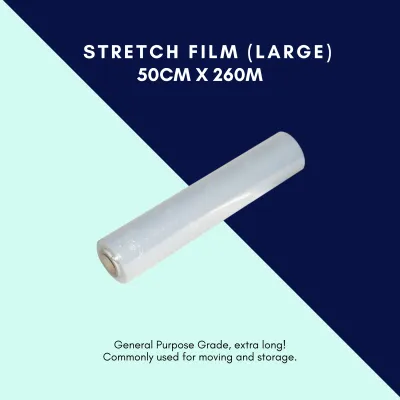
![[Hommly SG Instock] Shrink Wrap | Stretch Film | Cling Wrap | Pallet Furniture Wrap | Plastic Wrap | Plastic Film|Moving](https://img.lazcdn.com/g/p/e09c6c058a9d85d92a83a2dc21a98bbc.jpg_400x400q80.jpg_.webp)
![🏅[CHEAPEST] Stretch Film/ Shrink Wrap / Cling Wrap /Pallet wrapping /Moving Supplies/pallet Wrap/Pallet wrapping](https://img.lazcdn.com/g/p/c69357eb04f4e35ac9ee2d124f108fda.jpg_400x400q80.jpg_.webp)
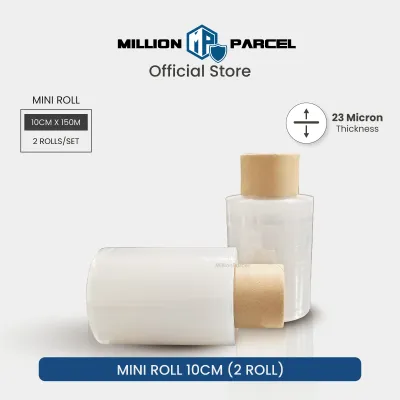
Prices are valid at publication and may change. Please refer to the product page for the latest price.
Shrink wrap operates on a completely different thermal principle. It is made from polymer films such as polyolefin (POF) or polyvinyl chloride (PVC) that have been formulated to shrink when heated. The film is applied loosely around an item or group of items and then exposed to a heat source, such as a handheld heat gun or an automated shrink tunnel. The heat causes the molecular structure of the plastic to contract rapidly, creating a tight, rigid, and contoured barrier around the product. Unlike stretch wrap, shrink wrap does not rely on mechanical tension applied during the wrapping process.
These material behaviors dictate how each film is handled in a warehouse environment. Stretch wrap is designed to yield and absorb shocks during transport, making it highly resilient against shifting loads. Shrink wrap, once cooled, forms a hard, puncture-resistant shell that keeps items completely stationary and sealed from the outside environment. Choosing the wrong material can lead to collapsed pallets or warped product packaging.
Head-to-Head Comparison: Protection, Cost, and Ease of Use
To determine which wrapping film fits your workflow, you must evaluate them across three primary operational dimensions: protection capabilities, cost-efficiency, and ease of application.

Product Protection and Stability
Stretch wrap excels at load containment and structural stability for bulk shipments. When multiple boxes are stacked on a pallet, they are highly vulnerable to lateral forces during transit. Stretch wrap secures these individual units to the wooden or plastic pallet base, turning the entire stack into a single, cohesive unit. Its high puncture resistance allows it to withstand contact with sharp carton corners and rough handling by forklifts. However, because stretch wrap is applied in overlapping layers, it does not create a completely airtight seal, meaning moisture and fine dust can still penetrate the top and bottom of the load if a pallet cap is not used.
Shrink wrap offers superior protection for individual items or small bundles requiring a complete environmental barrier. Because the film shrinks to fit the exact contours of the product, it seals out dust, dirt, and moisture. This makes it highly effective for protecting printed materials, cosmetics, and food items. The tight seal also provides immediate tamper evidence, as any attempt to open the package will visibly tear the rigid film. While shrink wrap is incredibly strong, it does not provide the structural load-bearing capacity needed to secure heavy, multi-ton pallet loads during long-distance freight shipping.
When choosing between these two for protective qualities, always consult your film manufacturer’s specifications. You should verify exact puncture thresholds, tensile strength, and moisture vapor transmission rates to ensure the material meets your specific shipping conditions.
Cost-Efficiency and Material Usage
From a financial perspective, stretch wrap generally offers a lower cost per use for bulk operations. The material has a high stretch yield, with many commercial films capable of stretching between 150% and 300% of their original length. This high elongation rate means a single roll of stretch wrap can cover significantly more surface area than its nominal length suggests. Additionally, manual stretch wrapping requires minimal initial investment, as hand dispensers are inexpensive and highly durable.
Shrink wrap typically involves higher material and operational costs. The film itself often has a higher price point per square meter than stretch wrap, and it does not stretch during application, resulting in a lower material yield. Furthermore, shrink wrap requires constant energy consumption to power heat guns, chamber machines, or shrink tunnels. For high-volume retail packaging, however, the professional presentation and reduced return rates due to damage can easily justify this premium.
To find the most cost-effective solution for your business, calculate the total cost per package. This calculation should include the purchase price of the film in Singapore Dollars (SGD), the estimated material usage per item, labor costs, and the energy consumption of any heating equipment used.
Ease of Use and Equipment Requirements
Applying stretch wrap is a straightforward process that can scale from manual labor to high-speed automation. Small businesses can easily manage low-volume pallet wrapping using lightweight manual dispensers. For larger logistics operations, semi-automated or fully automated turntable wrapping machines can dramatically speed up the process and ensure consistent tension. The physical ergonomics of manual wrapping can be demanding, as workers must walk backward around pallets while bending down, which requires proper training to prevent workplace strain.
Shrink wrap requires a more specialized toolset and careful safety protocols. Even at a small scale, you will need a heat gun and a sealing wire to cut and seal the film before heating. For larger production lines, L-bar sealers and conveyor-fed shrink tunnels are necessary to maintain speed. Working with shrink wrap introduces thermal hazards, requiring operators to wear heat-resistant gloves and work in well-ventilated areas. This is particularly important when using PVC shrink wrap, which can release trace amounts of hydrogen chloride gas when overheated.
Quick Comparison Table: Stretch Wrap vs Shrink Wrap
The following table summarizes the key operational differences between the two wrapping films to assist in your decision-making process.
| Feature | Stretch Wrap | Shrink Wrap |
|---|---|---|
| Primary Material | Linear Low-Density Polyethylene (LLDPE) | Polyolefin (POF) or Polyvinyl Chloride (PVC) |
| Application Method | Wrapped under mechanical tension | Applied loosely, then contracted with heat |
| Equipment Needed | Hand dispensers, turntables, or orbital wrappers | Heat guns, L-bar sealers, or shrink tunnels |
| Primary Use Case | Pallet stabilization and bulk shipping | Retail presentation, bundling, and sealing |
| Best Suited For | Heavy, uniform, or irregular palletized loads | Individual consumer goods, books, and multi-packs |
| Environmental Seal | Partial (requires top sheets for full coverage) | Complete, contoured, and airtight |
Note: Performance characteristics can vary based on film thickness and formulation. Always verify specific technical data sheets with your local packaging supplier before purchasing.
Decision Framework: When to Use Which Wrapping Film
To select the correct film for your inventory, apply this condition-based framework to your specific products and shipping workflows.
Choose Stretch Wrap If…
- You are shipping palletized goods: If your primary goal is to prevent boxes, drums, or bags from sliding off a pallet during truck or container transit, stretch wrap is the correct choice.
- Your products have sharp or irregular edges: The elastic properties of stretch wrap allow it to conform to uneven loads without tearing, making it ideal for mixed-product pallets.
- You need to minimize material costs on bulk shipments: The high stretch yield of LLDPE films ensures you use less plastic by weight to secure large volumes of goods.
- Your products are sensitive to heat: If you are shipping items that could melt, warp, or degrade when exposed to temperatures above 50°C, you must avoid shrink wrap and use stretch wrap instead.
Choose Shrink Wrap If…
- You are preparing retail products for display: Shrink wrap provides a crystal-clear, glossy finish that enhances the visual appeal of books, board games, and cosmetics on store shelves.
- You are bundling promotional items: If you want to package two-for-one deals, gift sets, or stationery kits together securely, shrink wrap holds them tightly without allowing them to rub against each other.
- You require a tamper-evident seal: For high-value goods, electronics, or personal care products, a fully sealed shrink wrap layer reassures customers that the product has not been opened.
- You need complete dust and moisture protection: If your items will be stored in environments where dust accumulation or light moisture exposure is a concern, a fully sealed shrink film provides an excellent barrier.
Verify First If…
- Your goods are highly fragile: High-tension stretch wrap can exert immense crushing force on weak or partially filled cardboard boxes. Verify the crush resistance of your packaging before applying maximum tension.
- You are wrapping electronic components: Some shrink films can build up static electricity during the heating process. Ensure you select anti-static formulations if wrapping sensitive circuit boards or electronic devices.
- Your storage area has poor ventilation: If you plan to use PVC shrink wrap, verify that your workspace has adequate airflow to protect operators from chemical fumes during the sealing process.
Practical Tips for E-commerce and Logistics in Singapore
Operating a business in Singapore introduces unique environmental and spatial challenges that directly influence packaging performance. The country’s tropical climate is characterized by high relative humidity, often exceeding 80% throughout the year. This moisture-rich air can weaken cardboard boxes stored in non-climate-controlled warehouses in areas like Tuas or Jurong. When cardboard loses structural integrity, standard stretch wrap tension can cause the boxes to buckle. To prevent this, logistics managers should use heavy-duty corner protectors under the stretch wrap to distribute the compression forces evenly.
Humidity also plays a role in how shrink wrap behaves. If moisture is trapped inside a shrink-wrapped package before sealing, temperature fluctuations can cause condensation to form inside the plastic, potentially damaging paper goods, stationery, or electronics. To mitigate this risk, ensure your packaging area is kept dry, and consider adding silica gel desiccant packs inside the shrink wrap for moisture-sensitive products.
Space constraints are another critical factor for local e-commerce businesses and fulfillment centers. Industrial space in Singapore is highly optimized, meaning every square meter of floor space carries a premium. If you run a growing online store from a compact warehouse, the physical footprint of your packaging equipment is highly important. While a large, automated shrink tunnel might offer maximum throughput, a compact chamber shrink machine or a manual stretch wrap station with a small footprint may be far more practical and cost-effective for your daily operations.
Finally, when preparing shipments for local delivery services or international air freight, consider the handling steps your packages will undergo. For local last-mile deliveries, individual items protected by a neat layer of shrink wrap are easier for couriers to handle and present a highly professional image to the end consumer. For bulk inventory moving through sea ports or air cargo terminals, heavy-duty stretch wrap remains non-negotiable to ensure your pallets withstand the rigors of mechanical sorting and transport.
Frequently Asked Questions (FAQ)
Can I use stretch wrap and shrink wrap interchangeably?
No, they serve different operational purposes and cannot be used interchangeably. Stretch wrap is designed specifically for load containment and pallet stabilization, relying on physical tension to hold heavy items together. Shrink wrap is designed for individual product protection, bundling, and retail presentation, relying on heat to contract the film tightly around an item. Using stretch wrap on individual retail items will look unprofessional and fail to provide a sealed barrier, while using shrink wrap on a heavy pallet will not provide the structural tension required to keep the load stable during transport.
Is shrink wrap completely waterproof for outdoor storage?
While shrink wrap provides an excellent barrier against rain and light moisture, it is not guaranteed to be completely waterproof for long-term outdoor storage. The seams, seals, and tiny ventilation holes required to let air escape during the shrinking process can allow moisture to seep in over time under heavy rain or high humidity. If you require long-term outdoor storage, you should check the manufacturer’s technical specifications for weather resistance and consider using specialized heavy-duty transit films or adding protective top caps to your loads.
Community discussion
Share your experience or ask a question. Comments are reviewed before publication.