
Finding the perfect notebook in Singapore’s vibrant stationery scene often comes down to a choice between visual delight and technical paper performance. Sticky Zoo notebooks have captured attention with their distinct, playful designs, but how does their paper actually hold up when subjected to daily writing tasks? The ideal notebook is highly subjective, depending on your preferred pen type, writing pressure, and even the local climate. Because paper performance can vary across different production batches and product lines, it is essential to verify specifications like paper weight (GSM) and surface coatings directly on the packaging. While standard commercial notebooks prioritize cost-efficiency and specialty brands focus on ink-handling capabilities, Sticky Zoo occupies a unique middle ground that requires a closer look at its physical characteristics.
Key Dimensions for Evaluating Notebook Paper Quality
Paper Weight and Thickness (GSM)
Grams per square meter, or GSM, is the standard metric used to measure paper density. When browsing notebooks in Singapore, you will typically encounter paper weights ranging from 70 GSM to 120 GSM or higher. A lower GSM, such as 70 or 80, is common in standard school exercise books; it is lightweight but highly susceptible to ghosting (where writing is visible on the reverse side) and bleeding (where ink physically leaks through the sheet). For heavy gel pens, rollerballs, or fountain pens, look for paper labeled 100 GSM or higher to ensure a cleaner writing surface on both sides of the page.
Surface Texture and Tooth
The tactile feel of a page—often referred to as its “tooth”—determines how much resistance your pen tip encounters. Highly coated, smooth papers allow pens to glide effortlessly, which reduces hand fatigue during long writing sessions but can significantly increase ink drying times. Conversely, uncoated papers with more tooth offer a satisfying tactile feedback that suits pencil users and fine-liner pens, though they may absorb ink more rapidly, leading to broader lines and potential feathering.
Products mentioned in this guide
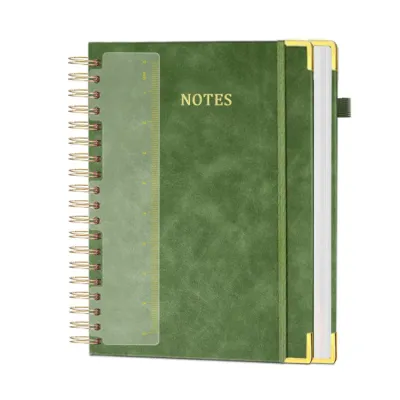
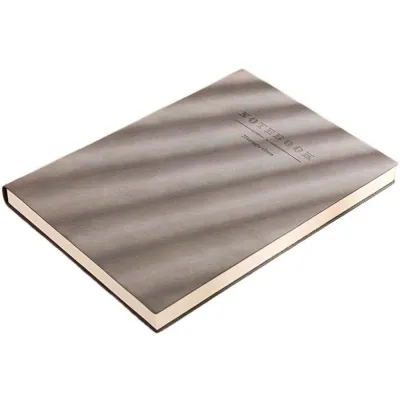
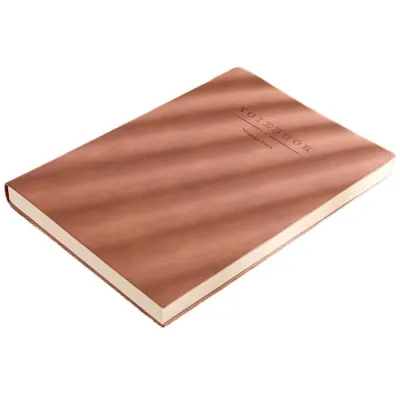
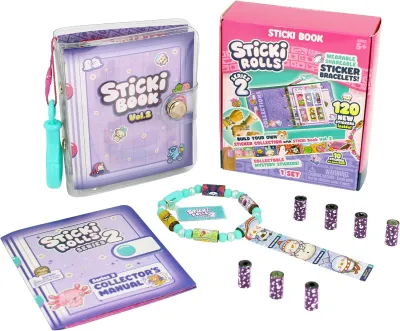
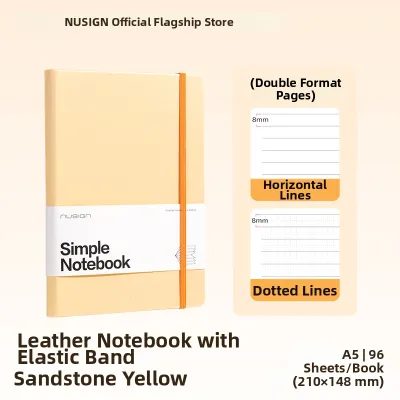
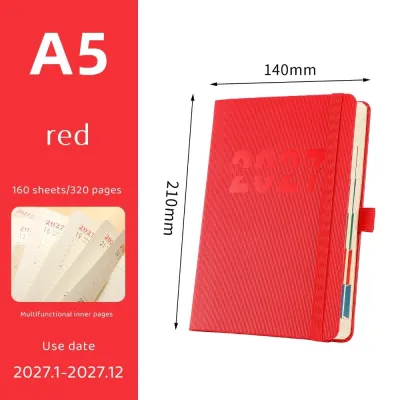

Prices are valid at publication and may change. Please refer to the product page for the latest price.
Ruling and Formatting Options
The layout of the page dictates how effectively you can organize your thoughts. Standard options include lined (ruled), dot grid, square grid, and blank formats. Lined notebooks usually feature 6mm to 8mm spacing, which accommodates standard handwriting sizes. Dot grids, typically spaced at 5mm, offer a subtle guide for both writing and sketching, making them a favorite for bullet journaling. When comparing brands, check if the margins and line intensities match your visual preferences, as overly dark lines can distract from your notes.
Binding and Lay-Flat Performance
A notebook’s binding directly impacts its usability, especially when writing near the center margin or “gutter.” Spiral or wire-bound notebooks allow the cover to fold completely back, saving desk space, but the metal coils can obstruct your hand. Thread-bound or case-bound notebooks offer a classic look and often lay completely flat when opened, providing an uninterrupted surface across two pages. Perfect-bound (glued) notebooks are often more affordable but may require you to hold the pages down constantly to prevent the book from snapping shut.
How to Test and Verify Paper Performance at Home
The Ink Bleed and Feathering Test
To evaluate how a notebook handles your favorite writing instruments, perform a simple ink test on an inconspicuous back page. Draw a series of solid lines and shapes using different pen types, such as a 0.5mm gel pen, a water-based rollerball, and a fountain pen filled with standard dye-based ink. Allow the ink to dry completely, then inspect the edges of the lines for “feathering”—a phenomenon where ink spreads along the paper fibers like tiny branches. Turn the page over to check for “ghosting” or “bleed-through”; if the ink has penetrated to the other side, the paper may be too thin or porous for double-sided writing with those specific pens.

The Drying Time Check
Singapore’s high relative humidity can slow down ink evaporation, making smudge resistance a critical factor for daily note-taking. To test drying speed, draw a quick line with your primary pen and immediately run a clean finger across it after one second. Repeat this process on a new line at three seconds, five seconds, and ten seconds, noting when the ink stops smearing. This test is particularly important for left-handed writers whose hands naturally drag across freshly written text, as well as students who need to close their notebooks quickly at the end of a lecture.
The Erasure and Correction Test
A high-quality notebook paper should withstand the friction of corrections without degrading. To test this, write a few words firmly with a graphite pencil, then use a standard plastic eraser to clear the marks using moderate pressure. Observe whether the paper surface begins to “pill”—forming tiny, loose fibers—or if it thins and tears. Additionally, apply a short strip of correction tape over a written line and attempt to write directly on top of it with a gel pen; the tape should adhere smoothly without peeling or causing the pen tip to skip.
Decision Framework: Which Notebook Brand Fits Your Workflow?
Matching Your Writing Style to the Right Brand
Selecting the right notebook requires aligning your daily tools and aesthetic preferences with the paper’s physical limits. Use the following guidelines to determine which option best suits your routine:
- Choose Sticky Zoo if: You prioritize unique, design-forward covers and layouts that add a touch of personality to your workspace. These notebooks are highly suitable if your manual ink tests show that your standard gel pens, ballpoints, or fine-liners perform cleanly on their specific paper stock without excessive ghosting.
- Choose Alternative Popular Brands if: Your daily writing relies heavily on wet inks, broad fountain pen nibs, or heavy markers that require verified high-GSM, coated specialty papers. Established global stationery brands may also be preferable if you require standardized academic sizes (such as exact A4 or B5 dimensions) or archival-grade, acid-free paper certified for long-term preservation.
- Verify First if: You are purchasing notebooks in bulk for school, office, or corporate gifting purposes. Because paper characteristics can shift slightly between manufacturing runs, always purchase a single test unit to verify pen compatibility before committing to a larger order.
- Neither May Fit if: Your workflow involves wet media such as watercolors, heavy ink washes, or alcohol-based art markers. Standard notebook papers, regardless of the brand, are not designed to handle high moisture levels and will warp, buckle, or bleed extensively; in these cases, specialized mixed-media or watercolor paper pads are necessary.
Purchasing Guide: What to Verify Before You Buy
Checking Product Labels
Before finalizing your purchase, take a moment to read the technical specifications printed on the notebook’s packaging or back cover. Look for explicit mentions of paper weight (such as 80 GSM or 100 GSM) to gauge its thickness. If you plan to store your journals for many years, check for “acid-free” or “archival” labels, which indicate the paper will resist yellowing and degradation over time. Environmental certifications, such as the Forest Stewardship Council (FSC) logo, can also help you verify that the paper was sourced from responsibly managed forests.
Navigating Online Marketplaces
When shopping on e-commerce platforms or online marketplaces, exercise caution to ensure you receive genuine products. Filter your searches to prioritize official brand stores or authorized local stationery distributors. Carefully read the product descriptions to confirm the exact dimensions, page count, and ruling style, as product photos can sometimes be misleading. Reviewing customer feedback specifically regarding packaging quality can also help you avoid notebooks that might arrive with bent corners or damaged bindings from transit.
Physical Store Verification
Whenever possible, visiting a physical stationery shop in Singapore offers the most reliable way to evaluate a notebook. Handling the book in person allows you to run your fingers over the paper to assess its smoothness and tooth, test the flexibility of the binding, and see if it truly lays flat on a flat surface. Many local boutiques and specialty stationery stores provide open sample books specifically for customers to touch and write on, allowing you to perform quick pen tests before spending your money.
Community discussion
Share your experience or ask a question. Comments are reviewed before publication.