
Buying school supplies often feels like navigating an endless list of highly specific items, and staples are no exception. If you are preparing your child for the upcoming school term, the correct staple size depends entirely on the specific stapler they own and the thickness of the assignments they need to bind. For most primary and secondary school students, the choice typically comes down to compact No. 10 staples for portable pencil-case staplers, or standard 26/6 staples for desktop models. Choosing the wrong size leads to frustrating jams, bent wires, and torn homework sheets right before submission deadlines.
How to Identify the Correct Size for Your Stapler
Before purchasing a box of staples, you must determine the exact specifications your child’s stapler supports. Most manufacturers stamp the compatible staple size directly onto the metal components of the tool. To find this information, open the stapler as if you are about to load it, and inspect the bottom of the loading channel or the metal base plate (the anvil where the staple bends). You will often see numbers like “No. 10,” “24/6,” or “26/6” engraved into the metal. If the markings have worn off or are absent, check the original packaging or look up the model number online.
School staplers generally fall into two main categories: compact mini-staplers and standard desktop staplers. Mini-staplers, which easily fit into a student’s pencil case for on-the-go use, almost exclusively use No. 10 staples. Standard full-strip or half-strip desktop staplers, which usually reside on a study desk at home, typically require 26/6 or 24/6 staples. Attempting to force standard staples into a mini-stapler, or vice versa, will jam the feeding spring, misalign the driving blade, and potentially ruin the stapler permanently.
Products mentioned in this guide
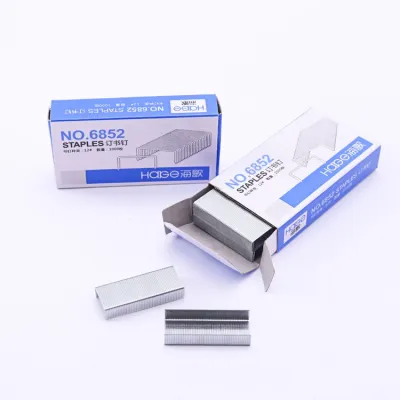
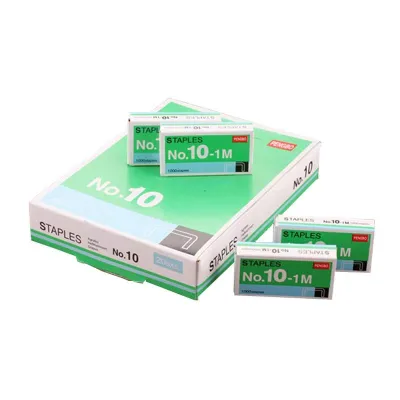
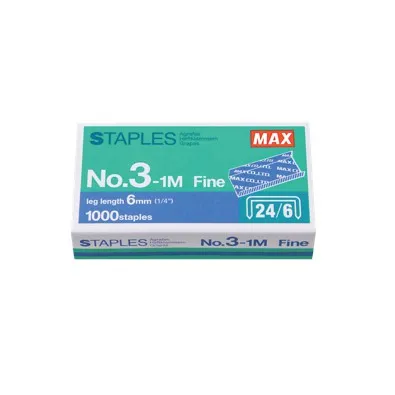
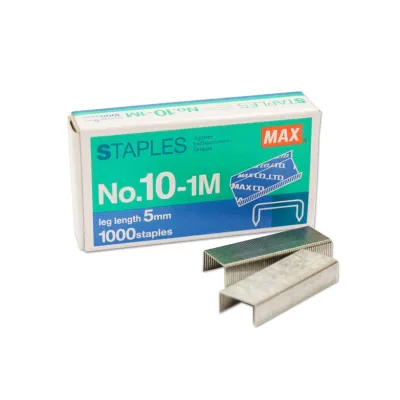
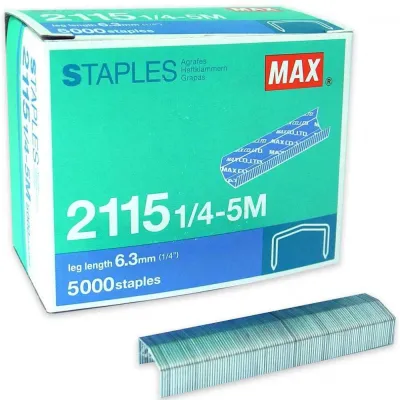
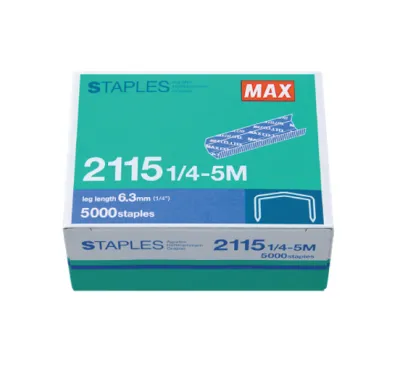
Prices are valid at publication and may change. Please refer to the product page for the latest price.
Decoding Staple Numbers: Wire Gauge and Leg Length
The numbers printed on a box of staples can seem like a confusing math fraction, but they represent two very straightforward physical measurements: wire gauge and leg length. In a standard size designation like 26/6, the first number (26) refers to the wire gauge, which indicates the thickness of the metal wire. Counterintuitively, a higher gauge number means a thinner wire. Therefore, a 26-gauge staple is thinner and more flexible than a 24-gauge staple. Thinner wires make smaller holes in your child’s schoolwork, which keeps the pages looking neat and tidy.

The second number in the sequence (6) represents the leg length measured in millimeters. This measurement is crucial because it determines how many sheets of paper the staple can successfully penetrate and fold over. A standard 6 mm leg length is designed to pierce through a modest stack of paper, typically up to 20 or 25 sheets of standard 80 gsm paper, before folding flat. For portable school supplies, the No. 10 staple is a unique regional standard that is smaller overall, featuring a leg length of approximately 5 mm and a narrower crown (the horizontal top bar), making it ideal for light, daily homework tasks.
Matching Staple Sizes to Typical Schoolwork
Matching the staple size to your child’s specific academic workload prevents loose pages and messy submissions. For daily worksheets, short spelling lists, and homework packets consisting of two to ten pages, a compact stapler using No. 10 staples is highly efficient. These smaller staples keep the corners of the pages low-profile, preventing bulky lumps when multiple worksheets are filed together in a school ring folder.
For older students in secondary school or pre-university programs who frequently compile thick lab reports, history essays, or multi-page project drafts, standard 26/6 staples are much more appropriate. If your child tries to bind a 30-page report with a No. 10 or a standard 26/6 staple, the legs will not be long enough to push through the entire stack and fold securely, leaving sharp, exposed metal points that can scratch fingers or snag other papers. Always check the school’s official stationery list at the start of the year; some teachers specify a preference for standard-sized submissions to ensure compatibility with school filing systems.
Purchasing and Storing Staples for the School Year
When stocking up on school supplies, it is tempting to buy the largest bulk boxes available to save money. However, a single student rarely goes through thousands of staples in one academic year. A standard box of 1,000 to 5,000 staples is usually more than enough to last from January to November. Saving a few cents on a massive bulk box that costs S$3 to S$5 is not worth the risk of rust and degradation over the long school year.
To keep your stationery supply in top condition, store spare staple boxes in airtight plastic containers or resealable bags alongside a small packet of silica gel. This simple step prevents moisture from oxidizing the metal, ensuring the staples slide smoothly through the loading chamber when needed. Additionally, clearly label your storage drawers if you keep multiple sizes at home. Mixing No. 10, 24/6, and 26/6 strips in the same drawer often leads to accidental cross-loading, which is the primary cause of jammed staplers during busy exam preparation weeks.
Frequently Asked Questions (FAQ)
Can I use 26/6 staples in a stapler designed for 24/6?
In many standard desktop staplers, 26/6 and 24/6 staples can be used interchangeably because they share the exact same 6 mm leg length and crown width. However, the 26/6 staple is made of thinner wire than the 24/6 staple. While a 26/6 staple will usually feed through a 24/6 stapler without issue, the thinner wire might occasionally bend or buckle if you try to staple thicker stacks of paper. Always check the underside of your stapler or the manufacturer’s user guide to see if it explicitly supports both wire gauges before mixing them.
What should I do if the staples keep jamming or bending?
If your stapler frequently jams or bends the wire into unusable shapes, start by opening the top cover and clearing out any fragmented staple pieces from the drive channel. Next, verify that the staple strip size matches the exact specifications engraved on the stapler’s base. If the sizes match, check the paper stack thickness; you may be trying to force the staple through more sheets than its leg length can handle. Finally, inspect the staple strip itself inside the loading chamber to ensure it is not broken into tiny, disconnected segments, which prevents the internal spring from feeding the staples forward evenly.
Community discussion
Share your experience or ask a question. Comments are reviewed before publication.