
Finding the right shipping box size is essential for protecting your items, reducing packaging waste, and keeping shipping costs manageable. Selecting the correct fit requires understanding how these dimensions are measured and how much extra space is needed for protective cushioning. By matching your items to the correct box category and measuring accurately, you can ensure your shipments arrive safely without paying for unnecessary dimensional weight.
Understanding Standard Shipping Box Size Categories
Shipping boxes are generally grouped into broad categories—small, medium, and large—to help businesses and individuals quickly identify the right packaging for their needs. Small boxes are typically used for lightweight items such as books, stationery sets, cosmetics, or small electronics. Medium boxes often accommodate larger stacks of documents, clothing, or multiple smaller items bundled together. Large boxes are reserved for bulky goods, household items, or multiple orders shipped in a single container.
When browsing box options, it is critical to understand how manufacturers list dimensions. Packaging specifications are almost always presented as Length x Width x Depth (or Height), representing the opening of the box and its depth. However, these measurements can refer to either internal or external dimensions. Internal dimensions indicate the actual usable space inside the box, which is the most important figure for determining if your items will fit. External dimensions represent the outer footprint of the box, which determines how much space it occupies in a delivery vehicle and how couriers calculate shipping fees.
Products mentioned in this guide
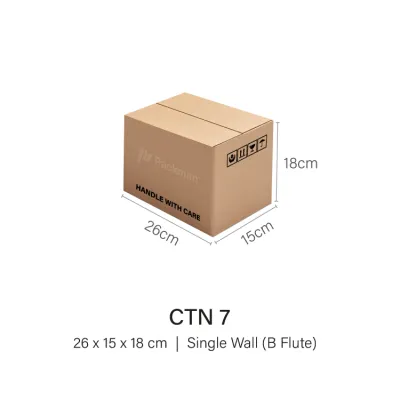
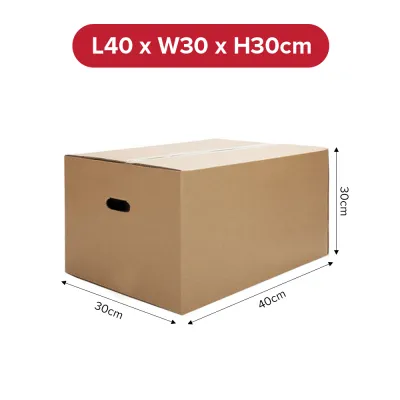

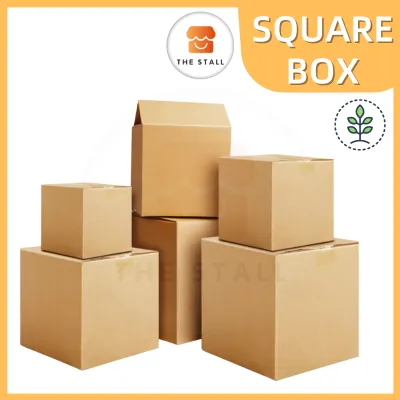
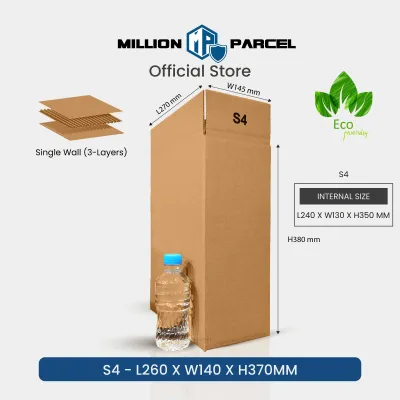
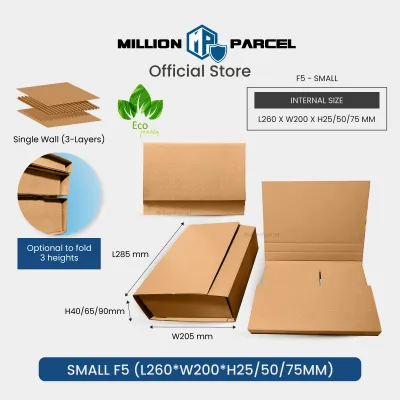
Prices are valid at publication and may change. Please refer to the product page for the latest price.
Relying solely on generic labels like “medium” or “large” can lead to shipping errors, as standard sizes vary significantly between different manufacturers and courier services. A “medium” box from one supplier might be several centimeters smaller than a “medium” box from another. Always verify the exact millimetre or centimetre measurements provided in the product specifications rather than assuming a generic category will meet your requirements.
How to Measure Your Items for Shipping
To find the correct box size, you must first measure the items you plan to ship. Start by placing the item, or the group of items, on a flat surface exactly as they will be arranged inside the box. Use a reliable measuring tape or ruler to find the maximum length, width, and height of the arrangement. If you are shipping multiple items together, stack or arrange them in their most compact, stable configuration before taking these measurements.

Once you have the base dimensions of your items, you must calculate and add clearance for protective packaging. Fragile items, such as glassware or delicate stationery, require cushioning materials like bubble wrap, packing peanuts, or crumpled paper to absorb shocks during transit. As a general rule, you should add a consistent clearance margin—typically between 2.5 to 5 centimeters on all sides—to the dimensions of your items to accommodate this protective layer.
Irregularly shaped items, such as rolled posters, triangular tubes, or molded plastic goods, require a bounding box approach. To measure these items, imagine them enclosed in a tight, invisible rectangular box. Measure the absolute longest, widest, and tallest points of the item to determine this bounding box. This ensures that even the most unusually shaped products have enough clearance to fit inside a standard rectangular shipping carton without stretching or tearing the cardboard.
Selecting the Right Fit to Minimize Void Fill and Costs
Choosing a box that is too large for your items leads to excessive void fill requirements, which increases both material waste and packing time. When there is too much empty space inside a carton, items are more likely to shift during transit, increasing the risk of damage. Using excessive bubble wrap or paper stuffing to fill these gaps also adds unnecessary weight and expense to your packaging process.
Furthermore, shipping costs are heavily influenced by dimensional weight, a calculation method used by couriers to estimate the space a package occupies relative to its actual weight. If you use an oversized box for a lightweight item, you may be charged based on the box’s external volume rather than its actual weight. Selecting a box that closely matches the dimensions of your item, plus the necessary protective cushioning, helps you avoid these costly dimensional weight surcharges.
To balance protection, availability, and cost-efficiency, use a simple decision checklist when selecting your packaging. First, verify if a standard, readily available box size can accommodate your item with the required clearance. Second, compare the cost of adding void fill in a slightly larger standard box against the cost of sourcing a custom-sized box. Finally, check the dimensional weight thresholds of your preferred courier service to ensure your selected box size does not trigger higher shipping rates.
Frequently Asked Questions (FAQ)
Does the thickness of the cardboard affect the internal space?
Yes, the thickness of the cardboard directly impacts the usable space inside a shipping box. Single-wall corrugated boxes are thinner and lightweight, making them ideal for standard items where internal space matches external dimensions closely. Double-wall corrugated boxes feature an extra layer of fluting for enhanced stacking strength and protection, but this added thickness reduces the internal dimensions. When shipping tight-fitting or fragile items, always verify the internal specifications to ensure the thicker walls do not compress your goods.
How do I measure a shipping box for courier requirements?
Couriers calculate shipping rates and dimensional weight based on the outermost dimensions of a fully packed and sealed box. To measure for courier requirements, use a tape measure to find the maximum length, width, and height from the outside of the box. Be sure to measure from the widest points, including any bulging sides, folded flaps, external tape, or shipping labels. Even minor protrusions can alter the courier’s automated scanning measurements, potentially leading to unexpected shipping adjustments or fees.
Community discussion
Share your experience or ask a question. Comments are reviewed before publication.