
Selecting the correct parcel box size requires balancing the physical dimensions of your item, the thickness of protective cushioning, and the pricing structures of shipping couriers. While standard box sizes exist across the packaging industry, they serve as general categories rather than universal templates. To find the ideal carton, you must measure your items accurately, account for protective void fill, and understand how outer dimensions impact shipping fees.
Decoding Standard Parcel Box Dimensions
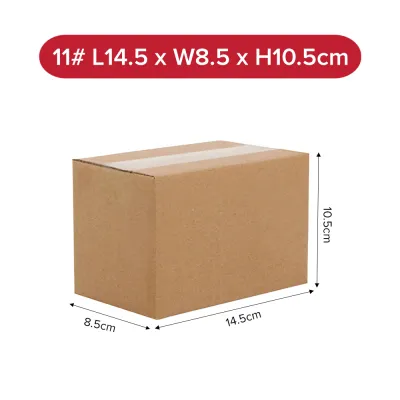
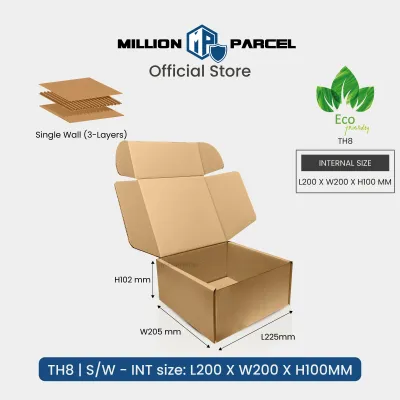
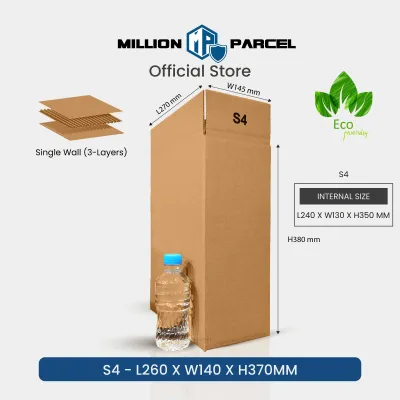
When browsing for a parcel box, the dimensions listed by manufacturers almost always refer to the internal space of the carton. This is critical because inner dimensions dictate the actual packing capacity, ensuring your items fit comfortably inside. The outer dimensions, which include the thickness of the corrugated cardboard walls, are slightly larger and are primarily used by courier services to calculate shipping space and volumetric weight.
The packaging industry follows a standardized order when listing dimensions: Length x Width x Height (or Depth). Length is the longest side of the box’s opening, Width is the shorter side, and Height is the distance from the opening to the bottom. Misinterpreting this sequence can lead to purchasing a box that opens awkwardly or fails to accommodate the orientation of your items.
Products mentioned in this guide
Prices are valid at publication and may change. Please refer to the product page for the latest price.
Standard size tiers—such as small, medium, large, and extra-large—are helpful starting points, but they are not universally fixed. Instead of relying on these broad labels, always look for the exact millimeter or centimeter measurements provided in the product specifications. Outer dimensions become highly critical when calculating the volumetric weight of your shipment, as couriers use these external measurements to determine how much physical space your package occupies in their transport vehicles.
How to Measure and Calculate the Required Box Size
To determine the exact parcel box size you need, start by measuring the item you intend to ship. Use a reliable measuring tape or ruler to find the absolute maximum length, width, and height of the object, measuring from the outermost points, including any protruding parts or original retail packaging.

Once you have these base measurements, calculate the necessary clearance for protective packaging. Items should never touch the inner walls of the parcel box directly. Depending on the fragility of the item, you will need to add a buffer of space on all sides to accommodate bubble wrap, packing paper, foam inserts, or biodegradable packing peanuts.
Next, factor in the thickness of the box walls when transitioning from your required inner space to selecting a listed product. Corrugated cardboard has a physical thickness that varies depending on whether it is single-wall or double-wall construction. If you only measure the item and the padding, and then buy a box with those exact outer dimensions, the internal space will be too small.
Finally, check the fit by visualizing the item’s orientation within the box. Placing an item flat, diagonally, or upright can drastically change the amount of empty space left over. Aim to minimize wasted space while maintaining a safe buffer of cushioning. A well-fitted box reduces the amount of void fill required, lowers your shipping costs, and prevents the item from shifting violently during transit.
Evaluating Box Strength and Material Specifications
Choosing the right parcel box size is only half the battle; you must also ensure the box material can withstand the rigors of transit. Corrugated cardboard boxes are generally categorized as single-wall or double-wall. Single-wall boxes consist of one wavy fluted layer sandwiched between two flat linerboards, offering a lightweight and cost-effective solution for everyday shipping of light to medium items. Double-wall boxes feature two layers of fluting and three linerboards, providing heavy-duty protection, superior stacking strength, and excellent resistance to punctures.
The wavy middle layer, known as the fluting, comes in various profiles that influence the box’s performance. B-flute is highly common, offering good puncture resistance and a relatively smooth surface for printing labels. C-flute is slightly thicker, providing better stacking strength and cushioning for general shipping. E-flute is very thin and flat, making it ideal for small, lightweight retail boxes where a sleek appearance and precise folds are more important than heavy-duty crush resistance.
To verify structural integrity, look for the Box Maker’s Certificate (BMC) usually printed on one of the bottom flaps. This circular stamp provides official ratings, such as the Edge Crush Test (ECT) or burst strength. The ECT rating measures the box’s ability to withstand vertical crushing forces when stacked in a warehouse or delivery truck.
However, always check the manufacturer’s stated maximum weight limits rather than assuming thicker cardboard automatically translates to higher weight capacity. A double-wall box might look sturdy, but if the adhesive or paper quality is low, it may fail under heavy loads. Always cross-reference the weight of your packed items with the certified limits printed on the BMC to ensure safe handling.
Adjusting Box Choices for Different Item Types
Different types of goods require distinct packaging strategies to ensure they arrive undamaged. Fragile items, such as glassware, ceramics, or delicate electronics, require a specialized approach. For these goods, choose a box that allows for a smaller inner clearance to prevent the item from shifting, but fill that clearance with high-density cushioning layers. The goal is to isolate the item completely from external shocks while keeping it firmly anchored in the center of the box.
Irregularly shaped objects, such as sporting goods, tools, or decorative sculptures, present a different challenge. Instead of searching for a highly customized carton that matches the odd shape, it is often more practical to select a larger standard box. You can then use custom-fitted dunnage, molded pulp, or crumpled paper to fill the irregular voids, ensuring the object cannot slide around or pierce the cardboard walls.
Heavy, dense items like books, metal hardware, or liquid containers demand smaller footprints with high ECT ratings. Packing heavy items into a large box makes the package incredibly difficult to lift and increases the risk of a bottom blowout, where the weight of the contents tears through the bottom flaps. A smaller, highly robust double-wall box keeps the weight concentrated and manageable for delivery personnel.
When bundling multiple items in a single parcel box, avoid letting them contact each other directly. Use cardboard dividers, corrugated partitions, or individual bubble wrapping to isolate each item. This prevents internal damage caused by items knocking against one another during transit and helps distribute the weight evenly across the bottom of the box.
Frequently Asked Questions (FAQ)
Does the outer dimension of a parcel box affect shipping costs?
Yes, the outer dimensions of a parcel box directly impact shipping costs through a pricing method known as volumetric weight. Couriers calculate this by multiplying the box’s outer length, width, and height, then dividing by a standard shipping factor. You are charged based on whichever is greater: the actual physical weight or the volumetric weight. Minimizing empty space and choosing the smallest possible box for your item helps you avoid paying extra to ship air, saving you from unexpected surcharges of S$5 to S$15 or more on your shipping bill.
How much extra space should I leave inside the box for padding?
As a general rule of thumb, leave a clearance of at least 5 centimeters of space on all sides of your item for protective padding. For highly fragile items, increase this buffer to 8 centimeters. The exact space required depends on the item’s fragility and the type of void fill used; lightweight bubble wrap requires less space to cushion effectively than loose-fill packing peanuts, which need more volume to prevent settling.
Can I reuse an old parcel box for shipping?
You can reuse an old parcel box, but you must carefully inspect its structural integrity first. Check for signs of compromise such as crushed corners, deep creases, moisture damage, soft spots, or torn flaps, as these can reduce the box’s stacking strength by up to 50 percent. Additionally, ensure you completely remove or black out all old shipping labels, barcodes, and addresses to prevent sorting errors and delivery delays at the courier facility.
Community discussion
Share your experience or ask a question. Comments are reviewed before publication.