
Selecting the right mover box involves balancing volume with weight. If you pack heavy items in a large box, the bottom can fail, and lifting it becomes a physical hazard. Conversely, packing light items in small boxes leads to unnecessary trips and inefficient space utilization in the moving vehicle. Standardizing your carton selection based on item density ensures that your belongings remain secure and your move proceeds smoothly.
To pack efficiently, you must match the physical characteristics of your goods to the specific dimensions and structural ratings of your cartons. Standard moving boxes are engineered to handle distinct weight thresholds and item profiles. By understanding how these sizes function, you can systematically organize your household, protect fragile items, and prevent physical strain during transit.
Understanding Standard Mover Box Dimensions
Standard mover boxes are categorized by their volume and dimensions, typically ranging from small utility cartons to expansive extra-large containers. A standard small box usually measures around 1.5 cubic feet (approximately 40 x 30 x 30 cm), making it highly manageable for a single person to carry. Medium boxes generally offer about 3.0 cubic feet of space (roughly 45 x 45 x 40 cm), serving as the versatile workhorse of most residential moves. Large boxes expand to approximately 4.5 cubic feet (often 60 x 45 x 45 cm), while extra-large boxes can exceed 6.0 cubic feet, designed specifically for items that take up significant space without adding substantial weight.
Products mentioned in this guide
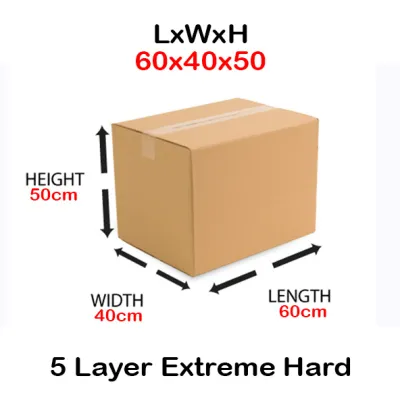
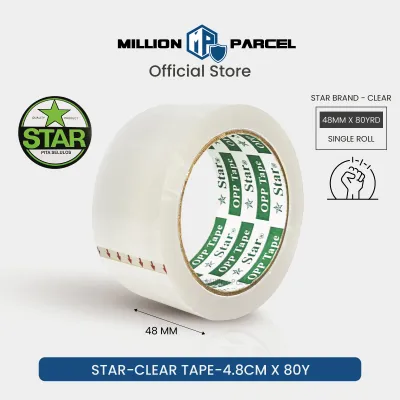
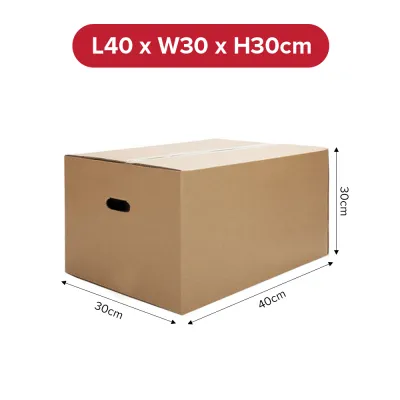
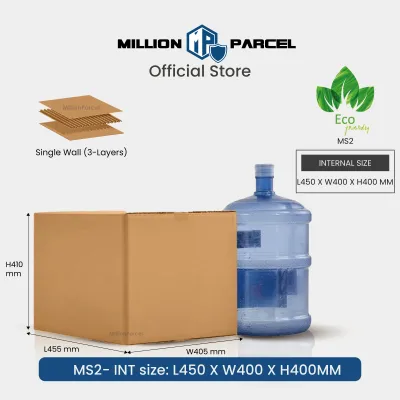
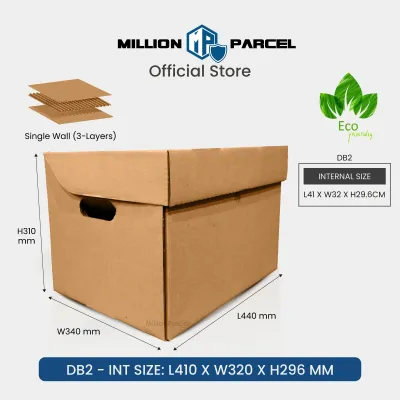
Prices are valid at publication and may change. Please refer to the product page for the latest price.
Beyond physical dimensions, the structural integrity of a carton depends heavily on its corrugated construction. Single-wall corrugated boxes consist of a single fluted medium glued between two flat linerboards, which provides sufficient strength for standard, lightweight household goods. For heavier items, fragile electronics, or long-distance transit where boxes are stacked high, double-wall corrugated boxes—featuring two layers of fluted medium—offer significantly higher resistance to crushing and puncture.
Before loading any carton, you should locate and inspect the manufacturer’s certification stamp, usually printed on the bottom flaps of the box. This circular stamp provides critical specifications, including the Edge Crush Test (ECT) rating or the bursting test limit. The ECT rating measures the box’s ability to withstand top-to-bottom crushing forces, which is essential when stacking cartons in a moving truck. Checking these labels ensures you do not exceed the maximum gross weight limit specified by the manufacturer, protecting both your belongings and the individuals handling the boxes.
Matching Box Sizes to Household Items
Systematically sorting your belongings by weight and fragility is the most effective way to determine which box size is appropriate. Grouping items by density prevents structural failures and optimizes the physical layout of the moving vehicle.

Small Boxes for Heavy and Dense Items
The physics of packing dictates that high-density items must always be placed in smaller cartons. When heavy objects are concentrated in a large space, they exert immense concentrated pressure on the bottom seams, significantly increasing the risk of a sudden blowout during transport. Furthermore, keeping dense items in small boxes limits the total weight of the package, ensuring that the loaded carton remains within a safe lifting range for a single person.
Ideal candidates for small boxes include books, files, vinyl records, cast-iron cookware, hand tools, and heavy pantry items like canned goods. These items pack tightly together, leaving minimal empty space and preventing shifting. When packing books, place them flat or spine-to-spine to protect the bindings, and fill any remaining small gaps with crumpled paper.
Before sealing a small box, perform a simple lift test to verify its weight. If the box feels excessively heavy or if you observe the cardboard bowing outward, redistribute the contents immediately. Never fill a small box to the point where the top flaps cannot meet flat, as bulging tops prevent stable stacking and compromise the structural integrity of the entire stack.
Medium Boxes for Everyday Household Goods
Medium boxes provide the optimal balance of volume and weight capacity, making them the most frequently used cartons during a residential move. They are designed to hold moderately heavy items that are too bulky for small boxes but too heavy to be packed safely in large containers. This size is highly versatile, allowing you to pack a wide variety of everyday household goods without exceeding safe lifting limits.
You should reserve medium boxes for items such as shoes, toys, small kitchen appliances, pots and pans, folded linens, and clothing. When packing kitchenware, place heavier pots at the bottom and lighter pans or plastic containers on top. This distribution keeps the center of gravity low, making the box much easier and safer to carry.
The uniform size of medium boxes offers a distinct advantage when loading a moving truck or stacking items on pallets. They nest together cleanly, minimizing empty spaces in the cargo hold and preventing shifting during transit. To maximize this benefit, ensure that each medium box is packed firmly to the top so it does not collapse when another carton is stacked on top of it.
Large and Extra-Large Boxes for Bulky, Light Items
Large and extra-large boxes are designed exclusively for voluminous, low-density items. A common packing mistake is filling these large volumes with heavy goods, resulting in a carton that is impossible to lift safely and highly prone to structural failure. By restricting these oversized cartons to lightweight items, you protect your back and ensure the boxes maintain their shape.
These large containers are ideal for items such as pillows, duvets, winter coats, stuffed toys, sleeping bags, and lightweight lampshades. When packing these items, compress them gently to maximize space, but avoid forcing them to the point where the sides of the box bulge outward.
Because lightweight items are often compressible, using appropriate void fill is essential to prevent the box from collapsing under the weight of other cartons. If a large box is only partially filled, the empty space at the top will allow the box to crush when stacked. Fill any remaining voids with clean packing paper, bubble wrap, or air pillows to maintain the box’s structural shape and prevent the contents from shifting during transit.
Specialty Boxes for Fragile and Awkward Items
Standard rectangular cartons are not always suitable for items with unusual dimensions or high fragility. Specialty boxes are engineered to address these specific challenges, offering tailored protection and structural support that standard boxes cannot provide. Investing in these purpose-built containers reduces the risk of damage to valuable or awkwardly shaped household goods.
Wardrobe boxes are a prime example, featuring a built-in metal hanging bar that allows you to transfer clothing directly from your closet without removing the hangers. This design prevents wrinkles, saves significant packing time, and protects delicate garments from being crushed. The empty space at the bottom of a wardrobe box can also be utilized for lightweight, bulky items like shoes or pillows.
For flat, fragile items such as large mirrors, framed artwork, and flat-screen televisions, specialty picture and mirror boxes are indispensable. These cartons often feature telescoping designs that slide together to fit the exact dimensions of the item. Before purchasing specialty boxes for electronics, always verify the internal dimensions against your specific device to ensure a snug fit, and use custom foam inserts or corner protectors to prevent movement.
How to Verify Box Quality and Packing Readiness
Before you begin packing, conducting a thorough inspection of your materials is crucial to ensure they can withstand the rigors of transit. Structural failures during a move are often preventable by identifying compromised cartons and using correct sealing techniques.
Begin by visually inspecting each box for signs of wear or damage. Look closely for deep creases, water stains, soft spots, or flattened corrugated flutes along the edges. If a box has been exposed to moisture or has lost its stiffness, its load-bearing capacity is severely compromised, and it should not be used for heavy or fragile items.
The method you use to seal your boxes is just as important as the quality of the cardboard itself. Use high-quality packing tape with a minimum width of two inches (approximately 50 mm) to ensure strong adhesion. Apply the H-taping method to both the top and bottom seams: seal the center seam first, allowing the tape to extend several inches down the sides, and then seal the exposed side edges to form an “H” shape. This technique reinforces the corners and prevents the flaps from pulling apart under pressure.
Finally, prepare your cushioning and void-fill materials before loading your items. Keep a supply of bubble wrap for fragile surfaces, clean kraft paper for wrapping and filling empty spaces, and foam peanuts or air pillows for shock absorption. Having these materials ready allows you to pack systematically, ensuring that every item is insulated from impact and cannot move within its carton.
Decision Framework: Choosing the Right Box for Your Move
To streamline your packing process, use this simple decision framework to match each household item to the correct carton type:
- Choose a small box if the items are dense, heavy, or consist of many small, solid objects. This includes books, tools, canned goods, and heavy cookware.
- Choose a medium box if the items have moderate volume and uniform weight. This is your default choice for shoes, toys, small appliances, and folded clothing.
- Choose a large or extra-large box if the items are voluminous but extremely lightweight. Use these for bedding, pillows, winter coats, and soft toys.
- Verify specialty requirements first if the item is highly fragile, unusually shaped, or requires specific internal dimensions. Use wardrobe boxes for hanging clothes, telescoping boxes for mirrors, and custom cartons for electronics.
Frequently Asked Questions (FAQ)
Can I reuse grocery or delivery boxes for moving?
Reusing grocery or delivery boxes is a common way to save money, but it comes with distinct structural and hygiene risks. These boxes have often undergone significant stress during transit, which degrades the corrugated flutes and weakens the corners, making them prone to collapsing when stacked. Additionally, food-grade cartons can harbor moisture, food residues, or pests, which can transfer to your household goods. If you choose to use repurposed boxes, restrict them to lightweight, non-fragile items, and carefully inspect them for cleanliness and structural integrity beforehand.
How do I estimate the total number of boxes needed for my home?
Estimating the number of boxes required depends on the size of your home and your lifestyle. A general baseline is to allocate approximately 15 to 20 boxes of various sizes per room, though this number should be adjusted based on the density of your belongings. If you have extensive book collections, large wardrobes, or numerous kitchen gadgets, you will need to increase your estimate accordingly. To avoid mid-move delays, consider purchasing your boxes in phases or keeping a buffer of unflattened cartons that can be returned to the retailer if they remain unused.
Community discussion
Share your experience or ask a question. Comments are reviewed before publication.