
Choosing the right courier bag size is essential for protecting your shipments, minimizing postage costs, and ensuring a professional presentation upon delivery. While standard sizes exist, the actual usable space is always smaller than the flat dimensions of the bag due to the thickness of the item being packed. Matching your item’s physical profile to the bag’s usable space prevents transit damage and keeps shipping fees efficient.
Decoding Courier Bag Dimensions and Labeling
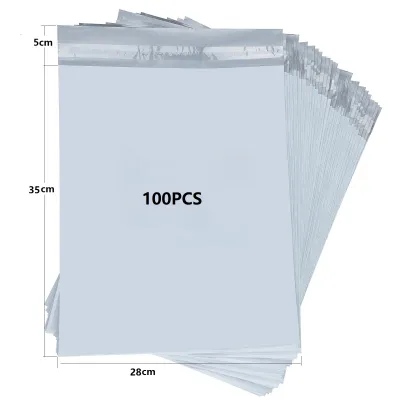
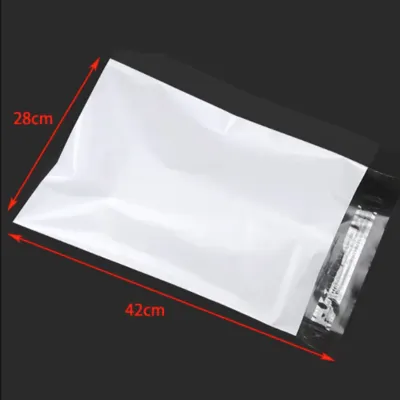
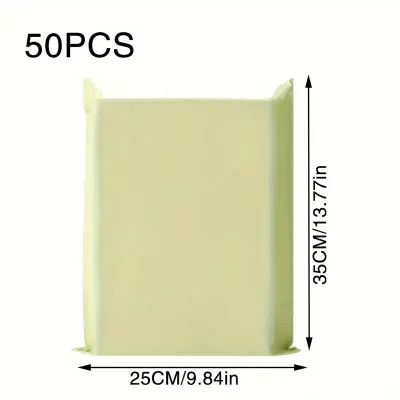
When browsing shipping supplies, you will typically see courier bags labeled with flat dimensions, such as 250 mm x 350 mm. The first number represents the width, while the second represents the length of the bag’s main pocket. It is crucial to note that the adhesive flap, which seals the bag, is usually an additional 40 mm to 50 mm extending beyond this length. Because labeling standards can vary between packaging manufacturers, always verify whether the stated length includes or excludes this flap before purchasing.
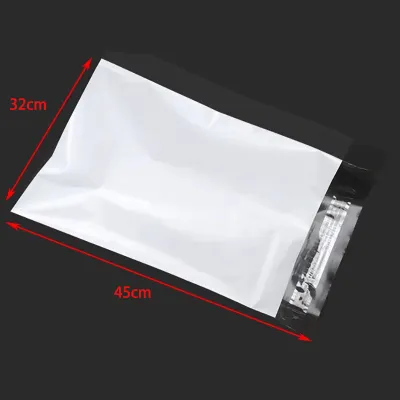
To simplify selection, manufacturers often group bags into general size categories. Small bags (roughly A5 size, around 170 mm x 250 mm) work well for jewelry, cosmetics, or small accessories. Medium bags (roughly A4 size, around 250 mm x 350 mm) are ideal for single t-shirts, books, or stationery. Large bags (A3 size or larger, starting around 350 mm x 450 mm) accommodate bulky winter wear, shoeboxes, or multi-item orders. Always check the manufacturer’s detailed specification sheet to confirm the exact interior dimensions before committing to a bulk order.
Products mentioned in this guide
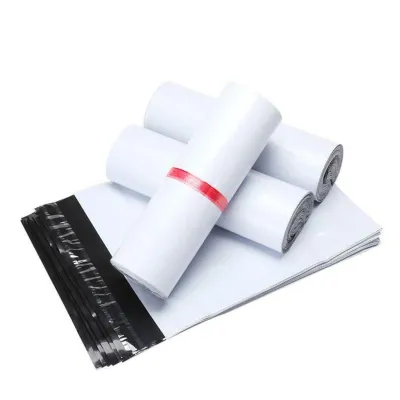
![[SG SELLER] 100 pcs Polymailer Plastic Mailers Packaging Courier Bag Storage Self-Adhesive Glossy Mailing Waterproof](https://img.lazcdn.com/g/p/05adb6ece2ae50bc64aa493b6fbe756d.png_400x400q80.png_.webp)
Prices are valid at publication and may change. Please refer to the product page for the latest price.
How to Measure and Calculate the Perfect Fit
To avoid the frustration of a bag that is too tight to seal or so loose that the contents slide around, you can use a straightforward mathematical formula. First, measure your item’s maximum width, length, and thickness (height) using a standard measuring tape or ruler. For rigid items like books or boxed goods, the bag must accommodate the three-dimensional volume without stretching.

Use the following formulas to determine the minimum bag dimensions required:
- Required Bag Width = Item Width + Item Thickness + 20 mm (allowance)
- Required Bag Length = Item Length + Item Thickness + 15 mm (allowance)
For example, if you are shipping a rigid rectangular book that is 180 mm wide, 240 mm long, and 30 mm thick, your minimum bag width should be 180 + 30 + 20 = 230 mm. Your minimum bag length should be 240 + 30 + 15 = 285 mm. This ensures the item slides in easily without tearing the seams.
When dealing with flexible items like clothing, textiles, or plush toys, the calculation is more forgiving because these items can be folded, compressed, or reshaped. However, highly compressed items exert outward pressure on the seams of the bag. For these compressible goods, add an extra 30 mm to 40 mm of allowance to both the width and length to prevent the seams from splitting during transit.
Evaluating Thickness, Seals, and Material Specs
Beyond physical dimensions, the structural integrity of a courier bag determines how well it survives the shipping process. Material thickness is typically measured in microns (mic) or mils (thousandths of an inch). Standard poly mailers generally range from 50 to 60 microns in thickness, which offers a reliable balance of flexibility and puncture resistance for lightweight items. For heavier or sharp-edged goods, look for heavy-duty bags rated at 75 microns or higher.
The closure mechanism is another critical factor. Most high-quality courier bags feature a tamper-evident, destructive hot-melt adhesive strip. Once pressed closed, this adhesive forms a permanent bond that cannot be peeled open without visibly tearing the plastic, providing excellent security against unauthorized access. Conversely, some bags feature resealable adhesive strips or zipper closures; while these are highly convenient for customer returns, they offer lower security and are best suited for hand-delivery or low-risk transit.
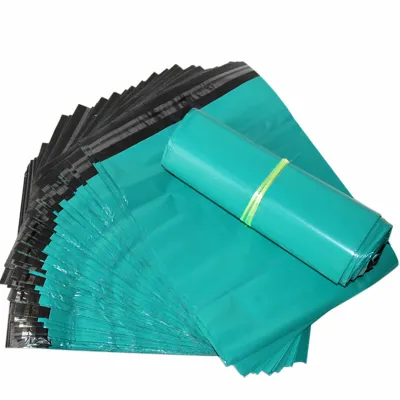
Additionally, consider the opacity of the material. Co-extruded polyethylene bags feature a dual-layer construction—typically a white or colored exterior for branding and a black or grey interior lining. This design ensures opacity, preventing anyone from seeing the contents of the package. While these visual and security specifications do not alter the physical dimensions of the bag, they are vital for protecting customer privacy and maintaining brand professionalism.
Sizing Strategies for Common E-commerce Products
Different product categories require distinct packaging strategies to balance protection, cost, and presentation.
For apparel and textiles, flexibility is your greatest advantage. T-shirts, jeans, and soft accessories can easily conform to the shape of a flexible poly mailer. When packing these items, focus on folding them neatly to minimize bulk, and choose a bag with high tear resistance. Because fabric is highly compressible, you can often use a slightly smaller bag than the flat measurements suggest, provided the material has enough elasticity to handle the bulge without tearing.
For rigid goods, books, and boxed items, precise 3D measurement matching is non-negotiable. Unlike clothing, rigid items will not yield to a tight bag. If you force a hard-covered book or a plastic toy into a bag that is too small, the sharp corners will easily puncture the thin plastic film. For these items, always round up your calculations and consider using padded bubble mailers or adding cardboard corner protectors to shield the edges from impact.
Fragile, delicate, or highly irregular items require an entirely different approach. Standard, unpadded courier bags offer virtually no impact protection. If you are shipping glassware, ceramics, delicate electronics, or intricate artwork, a flexible bag is unsuitable. In these scenarios, you must use a sturdy corrugated cardboard box paired with appropriate void fill, such as bubble wrap, packing peanuts, or crumpled kraft paper, to absorb shocks during handling.
Frequently Asked Questions (FAQ)
Is a standard courier bag safe for fragile items?
Standard poly mailers and courier bags lack the structural rigidity and cushioning necessary to protect breakable goods from drops, pressure, and impact during transit. If an item is fragile, it should be packed in a rigid corrugated box with ample cushioning material, or at minimum, a heavily padded specialty bubble mailer for semi-fragile, flat items.
How can I verify if a courier bag is truly waterproof?
Most standard courier bags made from low-density polyethylene (LDPE) are naturally water-resistant and will protect contents from light rain or humidity. To verify complete water protection, inspect the quality of the side seams to ensure they are fully sealed without gaps, and test a sample bag by placing a dry paper towel inside, sealing it, and exposing the exterior to water droplets or a light spray.
Community discussion
Share your experience or ask a question. Comments are reviewed before publication.