
Finding a spiral notebook that resists ink bleeding and feathering requires looking past generic marketing claims. No single brand offers a universal guarantee of zero bleed-through across every writing instrument. Instead, preventing these ink issues depends entirely on matching the specific paper specifications—such as weight, sizing, and finish—to the ink volume and flow of your preferred pens. To secure a clean writing experience, buyers must learn to decode manufacturer specifications rather than relying on vague “premium paper” labels. By understanding how paper density (measured in grams per square meter) and surface treatments interact with different inks, you can reliably select a notebook that keeps your notes crisp and legible on both sides of the page. The immediate next steps involve checking the paper’s technical specifications, identifying the presence of surface sizing, and matching these factors to your daily writing tools.
Key Paper Specifications to Compare Across Brands
To objectively compare spiral notebook brands, you must look at the technical metrics printed on the product packaging or listed in the manufacturer’s specifications. The most common and reliable metric is paper weight, measured in grams per square meter (GSM). Standard, budget-friendly spiral notebooks typically feature paper weights between 56 GSM and 70 GSM. While sufficient for basic ballpoint pens, these thin sheets easily succumb to bleeding and feathering when exposed to wet gel pens or fountain pen inks. For reliable ink resistance, look for notebooks offering at least 80 GSM to 90 GSM for general writing, or 100 GSM to 120 GSM if you regularly use heavy gel pens, fountain pens, or mild markers. Higher GSM generally indicates a denser fiber structure, which limits how far ink can sink into the page.
However, paper weight alone does not prevent feathering—the fuzzy, spiderweb-like spreading of ink along paper fibers. This is where sizing and coating play a critical role. Sizing is a chemical treatment applied during manufacturing, either mixed into the paper pulp (internal sizing) or coated onto the dried surface (external sizing). Sizing reduces the paper’s absorbency, forcing the ink to dry on the surface rather than soaking rapidly into the core fibers. Coated papers, which feature a microscopic barrier layer, further restrict ink absorption. This ensures that lines remain sharp and distinct, though it can extend drying times. When comparing brands, look for terms like “sized paper,” “ink-resistant,” or “fountain pen friendly,” which indicate that the paper has undergone these essential surface treatments.
Products mentioned in this guide
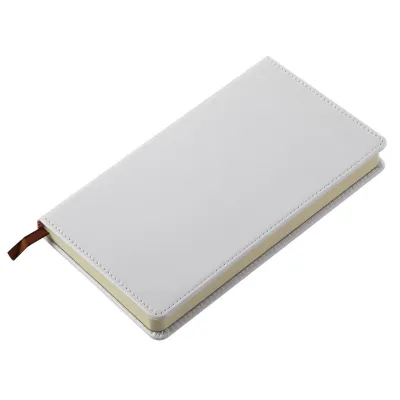
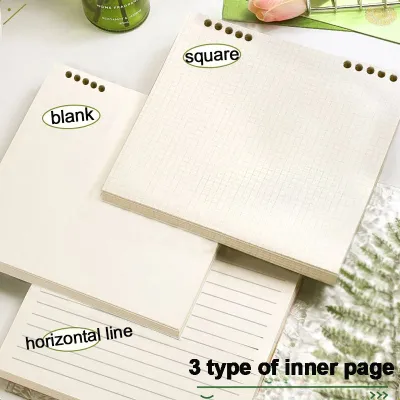
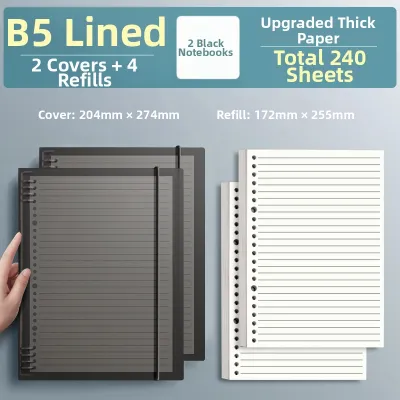
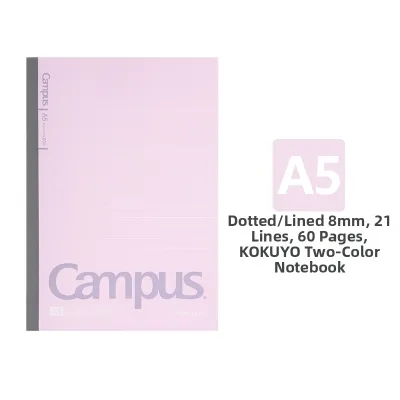
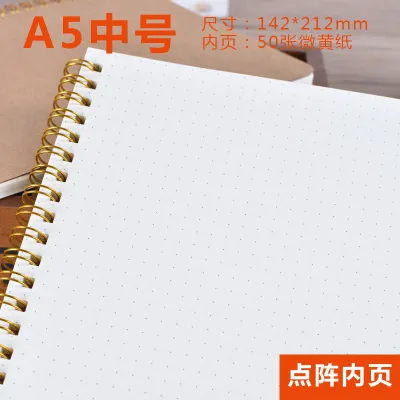
![[SG] APLI MIQUELRIUS A4 & A5 Spiral Bound Notebook | Aurora Series [Evergreen Stationery]](https://img.lazcdn.com/g/p/65ff6bc5328b762a8ec65620884e283c.jpg_400x400q80.jpg_.webp)
Prices are valid at publication and may change. Please refer to the product page for the latest price.
The finish and texture of the paper also dictate how ink behaves. Highly calendered papers—which have been pressed between heavy rollers during production—boast an ultra-smooth finish. This smooth surface is highly desirable for fountain pens and fine-liner gel pens, as it minimizes friction and prevents the nib from catching or picking up loose paper fibers. Conversely, papers with a slight texture or “tooth” provide more resistance. While textured paper can offer a satisfying tactile writing experience, it can sometimes cause gel pens to skip or lay down ink unevenly, potentially leading to localized pooling and subsequent bleed-through.
Finally, understanding the difference between opacity and brightness is crucial when evaluating show-through versus actual bleed-through. Show-through, often called “ghosting,” occurs when you can see the shadow of your writing on the reverse side of the page, even though the ink has not physically penetrated the paper fibers. High-contrast, high-brightness white papers can make ghosting more apparent, even on relatively thick sheets. If you prefer to write on both sides of a page without visual distraction, look for papers with high opacity ratings or opt for off-white, cream, or ivory-colored pages, which naturally reduce the visual contrast of ghosted ink.
Matching Paper Properties to Gel Pens, Fountain Pens, and Markers
Different writing instruments demand distinct paper characteristics to perform optimally. Fountain pens, which utilize highly fluid, water-based inks, require paper with exceptional sizing and a smooth finish. Because fountain pen ink is deposited in a relatively wet pool, unsized paper will immediately draw the liquid outward via capillary action, resulting in severe feathering and immediate strike-through to the next page. To prevent this, fountain pen users should seek out notebooks with highly sized, smooth paper of at least 80 GSM. Be prepared for longer drying times on these surfaces, particularly in humid climates like Singapore’s, where ambient moisture can slow down the evaporation of water-based inks.

Gel pens present a different set of requirements. Gel ink consists of pigment suspended in a water-based gel, which is thicker than fountain pen ink but still prone to smudging if it cannot dry reasonably fast. The ideal paper for gel pens strikes a delicate balance: it must have enough surface sizing to prevent the pigment from bleeding through the page, yet retain enough micro-texture to allow the gel to dry before your hand sweeps across it. For standard gel pens (such as 0.5mm or 0.7mm tips), a mid-weight paper of 80 GSM to 90 GSM with a semi-smooth finish provides a balanced compromise, ensuring crisp lines and manageable dry times.
Markers and highlighters are the most demanding tools for any spiral notebook. Alcohol-based markers are notorious for bleeding through almost all standard notebook papers, regardless of GSM, because the alcohol solvent rapidly dissolves and bypasses typical paper sizing. Water-based highlighters and brush pens can also saturate paper fibers if applied in multiple layers. If your daily workflow involves heavy highlighting or color-coding with markers, standard 80 GSM paper will likely fail. You will need to look for specialized notebooks featuring heavy-duty paper of 120 GSM or higher, or those specifically designated as “marker paper” or “mixed media” books. Alternatively, some notebooks include dedicated plastic or heavy-cardstock bleed-guard pages that you can slide behind your active sheet to protect the subsequent pages.
How to Test and Verify Paper Quality Before Committing
Before investing S$10 to S$30 or more in a premium spiral notebook, or purchasing a multi-pack for school or office use, you can perform simple, low-risk tests to verify the paper’s quality. If you are testing a notebook in a physical store that offers sample sheets, or testing the first page of a newly purchased book, start with the swab and dry test. Dip a cotton swab lightly in water or your preferred ink and draw a single, consistent line across the corner of the page. Observe how the liquid behaves. If the wet line immediately spreads out and blooms like a watercolor painting, the paper lacks adequate surface sizing. If the liquid pools on top of the paper and maintains its shape as it slowly dries, the paper has excellent sizing and will resist feathering.
Next, conduct a pen stroke matrix test using your actual writing tools. Draw a simple grid on an inconspicuous page, using different pens in each row. In the first column, write a single sentence at normal writing speed. In the second column, draw a solid block of color or hold the pen tip in place for two seconds to simulate a heavy ink deposit. This matrix allows you to observe three critical performance factors: how quickly the ink dries, whether the lines feather under normal writing conditions, and how the paper handles heavy, concentrated ink loads.
Once the ink has dried completely, turn the page over to evaluate the back. Hold the sheet up to a standard light source, such as a window or an overhead desk lamp. Distinguish carefully between ghosting and bleeding. If you can see the shape of your writing but the paper remains white and dry to the touch, you are dealing with ghosting, which is a function of paper opacity and color contrast. If you see actual spots of ink color that have penetrated the paper fibers and stained the reverse side, you have encountered bleed-through.
Define clear failure conditions to help you decide when to stop using a particular notebook or return it if the retailer’s policy allows. If your standard gel pen causes immediate strike-through during normal writing, or if the paper fibers begin to pill and tear under the friction of a fine-point pen, the paper is fundamentally incompatible with your tools. Do not force yourself to adapt your writing style to poor paper; instead, use these test results to guide your next purchase toward a higher GSM or better-sized alternative.
Decision Framework: Choosing the Right Spiral Notebook Profile
To simplify your selection process, use this conditional decision framework to match your writing habits with the correct spiral notebook specifications:
- Choose High-GSM, Smooth Paper (90 GSM to 120 GSM) if: Your primary writing instruments are wet fountain pens, broad-nib gel pens, or liquid ink rollerballs. This profile prioritizes absolute line crispness and zero bleed-through. Keep in mind that these notebooks are often heavier, making them slightly less portable, and the smooth, sized paper will require longer drying times, especially in humid environments.
- Choose Mid-Weight, Quick-Dry Paper (80 GSM to 90 GSM) if: You primarily use standard gel pens, ballpoints, or fine-liners for rapid note-taking in lectures or meetings. This profile offers a practical balance, providing sufficient opacity to write on both sides of the page while ensuring that your ink dries quickly enough to prevent smudging as you turn pages.
- Choose Specialized Marker Paper (120+ GSM or Mixed-Media) if: Your work relies heavily on alcohol-based markers, art pens, or intense highlighting. These notebooks are designed to handle heavy liquid saturation without warping or bleeding, though they typically offer fewer pages per notebook due to the thickness of each sheet.
- Verify First if: You regularly mix multiple pen types, such as writing with a fountain pen and highlighting with a water-based marker. In this case, avoid buying bulk packs immediately. Purchase a single notebook to run the pen stroke matrix test, or search specifically for mixed-media spiral notebooks that explicitly state compatibility with both wet and dry mediums.
Community discussion
Share your experience or ask a question. Comments are reviewed before publication.