
Finding the right postal bag size is essential for protecting your shipments, optimizing postage costs, and ensuring a professional presentation. To compare Smartpack postal bag sizes effectively, you must look beyond the basic model numbers and analyze the exact outer and inner dimensions. Because shipping rates in Singapore are often determined by both weight and package volume, selecting an oversized bag can unnecessarily increase your shipping fees in S$, while an undersized bag risks bursting during transit.
By understanding how to read manufacturer size charts, calculating the dimensional displacement of your specific products, and evaluating material specifications, you can confidently select the ideal packaging. This guide breaks down the essential steps to measure your items, interpret sizing labels, and verify current product options before making a bulk purchase.
Decoding Postal Bag Dimension Labels
When browsing through a postal bag size chart, the dimensions listed can sometimes be misleading if you do not know how they are measured. Manufacturers typically display the outer dimensions of the bag, which represent the total flat footprint from edge to edge. However, the usable inner space is always slightly smaller due to side seals and manufacturing tolerances.
Products mentioned in this guide
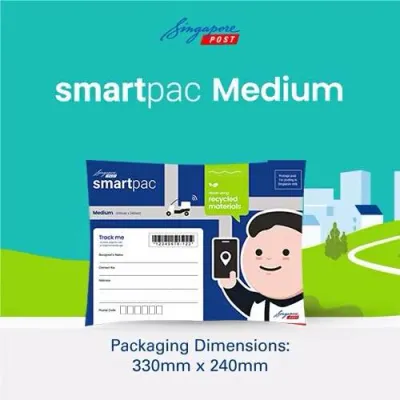
![[SINGPOST] MEDIUM smartpac - A postage-paid packaging for local delivery. Trackable via the SingPost mobile app.](https://img.lazcdn.com/g/p/3360d819ebee92c4900de5d10f98c2e8.png_400x400q80.png_.webp)
![*FREE SHIPPING* [CHOOSE OPTION] Singapore Post Smartpac Small Smartpac Medium Mini Lite 600g 1kg Singpost Smart pac Sing Post PolyM Poly M](https://img.lazcdn.com/g/p/ca35df7d5aaeef118422794879cc317a.jpg_400x400q80.jpg_.webp)
Prices are valid at publication and may change. Please refer to the product page for the latest price.
A critical element to identify on any specification sheet is the sealing flap, often referred to as the lip. This is the extra strip of material at the top of the bag that contains the adhesive line. When you fold this flap over to seal the package, the total length of the bag decreases. If a size chart lists a bag as 300 millimeters in length, you must check whether this includes the flap (which typically adds another 40 to 50 millimeters to the total outer length) or if it represents the body length alone.
Additionally, pay close attention to the units of measurement and thickness indicators. Most regional catalogs use millimeters for width and length, while thickness is measured in microns. A higher micron rating indicates a thicker, more robust plastic film. Understanding these metrics ensures you do not accidentally purchase a bag that is too thin for your contents or miscalculate the physical limits of the packaging.
Calculating the Right Bag Size for Your Items
To determine the minimum bag size required for your inventory, you cannot simply match the flat width and length of your product to the flat dimensions of the mailer. You must account for the three-dimensional volume of the item, which naturally stretches the bag outward and reduces its effective width and length.

To calculate the required dimensions, start by measuring your item’s maximum length, width, and thickness using a standard ruler. For relatively flat items, you only need to add a small margin of about 10 to 20 millimeters to the width and length to allow the item to slide in easily. However, for thicker items, you must apply a basic dimensional allowance. A reliable method is to add the item’s thickness to both its flat width and flat length to find the absolute minimum bag dimensions required.
The physical shape and rigidity of the item also play a major role in this calculation. Rigid objects, such as hardback books, boxed electronics, or wooden toys, have sharp, unyielding corners that require a looser fit to prevent the plastic from puncturing. Flexible items, such as clothing, blankets, or plush toys, can compress easily under pressure. For these soft goods, you can choose a tighter, more form-fitting bag size, which helps minimize excess air and keeps the final package compact.
Evaluating Specifications Beyond Basic Dimensions
While finding the correct width and length is the first step, the overall performance of a postal bag depends heavily on other material specifications. Puncture resistance is directly tied to the thickness of the polyethylene film. If you are shipping items with sharp edges, heavy components, or delicate retail packaging, look for heavy-duty mailers with a higher micron rating to ensure the bag does not tear during sorting and transport.
The type of closure mechanism is another factor that influences both security and usable length. Most modern postal bags feature a self-seal adhesive strip protected by a peel-off backing. Once pressed down, this adhesive forms a permanent bond that cannot be opened without visibly tearing the plastic, providing excellent tamper evidence. If your operations involve high-volume industrial packaging, verify whether the bags are compatible with automated heat-sealing equipment, which can provide an even more secure closure.
Finally, consider the opacity of the material. High-quality shipping bags are co-extruded, meaning they are manufactured with multiple layers of plastic. This process typically results in a dark interior layer (often black or grey) and a light exterior layer. This design ensures the bag is completely opaque, protecting the privacy of the contents and preventing sensitive items from being identified under bright postal sorting lights.
Verifying Current Smartpack Size Options
Because packaging manufacturers frequently update their product lines, introduce eco-friendly material alternatives, or adjust manufacturing tolerances, size catalogs can change over time. To ensure you are ordering the correct SKUs, always verify the latest dimensions directly on the official manufacturer website or through authorized local distributors.
When reviewing product packaging or specification sheets, look for the stated manufacturing tolerances. It is common for plastic mailers to have a tolerance of plus or minus 5 millimeters in width or length due to the high-speed cutting and sealing processes used in production. Factoring this potential variance into your initial calculations will prevent you from choosing a size that is too tight.
If your business requires unique dimensions, custom branding, or specific bulk quantities that are not listed in standard retail catalogs, contact the supplier’s customer support team directly. Many distributors can provide physical sample packs containing various sizes. Testing these sample bags with your actual products under real-world packing conditions is the most reliable way to confirm the fit before committing to a large-scale order.
Frequently Asked Questions (FAQ)
Do I need to account for the adhesive flap when choosing a size?
Yes, you must always account for the adhesive flap when calculating the usable length of a postal bag. In most manufacturer size charts, the listed total length includes the flap. Because this flap must be folded over and sealed to close the bag, the actual usable internal length is shorter. To find the true usable length, subtract the flap’s width—which typically ranges from 40 to 50 millimeters—from the total outer length specified on the packaging.
Can I use a flat postal bag for thick or bulky items?
You can use flat postal bags for bulky items, but you must select a significantly larger size than the item’s flat dimensions suggest. When a flat bag expands to accommodate a thick object, the front and back panels are pulled together, which dramatically reduces the usable width and length. If you are shipping exceptionally bulky or boxy items, it is highly recommended to look for gusseted postal bags, which feature expandable sides designed specifically to accommodate three-dimensional depth without distorting the bag’s shape.
Community discussion
Share your experience or ask a question. Comments are reviewed before publication.