
Selecting the right packaging is a critical step in ensuring your shipments arrive safely and cost-effectively. When preparing items for delivery, understanding the exact dimensions and specifications of medium courier bags, such as the SmartPac medium mailer, helps you avoid shipping delays, overstretching, or unexpected postage fees. While these pre-paid or standard medium mailers offer a convenient way to send documents and small items, their actual capacity depends heavily on the physical characteristics of what you place inside.
To determine if your items will fit, you must look beyond the basic flat measurements printed on the packaging. The transition from a flat envelope to a filled, three-dimensional parcel alters the usable space significantly. By understanding how to interpret these specifications and verify them against your specific inventory, you can streamline your fulfillment process and protect your goods during transit.
Decoding Dimensions and Weight Capacity
When evaluating a medium courier bag, the first detail to analyze is the difference between the outer dimensions and the inner usable space. The dimensions listed on product labels or postal guidelines typically represent the external measurements of the bag when it is laid completely flat. This flat measurement includes the seams, edges, and the adhesive flap, which do not contribute to the actual volume available for your items. Once an item is inserted, the plastic or paper material must stretch around the object’s depth, which pulls the sides inward and reduces both the effective width and length.
Products mentioned in this guide
![[1/2/3/4 pcs] SingPost Smartpac Medium size - for using within Singapore only - Prepaid Packaging with Tracking](https://img.lazcdn.com/g/p/8f2c3c3994c2d6fb1e87feebed85f10b.jpg_400x400q80.jpg_.webp)
![[2pcs] SingPost Smartpac Medium size - for using within Singapore only - Prepaid Packaging with Tracking](https://img.lazcdn.com/g/p/3723bb51383d082fe8de03c34ecc0c93.jpg_400x400q80.jpg_.webp)
![[SINGPOST] MEDIUM smartpac - A postage-paid packaging for local delivery. Trackable via the SingPost mobile app.](https://img.lazcdn.com/g/p/3360d819ebee92c4900de5d10f98c2e8.png_400x400q80.png_.webp)
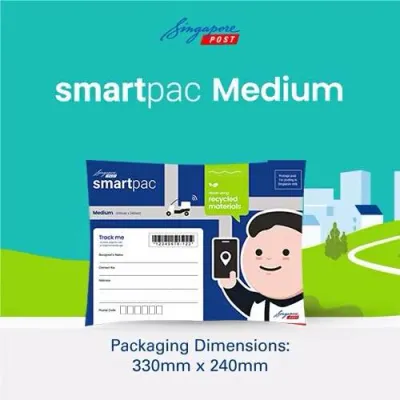
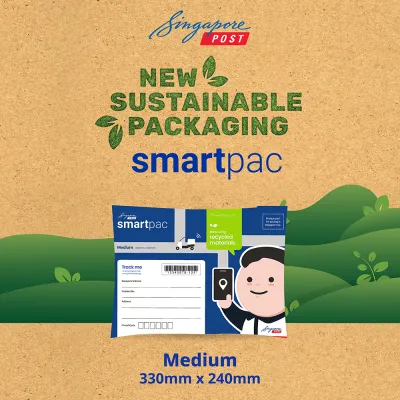
![*FREE SHIPPING* [CHOOSE OPTION] Singapore Post Smartpac Small Smartpac Medium Mini Lite 600g 1kg Singpost Smart pac Sing Post PolyM Poly M](https://img.lazcdn.com/g/p/ca35df7d5aaeef118422794879cc317a.jpg_400x400q80.jpg_.webp)
Prices are valid at publication and may change. Please refer to the product page for the latest price.
Weight capacity is another critical specification that requires careful interpretation. Most medium courier bags have a designated weight limit set by the manufacturer or the postal service to ensure the bag does not burst during automated sorting. However, weight capacity is not solely about the mass of the item; it is also about density and shape. A heavy, compact object concentrates all its weight on a small surface area, putting immense stress on a single point of the bag. Conversely, a soft item of the same weight distributes the load evenly across the entire surface, reducing the risk of a blowout.
To avoid overstretching the material, you should calculate the effective packing volume rather than relying on flat dimensions. For flat items like documents or thin books, you can use the flat measurements as a direct guide, leaving a small margin for the seams. For bulky or three-dimensional items, a practical approach is to subtract the thickness of the item from both the flat width and flat length of the bag. This calculation gives you a realistic estimate of whether the mailer can close securely without putting excessive tension on the adhesive seal or the side welds.
Evaluating Material Thickness and Transit Durability
The durability of a medium courier bag during transit is largely determined by its material thickness, which is commonly measured in microns or mils. Thicker materials offer higher tear resistance and puncture protection, which are essential when shipping items with sharp corners or rigid packaging. Additionally, thickness plays a vital role in opacity; a thicker, co-extruded plastic bag ensures that the contents remain completely invisible from the outside, maintaining privacy and reducing the risk of tampering during the delivery cycle.

Performing visual and tactile checks on your courier bags can help you assess their quality before sending them out. When handling a sample bag, feel the material to ensure it has a consistent thickness throughout, without any thin spots or bubbles. Inspect the side seams closely; high-quality mailers feature clean, wide welds that do not easily pull apart when you apply gentle outward pressure. The surface texture should also be smooth enough to allow shipping labels to adhere firmly, yet textured enough to prevent bags from sliding excessively when stacked in transit bins.
For businesses managing high-volume shipments, it is highly beneficial to consult the manufacturer’s technical specification sheet. This document provides detailed information regarding the exact polymer blend used, such as low-density polyethylene (LDPE) or co-extruded layers, which directly impact the bag’s flexibility and environmental resistance. Understanding these technical details allows you to select a bag that matches the specific demands of your logistics network, whether your parcels face extreme temperatures, high humidity, or rough handling.
Verifying Specifications Before You Buy
Before committing to a large purchase of medium courier bags, implementing a verification process can save time and prevent costly packaging errors. The most effective way to confirm a bag’s suitability is to request physical samples from the supplier. This allows you to conduct hands-on testing with your actual products, observing how they fit within the usable space and identifying any potential tight spots. Testing physical samples also helps you verify if the bag’s shape accommodates your product’s unique geometry without requiring excessive force to insert.
Another critical component to evaluate is the adhesive seal strip on the closure flap. A reliable courier bag should feature a strong, tamper-evident adhesive that creates a permanent bond shortly after application. To test this, seal a sample bag and let it sit for a few minutes, then attempt to pull the flap open. The adhesive should hold so firmly that the bag material tears or stretches visibly rather than peeling away cleanly, which ensures that any unauthorized opening during transit is immediately obvious.
Finally, you should assess how the courier bag performs under simulated transit conditions. Apply your standard shipping labels to the bag and check if they remain securely bonded, as some plastic formulations can repel standard adhesives. You can also test the bag’s moisture resistance by exposing it to light water droplets to ensure that the seams and seal keep the interior dry. By thoroughly verifying these operational details beforehand, you can confidently integrate the medium mailers into your daily shipping workflow.
Frequently Asked Questions (FAQ)
Can standard courier bags be used for fragile items?
Standard flexible courier bags are designed primarily for non-fragile items and do not provide structural protection against impacts, drops, or crushing forces. Because these bags lack rigid walls or internal cushioning, shipping delicate items without supplementary protection carries a high risk of damage. If you must use a medium mailer for fragile goods, you should wrap the items in multiple layers of bubble wrap or place them inside a sturdy inner box before inserting them into the bag. For highly sensitive or valuable items, switching to a rigid corrugated cardboard box is generally the safest option.
How do I measure the true usable space of a mailer?
To find the true usable space of a flat courier bag, start by laying the empty mailer flat on a hard surface. Measure the width from the inside of the left seam to the inside of the right seam, rather than the outer edges. For the height, measure from the bottom fold up to the opening line where the adhesive flap begins, excluding the flap itself since it must fold over to seal the bag. If you are shipping three-dimensional items, subtract the thickness of your item from both of these flat measurements to determine the maximum item size that will fit comfortably inside.
Community discussion
Share your experience or ask a question. Comments are reviewed before publication.