
Selecting the correct packaging material is the most critical step in ensuring items survive transit intact. When preparing goods for shipping or storage, the choice between small and large bubble wrap is not merely a matter of personal preference; it is a decision based on weight, structural fragility, and surface vulnerability.
The choice between small and large bubble wrap depends on the item’s weight, size, and surface sensitivity. Small bubble wrap is ideal for lightweight, fragile, and surface-sensitive items because it conforms closely and prevents surface scratching. Large bubble wrap is suited for heavy, bulky, or irregularly shaped items because the larger air pockets provide deeper shock absorption and fill voids better. Layer count and film thickness also play a critical role in overall protection.
Key Differences Between Small and Large Bubble Wrap
To make an informed packaging decision, it is essential to understand how bubble diameter and air volume affect cushioning mechanics. Bubble wrap operates on the principle of trapped air, which acts as a decelerating buffer during impacts. The size of these air pockets dictates how the material responds to external forces, how it distributes weight, and how well it fills empty spaces within a shipping container.
Products mentioned in this guide
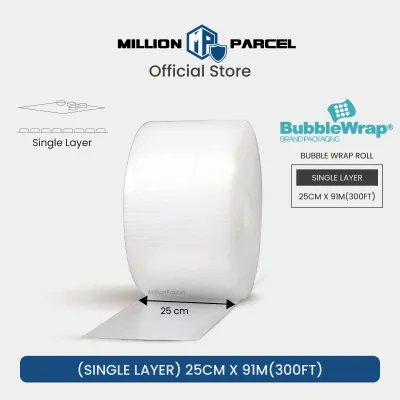
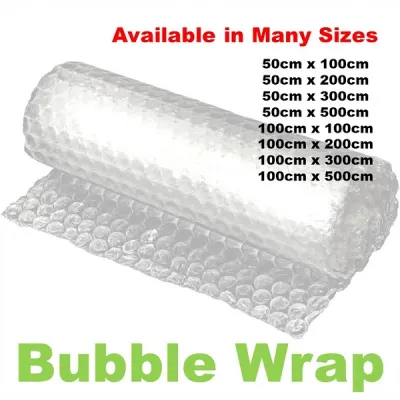
![[SG SELLER] Heavy Duty Bubble Wrap Roll Foam Wrap Air Cushion Packaging Stretch Film Shrink Wrap Protection Material](https://img.lazcdn.com/g/p/044501857b9d7b93587e94cbbcbac682.png_400x400q80.png_.webp)
![91m/20m/10m BubbLest™ [FREE PENKNIFE] Bubble Packaging Material Direct Singapore Manufacturer | Clingwrap | Plasticwrap | Cling Wrap | Plastic Wrap | Bubble Roll |](https://img.lazcdn.com/g/p/118908581c7285d2410f3d4422311ca0.png_400x400q80.png_.webp)
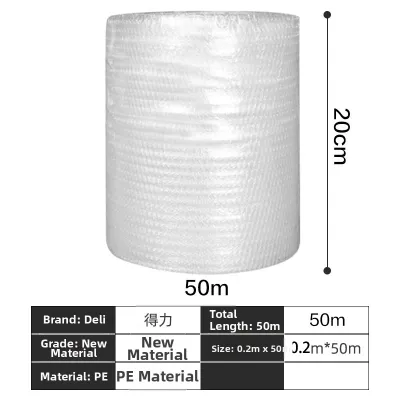
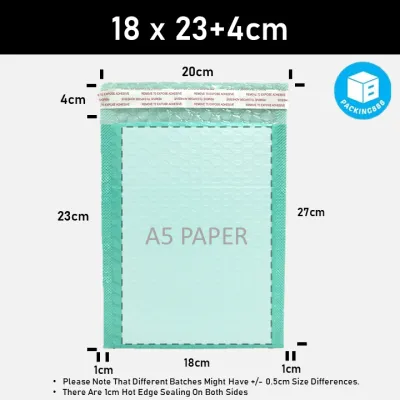
Prices are valid at publication and may change. Please refer to the product page for the latest price.
Standard small bubble wrap typically features bubbles with a diameter of approximately 10 millimetres and a height of 4 millimetres. This low-profile design creates a dense grid of miniature air cushions. Large bubble wrap generally features bubbles with a diameter of 25 millimetres to 32 millimetres and a height of 10 millimetres to 12 millimetres, providing a significantly higher profile. These physical dimensions directly influence the material’s flexibility, load-bearing capacity, and shock-absorption depth.
When verifying specifications before purchase, check the manufacturer’s product sheet for precise measurements. Bubble height and diameter can vary slightly between brands, and these variations can affect how the wrap fits into tight spaces or how many layers are required to achieve the desired level of protection.
Small Bubble Wrap Characteristics
Small bubble wrap excels at distributing weight and pressure evenly across an item’s surface. Because the bubbles are small and densely packed, they create a highly uniform contact area. This characteristic is particularly beneficial for items with intricate details or delicate structures, as the wrap supports every small curve and protrusion without concentrating force on a single point.
The high flexibility of small bubble wrap allows it to conform tightly to complex geometries. It can be wrapped snugly around glassware, delicate ceramics, or electronic components, securing them in a tight, protective cocoon. This tight fit prevents the item from sliding within its wrapping, which is a common cause of surface abrasion and scratches during transit.
However, small bubble wrap has a distinct physical limitation: it compresses quickly under heavy loads. Because each small bubble contains a relatively low volume of air, a heavy or dense item can easily compress the bubbles completely. This compression, known as “bottoming out,” leaves the item vulnerable to impact forces, as there is no remaining air cushion to absorb the shock.
Large Bubble Wrap Characteristics
Large bubble wrap is designed for deep cushioning and high impact absorption. The larger air pockets contain a substantial volume of air, which allows them to compress over a longer distance when subjected to a sudden force. This extended deceleration distance is crucial for protecting heavy, dense, or high-value items that would otherwise crush smaller bubbles instantly.
In addition to cushioning, large bubble wrap serves as an excellent void fill material. When packing items in standard shipping boxes, empty spaces must be filled to prevent the contents from shifting. A few wraps of large bubble wrap can quickly fill these voids, locking the item securely in the centre of the carton and reducing the overall volume of packaging material required compared to using crumpled paper.
Despite these advantages, large bubble wrap is less flexible than its small-bubble counterpart. It cannot conform tightly to small, intricate items, often leaving large gaps where dust or moisture can accumulate. Furthermore, the concentrated pressure points of the large bubbles can sometimes leave temporary circular marks on highly sensitive, soft, or polished surfaces, particularly under tight wrapping conditions.
How Layer Types Affect Protection
While bubble size is a primary consideration, the construction of the film itself is equally important. Bubble wrap is available in single-layer and double-layer (or multi-layer) configurations. Understanding these variations is essential for matching the packaging material to the specific transit risks of your shipment.

Single-layer bubble wrap consists of a flat backing sheet laminated to a shaped plastic sheet that forms the bubbles. This standard configuration is lightweight and cost-effective, making it suitable for general shipping needs. Double-layer bubble wrap features a second flat plastic sheet laminated over the top of the bubbles, sandwiching the air pockets between two flat layers. This construction traps the air more securely and prevents the bubbles from popping easily under sustained pressure.
Adding layers of bubble wrap increases the total air volume surrounding the item, creating a progressive cushioning effect. As an impact force travels through the outer layers, it is gradually dissipated before reaching the inner layers. This multi-layered defense is highly recommended for valuable or exceptionally fragile items.
Film thickness, typically measured in microns or mils, is another critical specification to verify. Thicker plastic films resist punctures and tears, which is vital when packing items with sharp edges or corners. Standard bubble wrap often uses a film thickness of 30 to 40 microns, while heavy-duty variants can exceed 75 microns. Always check the manufacturer’s product label to confirm the layer count and film thickness to ensure the material matches your protection requirements.
Matching Bubble Wrap to Your Items: A Practical Guide
To ensure your items arrive safely, you must pair the physical characteristics of the bubble wrap with the specific vulnerabilities of the objects you are packing. Different materials, weights, and shapes require distinct wrapping strategies.
Fragile and Surface-Sensitive Items
Fragile items with highly sensitive surfaces require a wrapping strategy that prioritises scratch prevention and close surface conformity. This category includes glassware, porcelain, delicate electronics, and items with polished, painted, or lacquered finishes.
For these items, small bubble wrap is the preferred choice. Its ability to conform tightly to smooth and irregular surfaces prevents friction-induced scuffs. However, plastic materials can sometimes trap moisture or interact chemically with certain finishes, especially in warm, humid climates like Singapore. To mitigate this risk, apply a soft inner layer of acid-free tissue paper or glassine paper before wrapping the item in bubble wrap.
When wrapping, wrap each item individually rather than bundling them together. Secure the bubble wrap with high-quality packaging tape, ensuring the tape is applied only to the wrap itself and never directly to the item’s surface, which could leave a sticky residue or damage the finish.
Heavy and Dense Items
Heavy and dense items, such as hand tools, metal components, heavy books, and mechanical parts, present a different packaging challenge. These items exert high static pressure on the packaging material, which can cause standard cushioning to fail.
Large bubble wrap, particularly in heavy-duty or multi-layer variants, is necessary for these applications. The larger air pockets resist the constant downward force of heavy items, maintaining a protective barrier even during rough handling. Small bubble wrap should be avoided as a primary cushion here, as the concentrated weight will quickly pop or compress the small bubbles, rendering them ineffective.
When packing heavy items, pay special attention to the corners and edges. These areas concentrate the item’s weight and are the most likely to puncture the packaging. Reinforce these sharp edges with heavy-duty cardboard corner protectors before wrapping the entire item in multiple layers of large bubble wrap.
Large and Awkwardly Shaped Items
Large, awkwardly shaped items, such as furniture, household appliances, and large decorative pieces, require deep shock absorption and effective void filling. These items often have protruding parts that are highly vulnerable to impact.
Use large bubble wrap to protect these objects. The thick air cushion acts as a buffer zone between the item and the outer shipping box, absorbing impacts from drops or shifts during transit. Wrap protruding parts, such as table legs or appliance handles, individually with multiple layers of large bubble wrap to create a thick protective sleeve.
When placing the wrapped item into a shipping carton, use extra large bubble wrap to fill any remaining empty spaces. This prevents the item from sliding or tilting inside the box. For added structural defense, place pre-formed cardboard or foam edge protectors along the outer corners of the item before sealing the box.
Small vs Large Bubble Wrap: Comparison at a Glance
This table provides a quick reference to help you compare the two primary bubble sizes across key decision-making dimensions.
| Feature | Small Bubble Wrap | Large Bubble Wrap |
|---|---|---|
| Best For | Lightweight, fragile, and surface-sensitive items | Heavy, bulky, and irregularly shaped items |
| Cushioning Depth | Low (approx. 4 mm profile) | High (approx. 10 mm to 12 mm profile) |
| Surface Conformity | High; wraps tightly around intricate shapes | Low; stiffer and less flexible around small corners |
| Void Filling | Poor; requires excessive material to fill large spaces | Excellent; fills empty box spaces quickly and efficiently |
| Weight Capacity | Low; bubbles compress or pop under heavy loads | High; absorbs deep impacts from heavy objects |
| Risk of Surface Imprinting | Low; distributes pressure evenly over small areas | Moderate; large bubble edges can leave temporary marks |
Best Practices for Wrapping and Packing
Choosing the right bubble wrap is only half the battle; applying it correctly is essential for ensuring the material performs as intended under real-world shipping conditions.
- Bubble Orientation: The general rule of thumb is to place the bubble side facing inward, against the item. This allows the individual air pockets to conform to the item's shape and provide direct cushioning, while the smooth outer backing resists snagging against the box walls. However, there is an important safety exception: for items with unsealed paint, delicate thermal transfers, or extremely soft polished surfaces, place the flat side against the item. This prevents the concentrated texture of the bubbles from transferring to the surface or sticking to it in warm conditions.
- Securing the Wrap: Use high-quality packaging tape to secure the bubble wrap to itself, creating a snug, immovable sleeve around the item. Avoid wrapping the tape too tightly, as excessive tension can compress the bubbles and reduce their cushioning effectiveness. Never apply tape directly to the item's surface, as removing it can strip paint, wood veneer, or delicate finishes.
- Box Sizing and Void Fill: Bubble wrap cannot compensate for a shipping box that is too large or too small. Choose a box that allows for a minimum 2-inch (approx. 5 cm) buffer zone of cushioning material on all six sides of the item. Once the wrapped item is placed inside, fill all remaining voids with extra bubble wrap or packing paper so the item cannot move.
- Verification: Before sealing the box permanently, perform a gentle shake test. Close the box flaps and lift the container. Gently shake it from side to side; if you feel or hear the contents shifting, the packaging is insufficient. Reopen the box and add more void fill until the contents are completely stationary.
Decision Framework: Final Rules for Choosing
Use this structured framework to quickly determine the best packaging approach for your specific items.
- Choose Small Bubble Wrap if: The item is lightweight, highly fragile, has intricate details, or features a delicate surface that is highly susceptible to scratching or abrasion.
- Choose Large Bubble Wrap if: The item is heavy, bulky, has large flat surfaces requiring deep impact protection, or if you need to fill large empty spaces inside a shipping box quickly.
- Choose Multi-Layer / Heavy-Duty if: The item is exceptionally dense, of high financial or sentimental value, or will undergo rigorous shipping conditions, such as international transit or multiple courier transfers.
- Verify First if: The item has an unusual, sensitive, or soft surface finish (such as uncured paint, raw wood, or delicate textiles). Always test a small, inconspicuous area first, or use a protective inner barrier like acid-free tissue paper before applying the bubble wrap.
Frequently Asked Questions (FAQ)
Does the bubble side face in or out?
For most items, the bubble side should face inward, directly against the object. This orientation allows the individual air pockets to cradle the item’s unique shape, providing maximum cushioning while leaving the smooth backing on the outside to slide easily into the shipping box. However, if you are packing items with highly sensitive, soft, or unsealed finishes, the bubble texture can leave temporary or permanent circular marks. In these specific cases, wrap the item with the flat side facing inward, or use an intermediate protective barrier such as paper.
Can I use small bubble wrap for heavy items if I add more layers?
While wrapping a heavy item in multiple layers of small bubble wrap will increase the overall thickness of the packaging, it does not change the physical compression limits of the small air pockets. Under the heavy, concentrated weight of a dense object, the small bubbles will still compress completely or pop during a drop, failing to provide adequate shock absorption. For genuinely heavy or dense items, large bubble wrap or heavy-duty variants are structurally necessary to prevent the packaging from bottoming out.
Is bubble wrap safe for all painted or polished surfaces?
While bubble wrap is generally safe for cured and stable surfaces, it can trap moisture or react chemically with certain finishes over long periods, particularly in high-temperature or high-humidity environments. Uncured paint, high-gloss lacquer, and certain soft plastics can develop permanent hazy patterns or stick to the polyethylene film. To prevent this, always place a neutral, breathable barrier—such as acid-free tissue paper, glassine paper, or a clean cotton cloth—between the item and the bubble wrap for long-term storage or shipping.
Community discussion
Share your experience or ask a question. Comments are reviewed before publication.