
Selecting the right small-format tapes and labels for your packaging workflow is essential to ensure secure sealing, clear identification, and professional presentation. Small SmartPAC tape and label products offer a range of compact adhesive solutions designed to streamline shipping, inventory management, and retail labeling. Finding the right fit requires matching the specific material properties, adhesive types, and roll dimensions of these products to your target packaging surfaces and application environments. By evaluating your daily packaging volume, the texture of your shipping containers, and your printing equipment, you can identify the exact tape or label configuration that prevents peeling, smudging, or structural failure during transit.
Understanding Small SmartPAC Tape and Label Categories
Navigating the selection of small-format packaging supplies begins with distinguishing between the primary categories of tapes and labels. Small-width packing tapes are typically designed for sealing lightweight cartons, bundling small items together, or securing decorative and craft packaging. These tapes generally feature a narrow width, often ranging from 12mm to 24mm, making them highly maneuverable for intricate sealing tasks where standard 48mm or 72mm shipping tapes would be bulky or wasteful. They provide a clean, unobtrusive seal that preserves the aesthetic of small retail boxes while offering sufficient tensile strength for light-duty applications.
In contrast, small-format labels serve primarily as information carriers rather than structural fasteners. These labels are engineered for high-visibility tasks such as barcode printing, pricing, inventory tracking, and applying handling instructions like “Fragile” or “This Side Up.” Because their primary function is legibility and adhesion to diverse surfaces, their design focuses on surface smoothness, print compatibility, and backing release characteristics rather than tensile strength or elongation.
Products mentioned in this guide
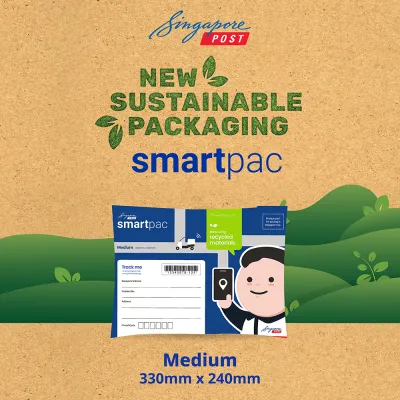
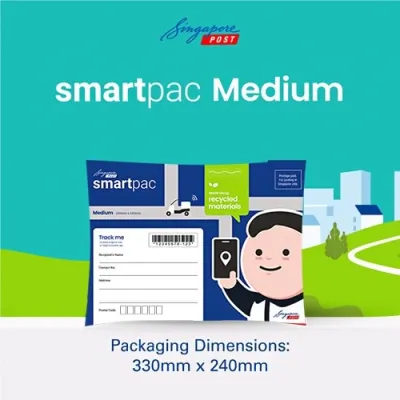
![*FREE SHIPPING* [CHOOSE OPTION] Singapore Post Smartpac Small Smartpac Medium Mini Lite 600g 1kg Singpost Smart pac Sing Post PolyM Poly M](https://img.lazcdn.com/g/p/ca35df7d5aaeef118422794879cc317a.jpg_400x400q80.jpg_.webp)
![[SINGPOST] SMALL W/ BUBBLEWRAP smartpac - A postage-paid packaging for local delivery. Trackable via the SingPost mobile app.](https://img.lazcdn.com/g/p/3360d819ebee92c4900de5d10f98c2e8.png_400x400q80.png_.webp)
![[SINGPOST] smartpac - 10pcs. A postage-paid packaging for local delivery. Trackable!](https://img.lazcdn.com/g/ff/kf/S10459dde07ab48bfb250270670ebeb7fS.jpg_400x400q80.jpg_.webp)
Prices are valid at publication and may change. Please refer to the product page for the latest price.
The performance of both tapes and labels is heavily influenced by their material base. Biaxially Oriented Polypropylene (BOPP) is a highly common synthetic film used for small packing tapes due to its resistance to moisture, high tensile strength, and clarity. BOPP tapes perform well on smooth cardboard and plastic mailers, though they require consistent pressure during application to activate the adhesive fully. For applications requiring hand-tearability or a more eco-friendly presentation, paper-based tapes and labels offer a practical alternative, adhering well to fibrous surfaces and accepting stamps or handwritten ink without smudging.
Synthetic films, such as polyester or polyethylene, are frequently utilized for small-format labels that must withstand harsh environmental conditions. These synthetic labels resist tearing, chemical exposure, and moisture, making them suitable for outdoor transit or long-term warehouse storage. When selecting these materials, it is crucial to verify their compatibility with your specific printer type, as synthetic films often require specialized thermal transfer ribbons rather than standard direct thermal printing.
Because product lines, exact dimensions, and SKU availability can shift over time, packaging coordinators should always verify current specifications against the manufacturer’s official catalog or authorized distributor listings. Relying on outdated third-party descriptions can lead to compatibility issues with existing dispensers or printers. Checking the official documentation ensures that the selected tape width or label sheet layout matches your operational setup precisely.
Matching Products to Your Specific Packaging Tasks
Selecting the right adhesive product requires a clear understanding of the specific task at hand, as a tape or label that excels in one scenario may fail in another. For light-duty carton sealing and bundling, narrower tapes are highly efficient for securing small corrugated boxes, folding cartons, or paper mailers. When sealing standard corrugated cardboard, look for tapes with high initial tack, which allows the adhesive to grab the loose paper fibers instantly. Kraft paper tapes with water-activated or high-tack pressure-sensitive adhesives are particularly effective here, as they create a strong, tamper-evident bond that fuses with the carton surface.

For bundling tasks, such as grouping small stationery items or securing protective bubble wrap around delicate goods, a narrow BOPP tape provides excellent tensile strength without adding unnecessary bulk. It is important to evaluate the surface energy of the materials being bundled; low-energy plastics like polyethylene mailers require specialized adhesives formulated to prevent the tape from flagging or peeling back at the edges over time.
Product labeling and inventory tagging demand a different set of selection criteria, centered around print technology and surface texture. If your workflow utilizes direct thermal printers, you must select small labels with heat-sensitive coatings that do not require ink ribbons. For high-resolution product labels printed via laser or inkjet systems, paper labels with matte or glossy finishes are suitable to ensure sharp text and scannable barcodes. The texture of the target surface is equally critical; rough, textured, or curved surfaces require highly flexible label materials with aggressive adhesives to prevent lifting, whereas smooth glass or metal containers can accommodate standard permanent or removable adhesives.
Warning and handling indicators represent another vital application for small-format labels. Pre-printed labels featuring bold, high-contrast text and universally recognized symbols—such as a wine glass for fragile items or arrows for package orientation—help ensure that logistics handlers treat your parcels with appropriate care. When choosing these labels, opt for high-visibility colors like fluorescent red or orange, and verify that the adhesive is rated for outdoor exposure, ensuring the warning remains firmly attached even if the parcel encounters rain or high humidity during transit.
For custom warning labels or specialized handling instructions, blank small-format labels can be printed on-demand. This approach is highly beneficial for businesses handling perishable goods, where specific storage temperatures or expiration dates must be clearly marked on each package. Ensuring that these labels are compatible with your existing printing software and hardware prevents alignment errors and minimizes material waste during high-volume packaging runs.
Essential Specifications to Check Before Purchasing
Before purchasing small-format tapes and labels in bulk, verifying their technical specifications is essential to avoid operational bottlenecks and material incompatibility. The adhesive type and tack level dictate how well the product performs on different substrates. Acrylic adhesives offer excellent long-term UV resistance and clarity, making them suitable for retail packaging, but they may require a longer dwell time to reach maximum bond strength. Hot-melt or synthetic rubber adhesives, on the other hand, provide high initial tack and bond quickly to corrugated cardboard and plastic poly mailers, though they can degrade faster when exposed to high temperatures or direct sunlight.
Physical compatibility with your existing packaging hardware is another critical factor that is easily overlooked. For tape rolls, always check the inner core diameter—typically 1 inch (approx. 25.4 mm) for small desktop dispensers or 3 inches (approx. 76.2 mm) for standard industrial dispensers—as well as the total roll length and outer diameter. Attempting to load a roll with an incompatible core size or an excessively large outer diameter into a standard dispenser can cause jamming, uneven tension, or complete operational failure.
Environmental resistance must be evaluated based on the transit journey your packages will undergo. If your parcels are shipped through tropical climates, high humidity, or cold-chain logistics channels, standard adhesives may soften, slide, or lose their grip entirely. Review the manufacturer’s technical data sheets for the recommended application temperature range and service temperature limits. For moisture-heavy environments, synthetic film labels with water-resistant adhesives are necessary to prevent the printed information from bleeding or the label from peeling off the substrate.
For label products, the liner type and peelability significantly impact application speed and efficiency. Glassine or paper liners are suitable for manual peeling and standard desktop printing, providing a stable backing that resists tearing. If your packaging line utilizes automated label applicators, you must verify that the liner material possesses the tensile strength required to withstand high-speed mechanical pulling without snapping. Additionally, check whether the label adhesive is classified as permanent, removable, or repositionable, depending on whether the label needs to be cleanly detached from the product later without leaving sticky residue.
How to Verify Availability and Authentic Specifications
To ensure you receive genuine products that perform according to their stated specifications, sourcing through verified channels is paramount. Purchasing directly from official brand channels, established local stationery suppliers, or authorized B2B packaging distributors guarantees that you are receiving authentic inventory. This practice protects your business from counterfeit tapes and labels, which often suffer from inconsistent adhesive coating, brittle film backings, and poor print receptivity that can disrupt your packaging line.
When evaluating potential products, look beyond generic marketing descriptions and request the Technical Data Sheet (TDS) from the supplier. The TDS provides precise, objective metrics such as total thickness (measured in microns or mils), peel adhesion to steel, tensile strength, and elongation at break. Comparing these standardized metrics allows you to make objective comparisons between different product options and ensures the selected tape or label meets the mechanical demands of your shipping workflow.
Before committing to a large-scale bulk purchase, it is highly recommended to request sample rolls or label sheets for real-world testing. Applying samples directly to your specific packaging substrates—whether they are recycled corrugated boxes, glossy retail cartons, or textured plastic mailers—allows you to observe adhesive performance firsthand. This trial period is also the ideal time to test print quality, drying speed, and smudge resistance on your actual office or warehouse printers, ensuring seamless integration into your daily operations.
Frequently Asked Questions (FAQ)
Can small-width packing tape securely seal heavy corrugated boxes?
Small-width packing tape is generally not recommended as the primary seal for heavy or overfilled corrugated boxes. Because tape width directly correlates with the total surface area of adhesive contact, narrower tapes (such as 12mm or 24mm widths) provide significantly less structural reinforcement and shear resistance than standard 48mm or 72mm shipping tapes. For heavy loads, the weight of the contents exerts substantial pressure on the box flaps, which can easily cause narrow tape to shear or peel away. If you must use small-width tape, it should be reserved for light-duty bundling, sealing small inner boxes, or reinforcing light retail packaging, while heavy outbound cartons should be sealed with wider, heavy-duty packing tapes rated for the specific box weight.
How should I store unused small tape rolls and label sheets?
To preserve the integrity of the adhesive and backing materials, unused small tape rolls and label sheets should be stored in a cool, dry environment away from direct sunlight, moisture, and extreme temperature fluctuations. Ideal storage conditions typically involve maintaining a stable temperature around 20°C to 25°C and a relative humidity of 40% to 50%. Exposure to high heat can cause the adhesive to bleed, soften, or transfer permanently to the backing liner, making the tape difficult to unwind and labels prone to curling or jamming in printers. Keep the products in their original packaging or airtight plastic bins until they are ready for use to protect them from dust and airborne contaminants that can degrade adhesive tack.
Community discussion
Share your experience or ask a question. Comments are reviewed before publication.