
Selecting the correct large poly mailer bag size for shipping clothing requires balancing the physical dimensions of your folded garments with the natural expansion of the plastic material. To find the perfect fit, you must measure your folded apparel’s length, width, and height, then add specific allowances for seam stretch and the sealing flap. Choosing the right size ensures your items arrive in pristine condition while keeping your shipping costs as low as possible.
How to Measure Folded Clothing for Poly Mailers
To determine the baseline dimensions for your shipping bag, you must first prepare the garment exactly as it will be presented to the customer. Lay the clothing item on a clean, flat surface and fold it into its final shipping shape. If you use inner packaging, such as a protective clear poly bag or tissue paper, wrap the garment in these materials before taking any measurements, as they add subtle but important bulk.
Once the garment is folded and wrapped, use a firm measuring tape to record three critical dimensions: the maximum length, the maximum width, and the total thickness (or depth) at the thickest point. Avoid pressing down on the fabric while measuring; allowing the garment to rest naturally ensures you capture its true, uncompressed volume.
Products mentioned in this guide
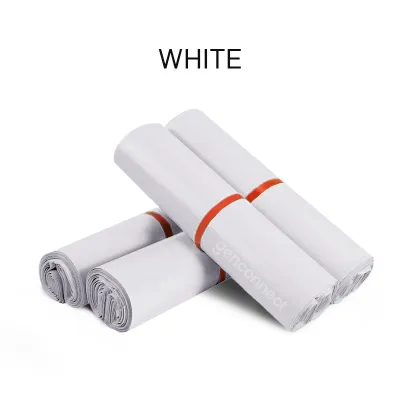
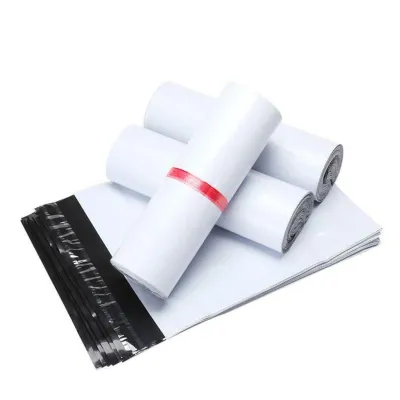

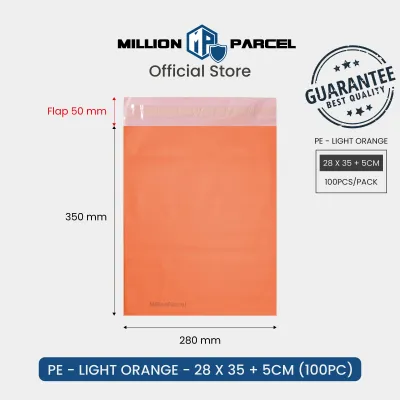
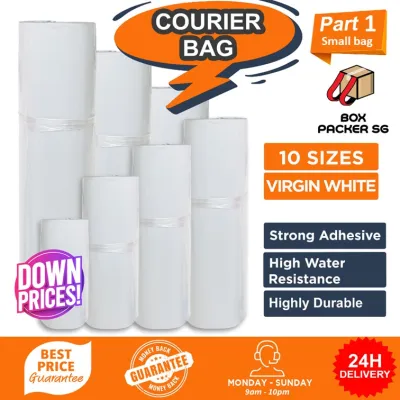
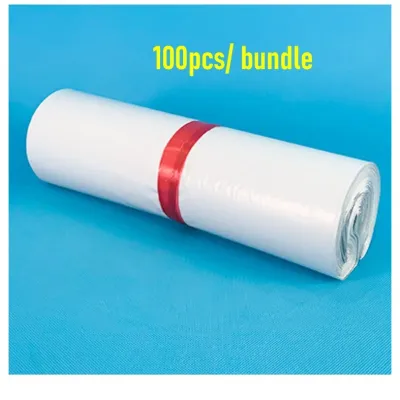
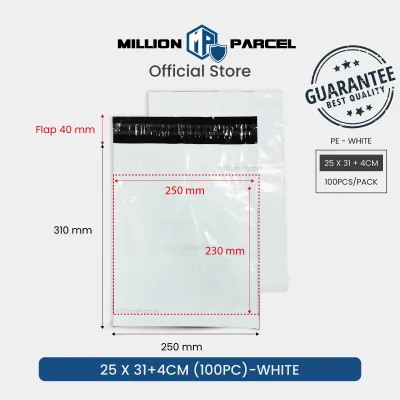
Prices are valid at publication and may change. Please refer to the product page for the latest price.
To calculate the minimum required width of your flat poly mailer, use this straightforward formula:
Mailer Width = Garment Width + Garment Thickness + Seam Allowance
The seam allowance is a safety margin—typically at least 20 to 30 millimeters—that prevents the side seams of the plastic bag from splitting under tension when the item is inserted.
To calculate the minimum required length of the mailer, apply the following formula:
Mailer Length = Garment Length + Garment Thickness + Sealing Flap Allowance
The sealing flap allowance represents the portion of the bag that folds over to seal the opening, which usually requires an additional 40 to 50 millimeters. Because the flap cannot be used to cover the garment itself, omitting this allowance will leave your clothing exposed or force you to fold the item awkwardly to make it fit.
Because the water resistance, tear strength, and adhesive stickiness of poly mailers depend on the exact blend of polyethylene used, it is wise to perform a simple manual test before committing to a bulk order. You can verify these properties by sealing a sample bag, attempting to pull the seam apart, and exposing the surface to a few drops of water to observe its barrier performance.
Estimating Mailer Sizes for Common Apparel Categories
While precise measurements are the most reliable path to a perfect fit, understanding how different apparel categories behave when folded helps you plan your packaging inventory. Clothing items generally fall into three bulk categories: lightweight, mid-weight, and heavy. Each category demands a different approach to spatial planning due to how the fabrics compress and hold air.

Lightweight tops, such as summer t-shirts, silk blouses, and activewear, fold flat and retain very little air. These items require minimal thickness allowance, meaning you can often use standard flat mailers where the width and length closely match the folded dimensions of the garment. For instance, a single folded t-shirt typically fits comfortably in a smaller utility mailer, while a bundle of three or four lightweight tops will require a step up to a medium or large flat mailer to accommodate the cumulative thickness.
Mid-weight bottoms and knitwear, including denim jeans, chinos, and lightweight sweaters, present a different challenge. These garments are constructed from denser, stiffer fabrics that resist tight folding and naturally spring back, creating significant thickness. When estimating sizes for these items, you must account for this springiness by choosing a larger flat mailer or a bag with a flexible bottom. A single pair of jeans, for example, often requires a large poly mailer to ensure the stiff denim does not stretch the plastic to its breaking point.
Heavy outerwear, such as wool coats, puffer jackets, and heavy fleece hoodies, represents the high-bulk category. These items do not fold into neat, flat shapes and contain a large volume of trapped air. Trying to force these garments into standard flat mailers is rarely successful. Instead of relying on standard flat dimensions, you must evaluate the compressed thickness of the item and look for specialized large-format packaging designed to handle high-volume goods.
Because sizing standards vary across packaging manufacturers, always verify the exact interior dimensions of the bags before placing a bulk order. Some manufacturers list the exterior dimensions, which include the weld seams and the sealing flap, while others list only the usable interior space. Reviewing the product specification sheets and checking the manufacturer labels will prevent you from purchasing bags that are slightly too small for your calculated needs.
Adjusting for Fabric Bulk and Folding Techniques
The material composition of your apparel directly influences how much space it occupies inside a shipping bag. Thick, structured fabrics like denim, corduroy, and heavy fleece do not compress easily and require generous width and length allowances to prevent the mailer from stretching taut. Conversely, fine synthetics, silk, and lightweight cotton compress easily, allowing you to use a more compact mailer size for the same overall garment dimensions.
Your chosen folding technique also plays a major role in determining the ideal mailer shape. The traditional flat fold creates a wide, thin package that distributes the garment’s weight evenly across a flat surface. This method is highly compatible with standard flat poly mailers. However, if you use the rolling method—often favored for reducing wrinkles in transit—the garment becomes a dense, cylindrical bundle. Rolled items concentrate their bulk into a single dimension, which can severely strain the seams of a flat mailer.
If you regularly ship rolled garments or highly bulky items, standard flat mailers may not be sufficient. Overstuffing a flat bag forces the plastic to stretch outward, pulling the side seams inward and reducing the usable length of the bag. To identify when a garment has outgrown a flat mailer, look for visible tension lines along the side welds or a bag that rounds out like a pillow. When this occurs, you should transition to a gusseted poly mailer, which features expandable sides or a bottom pleat that opens up to accommodate three-dimensional depth without sacrificing length.
Common Sizing Mistakes When Shipping Clothing
One of the most frequent errors in apparel shipping is ignoring the length of the sealing flap when calculating bag size. The flap is designed solely to fold over and adhere to the back of the mailer, securing the opening. If you treat the total length of the bag as usable space, you will find that the garment prevents the flap from reaching the adhesive strip, leaving the package partially open or requiring you to use packing tape to force a seal.
Choosing a poly mailer that is too tight creates immediate risks during transit. When a plastic bag is stretched to its absolute limit, the material loses its puncture resistance and becomes highly vulnerable to tearing if it snags on sorting machinery or delivery vehicle edges. Furthermore, tight packaging puts continuous pressure on the adhesive seal and the side welds, increasing the likelihood that the bag will burst open under the rough handling common in postal networks.
On the other hand, selecting a bag that is far too large for the garment introduces its own set of problems. Excess plastic material flaps loosely during transit, which can get caught in conveyor belts or automated sorting systems, leading to torn packaging and damaged contents. Additionally, an oversized bag allows the clothing to shift freely, causing it to arrive crumpled, unfolded, and unappealing to the customer.
Using excessively large packaging can also negatively impact your shipping budget. Many postal carriers and courier services calculate shipping rates based on dimensional weight—a pricing model that factors in the volume of the package rather than just its actual weight. If you ship a lightweight item in an oversized poly mailer that does not lay flat, you may be charged at a much higher rate than necessary. Keeping the mailer dimensions as close to the folded garment size as safely possible protects your items while keeping your shipping costs optimized.
Frequently Asked Questions (FAQ)
Can I use a standard large poly mailer for winter jackets?
Standard flat poly mailers are generally unsuitable for heavy winter jackets and bulky outerwear. These garments possess significant loft and compressed thickness, which forces flat plastic bags to stretch excessively, risking seam failure and fabric compression damage. For heavy outerwear, you should measure the compressed thickness of the jacket and opt for a gusseted shipping bag or a sturdy cardboard shipping box that can accommodate the item’s volume without putting undue stress on the packaging seams.
Does the poly mailer size affect shipping costs for clothing?
Yes, the size of your poly mailer can directly influence your shipping expenses. Many modern courier services utilize dimensional weight pricing, which calculates shipping fees based on the package’s length, width, and height. If you use a mailer that is significantly larger than the folded garment, the excess, uncompressed plastic can increase the package’s physical volume, potentially pushing it into a more expensive pricing tier. To avoid these unnecessary costs, select a mailer size that closely matches your folded apparel while leaving just enough room for safe sealing.
Community discussion
Share your experience or ask a question. Comments are reviewed before publication.