
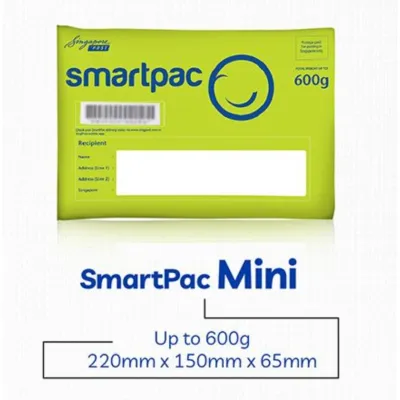
The standard SingPost small polymailer measures 240 mm by 150 mm, while the prepaid SmartPac Small envelope measures 220 mm by 150 mm. These compact dimensions are designed specifically to fit standard Singapore residential letterboxes, which have a strict thickness limit of 65 mm. For online sellers, home businesses, and casual shippers, these small bags are ideal for flat, lightweight items like single t-shirts, flat stationery, small cosmetics, and standard documents. Understanding how to calculate the actual usable space of these bags ensures your items arrive safely without risking transit delays or package rejection.
Decoding SingPost Small Specs: Outer Dimensions vs. Usable Packing Space
When planning a shipment, relying solely on the official outer dimensions of a shipping bag can lead to packing errors. The standard non-prepaid SingPost small polymailer is listed at 240 mm in length by 150 mm in width. However, this measurement represents the flat plastic sheet before it is sealed. To determine what will actually fit inside, you must account for the physical features of the bag that reduce its internal volume.
The most significant reduction in length comes from the adhesive sealing flap. This flap typically takes up 30 mm to 40 mm of the bag’s total length. Once you fold the flap over to secure your package, the maximum flat length of the sealed bag drops to approximately 200 mm. Additionally, the heat-sealed side seams consume about 5 mm on each side, which narrows the practical flat width of the bag to around 140 mm.
Products mentioned in this guide
![[SINGPOST] SMALL W/ BUBBLEWRAP smartpac - A postage-paid packaging for local delivery. Trackable via the SingPost mobile app.](https://img.lazcdn.com/g/p/3360d819ebee92c4900de5d10f98c2e8.png_400x400q80.png_.webp)
![*FREE SHIPPING* [CHOOSE OPTION] Singapore Post Smartpac Small Smartpac Medium Mini Lite 600g 1kg Singpost Smart pac Sing Post PolyM Poly M](https://img.lazcdn.com/g/p/ca35df7d5aaeef118422794879cc317a.jpg_400x400q80.jpg_.webp)
Prices are valid at publication and may change. Please refer to the product page for the latest price.
Material properties also play a major role in how much the bag can hold. SingPost small polymailers are made from co-extruded polyethylene plastic. This material is highly durable, waterproof, and tear-resistant, offering a small amount of flexibility to accommodate minor bulges. However, because these bags are flat and do not feature a bottom or side gusset, any three-dimensional thickness in your item will pull the sides of the bag inward. This structural constraint means that thicker items will dramatically reduce both the usable width and length of the packaging.
For most shipping decisions, the flat usable width and length are the most critical parameters to verify. While the micron thickness of the plastic ensures opacity and puncture resistance, the physical boundaries of the flat envelope dictate whether your item can slide in smoothly. Forcing an item that is too wide or too long will put immense pressure on the seams, leading to potential failures during transit.
Real-World Capacity: What Items Fit Inside a Small Bag?
To make the most of a SingPost small shipping bag, it helps to understand which everyday items fit comfortably within its dimensions and which items require larger packaging. Because these bags are designed for letterbox delivery, they perform best with flat, flexible, or highly compressible goods.

Several categories of items are ideal for this compact size:
- Thin Apparel: A single folded lightweight t-shirt, activewear shorts, a silk scarf, or a pair of socks.
- Flat Stationery: A5-sized notebooks, sticker sheets, greeting cards, pens, and small softcover journals.
- Small Cosmetics: Sheet masks, lip balms, travel-sized toiletries, or small eyeshadow palettes (provided they are wrapped securely to prevent leakage).
- Tech Accessories: Phone cases, charging cables, memory cards, and small power banks.
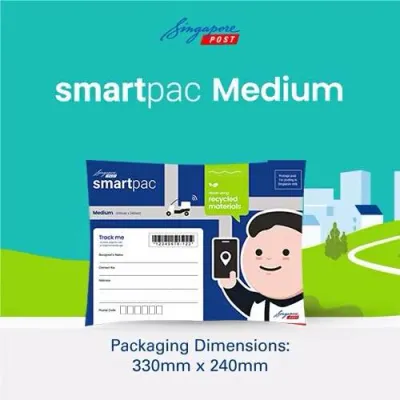
When shipping items with noticeable depth, you must calculate the “thickness penalty.” When a 3D object is placed inside a flat polymailer, the bag must stretch around the object’s height. As a rule of thumb, every centimeter of item thickness reduces the usable flat width and length of the bag by roughly the same amount. For example, a paperback book measuring 180 mm by 130 mm may seem small enough to fit. However, if the book is 25 mm thick, the bag will struggle to close because the thickness consumes the available width, pulling the seams taut and risking a blowout.
Certain items should never be packed in a small shipping bag. Bulky clothing like hoodies, sweaters, or jeans will not fit and will prevent the adhesive strip from sealing flat. Rigid boxes that exceed 20 mm in thickness and 120 mm in width are also unsuitable. Sharp objects, such as metal tools or acrylic stands with pointed corners, should be avoided unless they are heavily padded, as they can easily puncture the flexible polyethylene under the weight of other mail.
Overstuffing a small bag carries significant risks. Under transit pressure, overstuffed seams can burst, exposing or losing your items. Furthermore, SingPost utilizes automated sorting machines and manual delivery processes optimized for standard letterbox dimensions. If your package bulges beyond the maximum allowable thickness of 65 mm, it cannot be delivered directly to a residential letterbox. This can result in delivery delays, additional surcharges, or require the recipient to make a trip to the post office for self-collection.
How to Measure Your Items and Pack Them for Transit
To ensure your package complies with SingPost guidelines and fits perfectly every time, follow a systematic measurement process before you seal the bag. Taking a few seconds to calculate the dimensions prevents wasted packaging and shipping delays.
You can determine compatibility using a simple formula for flexible, non-gusseted bags:
- Maximum Item Width: Must be less than the Bag Usable Width (140 mm) minus the Item Thickness.
- Maximum Item Length: Must be less than the Bag Usable Length (200 mm) minus the Item Thickness.
For example, if you are shipping a packaged charging dock that is 30 mm thick, the maximum width of the dock must not exceed 110 mm (140 mm minus 30 mm), and its length must not exceed 170 mm (200 mm minus 30 mm). If your item’s measurements exceed these limits, you should upgrade to a medium shipping bag to ensure a safe delivery.
When packing your items, employ these practical techniques to maximize space and maintain a flat profile:
Compress Apparel: Fold clothing tightly using a flat-folding board or roll it flat to minimize height. Press out excess air from the bag before sealing to keep the package as thin as possible.
Minimize Protective Padding: If your item is fragile and requires bubble wrap, use a single layer of small-bubble wrap. Avoid large-bubble wrap or thick foam sheets, which add unnecessary bulk and quickly exceed the bag’s capacity.
Use Rigid Backing for Paper: To keep documents, art prints, or sticker sheets from bending, place a thin piece of stiff cardboard behind them. Ensure the cardboard is cut slightly smaller than the usable dimensions of the polymailer so it does not stretch or puncture the corners.
Seal on a Flat Surface: Always pull the adhesive flap tight and press it down firmly against a hard, flat surface. The sealed flap must be smooth and free of wrinkles to prevent it from catching on automated sorting machinery.
Frequently Asked Questions (FAQ)
Can I use my own small shipping bag instead of buying one from SingPost?
Yes, you can use your own third-party polymailers or shipping bags for SingPost services, including basic mail, tracked mail, and registered mail. The bag must be completely opaque, clean, and made of durable, tear-resistant material. You must also ensure that the shipping label or barcode is pasted completely flat on the widest surface of the bag, unobstructed by tape, folds, or seams, so that SingPost’s automated scanning systems can read the tracking details without errors.
What happens if my small bag is slightly overstuffed or exceeds the dimensions?
If your package exceeds the maximum thickness limit of 65 mm or bulges excessively, it will not fit through standard residential letterbox slots. SingPost may reclassify the parcel into a larger delivery tier, which will incur additional postage fees or surcharges. In some cases, the overstuffed package may be rejected at the post office counter, returned to your sender address, or held at a local post office for the recipient to collect, causing significant delivery delays.
Community discussion
Share your experience or ask a question. Comments are reviewed before publication.