
Selecting the correct shipping bag size for your SingPost deliveries ensures your items arrive safely while keeping your postage costs predictable. To find the right fit, you must measure your item’s length, width, and depth, and then account for how the item’s thickness reduces the usable space inside a flat mailer. While standard poly mailers and prepaid trackable bags are widely available across Singapore, verifying the exact dimensions and weight limits directly through official postal channels is the most reliable way to avoid delivery delays or unexpected surcharges.
Understanding SingPost Bag Dimensions and Limits
When preparing a parcel for delivery, understanding how shipping bag dimensions are calculated is essential. A flat shipping bag is defined by its external length and width, but these flat measurements do not represent the actual volume of three-dimensional items you can pack inside. If a bag features a gusset—an expandable fold along the sides or bottom—it can accommodate thicker items more easily, but standard flat poly mailers require careful calculation because they must stretch around the item’s depth.
To ensure your parcel complies with local postal regulations, always verify the current size categories and weight limits. These standards can change, so it is best to check the official SingPost website, consult staff at a physical post office counter, or read the printed specifications directly on official prepaid packaging. Relying on outdated third-party blogs or unofficial online forums can lead to packing errors, as postal weight tiers and maximum thickness limits for letterbox deliveries are strictly enforced.
Products mentioned in this guide
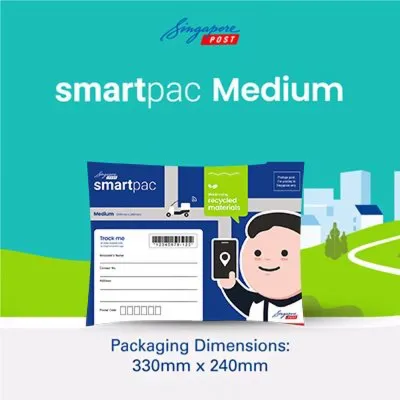
![[1/2/3/4 pcs] SingPost Smartpac Medium size - for using within Singapore only - Prepaid Packaging with Tracking](https://img.lazcdn.com/g/p/8f2c3c3994c2d6fb1e87feebed85f10b.jpg_400x400q80.jpg_.webp)
![[SINGPOST] BOX smartpac - A postage-paid packaging for local delivery. Trackable via the SingPost mobile app.](https://img.lazcdn.com/g/p/3360d819ebee92c4900de5d10f98c2e8.png_400x400q80.png_.webp)
![[1 pc] SingPost Smartpac - A postage-paid packaging for local delivery. Trackable via the SingPost mobile app.](https://img.lazcdn.com/g/ff/kf/Sbacc9034b1bf4b8b8aa42368084e6051F.jpg_400x400q80.jpg_.webp)
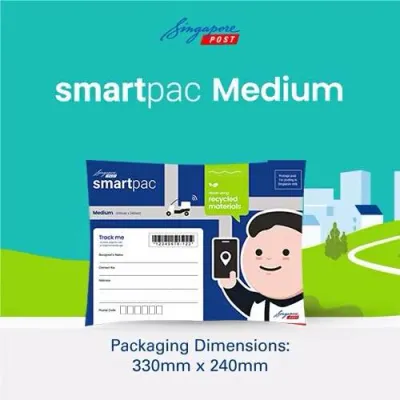
![[3 Pcs]SingPost Smartpac Small/Medium- A postage-paid packaging for local delivery. Trackable via the SingPost mobile app.](https://img.lazcdn.com/g/ff/kf/S98f844099c9d4689ad00c15c15908ddbe.jpg_400x400q80.jpg_.webp)
![[1/2/3/4 pcs] SingPost Prepaid Postage Label Tracked to Letterbox for Local delivery within Singapore](https://img.lazcdn.com/g/p/de7ebe2d3294ef869209b212ec59a91e.jpg_400x400q80.jpg_.webp)
![[Normal Mail] [1 pc] SingPost Prepaid Postage Label Tracked to Letterbox for Local delivery within Singapore](https://img.lazcdn.com/g/p/e8d72aa850c60c5a0408bccb70f8687a.png_400x400q80.png_.webp)
Prices are valid at publication and may change. Please refer to the product page for the latest price.
A common pitfall is confusing the outer dimensions of a shipping bag with its usable inner dimensions. The outer dimensions include the adhesive sealing flap and the welded side seams, which typically reduce the usable width and length by at least one to two centimeters. When selecting a bag, always base your decision on the inner dimensions to ensure your item fits comfortably without putting excessive pressure on the seams.
How to Measure Your Parcel and Calculate Bag Size
To determine the minimum bag size you need, start by preparing your item exactly as it will be shipped. If the item requires bubble wrap, tissue paper, or an inner protective box, wrap or pack it completely before taking any measurements. Measuring the bare item without its protective layers is a frequent mistake that results in a bag that is too small to seal.

Once the item is fully wrapped, use a reliable ruler or measuring tape to find its three maximum dimensions: the longest point (length), the widest point (width), and the thickest point (height or depth). Write these numbers down in millimeters or centimeters. Because a flat shipping bag must wrap around the thickness of your item, the item’s height will consume both the available width and length of the bag.
To calculate the minimum required bag dimensions, you can use a basic geometric formula. For the bag width, add the item’s width to its height, then add a safety margin of at least two centimeters. For the bag length, add the item’s length to its height, then add an additional three to four centimeters to account for the adhesive flap and the fold. For example, if your wrapped item is 20 cm wide, 15 cm long, and 5 cm thick, your minimum bag width should be at least 27 cm, and your minimum bag length should be at least 23 cm. This margin ensures the bag can close securely without stretching.
Interpreting Material and Thickness Specifications
Choosing the right shipping bag also requires evaluating the material and thickness to match the vulnerability of your shipment. Shipping bags, often referred to as poly mailers, are typically measured in microns or mils (where one mil is a thousandth of an inch). A higher micron or mil rating indicates a thicker, more robust plastic that offers superior tear resistance and puncture protection during transit.
For lightweight, non-fragile items like clothing, textiles, or soft goods, a standard single-layer poly mailer is usually sufficient. However, if you are shipping items with sharp corners, books, or heavier stationery supplies, you should look for co-extruded poly mailers, which use multiple layers of plastic bonded together for extra strength. For fragile items, standard flat bags do not provide enough impact protection; in these cases, bubble-lined or padded mailers are necessary to cushion the contents against drops and bumps.
Before purchasing shipping bags in bulk, check the product labels or manufacturer specifications for verifiable performance claims. Look for explicit mentions of water resistance, tear-proof seams, and tamper-evident adhesive seals. High-quality bags feature a strong, permanent adhesive that cannot be peeled open without visibly damaging the bag, which helps protect your parcel from tampering while it is in the postal network.
Common Sizing and Packing Mistakes to Avoid
One of the most frequent packing errors is forcing an item into a shipping bag that is too small. When a bag is overstuffed, the tension pulls against the side seams and stretches the adhesive seal, making the parcel highly vulnerable to bursting open during sorting or transport. If you have to pull or stretch the plastic significantly to close the flap, the bag is too small and should not be used.
Another critical mistake is ignoring the weight limits associated with specific bag sizes or postal services. Even if an item physically fits inside a bag, exceeding the maximum weight limit set by the postal service can lead to automatic sorting failures, additional postage fees, or the parcel being returned to the sender. Always weigh your fully packed parcel on a digital scale before shipping to ensure it falls within the allowed weight tier.
Finally, failing to remove excess air from padded or bubble-lined bags before sealing can artificially inflate the parcel’s dimensions. This extra volume can cause your parcel to exceed the maximum thickness allowed for standard letterbox delivery, pushing it into a more expensive parcel delivery tier. To prevent this, gently press the air out of the bag from the bottom up to the opening before folding down the adhesive flap and sealing it firmly.
Frequently Asked Questions (FAQ)
Can I use my own non-branded shipping bags for postal deliveries?
Yes, you can generally use your own non-branded shipping bags for postal deliveries, provided they meet the postal service’s size, weight, and durability requirements. When using third-party poly mailers, ensure the material is opaque and strong enough to protect the contents. Additionally, you must securely attach the official shipping label to a flat, unobstructed surface of the bag, ensuring the barcode and address details are fully visible and free of wrinkles or folds that could interfere with optical scanners.
What should I do if my packed item slightly exceeds the bag dimensions?
If your packed item slightly exceeds the dimensions of your shipping bag, you should upgrade to the next larger bag size or switch to a corrugated cardboard box. Attempting to stretch a bag to fit an oversized item compromises the structural integrity of the plastic, weakens the seams, and prevents the adhesive strip from forming a complete, secure seal. Using a larger bag and folding down the excess material is always safer than risking a torn package during transit.
Community discussion
Share your experience or ask a question. Comments are reviewed before publication.