
Selecting the right packaging is a balancing act between cost, weight, and structural protection. For footwear brands, e-commerce retailers, and individual shippers, the choice of cardboard box construction directly impacts whether a pair of shoes arrives in pristine condition or with damaged packaging that devalues the product. Understanding the physical differences between single-wall and double-wall cardboard is the first step in optimizing your shipping strategy and minimizing costly product returns.
While both box types serve as protective outer layers, they are engineered for different levels of physical stress. Choosing the incorrect specification can lead to collapsed boxes, punctured packaging, or unnecessary shipping expenses due to excess weight. By analyzing the structural mechanics, transit hazards, and logistical scenarios of each option, you can make an informed decision that protects your inventory and your bottom line.
Quick Answer: Which Cardboard Shoebox Fits Your Shipping Needs?
Single-wall cardboard is generally sufficient for standard local shipping and lightweight footwear, while double-wall cardboard is necessary for heavy items, long-distance transit, or high stacking requirements. Matching the box construction to your specific logistical path ensures adequate protection without overspending on materials.
Products mentioned in this guide
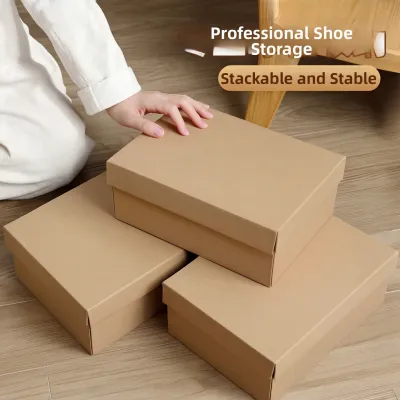
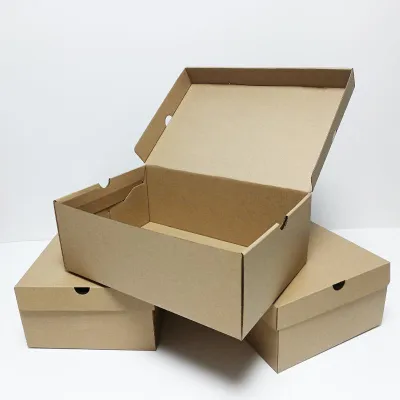
Prices are valid at publication and may change. Please refer to the product page for the latest price.
To determine the best fit for your operations, consider this quick decision framework:
- Choose single-wall if: You are shipping locally within Singapore via standard couriers, sending lightweight shoes such as canvas sneakers, sandals, or flats, and need to minimize both packaging unit costs and volumetric shipping weight.
- Choose double-wall if: You are shipping internationally, sending heavy footwear such as leather work boots, steel-toed safety shoes, or luxury heels, expecting multiple sorting handoffs, or planning to stack boxes high on pallets in a warehouse.
- Verify first if: You are utilizing an e-commerce platform or courier service with strict dimensional and weight guidelines, or if you are storing inventory in high-humidity environments that naturally weaken cardboard over time.
Structural Differences: Single-Wall vs. Double-Wall Construction
To understand why these two packaging types perform differently under pressure, it is necessary to examine their physical construction. Corrugated cardboard is not a single solid sheet; instead, it is a engineered structure designed to maximize strength while minimizing material weight.

Understanding Single-Wall Architecture
Single-wall corrugated cardboard consists of a single wavy layer of paper, known as the corrugated medium or fluting, sandwiched between two flat outer sheets of paper, called linerboards. This three-layer sandwich is the most common form of shipping packaging. The fluting inside acts as a continuous arch, providing vertical rigidity and cushioning against lateral impacts. For shoeboxes, manufacturers typically use B-flute (approximately 3mm thick) or E-flute (approximately 1.5mm thick). B-flute offers an excellent balance of crush resistance and structural stiffness, while E-flute provides a highly smooth outer surface that is ideal for high-quality graphic printing and retail branding.
The Mechanics of Double-Wall Construction
Double-wall cardboard increases protection by adding a second layer of corrugated fluting and an additional flat linerboard, resulting in a five-layer structure. This build consists of an outer liner, a layer of fluting, a middle liner, another layer of fluting, and an inner liner. By combining two different flute profiles, manufacturers can customize the performance of the box. For example, a common configuration is BC-flute, which pairs a B-flute (3mm) with a C-flute (4mm) to create a robust 7mm barrier. This combination leverages the puncture resistance and printability of the outer B-flute with the superior vertical compression strength of the inner C-flute, making the box exceptionally rigid.
How to Identify Them in Your Inventory
When managing flat-packed shipping supplies, distinguishing between these two types is straightforward. Inspect the exposed edges of the flat-packed sheets before assembly. A single-wall sheet displays a single row of wave-like arches between two paper faces. A double-wall sheet clearly shows two stacked rows of arches separated by a flat middle paper layer. Physically, double-wall cardboard is noticeably heavier and stiffer. When folding the box along its pre-scored crease lines, double-wall board requires significantly more manual force to bend, indicating the high level of structural resistance it will offer during transit.
Protection Performance: How They Handle Transit Hazards
During transit, packages are subjected to a variety of mechanical forces, including vertical compression, sharp punctures, drops, and continuous vibration. Evaluating how each box construction handles these hazards highlights the practical performance gap between single-wall and double-wall designs.
Compression and Stacking Strength under Load
In delivery vehicles and warehouses, boxes are stacked on top of one another to maximize space. The bottom box in a stack must bear the cumulative weight of all packages above it. Double-wall cardboard provides vastly superior vertical compression strength compared to single-wall. This vertical strength is primarily determined by the fluting; two layers of flutes act as double columns supporting the load. Rather than assuming all boxes of a certain wall type are identical, look for the Edge Crush Test (ECT) rating printed on the manufacturer’s stamp. While a standard single-wall box might carry a rating of 32 ECT, a double-wall box frequently achieves 42 ECT or higher, allowing it to withstand significantly heavier vertical loads without buckling.
Puncture, Tear, and Impact Resistance
Shipping sorting facilities utilize high-speed conveyor belts, chutes, and automated sorting arms that can strike packages with considerable force. Sharp corners of adjacent parcels or loose items in transit can puncture thin packaging. Double-wall cardboard excels in puncture resistance because of its multi-layered design. If an object manages to penetrate the outer linerboard and the first layer of fluting, it must still pierce the middle linerboard and the second layer of fluting before reaching the interior. This secondary barrier prevents sharp objects from contacting the inner retail shoebox or damaging the footwear directly.
Vibration Dampening and Shock Absorption
As a delivery truck travels, the cargo experiences continuous low-frequency vibrations and occasional high-impact shocks from road bumps or drops. The air pockets sealed within the corrugated fluting act as natural shock absorbers, dampening these kinetic forces. Although double-wall cardboard provides a thicker cushion that absorbs more impact energy, neither box type can completely eliminate internal movement. If the shoes are free to slide around inside the box, they can suffer from friction scuffs, particularly delicate materials like suede or fine leather. Therefore, regardless of whether you choose single-wall or double-wall, using internal void fill such as tissue paper, molded pulp inserts, or paper cushioning is essential to keep the shoes stationary.
Matching the Box to Your Shipping Scenario
Selecting the right box construction requires aligning the physical capabilities of the cardboard with your specific logistical pipeline, shipping destinations, and product characteristics.
Local Deliveries and Last-Mile Couriers
For local e-commerce deliveries within Singapore, transit distances are short, and packages typically spend minimal time in transit. Local courier services (such as SingPost, Ninja Van, or Qxpress) usually handle packages individually or in small batches, resulting in fewer sorting hub handoffs. In this controlled shipping environment, single-wall cardboard boxes are highly efficient. They provide ample protection against the minor bumps of local delivery vans while keeping packaging costs and dimensional weight to a minimum. Unless the footwear is exceptionally heavy or high-value, single-wall is the standard choice for domestic last-mile logistics.
International Freight and Long-Distance Logistics
Cross-border shipping introduces a much higher level of risk. Whether utilizing air freight or sea cargo, international shipments pass through multiple warehouses, customs inspection points, and various transport vehicles. The extended transit time and frequent handling by different logistics personnel increase the likelihood of rough treatment. Furthermore, packages shipped internationally are often stacked on large pallets under heavy loads for days or weeks. For these long-haul journeys, double-wall cardboard is the industry standard. Its structural integrity ensures that the box remains intact and square, preventing stack collapses in cargo holds and protecting the product through every stage of global transit.
Footwear Weight and Structural Integrity
The weight and design of the footwear itself should dictate the strength of the packaging. Lightweight items, such as canvas slip-ons, running shoes, or sandals, exert very little internal pressure on the box walls when dropped. Single-wall boxes easily support these products. Conversely, heavy footwear, such as steel-toed safety boots, thick leather riding boots, or designer platform heels, places significant localized stress on the packaging. If a box containing heavy boots is dropped, the kinetic energy can easily blow out the seams of a single-wall box. Heavy or structurally complex shoes require the rigid support of a double-wall box to maintain shape and prevent the footwear from tearing through the cardboard.
Warehousing Conditions and Environmental Factors
Environmental conditions can drastically alter the strength of paper-based packaging. Cardboard is highly hygroscopic, meaning it absorbs moisture from the surrounding air. In Singapore’s tropical climate, where relative humidity levels frequently exceed 80%, standard cardboard can lose up to 50% of its structural compression strength as the paper fibers soften. If you store inventory in non-air-conditioned warehouses or industrial spaces, single-wall boxes are highly susceptible to sagging and collapsing under vertical stacks over time. Double-wall boxes, with their extra layers and thicker construction, maintain their shape much better under high humidity, making them a safer investment for long-term storage in humid climates.
Cost, Weight, and Storage Trade-offs
While double-wall cardboard offers superior protection, it also introduces higher costs, increased shipping weight, and larger storage space requirements. Evaluating these trade-offs is critical to maintaining operational efficiency.
Volumetric Weight and Shipping Fees
Courier services calculate shipping costs based on either actual weight or volumetric (dimensional) weight, whichever is greater. The formula for volumetric weight—typically calculated as $(Length imes Width imes Height) / 5000$—means that the outer dimensions of your box directly influence your shipping rates. Because double-wall cardboard is roughly twice as thick as single-wall, a double-wall box will have larger external dimensions than a single-wall box with the same internal capacity. Additionally, the extra material makes the empty double-wall box heavier. Over hundreds of shipments, the combined cost of the increased actual weight and the larger volumetric footprint can significantly raise your total logistics spend.
Packaging Unit Costs vs. Product Value Protection
From a purchasing perspective, double-wall boxes carry a price premium. In Singapore, a standard single-wall corrugated shoebox might cost between S$0.60 and S$1.20 when purchased in bulk, whereas a double-wall box of similar internal dimensions can range from S$1.50 to S$2.50 or more. However, this cost difference should be viewed in relation to the value of the footwear being shipped. For a pair of premium leather boots valued at S$250, spending an extra S$1.00 on a double-wall box is a highly cost-effective insurance policy. The cost of a single damaged-product return—including return shipping fees, unsellable inventory, and the customer service labor required to resolve the issue—far outweighs the marginal savings of using cheaper packaging.
Physical Storage Footprint of Flat-Packed Stock
Before they are assembled and shipped, boxes are stored flat-packed to save space. However, because double-wall cardboard is twice as thick as single-wall, a bundle of flat-packed double-wall boxes occupies double the physical volume of a single-wall bundle. For home-based sellers, small businesses, or retailers operating out of compact urban offices in Singapore where commercial space is expensive, storage capacity is a major constraint. Storing 1,000 flat-packed double-wall boxes requires substantial warehouse space, whereas the same quantity of single-wall boxes can be tucked away much more easily, leaving more room for actual product inventory.
How to Verify Cardboard Quality Before Purchasing
Regardless of whether you choose single-wall or double-wall construction, verifying the quality of the cardboard before committing to a bulk purchase is essential to ensure you receive the protection you pay for.
Deciphering the Box Maker's Certificate (BMC)
Reputable packaging manufacturers print a circular stamp, known as the Box Maker’s Certificate (BMC), on one of the bottom flaps of the box. This certificate provides official specifications regarding the box’s strength. Look for two primary metrics:
- Edge Crush Test (ECT): This measures the box's top-to-bottom compression strength, indicating how much load the box walls can support when stacked. For standard single-wall shoeboxes, a rating of 32 ECT is the industry baseline. For double-wall shoeboxes, look for a minimum of 42 ECT.
- Bursting Test (Mullen): This measures the force required to puncture the face of the cardboard, indicating its resistance to rough handling. A standard single-wall box should have a burst test rating of at least 200 pounds per square inch (psi), while double-wall boxes often exceed 275 psi.
Evaluating Flute Profiles and Configurations
Do not assume that all double-wall boxes are automatically stronger than all single-wall boxes. The specific flute profile plays a massive role in performance. A single-wall box constructed with a thick, high-quality C-flute (approx. 4mm) can actually offer better vertical compression strength than a low-grade double-wall box made of two ultra-thin micro-flutes (such as E-flute and F-flute). When sourcing boxes, ask your supplier for the exact flute designation. For optimal shoebox performance, a B-flute is highly recommended for single-wall, while a BC-flute or EB-flute combination is ideal for double-wall applications.
Performing a Physical Quality Audit on Arrival
When your bulk order of flat-packed boxes arrives, conduct a quick physical inspection to verify the material’s integrity. Use this checklist to evaluate the batch:
- Check for Delamination: Gently pull at the edges of the flat board to ensure the linerboards are firmly glued to the fluting. If the layers peel apart easily, the adhesive is weak, which severely reduces the box's overall strength.
- Examine the Creases: Fold a few sample boxes along their pre-scored lines. The cardboard should fold cleanly without cracking, tearing, or exposing the internal fluting.
- Inspect the Manufacturer's Joint: Look at the glued or stapled seam that holds the box sleeve together. The joint should be perfectly aligned and firmly bonded with no gaps or excess glue squeeze-out.
- Assess Moisture Levels: Feel the cardboard to ensure it is stiff and dry. If the flat-packed boards feel soft, limp, or wavy, they have absorbed moisture during transit or storage, compromising their protective capabilities before you even assemble them.
Community discussion
Share your experience or ask a question. Comments are reviewed before publication.