
Navigating the school supply list in Singapore can be a daunting task for parents, especially when it comes to mathematics equipment. The type of calculator your child needs is strictly determined by their educational level and the guidelines set by the Ministry of Education (MOE) and the Singapore Examinations and Assessment Board (SEAB). From tactile learning aids in early primary school to advanced graphing devices in junior college, choosing the right tool ensures your child can participate fully in class and sit for national examinations without violating strict compliance rules.
In the early years, students do not use electronic calculators at all; instead, they rely on physical manipulatives and mechanical tools to build a strong foundation in mental arithmetic. As they progress to Upper Primary (Primary 4 to 6), they transition to basic four-function electronic calculators. By the time they enter secondary school and pre-university institutions, they must upgrade to highly specific scientific or graphing calculators. Understanding this progression helps you make timely, cost-effective purchases that support your child’s learning journey.
Understanding Singapore Ministry of Education (MOE) Calculator Guidelines
The Ministry of Education in Singapore maintains a structured approach to integrating technology into the mathematics curriculum. The primary goal is to ensure that students first master fundamental mathematical concepts, such as place value, basic operations, and estimation, before relying on electronic assistance. Consequently, the use of calculators is carefully regulated across different grade levels, balancing conceptual understanding with computational efficiency.
Products mentioned in this guide
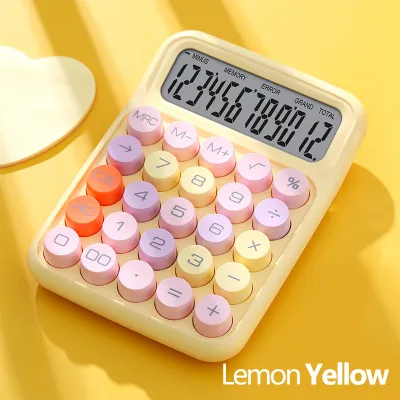
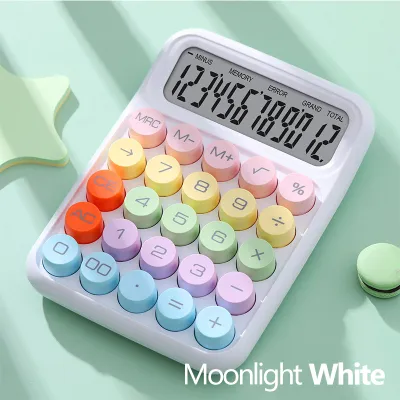
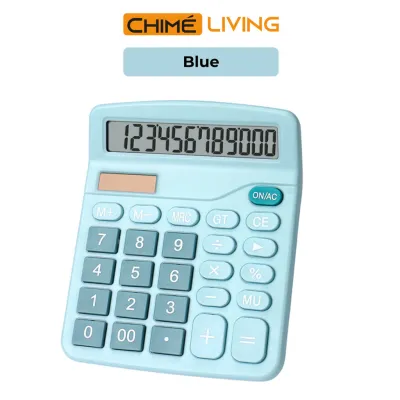
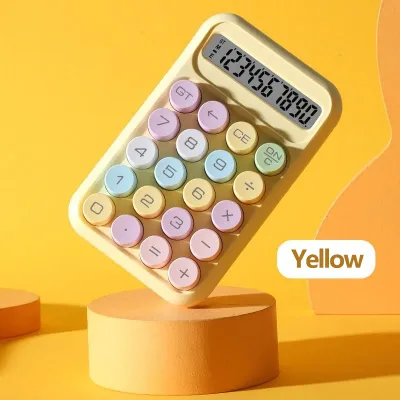
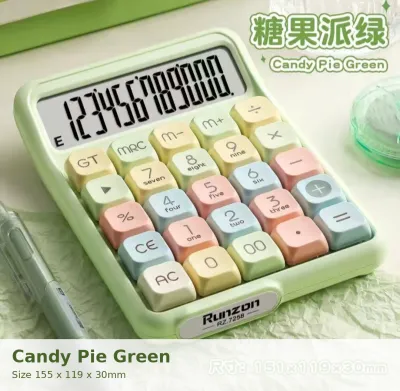
Prices are valid at publication and may change. Please refer to the product page for the latest price.
During daily classroom learning, teachers introduce calculators as tools for exploration and problem-solving rather than substitutes for thinking. However, when it comes to national examinations like the Primary School Leaving Examination (PSLE), GCE N-Level, O-Level, and A-Level, only specific approved models are permitted. The SEAB publishes an annual list of approved calculator models that students can bring into the exam hall.
This strict regulation prevents unfair advantages and ensures that the focus remains on the student’s mathematical reasoning. Electronic calculators used in upper primary and secondary schools must be non-programmable and must not possess features that could compromise exam integrity, such as wireless communication or symbolic algebra capabilities. By aligning your purchases with these guidelines, you protect your child from the stress of having their equipment confiscated or disallowed on exam day.
Lower Primary (Primary 1–3): Physical and Mechanical Learning Aids
In Primary 1, 2, and 3, electronic calculators are strictly prohibited in both daily classroom work and formal assessments. The curriculum at this stage focuses heavily on developing a child’s number sense, mental calculation strategies, and manual computational fluency. Introducing electronic devices too early can hinder a child’s ability to visualize numbers and understand the underlying mechanics of addition, subtraction, multiplication, and division.

Instead of electronic devices, teachers and parents often utilize physical manipulatives and mechanical learning aids to make abstract concepts concrete. Tools such as counting blocks, fraction discs, and the traditional abacus play a vital role in early math education. A simple mechanical calculator, such as a tactile click-wheel adding toy or a physical slide rule, can also serve as an engaging educational aid at home. These mechanical devices allow children to physically manipulate parts to see how numbers combine and separate, reinforcing the concept of place value without the passive experience of pressing buttons on a digital screen.
It is important to distinguish between these educational toys and actual exam requirements. While a mechanical calculator or an abacus is excellent for building tactile understanding and spatial awareness of numbers at home, they are not used in school exams. Parents should focus on providing high-quality, durable physical manipulatives during these formative years to help their children build the confidence needed for the transition to electronic tools later on.
Upper Primary (Primary 4–6): Transitioning to Basic Electronic Calculators
The transition to electronic calculators begins in Primary 4, where students are introduced to basic four-function calculators for specific topics in the syllabus. By Primary 5 and 6, the calculator becomes an essential tool for Paper 2 of the PSLE mathematics examination. This introduction allows students to tackle more complex, real-world problems involving large numbers, decimals, and percentages without getting bogged down by tedious manual calculations.
When shopping for a calculator for an upper primary student, look for a basic electronic model that features a clear, easy-to-read display and large, durable buttons. The device should perform only fundamental arithmetic operations: addition, subtraction, multiplication, division, square roots, and percentages. It must not have any scientific functions, such as trigonometric keys (sin, cos, tan) or logarithmic capabilities, as these are not part of the primary syllabus and can confuse young learners.
Choosing a simple, robust device is key. A basic calculator with a dual power source—utilizing both solar panels and a backup button cell battery—is highly recommended to ensure the screen remains bright and legible under classroom and exam hall lighting. Avoid purchasing advanced scientific models at this stage, as they are not permitted in primary school exams and their complex layouts can overwhelm a child who is still mastering basic calculator operations.
Secondary School and Junior College: Scientific and Graphing Calculators
Upon entering secondary school (Secondary 1 to 5), students face a significant shift in their mathematics and science curricula. Subjects like Additional Mathematics, Physics, and Chemistry require complex calculations involving trigonometry, logarithms, exponential functions, and statistical analysis. Consequently, a standard basic calculator is no longer sufficient, and students must upgrade to an approved scientific calculator.
For junior college students, particularly those taking H2 Mathematics, the requirements become even more advanced. These students must use a graphing calculator, which allows them to plot curves, solve systems of linear equations, and perform complex statistical analysis visually. Graphing calculators are sophisticated devices with high-resolution screens capable of displaying detailed mathematical graphs and tables.
Because these advanced calculators are used in high-stakes national examinations like the GCE O-Level, N-Level, and A-Level, compliance is critical. The SEAB maintains a strict registry of approved scientific and graphing calculator models. Before making a purchase, parents must cross-reference the model number with the latest SEAB approved list. Buying an unapproved model, even if it is sold in local stationery shops, means the student will not be allowed to use it during national exams.
Purchasing Checklist: Verifying Compatibility and Exam Compliance
To ensure your child’s calculator is fully compliant and ready for school, use this practical checklist before finalizing your purchase:
- Verify the SEAB Approved List: Always check the official SEAB website for the most current list of approved scientific and graphing calculator models.
- Look for the Approval Sticker: In Singapore, approved calculators sold through school bookshops or authorized retailers often come with an official SEAB approval sticker or are registered directly by the school. Ensure this sticker is intact and visible.
- Check the Feature Set: Ensure the calculator is strictly non-programmable. It must not have a QWERTY keyboard, wireless communication capabilities (such as Bluetooth or Wi-Fi), or a Computer Algebra System (CAS) that can perform symbolic manipulation.
- Confirm School Preferences: Some schools prefer specific models within the approved list to ensure uniformity during classroom instruction. Check with your child's math teacher or the school's bookshop list before buying.
- Inspect the Power Source: Opt for models with dual-power systems (solar and battery) to prevent sudden power failures during critical exam moments. Ensure the battery compartment is secure and requires a tool to open, which is a standard safety feature for devices used by younger students.
Frequently Asked Questions (FAQ)
Can my child use a mechanical calculator during the PSLE?
No. Only approved electronic calculators that appear on the official SEAB approved list are permitted for the relevant sections of the PSLE. Mechanical calculators, abacuses, and other non-electronic calculation aids are not allowed in the examination hall.
What should I do if my child's approved scientific calculator breaks before exams?
If a calculator fails close to an exam, contact your child’s school immediately. Many schools keep a small inventory of approved spare calculators to lend to students in emergencies. Alternatively, you can quickly purchase an identical approved model from the school bookshop or a local stationery store, ensuring it is properly registered or marked according to school guidelines before the exam begins.
Are solar-powered calculators allowed in Singapore national exams?
Yes, solar-powered and dual-power calculators are fully permitted, provided the specific model is on the SEAB approved list. It is highly recommended to choose a dual-power model that includes a backup battery, ensuring the calculator functions reliably even under the varied lighting conditions of large examination halls.
Community discussion
Share your experience or ask a question. Comments are reviewed before publication.