
Keeping track of school uniforms, physical education (PE) kits, and co-curricular activity (CCA) gear is a constant challenge for parents and students in Singapore. In a climate where daily laundry cycles are mandatory due to high humidity and sweat, name labels must withstand intense wear and frequent washing. Choosing the right iron-on name label is not a one-size-fits-all decision; the ideal choice depends on whether you prioritize rapid turnaround for the upcoming school term, specialized adhesion for high-stretch athletic fabrics, or immediate, cost-effective DIY solutions for a last-minute camp.
To navigate the options effectively, it is helpful to understand the primary trade-offs between the three main categories of labels available to local consumers. Local custom print services offer fast domestic shipping and are tailored to the typical poly-cotton blends used in Singaporean school uniforms. International premium brands provide advanced material engineering, such as highly flexible polyurethane adhesives designed for performance activewear, though they come with higher price tags and longer delivery times. Meanwhile, DIY home-printed transfers offer immediate, on-demand creation but generally lack the long-term wash durability of professionally manufactured alternatives. This guide provides a comprehensive framework to evaluate these options across print clarity, wash resistance, and ease of application, helping you make an informed decision that preserves both your garments and your sanity.
How to Evaluate Print Quality, Durability, and Ease of Use
Selecting a reliable iron-on label requires looking beyond the polished marketing graphics found on brand websites. To ensure your labels remain legible and securely attached throughout the school year, you must understand how to objectively assess their technical specifications, material composition, and application requirements.
Products mentioned in this guide
![[SG Stock] Iron on Clothing labels Daycare labels Kids name stickers Name labels](https://img.lazcdn.com/g/ff/kf/S0c6bc16b579647c99d8ee477aaf77ddf8.jpg_400x400q80.jpg_.webp)
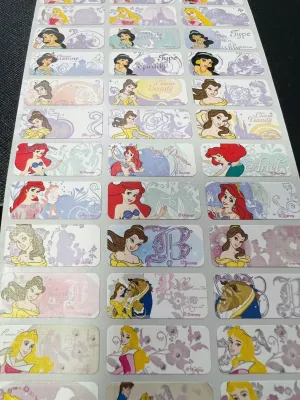
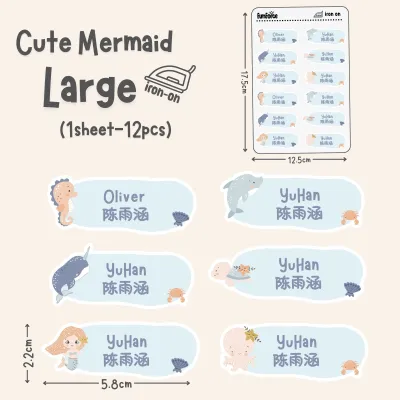
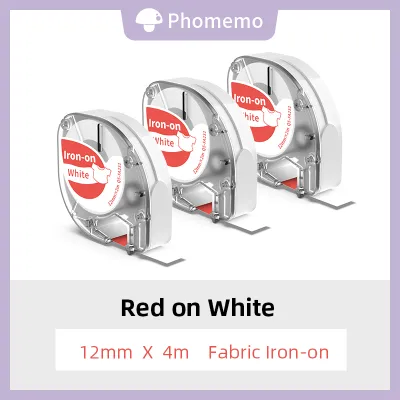
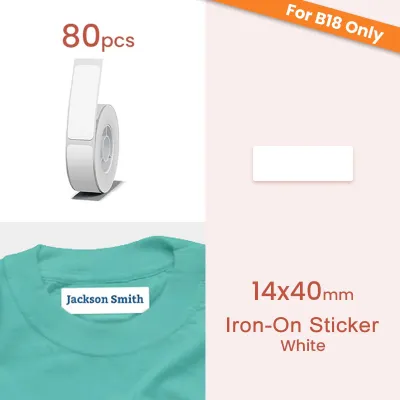
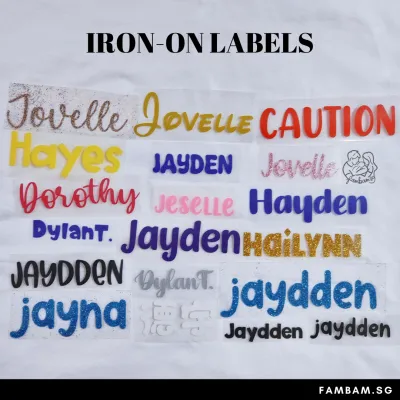
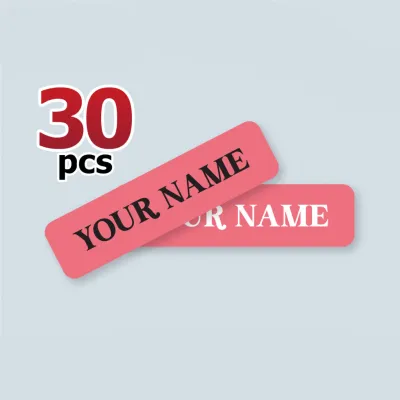
Prices are valid at publication and may change. Please refer to the product page for the latest price.
Assessing Print Clarity and Colorfastness
Print quality is the first line of defense against lost property. In school environments, names and contact details must be instantly readable by teachers, coaches, and camp counselors. High-contrast text is critical, especially when labels are applied to dark-colored garments such as navy blue shorts, green pinafores, or dark gray knits. If the printing is fuzzy or the ink bleeds into the surrounding material, the label loses its utility.
When comparing brands, look for those utilizing thermal transfer printing technology rather than standard surface inkjet printing. Thermal transfer processes use heat to fuse specialized resin or wax-based inks deep into the label substrate. This method creates exceptionally sharp text edges and superior resistance to fading from UV exposure and harsh detergents. Surface-printed inks, by contrast, sit loosely on top of the material and are highly prone to rubbing off due to friction from daily wear. To verify clarity before committing to a large order, utilize the online preview tools provided by most reputable manufacturers. These tools allow you to test different font weights and sizes, ensuring that long names or secondary phone numbers remain perfectly legible. For large-scale needs, such as labeling gear for an entire sports club, consider ordering a small sample pack first to inspect the physical print sharpness firsthand.
Verifying Wash Resistance and Adhesive Strength
A label’s durability is directly tied to the chemistry of its adhesive backing. In Singapore’s climate, school uniforms and sportswear undergo rigorous washing cycles, often at high temperatures to eliminate sweat odors and bacteria. Therefore, verifying wash resistance using objective manufacturer specifications is essential.
Look for labels that explicitly state their maximum wash temperature limits (such as durability up to 40°C or 60°C) and their compatibility with tumble dryers. The fundamental difference lies in the adhesive material used: standard vinyl labels rely on pressure-sensitive acrylic adhesives that sit on the fabric surface, whereas premium labels utilize polyurethane (PU) or specialized fabric-fusing adhesives. When subjected to the heat of an iron, PU adhesives melt slightly and flow into the microscopic gaps between the woven fibers of the garment. As they cool, they form a mechanical bond that integrates the label directly into the textile structure. This allows the label to stretch and flex naturally with the fabric, preventing the cracking and corner-lifting common in cheaper vinyl alternatives. Never assume that a generic “waterproof” claim translates to high-heat wash durability; always cross-reference the manufacturer’s adhesive specifications with the care instructions on your clothing.
Comparing Application Steps and Tool Requirements
The ease of applying iron-on labels is a critical factor that directly influences their long-term performance. Even the highest-quality adhesive will fail if the application process is overly complex or poorly executed. One of the primary differences to observe is the backing paper peelability, which typically falls into two categories: hot peel and cold peel.
Hot-peel labels require you to strip away the protective backing sheet immediately after removing the iron while the adhesive is still molten. While this allows for rapid, sequential labeling of large bundles, it requires careful handling to avoid burning your fingers or accidentally distorting the warm vinyl. Cold-peel labels, on the other hand, must be allowed to cool completely to room temperature before the backing paper is removed. This method is generally more forgiving for beginners, as the cooled adhesive is fully set and less likely to lift during the peeling process. Additionally, check the manufacturer’s requirements regarding heat protective barriers. Many brands mandate the use of parchment paper, Teflon sheets, or a thin cotton pressing cloth to distribute heat evenly and protect both the label and your iron’s soleplate. Clear, detailed instructions provided by the brand are a strong indicator of usability, as insufficient heat, inadequate pressure, or using a soft, padded ironing board are the leading causes of premature label peeling.
Iron-On Label Options Available in Singapore
Understanding the local marketplace allows you to match your specific needs with the most appropriate supply channel. Consumers in Singapore generally choose between three distinct categories of iron-on labels, each offering unique advantages and trade-offs.

Local Custom Print Services
Singapore-based custom print services are highly favored for their convenience, rapid turnaround times, and local customer support. Because these companies operate domestically, they can typically process and ship orders within 3 to 5 business days, making them an excellent choice for last-minute preparations before the school term begins.
These local providers are highly familiar with the specific textiles used in Singaporean school uniforms, such as the stiff polyester-cotton blends common in primary school shirts and the heavy drill cotton used for secondary school trousers and pinafores. Their adhesives are formulated to bond effectively with these dense, durable fabrics. Additionally, local services frequently offer bundled packages tailored specifically to school starter kits. These bundles often combine iron-on clothing labels with matching waterproof stick-on labels for water bottles, lunchboxes, and stationery, providing a highly cost-effective, one-stop solution for busy parents.
International Premium Brands
International premium brands, sourced primarily from specialized manufacturers in Australia, Europe, or North America, focus heavily on material innovation and extensive design customization. These brands are highly suitable for active families who require specialized labeling solutions.
Their product catalogs often feature advanced materials, such as ultra-thin, highly stretchable polyurethane labels that move seamlessly with elastane and spandex activewear, or ultra-durable, thick labels engineered for rugged outdoor gear and camping equipment. They also offer a vast library of design choices, including licensed cartoon characters, modern fonts, and diverse color palettes, allowing children to personalize their belongings. However, these premium features come with notable trade-offs. International shipping can take anywhere from one to three weeks, and the cost per label is significantly higher due to international freight charges and currency conversions. These labels are best reserved for specialized garments or when specific aesthetic customizations are highly desired.
DIY Iron-On Transfer Papers
For those who require immediate solutions or enjoy hands-on crafting projects, DIY iron-on transfer papers represent a highly accessible and flexible option. These blank transfer sheets can be purchased from local stationery stores or online marketplaces and printed at home using standard inkjet or laser printers.
This method offers absolute creative control, allowing you to design and print custom graphics, logos, and names on demand. However, DIY transfers generally fall short in terms of long-term durability when compared to professional thermal transfer services. The transfer films available for home printing are typically thicker and less flexible, making them prone to cracking and peeling after a few wash cycles. Furthermore, home-printed inks lack the colorfastness of professional industrial inks, leading to rapid fading under frequent laundering. Consequently, DIY transfer papers are best utilized for temporary items, one-off events, school camp shirts, or costumes that do not require long-term washing durability.
Decision Framework: Which Label Type Should You Choose?
To streamline your purchasing decision, evaluate your specific labeling requirements against the following operational scenarios:
- Choose local custom services if: You need to label a large volume of standard school uniforms, PE shirts, and daily wear quickly and cost-effectively. This option offers the fastest delivery within Singapore and is optimized for the standard poly-cotton blends used by local schools.
- Choose international premium brands if: You are labeling highly specialized, stretchy fabrics such as swimwear, compression activewear, nylon windbreakers, or heavy-duty outdoor gear. This is also the ideal route if you prioritize unique design themes, licensed characters, or ultra-flexible material technology that resists cracking.
- Choose DIY transfer paper if: You require a small number of custom labels immediately for a temporary event, such as a weekend school camp, a sports meet, or a theatrical production, and you already own a compatible home printer.
- Verify fabric compatibility first: Before purchasing or applying any iron-on labels, always inspect the care tags of your garments. If a garment requires dry-cleaning, is highly heat-sensitive (such as silk, rayon, or fine nylon), or explicitly prohibits ironing, standard iron-on labels should not be used. Applying high heat to these delicate materials can melt the fibers or permanently scorch the fabric. For these sensitive items, consider using sew-in labels, laundry stamps, or clip-on tags as safe, heat-free alternatives.
Application and Care Tips for Maximum Durability
The longevity of an iron-on label depends as much on the application technique as it does on the quality of the product itself. To ensure a permanent, wash-resistant bond that lasts for the entire lifespan of the garment, follow these precise application and maintenance steps:
- Prepare the fabric thoroughly: Always wash new garments before applying labels to remove any manufacturing starches, chemical sizing, or finishes. It is critical to avoid using fabric softeners during this pre-wash, as softeners leave a microscopic silicone residue on the fabric fibers that prevents the adhesive from bonding securely. Ensure the fabric is completely dry before proceeding.
- Select a hard, unyielding surface: Never use a standard padded ironing board. The soft padding absorbs the downward force, preventing the adhesive from being pressed deeply into the fabric weave. Instead, use a solid, heat-resistant surface such as a wooden cutting board, a stone countertop, or a sturdy wooden table protected by a single layer of thin cotton cloth.
- Apply firm, static pressure: Set your iron to the "dry cotton" setting (typically between 130°C and 150°C) and ensure the steam function is turned completely off. Moisture and steam will ruin the adhesive bond. Place the protective parchment paper or pressing cloth over the label, then press down firmly with your full body weight. Hold the iron completely static for 10 to 15 seconds. Do not glide the iron back and forth, as this lateral movement can shift, warp, or smudge the warm label.
- Allow the adhesive to cure fully: Once applied, leave the garment completely undisturbed. Do not wash, stretch, or heavily handle the item for at least 24 to 48 hours. This crucial curing period allows the adhesive to cool, harden, and fully lock into the fabric fibers, establishing a permanent bond.
- Launder with care: When washing labeled garments, always turn them inside out. This simple step protects the face of the label from abrasive friction caused by zippers, buttons, and the rough textures of other fabrics in the washing machine drum, significantly extending the life of the print.
Frequently Asked Questions (FAQ)
Can iron-on name labels be removed or transferred to another garment?
Most high-quality iron-on labels are engineered to be permanent. They melt and fuse directly into the fabric fibers, making clean removal very difficult. While you can sometimes reheat the label with an iron (using parchment paper) to soften the adhesive and peel it off with tweezers, this process often leaves a sticky residue, damages the label, or risks scorching the garment. They are not intended for transfer to other clothing.
Do iron-on labels work on all types of school uniform fabrics?
They perform exceptionally well on standard cotton, polyester, and polyester-cotton blends commonly used in local school uniforms. However, they are not suitable for highly heat-sensitive materials like nylon, rayon, or delicate knits, which can melt under the iron. Always check the garment’s care tag to ensure it can withstand the heat required for label application.
How do iron-on labels compare to stick-on or sew-in labels for durability?
Iron-on labels offer superior wash durability compared to stick-on labels on clothing, as the heat fuses the adhesive deep into the fabric weave. Stick-on labels are prone to peeling off fabrics during washing, though they are excellent for hard surfaces like water bottles. Sew-in labels remain the absolute most durable and reversible option, especially for delicate garments or items subjected to commercial high-heat laundering.
Community discussion
Share your experience or ask a question. Comments are reviewed before publication.