
Selecting the right shrink wrap thickness is a balance between the physical properties of your product and the level of protection required during transit or storage. Choosing too thin a film leads to tears, punctures, and compromised items, while over-specifying increases material costs and energy consumption during the heat-shrinking process. By evaluating your product’s weight, shape, and vulnerability, you can identify the ideal thickness range to keep your goods secure.
Understanding Shrink Wrap Thickness Units: Micron vs. Gauge
When sourcing shrink wrap, you will primarily encounter two units of measurement: microns (µm) and gauge. Microns represent a metric measurement of thickness, where higher numbers indicate a thicker film. Gauge is an imperial unit commonly used in regional packaging standards, where higher numbers also represent thicker materials.
Because manufacturers and distributors across different regions use these units interchangeably, it is crucial to verify the exact conversion on packaging labels before purchasing. A common point of confusion is assuming a direct one-to-one relationship between different regional standards, which can lead to ordering film that is either too thin to support your items or too thick for your heat-sealing equipment to melt properly.
Products mentioned in this guide
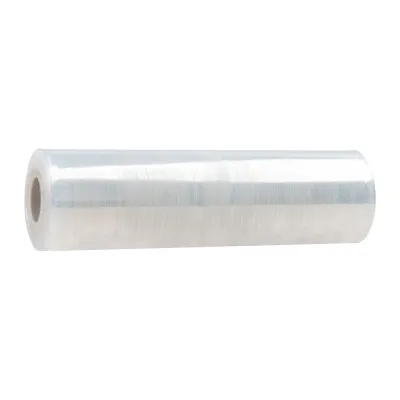
![🏅[CHEAPEST] Stretch Film/ Shrink Wrap / Cling Wrap /Pallet wrapping /Moving Supplies/pallet Wrap/Pallet wrapping](https://img.lazcdn.com/g/p/c69357eb04f4e35ac9ee2d124f108fda.jpg_400x400q80.jpg_.webp)
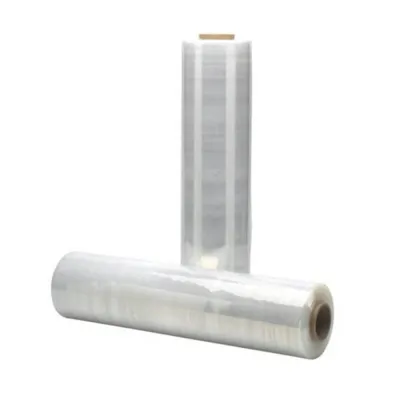
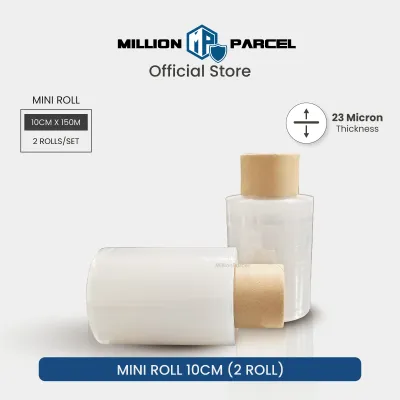
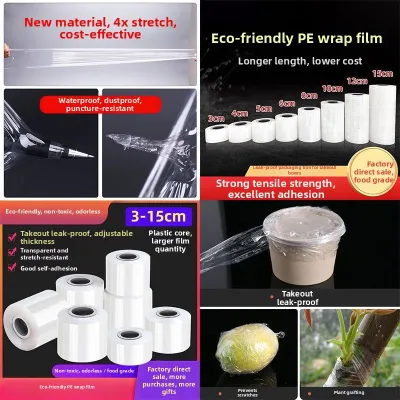
Prices are valid at publication and may change. Please refer to the product page for the latest price.
It is also important to remember that thickness is merely a baseline metric. The actual protective performance, puncture resistance, and elasticity of the film depend heavily on the base polymer formulation and manufacturing process, meaning two films of the same thickness can behave differently under stress.
Matching Thickness to Item Weight, Shape, and Fragility
Selecting the right thickness requires a close look at your product’s physical characteristics. For light, uniform items with smooth edges—such as standard stationery boxes, notebooks, or small cosmetic containers—a lower thickness range is generally sufficient. These applications typically require films between 12 to 15 microns (50 to 60 gauge), which provide excellent clarity and basic dust and moisture protection without adding unnecessary bulk.

For medium-weight items or products with slight edges, such as multi-pack books, retail toys, or lightweight hardware, a mid-range thickness is more appropriate. Films ranging from 19 to 25 microns (75 to 100 gauge) balance shrinkage rate with puncture resistance. This thickness provides enough structural integrity to hold multiple items together tightly while resisting minor abrasions during handling.
Heavy, irregular, or sharp-edged items demand the highest level of protection. Products like heavy industrial parts, large metal tools, or items with protruding corners require heavy-duty films, often exceeding 30 to 50 microns (120 to 200 gauge), or even thicker polyethylene wraps for palletized loads. In these scenarios, verifying the load-bearing limits and puncture resistance of the film is essential to prevent the corners of the product from piercing the plastic during transit.
Rather than relying solely on general rules of thumb, always consult the specific manufacturer’s technical specification sheet. These documents outline the maximum weight recommendations and tear propagation limits for each film grade, helping you make an informed decision based on your specific packaging setup.
Why Material Type Matters Just as Much as Thickness
Thickness alone does not dictate how well a shrink wrap protects your goods; the polymer type plays an equally critical role. The three most common materials used in packaging are Polyolefin (POF), Polyvinyl Chloride (PVC), and Polyethylene (PE). Each material exhibits distinct tear and puncture resistance profiles even when compared at identical thicknesses.
Polyolefin is highly favored for retail products and stationery due to its exceptional tensile strength, high clarity, and food-safe properties. Even at lower thicknesses, POF offers excellent puncture resistance and does not become brittle over time. Polyvinyl Chloride is stiffer and shrinks at lower temperatures, making it suitable for CD boxes or software packaging, though it can release odors during sealing. Polyethylene is the go-to choice for heavy-duty industrial wrapping and palletization, offering high durability and stretchability at much higher thicknesses.
Your specific packaging goals—such as achieving high optical clarity for retail display or requiring high shrinkage force to hold heavy bundles together—will dictate the optimal combination of material and thickness. To ensure compatibility, use this quick checklist when evaluating your options:
- Confirm the material type matches your product's safety requirements (e.g., food-grade POF for consumables).
- Verify that your heat tunnel or shrink gun can reach the required temperature for the chosen polymer.
- Check the label for recycling codes to align with local waste management guidelines.
- Ensure the film's clarity matches your retail presentation needs.
How to Test and Verify Your Shrink Wrap Selection
Before committing to a large-scale packaging run, it is highly recommended to conduct small-batch test runs. Wrap a small sample of your actual products and observe the post-shrink tension, the strength of the edge seals, and how the film responds to manual pressure. This hands-on trial helps you identify potential weak points, such as seal separation or dog-ears (unshrunk corners), before processing bulk inventory.
Keep in mind that heating temperature and exposure time directly affect the final shrink result. Thicker films require more heat or longer exposure times to shrink fully and create a secure seal. Always follow both your packaging equipment guidelines and the film manufacturer’s recommended temperature settings to avoid under-shrinking or burning holes through the plastic.
Establish clear stopping conditions during your testing phase to determine when a specific thickness or material is inadequate. If you observe visible tearing along the corners, weak or easily separated seals, or excessive distortion of the product packaging due to high shrink force, abandon the current specification. These signs indicate you need to switch to a thicker film, adjust your heat settings, or select a different polymer formulation entirely.
Frequently Asked Questions (FAQ)
Does a higher gauge always mean better protection?
Not necessarily. A thicker film made from a lower-quality polymer or a poorly formulated blend can underperform compared to a thinner, high-grade alternative. For example, a high-quality, multi-layer co-extruded Polyolefin film at a lower gauge often provides reliable puncture resistance and tear strength compared to a thicker, single-layer PVC film. When selecting shrink wrap, always evaluate specific performance metrics like puncture resistance, tensile strength, and tear propagation alongside raw thickness numbers.
How do I measure the thickness of my existing shrink wrap?
To measure the thickness of unlabelled or existing shrink wrap inventory, use a digital micrometer or a specialized film thickness gauge. Take measurements at multiple points across a flat, unshrunk sample of the film to get an accurate average reading. However, because physical measurements can vary slightly depending on the pressure applied by the tool, checking your original purchase records or contacting the manufacturer with the product batch code remains the most reliable method for verifying exact specifications.
Community discussion
Share your experience or ask a question. Comments are reviewed before publication.