
Quick Answer: Which Sewing Thread Brand Offers the Best Value?
Choosing the best sewing thread brand in Singapore depends on your specific sewing project, machine requirements, and overall budget. Premium brands, such as Gütermann and Mettler, offer exceptional tensile strength, minimal lint production, and highly consistent tension. These characteristics make them the ideal choice for fine garments, heirloom quilting, and visible topstitching, easily justifying their higher price per meter.
Conversely, everyday brands, such as Coats or unbranded local haberdashery staples, provide excellent cost efficiency for general mending, basting, and high-volume internal seam construction. For these projects, the minor variations in thread thickness and slightly higher lint levels are negligible.
Ultimately, true value is not determined by the upfront price of a single spool. Instead, it is calculated by evaluating the cost per meter alongside the specific demands of your fabric and sewing machine. Investing in premium thread for structural seams prevents premature thread rot and breakage, while utilizing budget-friendly threads for utility tasks keeps overall crafting costs manageable.
Products mentioned in this guide
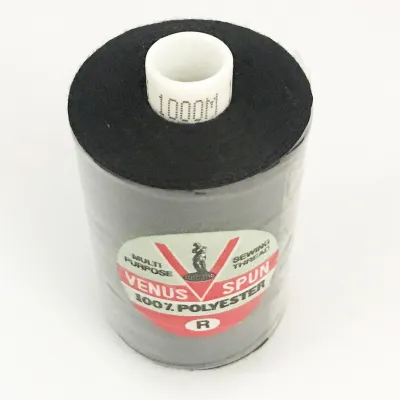
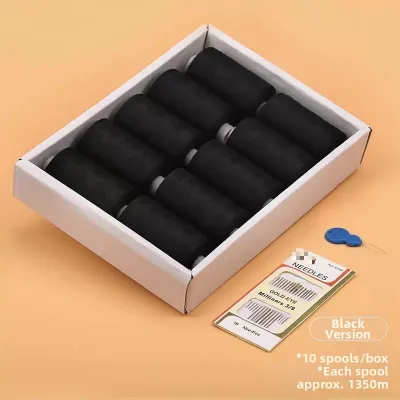
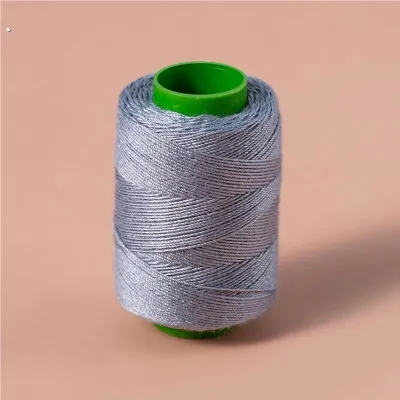
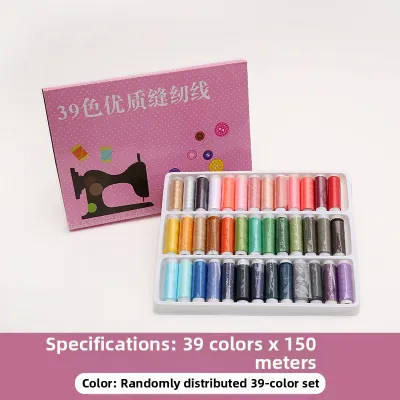
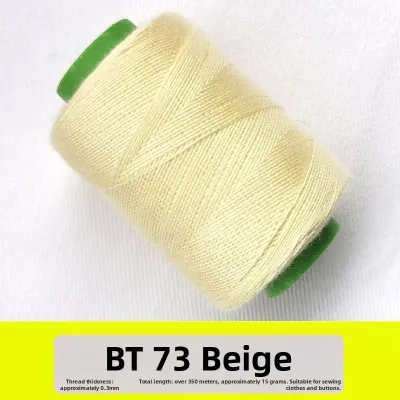
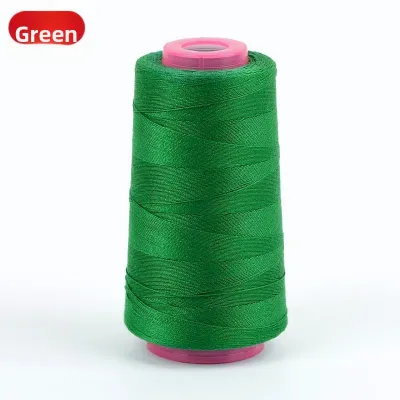
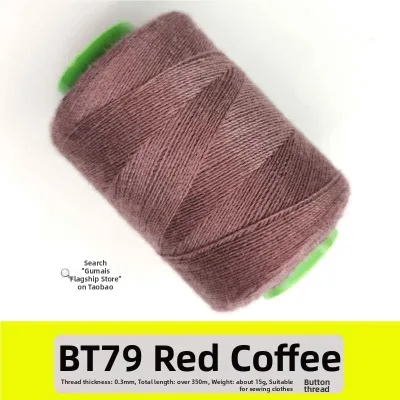
Prices are valid at publication and may change. Please refer to the product page for the latest price.
How to Evaluate Sewing Thread Quality and Price
Before selecting a thread brand, it is essential to understand the objective technical standards that dictate how a thread performs under the high-speed friction of a sewing machine. Evaluating these criteria prevents tension issues, skipped stitches, and machine damage.

Quality Indicators on Spool Labels
Reading a thread spool label correctly is the first step in verifying compatibility with your fabric and machine. The label contains critical specifications regarding fiber content, thread weight, and manufacturing standards:
- Fiber Content: The most common options are 100% polyester, cotton-wrapped polyester (often called corespun), and 100% cotton. Polyester threads offer excellent elasticity and strength, making them suitable for synthetic and stretch fabrics. Cotton-wrapped polyester provides the strength of a polyester core with the heat resistance of a cotton exterior. Pure cotton thread is preferred for quilting and natural fibers but lacks the stretch required for synthetic knits.
- Thread Weight (wt) and Tex: Thread thickness is commonly measured using the Weight (wt) system or the metric Tex system. In the Weight system, a higher number indicates a finer thread (e.g., 50wt is thinner than 30wt). In the Tex system, a higher number indicates a thicker thread (e.g., Tex 40 is thicker than Tex 25). Standard garment sewing typically utilizes a 40wt to 50wt (Tex 25 to Tex 30) thread.
- Ply: This refers to the number of individual strands twisted together to form the single thread (e.g., 2-ply or 3-ply). A higher ply generally increases strength but also increases thread thickness, which must be matched to the appropriate sewing machine needle size.
Observable Quality Checks
You can physically inspect a spool of thread before starting a project to ensure it meets quality standards. These simple checks can save hours of troubleshooting later:
- Even Winding: Examine the spool to see if the thread is wound uniformly. Uneven winding or visible knots on the spool can cause sudden tension spikes as the thread feeds through your machine.
- Lint Production: Pull a meter of thread off the spool and run it between your thumb and forefinger. If a visible layer of fuzz or lint accumulates on your skin, the thread is made of short-staple fibers. High-lint threads quickly clog your sewing machine's bobbin case and tension discs, requiring frequent cleaning.
- Tensile Snap Test: Take a section of thread and pull it firmly between both hands until it breaks. A high-quality thread will resist a reasonable amount of tension and snap cleanly without fraying or unraveling into individual fibers first.
- Spool Dimensions and Machine Fit: Ensure the physical spool shape fits your machine's spool pin. Large industrial cones or specialized king spools often require a standalone thread stand to feed smoothly into domestic sewing machines without catching.
Price Evaluation and the Cost-per-Meter Formula
Comparing thread prices solely by the spool is highly misleading because spool capacities vary drastically. A small domestic reel may hold only 100 meters, while a medium spool holds 500 meters, and an industrial cone can hold 1,000 to 5,000 meters.
To find the true value, always calculate the cost per meter using this simple formula:
$$\text{Cost per Meter (SGD)} = \frac{\text{Price of the Spool (SGD)}}{\text{Total Meters on the Spool}}$$
For example, if a premium 100-meter spool costs S$3.50, the cost is S$0.035 per meter. If a 1,000-meter cone of everyday thread costs S$8.00, the cost drops to S$0.008 per meter. Calculating this rate allows you to make an accurate, objective comparison across different brands and spool sizes.
Comparing Popular Sewing Thread Brands in Singapore
The Singaporean market offers a diverse selection of sewing threads ranging from European premium imports to regional value brands. These options are widely available in local craft boutiques, traditional textile hubs, and online marketplaces.
Premium and Professional Brands
Premium brands are typically manufactured to incredibly tight tolerances, ensuring that the thread diameter remains uniform across the entire spool. This consistency is vital for maintaining balanced machine tension, especially when working with temperamental fabrics like silk, chiffon, or dense denim.
- Gütermann: Widely regarded as the gold standard among local hobbyists and professional tailors alike, Gütermann is highly accessible in Singapore. Their flagship "Sew-All" thread is a 100% polyester corespun thread that exhibits virtually zero lint. It feeds flawlessly through domestic machines and is highly resistant to abrasion. While it commands a premium price (often ranging from S$0.03 to S$0.05 per meter depending on the spool size), its reliability makes it the preferred choice for structural seams and visible topstitching.
- Mettler: Another highly respected European brand, Mettler specializes in premium cotton and polyester threads, such as their popular "Metrosene" line. Mettler threads are known for their high tensile strength and rich, fade-resistant coloration. They are slightly less common in neighborhood shops but are easily found in specialized quilting boutiques. They carry a similar premium price point to Gütermann and are highly recommended for detailed patchwork and machine embroidery.
- Madeira: Primarily known for high-end embroidery threads, Madeira offers exceptional sheen and strength. Their threads are designed to withstand the extreme speeds of multi-needle embroidery machines without breaking. While expensive, they are the premier choice for decorative embellishments, monogramming, and lace-making.
When purchasing premium brands in Singapore, always verify the exact meterage printed on the inner spool rim. Some specialty assortments or promotional gift packs may contain smaller 50-meter or 100-meter spools, which carry a much higher cost per meter than standard 200-meter or 500-meter reels.
Everyday and Value-Oriented Brands
For high-volume sewing, prototyping, or hidden structural seams, premium threads can quickly become cost-prohibitive. Everyday brands offer a practical middle ground, providing reliable performance at a fraction of the cost.
- Coats (including Coats Duet): Coats is a historic global brand with a massive footprint in Singapore. Their threads are widely available in neighborhood haberdasheries, traditional textile centers in Chinatown (such as People's Park Complex), and general craft stores. Coats Duet is a highly reliable polyester thread that balances strength with affordability. While it may produce slightly more lint than Gütermann, it is highly consistent and serves as an excellent workhorse thread for everyday garment construction and home decor projects.
- Anchor: Often associated with embroidery floss, Anchor also produces dependable sewing threads that are highly popular for hand-sewing and general alterations. They offer excellent color fastness and are priced very competitively, making them a staple in many Singaporean households.
- Unbranded and Bulk Cones: Found in abundance in local textile markets and online marketplaces, these large cones (typically 1,000m to 5,000m) are incredibly cheap, often costing less than S$0.005 per meter. They are ideal for overlocking (serging), where four separate threads are used simultaneously, consuming vast quantities of thread. The primary trade-off is a noticeable increase in lint production and occasional weak spots that can snap under high tension. However, for internal seam finishing and basting, these trade-offs are entirely acceptable.
Feature and Value Comparison Matrix
To help you quickly compare your options, this matrix contrasts the key performance and financial dimensions of premium and everyday thread tiers available in Singapore.
| Brand Tier | Typical Fiber Content | Best Use Cases | Expected Lint Production | Price Value Strategy | Label Verification Check |
|---|---|---|---|---|---|
| Premium (e.g., Gütermann, Mettler) | 100% Polyester, Long-Staple Cotton | Fine garments, visible topstitching, quilting, machine embroidery | Extremely Low (minimal residue in bobbin case) | Higher cost per meter; buy for structural longevity and presentation | Check for "Made in Germany" or "Made in EU" and exact meterage |
| Everyday (e.g., Coats Duet, Anchor) | Polyester, Cotton-Polyester Blend | General garment construction, basic alterations, home decor | Low to Moderate (requires regular machine dusting) | Moderate cost per meter; excellent balance for daily crafting | Verify thread weight (e.g., 40wt) to ensure fabric compatibility |
| Value / Bulk (e.g., Unbranded Cones) | Spun Polyester | Overlocking, basting, temporary seams, high-volume crafts | Moderate to High (frequent bobbin cleaning required) | Lowest cost per meter; buy in bulk cones for interior seam finishing | Inspect for uniform thread thickness and twist direction (Z-twist) |
Decision Framework: Matching Thread to Your Sewing Project
To maximize both your budget and your sewing success, use this structured decision framework to select the right thread tier for your next project.
Choose Premium Brands if:
- You are sewing fine apparel: Silk, satin, chiffon, and lightweight wool demand a thread that is incredibly smooth and thin. Coarser threads can cause unsightly seam puckering or fabric damage.
- You are quilting: Heirloom quilts represent dozens of hours of labor. Using a premium, low-lint cotton thread ensures that the seams will withstand decades of use and repeated washing without degrading.
- The stitching is highly visible: For topstitching on denim, tailoring buttonholes, or executing decorative machine embroidery, the uniform thickness and high sheen of premium thread directly affect the professional finish of the garment.
- Your machine is highly sensitive: Some modern computerized sewing machines have incredibly tight tension tolerances. Using cheap, lint-heavy thread can trigger tension errors or cause lint buildup that requires professional servicing.
Choose Everyday or Value Brands if:
- You are finishing raw edges: Overlocking (serging) requires massive quantities of thread. Using bulk cones for your loopers saves significant money while still providing professional seam coverage.
- You are sewing mockups or toiles: When testing a pattern on cheap muslin fabric to check the fit, premium thread is wasted. Use budget-friendly everyday threads for all temporary construction.
- You are doing basic alterations and mending: For shortening a hem, patching a pocket, or repairing a minor tear in everyday wear, a standard spool of Coats thread is perfectly adequate and highly cost-effective.
- You are crafting high-volume items: For items like tote bags, pencil cases, or holiday decorations where structural stress is low, everyday threads provide excellent durability without inflating your material costs.
Verify First if:
- You are working with specialty fabrics: Regardless of the brand tier, always check the fabric manufacturer's care instructions and match the thread type to the fabric's physical properties. Stretch knits require a thread with natural elasticity (such as textured polyester or woolly nylon) to prevent the seams from popping when the garment is stretched. Heavy canvas, leather, or upholstery fabrics require heavy-duty, UV-resistant polyester or nylon thread paired with an appropriately sized heavy needle (e.g., size 90/14 to 110/18) to prevent shredding during stitching.
Frequently Asked Questions (FAQ)
Does sewing thread expire or degrade over time?
Yes, sewing thread can degrade, lose its tensile strength, and become brittle over time. Natural fibers like cotton and silk are particularly susceptible to dry rot, while synthetic fibers like polyester can degrade if exposed to prolonged UV light.
To test if an old spool of thread is still usable, perform a simple pull test. Unwind a length of thread and tug it sharply between your hands. If it snaps effortlessly with minimal resistance, the thread has degraded and should not be used in a sewing machine, as it will constantly break and jam.
In Singapore’s tropical climate, high humidity and heat can accelerate the degradation of natural fibers and encourage mold growth. To preserve your thread collection, store your spools in airtight plastic containers away from direct sunlight. Adding a few silica gel packets to your storage containers will absorb excess moisture and significantly extend the lifespan of your threads.
Should I use the same thread for the needle and the bobbin?
As a general rule, you should use the exact same thread brand, fiber type, and weight in both the needle and the bobbin. This consistency ensures that the upper and lower tensions remain perfectly balanced, resulting in even stitches on both sides of the fabric.
Using different thread weights in the needle and bobbin can cause the machine to pull unevenly, leading to puckered seams, skipped stitches, or unsightly loops on the underside of your fabric.
There are, however, specific technical exceptions to this rule. For example, during machine embroidery or dense satin stitching, a specialized, lightweight bobbin thread (often 60wt or 90wt) is used so that the bobbin thread does not show on the right side of the project. Similarly, gathering fabric sometimes involves using a stronger, thicker thread in the bobbin. For all standard garment construction and utility sewing, always consult your sewing machine’s instruction manual for specific bobbin tension guidelines and stick to matching threads.
Community discussion
Share your experience or ask a question. Comments are reviewed before publication.