
Choosing the right magnetic whiteboard for home or classroom education in Singapore requires balancing space constraints, surface durability, and magnetic holding power. While many brands and unbranded options fill local stationery shops and online marketplaces, the most reliable choice is not a single universal brand. Rather, it is the board that matches your specific educational activities—whether that involves heavy daily writing, displaying magnetic letters, or moving the board between rooms. By evaluating key physical specifications, surface materials, and mounting safety, you can confidently select a reliable board that withstands the rigors of teaching.
In Singapore, the demand for high-quality educational tools has grown significantly with the rise of home-based learning and private tutoring. Parents and educators alike recognize that a physical writing surface helps children visualize complex concepts, practice spelling with magnetic letters, and engage in active problem-solving away from digital screens. However, a poorly chosen whiteboard can quickly become a source of frustration, ghosting within weeks or failing to hold basic teaching aids. To avoid these pitfalls, you must understand the technical aspects of whiteboard construction and how they perform in a typical Singaporean home or classroom environment.
Defining Your Space and Size Requirements
Before browsing online marketplaces or visiting a local stationery supplier, you must accurately assess the physical space where the whiteboard will be installed. In Singapore, residential spaces like HDB flats and condominiums often require creative space planning. A board that is too large will overwhelm a study room and restrict movement, while a board that is too small will force you to constantly erase your work, disrupting the flow of a lesson.
Products mentioned in this guide
Prices are valid at publication and may change. Please refer to the product page for the latest price.
Begin by measuring the available wall or floor space with a tape measure. Do not just measure the flat surface of the wall; account for the thickness of the whiteboard frame and the clearance required for the pen tray at the bottom. A standard pen tray can protrude by several centimetres, which might interfere with nearby cabinet doors or desk edges. If you are planning to place the board above a desk, ensure there is enough vertical clearance so that the writer does not have to hunch over to use the bottom of the board.
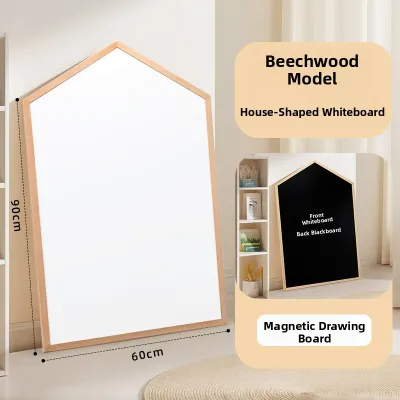
The width of the board should directly correlate with the typical viewing distance of your students or children. For a home setup where a child sits at a desk directly in front of the board, a compact board measuring 60 x 90 centimetres is highly effective. This size provides ample space for writing out daily schedules, spelling words, or basic math equations. For tuition centres or home-based group classes where students sit further away, you will need a board that is at least 120 x 180 centimetres to ensure that writing remains legible from the back of the room.
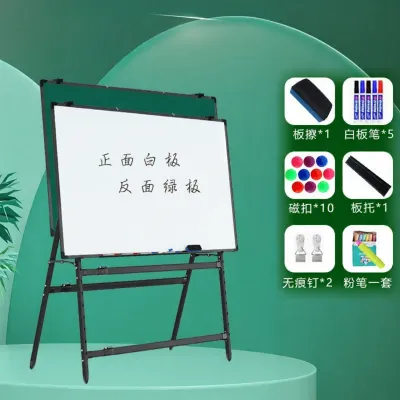
You must also decide on the structural format of the board based on your room’s flexibility and wall constraints. Wall-mounted boards are the most stable and space-efficient option, but they require drilling into your walls, which may not be ideal for rental properties. Easel boards are excellent for younger children as they can be adjusted to a lower height, encouraging independent play and learning. Mobile rolling stands offer the ultimate flexibility for multi-purpose spaces, allowing you to wheel the board out of sight when not in use, though they do require a flat, unobstructed floor area and a wider storage footprint.
Evaluating Surface Materials for Daily Writing
The surface material is the most critical factor determining a whiteboard’s lifespan, writing smoothness, and resistance to staining. When whiteboards are used for daily educational purposes, they undergo frequent writing and erasing cycles. Over time, lower-quality surfaces develop ghosting, which is the permanent staining left behind by dry-erase markers.

Melamine is the most affordable surface material available. It consists of a thin plastic-like resin coated over a fiberboard backing. While lightweight and budget-friendly, melamine is highly porous. With daily use, the surface quickly wears down, allowing marker ink to seep into the pores. This makes melamine boards highly prone to ghosting and staining, requiring frequent deep cleaning with specialized chemical solvents. They are best suited for light, occasional home use rather than structured daily lessons.
Painted steel is the standard mid-range option for most educational environments. It features a steel sheet coated with a durable layer of baked-on paint or enamel. The steel backing provides excellent magnetic properties, while the painted surface offers a smooth writing experience. Painted steel is significantly more resistant to ghosting than melamine, making it a practical choice for home tutoring and primary school classrooms. However, it can still scratch if abrasive cleaners or rough erasers are used, which will eventually lead to staining in the damaged areas.
Porcelain, also known as ceramic-on-steel, represents the premium tier of whiteboard surfaces. It is manufactured by fusing a ceramic glass layer onto a steel backing at extremely high temperatures. This process creates an incredibly hard, non-porous surface that is highly resistant to scratches, dents, and chemical damage. Porcelain boards are virtually immune to ghosting and staining, even if marker ink is left on the surface for weeks. For heavy, daily classroom instruction or long-term tutoring setups, investing in a porcelain board ensures a pristine writing surface for years to come.
When comparing these materials, always check the manufacturer’s specifications for scratch resistance and surface warranties. To verify the quality of a board before committing to heavy use, perform a simple, localized test. Write a few words with a standard dry-erase marker in an inconspicuous corner of the board, let the ink dry completely for 24 hours, and then attempt to wipe it away with a standard dry eraser. A high-quality painted steel or porcelain surface should wipe completely clean without leaving any dark residue or requiring excessive physical pressure.
Checking Magnetic Strength and Accessory Compatibility
A magnetic whiteboard’s educational value is doubled when it can reliably hold teaching aids like magnetic letters, numbers, flashcards, and heavy charts. However, the term magnetic only refers to the board’s ability to attract magnets, not that the board itself is a magnet. This attraction depends entirely on the thickness and quality of the steel backing behind the writing surface.
Inexpensive, low-quality whiteboards often use an extremely thin sheet of metal backing to save on manufacturing costs. While these boards will easily hold lightweight, flat refrigerator magnets, they often fail to support standard educational accessories. Plastic magnetic letters with small, weak magnets will slowly slide down the board, and laminated flashcards with magnetic tape backing will slide off completely. For effective classroom use, you need a board with a solid, thick steel core that provides a strong, reliable hold.
Before purchasing a board, or immediately upon its delivery, test it with the specific accessories you plan to use in your lessons. If you intend to hang heavy paper charts or workbooks using magnetic clips, verify that the board can support that weight without the clips sliding. If you find that your accessories are sliding, the issue could be either a weak steel backing on the board or weak magnets on the accessories. You can often resolve this by upgrading to accessories that utilize stronger neodymium magnets, though these must be handled with care around young children to prevent accidental swallowing.
Additionally, ensure that the whiteboard’s surface is perfectly flat and free from warping. Any bowing or unevenness in the board’s backing sheet reduces the contact surface area between the magnet and the steel, significantly weakening the magnetic hold. A high-quality board will maintain a perfectly flat profile across its entire surface, ensuring consistent magnetic strength from corner to corner.
Assessing Frame Durability and Mounting Hardware
The frame and mounting system of a whiteboard are essential for both structural durability and physical safety, particularly in active learning environments where children are present. Whiteboard frames are typically constructed from aluminum, wood, or plastic, each offering distinct advantages and trade-offs.
Aluminum frames are the industry standard for both classrooms and home study areas. They provide excellent impact resistance, do not warp when exposed to changes in temperature or humidity, and offer a clean, modern aesthetic. Given Singapore’s tropical climate and high relative humidity, aluminum is highly recommended as it will not rust or degrade over time. Wood frames offer a warmer, more traditional look that can blend seamlessly with home furniture, but they are susceptible to warping if the indoor environment is not climate-controlled. Plastic frames are lightweight and inexpensive, but they lack the structural rigidity required for larger boards and can crack under impact.
Mounting hardware must be carefully matched to the specific wall construction of your home or classroom. In Singapore, residential and commercial walls are typically made of solid concrete, brick, or drywall partition. The standard screws and plastic wall plugs included in many whiteboard packaging kits are often designed for drywall and will not hold securely in solid concrete. For concrete walls, you must use a masonry drill bit to create the pilot holes and install heavy-duty concrete anchors or expansion bolts to ensure the board is safely anchored.
For large-format boards—especially those exceeding 120 x 180 centimetres—or heavy porcelain boards, the weight can be substantial. An improperly mounted board poses a serious safety hazard, as it could fall and cause injury to children or teachers. If you do not have the appropriate tools, such as a hammer drill, or if you are unsure of your wall’s load-bearing capacity, stop and consult a professional handyman or installer to mount the board securely.
Building Your Purchase Shortlist and Verification Checklist
To find the ideal magnetic whiteboard for your educational needs in Singapore, compile a shortlist of candidate models from local stationery hubs, specialized office suppliers, or reputable online marketplaces. Rather than relying on vague brand promises, use a structured verification checklist to evaluate each option objectively before finalizing your purchase.
Start by cross-referencing the product labels and technical specifications. Look for explicit details regarding the surface material (such as porcelain or painted steel), the warranty period on the writing surface, and any notes on magnetic compatibility. Avoid products that omit these details or use generic terms like “high-quality magnetic surface” without specifying the underlying material.
Next, read user reviews carefully, focusing on feedback from teachers, tutors, or parents who use the board daily. Look for mentions of long-term performance, such as whether the board began ghosting after a few months of use, if the frame warped in humid conditions, or if standard magnetic letters failed to stick. Pay attention to comments regarding the quality of the packaging, as large whiteboards are fragile and can easily be dented or bent during transit.
Finally, verify the delivery and return policies of the retailer. Because large whiteboards are bulky and fragile, shipping them via standard courier services can sometimes result in damage. Ensure that the retailer offers specialized delivery for oversized items and has a clear, hassle-free return policy in case the board arrives damaged or warped.
Use the following checklist to evaluate each candidate board on your shortlist:
- [ ] Surface Material: Is it porcelain (for heavy daily use) or painted steel (for moderate use)?
- [ ] Magnetic Strength: Does the manufacturer specify a solid steel backing suitable for educational accessories?
- [ ] Frame Material: Is the frame made of durable, rust-resistant aluminum?
- [ ] Mounting Hardware: Are the included anchors compatible with your wall type (concrete or drywall)?
- [ ] Size & Clearance: Does the board fit your measured space, including the pen tray?
- [ ] Delivery Terms: Does the seller provide safe transport and a return policy for damaged goods?
Frequently Asked Questions (FAQ)
Can I use regular wall paint to create a magnetic whiteboard surface?
While magnetic paint and whiteboard paint are popular DIY alternatives, they generally do not perform as well as actual steel-backed boards for educational purposes. Magnetic paint contains fine iron dust, which provides a much weaker magnetic attraction than a solid sheet of steel. Standard educational accessories, like heavy magnetic letters or laminated flashcards, will often slide down or fall off a painted wall. Additionally, achieving a perfectly smooth, ghost-free writing surface with whiteboard paint requires extensive wall preparation and multiple coats, making a physical magnetic whiteboard a more reliable and durable choice for active teaching.
How do I remove permanent marker stains from a magnetic whiteboard?
If someone accidentally writes on your magnetic whiteboard with a permanent marker, you can often remove the stain using a simple, non-abrasive technique. Trace directly over the permanent marker lines with a fresh, high-quality dry-erase marker, ensuring the wet ink completely covers the permanent ink. Let it sit for a few seconds, then wipe it away firmly with a clean dry eraser or microfiber cloth; the solvents in the dry-erase ink will dissolve the permanent pigments. If the stain persists, avoid using harsh abrasive cleaners or steel wool, which can permanently scratch and ruin the surface. Instead, stop and consult the manufacturer’s cleaning guidelines for approved solvents.
Community discussion
Share your experience or ask a question. Comments are reviewed before publication.