
Finding the right Teacher’s Day gift tag in Singapore involves balancing aesthetic appeal with practical durability. A well-chosen tag does more than display a name; it completes the presentation of your token of appreciation and ensures your message of gratitude remains intact from transit to the classroom. Whether you are preparing a single elegant gift or assembling multiple small favors for a team of educators, understanding the nuances of paper weight, finishes, and design styles will help you make an informed purchase.
Quick Guide to Selecting Teacher's Day Gift Tags
When selecting Teacher’s Day gift tags, the primary decision lies between the convenience of pre-designed, ready-to-use tags and the flexibility of customizable blank options. Pre-designed tags often feature festive illustrations and pre-printed thank-you messages, making them excellent for quick assembly. Blank tags, on the other hand, allow students to write personalized notes or draw custom illustrations, adding a deeply personal touch to the gift.
Before purchasing, a few physical checks are essential to ensure the tags survive handling. Verify the paper weight to prevent tearing, inspect the hole reinforcement to ensure it can withstand tension, and check whether attachment strings are included. If you are sourcing tags locally in Singapore, you can often find them in physical stationery shops for immediate use. If you prefer online marketplaces, plan your order at least two to three weeks in advance of the school holidays to account for shipping times.
Products mentioned in this guide

![[Bundle of 5 pcs] Custom Teachers Day Gift Tag / Customised Hang Tag For Teachers Day Present / Customised Thank You Tags](https://img.lazcdn.com/g/p/2983e792186d0da25638ba5035d2d3f4.jpg_400x400q80.jpg_.webp)
![[SG] [FREE🚚] Gift Tags Thank you Tag Mini Card Note Goodie Bag Wedding Door Gift Birthday Party Mothers Teachers Day](https://img.lazcdn.com/g/p/77aacf2fe3e376cfaf72b0077281957b.jpg_400x400q80.jpg_.webp)
Prices are valid at publication and may change. Please refer to the product page for the latest price.
Evaluating Material, Size, and Attachment Features
Paper Weight and Material Finish
The durability of a gift tag is largely determined by its paper weight, which is measured in grams per square metre (GSM). For a sturdy tag that does not bend or crease easily when packed into a school bag, look for a paper weight of at least 250 GSM to 300 GSM. Lightweight paper under 200 GSM behaves more like standard printer paper and is highly susceptible to tearing at the attachment point.

The surface finish of the tag dictates which writing instruments you can use. Matte finishes are highly versatile, absorbing ink quickly and allowing for smooth writing with standard ballpoint pens, gel pens, or fountain pens without the risk of smudging. Textured papers, such as linen or laid cardstock, offer a premium tactile feel but may cause slight line feathering with wet inks, making fine-liner pens or standard ballpoints the safer choice.
Glossy or coated finishes present a different set of challenges. While they make printed colors look vibrant and sharp, they resist water-based inks, causing standard gel pens and rollerballs to smudge easily. If you select a glossy tag, you will need to use permanent, oil-based markers or quick-drying pigment pens, and allow ample drying time before handling the tag.
Dimensions and Hole Reinforcement
Gift tags come in various dimensions, and matching the tag size to the gift scale is crucial for visual balance. A standard rectangular tag measuring approximately 5 cm by 9 cm works well for medium-sized gift bags, potted plants, or boxed items. For smaller favors like individual pens, custom cookies, or hand sanitizers, a compact tag of about 3 cm by 5 cm or a small circular tag with a 4 cm diameter prevents the tag from overwhelming the item.
The point where the tag connects to the string is its most vulnerable area. Look for tags that feature reinforced holes, often constructed with a metal eyelet or a double-layered paper patch around the punch hole. This reinforcement is particularly important if the tag will be tied to heavy items, such as insulated water bottles or heavy books, where movement during transit can easily tear through unreinforced paper.
Additionally, measure the thickness of the ribbon or twine you plan to use. Standard tag holes are typically 3 mm to 5 mm in diameter. If you intend to use thick satin ribbon or chunky yarn to tie your gifts, ensure the tag’s hole is wide enough to accommodate the material without forcing and wrinkling the paper.
Pre-strung vs. Punch-Your-Own
Choosing between pre-strung tags and those without strings depends on your packaging workflow and aesthetic preferences. Pre-strung tags save significant time, especially when preparing gifts for multiple teachers, as they come with pre-cut and pre-attached loops of twine, elastic, or ribbon. This convenience allows you to quickly loop the tag over a bottle neck or bag handle.
However, tags without pre-attached strings offer greater creative flexibility. They allow you to coordinate the attachment material precisely with your wrapping theme, whether you prefer colorful baker’s twine, metallic wire, or wide organza ribbon. This option is also ideal if you want to pin the tag directly to a fabric gift wrap or use a decorative wooden clip instead of a string.
If you opt for pre-strung tags, verify the length of the included string. A string length of at least 10 cm to 15 cm is usually necessary to comfortably loop around bulky gift boxes or thick handles. Strings that are too short can make tying difficult and may pull the tag too tight against the gift, obscuring the design.
Matching Tag Styles to Your Gift Presentation
Minimalist and Typographic Designs
Minimalist tags focus on clean typography, simple borders, and generous negative space. These designs often feature elegant serif or modern sans-serif fonts displaying simple phrases like “Thank You” or “With Appreciation.” The simplicity of these tags makes them highly versatile, allowing them to complement almost any gift style without clashing.
To maximize their visual impact, pair minimalist tags with solid-colored gift bags, neutral kraft wrapping paper, or crisp white tissue paper. This clean combination creates a sophisticated, professional presentation suitable for secondary school teachers or junior college tutors.
Keep in mind that minimalist designs leave little room for visual distraction, meaning any handwriting on the tag will be highly visible. If you choose this style, ensure your message is concise and written with a steady hand, or opt for tags that have pre-printed lines on the reverse side to help keep your writing straight.
Illustrated and Subject-Themed Art
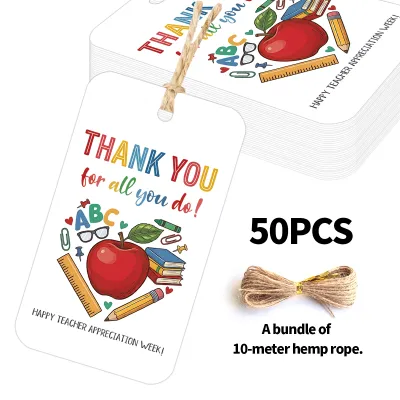
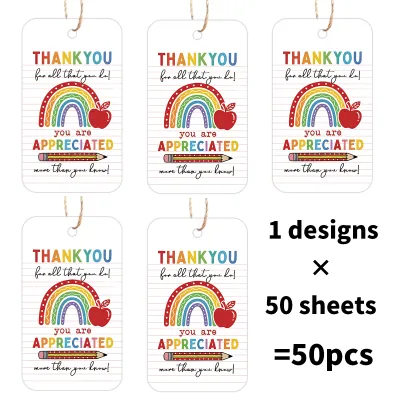
Illustrated tags bring a cheerful, festive energy to Teacher’s Day. Common motifs include classic school symbols like red apples, stacks of books, pencils, globes, and graduation caps. These colorful designs are highly popular for preschool and primary school gifts, as they immediately convey the theme of education and appreciation.
When using highly illustrated tags, it is best to keep the surrounding wrapping paper relatively simple. Pairing a busy, multi-colored tag with patterned wrapping paper can create visual clutter and make the tag difficult to read. Instead, tie the illustrated tag to a plain pastel bag or a clear cellophane wrap to let the artwork stand out.
For a highly personalized touch, look for subject-specific illustrations. A tag featuring musical notes is excellent for a music teacher, while designs with geometric shapes or scientific apparatus are perfect for mathematics and science educators. This extra level of detail shows thoughtful preparation and personal recognition of the teacher’s role.
Kraft, Rustic, and Eco-Friendly Looks
Kraft paper tags, characterized by their natural brown color and slightly textured surface, offer a warm, rustic aesthetic. These tags are often made from recycled materials, making them an excellent choice for eco-conscious families who prefer sustainable packaging options.
To complement the earthy tone of kraft paper, use natural attachment materials such as jute twine, hemp cord, or thin cotton string. You can also enhance the rustic presentation by tucking a small sprig of dried lavender or a pressed leaf under the twine, creating a beautiful, organic look that feels highly personal.
One practical challenge with kraft paper is ink visibility. Because the paper is dark, standard black or blue ballpoint pens can look dull and be difficult to read. To ensure your message stands out, write on kraft tags using metallic gold, silver, or bronze gel pens, or use a highly opaque white paint pen for a striking contrast.
Sourcing Options: Local Shops vs. Online Platforms
Brick-and-Mortar Stationery and Craft Stores
Purchasing your Teacher’s Day gift tags from physical retail stores in Singapore offers the distinct advantage of sensory verification. Visiting a local stationery chain, neighborhood bookshop, or dedicated craft supply store allows you to feel the paper thickness, check the rigidity of the cardstock, and see the true colors of the designs under natural light. This eliminates the risk of receiving flimsy or poorly printed tags.
Physical stores are also the ideal solution for last-minute shoppers. If Teacher’s Day is just a day or two away, walking into a local shop ensures you walk out with your tags immediately, avoiding any anxiety over shipping delays. Many local craft stores also sell individual tags or small assortments, allowing you to buy exactly the quantity you need.
However, brick-and-mortar stores often carry a more limited seasonal inventory compared to digital platforms. The per-unit cost can also be higher in physical retail due to overhead expenses. If you have a large number of gifts to prepare, buying in bulk from a physical store may turn out to be less cost-effective than other sourcing methods.
E-commerce Platforms and Digital Downloads
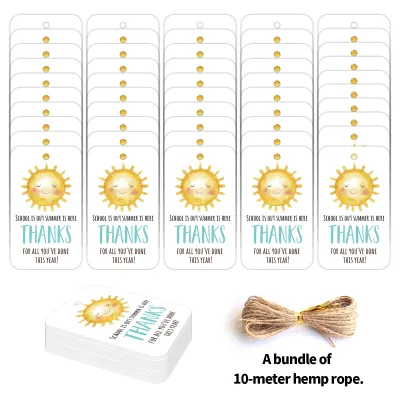
For those planning ahead, online marketplaces and e-commerce platforms offer an extensive variety of designs and highly competitive bulk pricing. You can easily find packs of 50 or 100 pre-printed tags in diverse themes, which is highly economical if you are preparing gifts for an entire school department or multiple classes.
Another popular online option is purchasing digital download files from independent designers. Once purchased, you receive a high-resolution PDF file that you can print at home on your choice of cardstock or send to a local print shop in Singapore for professional production. This method gives you complete control over the paper quality and allows you to print as many copies as you need for future years.
When sourcing online, always verify the seller’s shipping lead times, especially during the busy weeks leading up to Teacher’s Day. Check customer reviews to confirm that the printed colors match the product photos and that the paper weight is as described. Opt for local online sellers where possible to minimize transit times and ensure your tags arrive well before the school celebrations begin.
Best Practices for Writing and Securing the Tag
To ensure your gift tag looks polished and professional, always draft your message on a piece of scrap paper before writing on the actual tag. This simple step helps you gauge the spacing, decide on the layout, and prevent mistakes that would require crossing out text or discarding a tag. Keep the message concise, focusing on a sincere expression of gratitude.
Choose your writing instrument carefully based on the tag’s material finish. For standard matte cardstock, a reliable gel pen or fine-liner works beautifully. For glossy or coated tags, stick to quick-drying permanent markers to prevent smudging. If you are writing on dark kraft paper, use opaque metallic or white ink pens, and let the ink dry completely for several minutes before assembling the gifts.
When attaching the tag, use a secure knotting technique to prevent it from slipping off during transit. A simple double knot or a neat bow is usually sufficient for cotton twine or jute. If you are using slippery satin or organza ribbons, consider adding a small dab of double-sided tape behind the tag or tying an extra knot close to the tag hole to keep it firmly in place.
Finally, ensure the student’s name and class are clearly written on the tag. Teachers often receive dozens of gifts on Teacher’s Day, and clear labeling helps them identify who each thoughtful gesture came from. Writing the class name (such as “Primary 3-A” or “Sec 2-Joy”) is especially helpful for teachers who interact with multiple cohorts throughout the day.
Frequently Asked Questions (FAQ)
Can I use regular cardstock to make my own gift tags?
Yes, regular cardstock is an excellent material for creating DIY gift tags at home. To ensure the tags are durable enough to withstand handling, use cardstock with a weight of at least 220 GSM to 250 GSM. You can cut the cardstock into classic tag shapes using scissors or a utility knife, and use a standard single-hole punch to create the attachment point. To prevent the hole from tearing, you can apply adhesive paper reinforcement rings, which can be left white or colored to match your design.
What is the standard size for a gift tag?
The standard size for a classic rectangular gift tag is approximately 5 cm by 9 cm, which provides ample space for a short message and a signature. Circular tags typically have a diameter of 4 cm to 5 cm, offering a more compact option. When choosing a tag size, scale it to match your gift packaging: larger gift bags and boxes pair well with standard rectangular tags, while small favors, individual treats, or single pens are best suited for mini tags measuring around 3 cm by 5 cm.

Community discussion
Share your experience or ask a question. Comments are reviewed before publication.