
Stickers are an essential yet often overlooked part of a child’s school supply list in Singapore. For primary school students, the focus is on durable name labels to prevent lost property, motivational reward stickers, and tactile craft options. For secondary school students, stickers transition into functional tools—such as planner icons, subject dividers, and color-coded index tabs—to manage heavier academic workloads and Co-Curricular Activity (CCA) schedules. Choosing the right stickers ensures that school gear remains organized, personalized, and compliant with school guidelines throughout the academic year.
How to Choose School Stickers: Key Criteria for Parents
Parents preparing for the school year must evaluate the technical specifications of school stationery, as selecting the right stickers requires careful consideration of materials, adhesive types, and school regulations. The school environment demands durability. From high-humidity classrooms to daily washing routines, stickers must withstand significant wear and tear. Before purchasing any labeling or decorative stickers, parents should evaluate several key criteria to ensure they select products that are safe, long-lasting, and compliant with school guidelines.
First, evaluate adhesive strength versus residue. Adhesives generally fall into two categories: permanent and removable. Permanent adhesives are formulated to create a lasting bond with a surface over a 24-hour curing period. These are ideal for long-term labeling of items like textbooks, lunchboxes, and calculators, where the label must remain intact for the entire academic year. Conversely, removable adhesives use a low-tack formula that allows the sticker to be peeled away cleanly without leaving a sticky, dirt-attracting residue. Removable stickers are best suited for temporary organization, such as labeling weekly files, marking short-term project folders, or decorating personal items that your child may want to update later.
Products mentioned in this guide
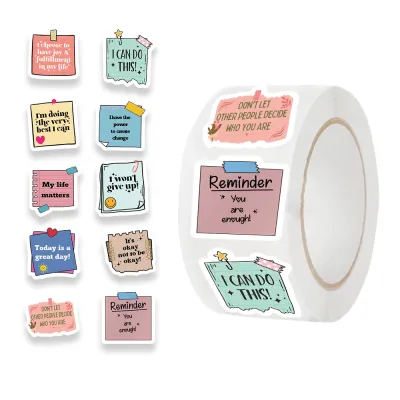
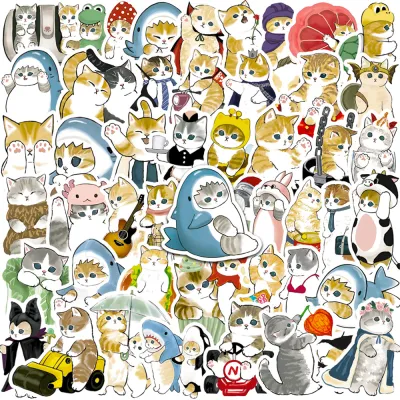

Prices are valid at publication and may change. Please refer to the product page for the latest price.
Second, assess waterproof and smudge-proof requirements. In Singapore’s tropical climate, school supplies are frequently exposed to moisture. Water bottles and lunchboxes undergo daily washing and experience condensation from cold drinks. Standard paper stickers will quickly disintegrate, peel, or suffer from running ink under these conditions. For any item exposed to moisture, look for stickers made from synthetic materials like vinyl or polyester, and ensure the printing process uses water-resistant inks. Testing the smudge resistance of writable labels with your child’s preferred school pen is also an important step before labeling an entire set of books.
Third, review common school policies in Singapore regarding the decoration of official school property. Most schools, including Ministry of Education (MOE) primary and secondary institutions, maintain strict guidelines regarding the appearance of official textbooks, uniforms, and school bags. While personalizing items helps children identify their belongings, excessive or inappropriate decoration can violate dress codes or school property rules. For instance, name labels on school uniforms or physical education (PE) kits should be placed discreetly, such as on the inner collar or hem, rather than on the exterior. Official textbooks should remain clean and free of decorative stickers that might obscure learning materials or grading spaces.
Finally, verify non-toxic and child-safe material certifications. This is particularly crucial for lower primary students (Primary 1 to Primary 3) who frequently handle their stationery and may inadvertently place stickers or stickered items near their mouths. Look for safety certifications on product packaging, such as the European EN71 toy safety standard or the ASTM D-4236 certification for art materials. These certifications guarantee that the adhesives, plastics, and inks used in the stickers do not contain harmful levels of heavy metals, phthalates, or toxic solvents, providing peace of mind for parents.
Essential Stickers for Primary School Students
Primary school is a time of transition, where young children learn to manage their own belongings and develop organizational habits. Stickers serve a dual purpose during these formative years: they act as essential tools for item ownership and serve as highly effective motivational aids. Selecting the right stickers for primary school students involves balancing extreme durability with age-appropriate appeal.

Name Labels and Ownership Stickers
The rate of lost property in primary schools is high, with water bottles, pencil cases, and jackets frequently ending up in the school’s lost-and-found bin. To combat this, parents must implement a systematic labeling strategy using high-quality name labels. For daily-use items exposed to water and physical friction—such as water bottles, food containers, and umbrella handles—waterproof and tear-resistant vinyl or polyester name labels are indispensable. These materials resist stretching, tearing, and peeling, ensuring the child’s name and class remain legible throughout the school year.
When choosing name labels, consider the background style. Clear backgrounds offer a subtle, minimalist appearance that blends seamlessly with solid-colored water bottles or pencil cases. However, if the item has a highly patterned, dark, or multi-colored surface, clear labels can become difficult to read. In these cases, opaque backgrounds (such as solid white, pastel, or bright neon colors) provide the necessary contrast to make the text stand out clearly to teachers and classmates alike.
For textile items like school uniforms, PE kits, and fabric school bags, parents must choose between stick-on and iron-on labels. Stick-on fabric labels are convenient for quick application and often adhere well to nylon or polyester care tags. However, for a permanent bond that survives weekly hot-water washes and tumble drying, iron-on labels are the superior choice. Before applying iron-on labels, always check the garment’s care label. Synthetic fabrics like polyester PE shirts can melt under high iron temperatures; using a sheet of parchment paper as a protective barrier during application is a vital safety measure to protect both the garment and the iron.
Reward and Motivation Stickers
Positive reinforcement is a powerful tool for encouraging academic progress, good behavior, and habit formation in primary school children. Reward and motivation stickers provide an immediate, tangible acknowledgment of a child’s effort. Classic designs such as gold stars, smiley faces, and colorful thumbs-up stamps are perfect for tracking daily achievements on homework charts, reading logs, and chore trackers at home.
To maintain a child’s interest over the long school term, it is beneficial to select thematic sticker sets. Rotating themes—such as animals, outer space, ocean life, or vehicles—keeps the reward system fresh and exciting. For example, a child working through a reading log might receive a space-themed sticker for every book completed, building anticipation as they collect the entire set.
For younger primary students (Primary 1 and Primary 2), independence is key. When purchasing reward stickers, prioritize sheets with easy-peel backing. Cheaply manufactured stickers often have shallow die-cut lines, making them incredibly difficult for small fingers to peel without tearing the sticker or the backing paper. Look for stickers that feature a split-back design or are printed on slightly thicker release liners, allowing young children to peel and apply their rewards independently, boosting their confidence.
Decorative and Craft Stickers
Creativity is a cornerstone of the primary school curriculum, particularly in Art and Music classes. Decorative and craft stickers allow children to express their personality and develop fine motor skills through scrapbooking, journaling, and art assignments. Tactile options like puffy stickers, holographic foils, and textured vinyl are highly popular among younger students, adding three-dimensional depth and visual interest to their creative projects.
However, parents must establish clear boundaries regarding where these decorative stickers can be applied. Children should be taught to differentiate between personal items—such as private diaries, sketchbooks, or personal pencil cases—and official school-issued materials. School-issued textbooks, worksheets, and spelling books must remain free of decorative stickers to ensure that teachers can read, grade, and write feedback without visual distractions.
To prevent a chaotic mess of loose stickers in school bags, guide your child on how to organize their sticker collections. Storing sticker sheets in dedicated sticker binders, folders, or reusable sticker books with silicone-coated release paper is an excellent practice. This organization prevents the sticker edges from curling, keeps the adhesive free from dust and lint, and ensures the stickers retain their sticky properties for future art projects.
Functional and Planner Stickers for Secondary School Students
As students transition into secondary school, their academic and organizational needs change dramatically. The focus shifts from simple item ownership to complex time management, systematic filing, and personal responsibility. Consequently, the stickers included in a secondary student’s school supply list must transition from colorful rewards to highly functional, mature organizational tools.
Planner and Organization Stickers
Secondary school students in Singapore face a demanding schedule filled with eight or more academic subjects, remedial classes, project work, and Co-Curricular Activities (CCAs). Managing these competing priorities requires robust planning habits. Planner and organization stickers are excellent aids for students using physical student planners, academic diaries, or bullet journals to track their commitments.
Color-coded dot stickers and functional icons are highly effective for creating a visual hierarchy in a planner. For instance, a student can assign specific colors to different categories: red dots for examinations and major project deadlines, blue dots for CCA practices or matches, and green dots for personal commitments. Small functional icons—such as book symbols for reading assignments, pencil icons for homework, and clock symbols for meetings—allow students to scan their weekly layout and instantly understand their workload without reading lines of dense text.
Unlike primary school students, secondary school students typically prefer minimalist and typographic sticker designs. Muted color palettes, clean geometric shapes, and simple, elegant fonts appeal to older teenagers who want their planners to look organized and professional rather than childish. These sleek designs reduce visual clutter, allowing the student to focus entirely on their academic schedule.
Additionally, priority flags, exam countdown stickers, and page markers are invaluable tools for secondary school revision. When preparing for major examinations like the O-Levels or N-Levels, students must navigate thick study guides, assessment books, and ten-year series (TYS) papers. Highlighting key formulas, marking difficult questions for teacher consultation, or tracking the days remaining until an exam with countdown stickers keeps students organized, focused, and motivated during intense study periods.
Subject and Folder Labels
With a larger number of subjects and a constant influx of worksheets, notes, and exam papers, secondary students must maintain strict filing systems to avoid losing critical study materials. Ring binders, lever arch files, and expanding folders are standard equipment, but they quickly become unmanageable without clear, durable labeling.
Writable vinyl labels with a matte finish are the ideal solution for labeling subject folders. Unlike glossy labels, which cause ink to smear and run, matte-finish vinyl labels readily accept ink from standard ballpoint pens, gel pens, and permanent markers. This allows students to neatly write custom subject names, teacher initials, and class codes. To ensure compatibility and prevent smudging, students should perform a quick trial by writing on a spare label and allowing the ink to dry for a few seconds before handling.
To make filing systems even more efficient, recommend the use of color-coded edge stickers and index tabs. Applying these durable tabs to the edges of ring binders or plastic dividers allows students to quickly identify different topics or subjects when looking at their folders from the side, whether they are stacked on a home study desk or packed vertically inside a school bag.
Because these files are handled daily, sliding in and out of heavy school bags and subjected to friction, the labels must feature durable, long-lasting adhesives. Cheap paper labels will quickly fray at the corners and peel off under these conditions. Investing in high-grade vinyl or polyester folder labels ensures that the organizational system remains intact and legible for the entire academic year, preventing lost notes during critical revision periods.
Comparing Sticker Materials for School Use
Selecting the right sticker material is essential to ensure that the label performs well on its intended surface and lasts as long as required. Applying a delicate paper sticker to a water bottle will result in a soggy, peeling mess, while using an expensive polyester label on a temporary paper folder is an unnecessary expense.
The following table evaluates the most common sticker materials used in school environments, helping parents and students match the right material to the correct application:
| Material Type | Best Used On | Water Resistance | Durability | Removal Ease |
|---|---|---|---|---|
| Paper | Paper notebooks, planners, reward charts, study guides | Low | Low | Easy to Moderate |
| Vinyl | Water bottles, lunchboxes, plastic folders, pencil cases | High | High | Moderate (often residue-free) |
| Polyester | Heavy-duty gear, metal flasks, laptops, calculators | Very High | Very High | Difficult (designed to be permanent) |
| Fabric / Iron-on | School uniforms, PE kits, canvas school bags, fabric cases | High (washable) | High | Very Difficult |
Understanding the practical differences between permanent, removable, and repositionable adhesives is also crucial for school organization. Permanent adhesives form a strong, chemical bond with the surface over time, making them excellent for name labels on valuable gear. Removable adhesives maintain a stable but low-tack grip, allowing clean removal from textbooks or plastic folders at the end of the school year. Repositionable adhesives use a specialized low-tack formula that allows the sticker to be peeled and reapplied multiple times without losing its stickiness, which is ideal for planner flags and index tabs that may need to be moved as study topics progress.
It is important to note that the actual performance of these materials—especially their level of water resistance and ease of residue-free removal—depends heavily on the manufacturer’s specific formulations and proper surface preparation. Parents should always check the product packaging and instructions before application to ensure the sticker is suitable for the intended surface.
Tips for Applying and Removing Stickers from School Gear
Proper application and safe removal techniques are vital to maximizing the lifespan of school stickers and protecting expensive school gear from damage. Following a few simple, low-risk steps ensures that labels stay put when needed and come off cleanly when it is time to upgrade or return school property.
To ensure proper adhesion, thorough surface preparation is essential. Before applying any sticker to items like water bottles, lunchboxes, or laptop covers, clean the surface thoroughly with mild dish soap and warm water to remove dust, dirt, and finger oils. Dry the item completely with a lint-free microfiber cloth. Any remaining moisture or oil will compromise the adhesive bond, causing the sticker edges to curl prematurely. Once the surface is clean and dry, apply the sticker firmly from one edge to the other, using a plastic card or your thumb to smooth out any trapped air bubbles.
If you must use standard paper stickers on items that might get damp, a simple protective measure can prevent damage. Apply a layer of clear, waterproof packing tape or a clear vinyl overlay directly over the paper sticker, extending at least half a centimeter beyond the sticker’s edges. This seals the paper from moisture, preventing the ink from smudging and the paper from disintegrating during washing.
When it is time to remove unwanted stickers or clear away sticky residue from school gear, always use safe, reversible methods. For plastic or metal surfaces, soaking the sticker in warm, soapy water can help break down water-soluble adhesives. For stubborn, oil-soluble adhesive residue, apply a tiny drop of mild household oil (such as olive oil, canola oil, or baby oil) to a microfiber cloth and rub the area gently. The oil will safely dissolve the sticky residue without damaging the underlying material. Gently scraping the softened adhesive with the edge of an old plastic membership card can also help lift stubborn spots. Avoid using harsh chemical solvents like acetone, nail polish remover, or paint thinners, as these can permanently melt plastics, discolor school bags, or strip the printed designs from book covers.
Finally, always prioritize safety and preservation. If you are dealing with specialized surfaces, expensive school-issued tablets, or personal learning devices (PLDs), stop and consult the manufacturer’s care instructions before applying or removing any adhesive. Some electronic screens and protective casings have specialized coatings that can be permanently ruined by adhesives or cleaning agents.
Frequently Asked Questions (FAQ)
Are name stickers dishwasher safe for school lunchboxes?
While many high-quality vinyl and polyester name labels are highly water-resistant, dishwasher safety depends entirely on the specific manufacturer’s adhesive and material specifications. The intense heat, high-pressure water jets, and harsh chemical detergents used in dishwashers can degrade adhesives over time, causing labels to peel or fade. To prolong the life of your name stickers, it is highly recommended to check the product packaging for an explicit dishwasher-safe claim. When in doubt, hand-wash labeled lunchboxes and water bottles with mild dish soap to ensure the labels remain intact for the entire school year.
Can I use regular paper stickers on school water bottles?
Standard paper stickers are not suitable for school water bottles or any items exposed to moisture. When subjected to condensation, spills, or washing, paper stickers quickly absorb water, causing the paper fibers to disintegrate, the edges to peel, and the ink to smudge or run. For drinkware, always use waterproof vinyl or polyester stickers designed to withstand wet environments. If you must use a paper sticker, you can protect it by sealing it completely with a clear, waterproof adhesive overlay, ensuring the edges are fully covered to block out moisture.
What is the best way to remove sticky residue from school textbooks?
Removing sticky residue from school textbooks requires a gentle, low-risk approach to avoid tearing the delicate paper cover or stripping away the printed design. Start by rubbing the sticky area gently with a clean, dry pencil eraser; the friction will often roll the adhesive residue into small, easily removable crumbs. If the residue persists, dampen a microfiber cloth with a very tiny amount of warm, soapy water—ensuring the cloth is barely damp, not wet—and gently wipe the area, drying it immediately afterward with a clean cloth. Never use abrasive scrubbers, sharp blades, or strong chemical solvents, as these can permanently damage the textbook.
Community discussion
Share your experience or ask a question. Comments are reviewed before publication.