
Preparing your child for a new school year involves more than just gathering textbooks and uniforms; it requires setting up a system of organisation that helps them navigate their daily routine. Stickers play a surprisingly vital role in this preparation, transitioning from simple identification tools in the early years to highly functional planning aids in secondary school. Matching the right sticker type to your child’s specific grade level ensures their school supplies remain organised, identifiable, and intact throughout the academic year.
Choosing the wrong sticker material can lead to peeling labels, ruined book covers, or smudged ink that defeats the purpose of labelling. By understanding the physical properties of different sticker types—such as water resistance, adhesive strength, and surface compatibility—you can build a practical stationery kit tailored to your child’s developmental needs. This guide breaks down the essential sticker selections for every educational stage, helping you make informed purchasing decisions.
Evaluation Criteria for School Supply Stickers
Selecting the right school stickers requires balancing durability, adhesive properties, and safety. Different school items demand different material characteristics; a label that adheres perfectly to a paper notebook cover may quickly disintegrate or peel off when applied to a plastic lunchbox or a metal water bottle.
Products mentioned in this guide
Prices are valid at publication and may change. Please refer to the product page for the latest price.
Material Durability
Stickers generally fall into two material categories: vinyl and paper. Vinyl stickers, including those made from polyethylene (PE) or polypropylene (PP), offer excellent water resistance, tear-resistance, and flexibility, making them ideal for items exposed to moisture or frequent handling. Paper stickers are more economical and highly suitable for dry, indoor applications such as the inside pages of notebooks, files, and planners, where they can be written on easily.
Adhesive Strength
Adhesives are formulated to be either permanent or removable. Permanent adhesives form a strong bond with the substrate over time, making them perfect for name labels that must survive a full school year of friction and washing. Removable or repositionable adhesives allow stickers to be peeled off and repositioned without leaving sticky residue or tearing the underlying surface, which is essential for planner stickers and textbook labels.
Surface Compatibility
The texture and material of the school supply dictate how well a sticker will adhere. Smooth, non-porous surfaces like glossy textbook covers, plastic folders, and stainless steel bottles provide excellent adhesion for both vinyl and strong paper stickers. Matte, textured, or curved surfaces require highly flexible stickers with stronger adhesives to prevent the edges from lifting over time.
Writing and Ink Compatibility
Not all sticker surfaces accept every type of ink. Smooth, glossy vinyl stickers often repel water-based inks, causing gel pens or rollerballs to smear. Matte paper or uncoated synthetic stickers allow for quick ink absorption and faster drying speeds. To prevent smudging, perform an observable trial: write a test word on the sticker with your child’s standard school pen, wait five seconds, and rub it gently with a fingertip to check for smearing.
Safety Considerations
Since school supplies are handled daily, prioritize stickers made with non-toxic, acid-free adhesives and lead-free inks. Ensure the stickers have smooth, die-cut edges that do not peel up easily, as loose edges can collect dirt or scratch sensitive skin. For younger children, avoid stickers with small, detachable decorative parts or heavy chemical scents.
Lower Primary (Primary 1–2): Identification and Motivation
For children entering Primary 1 or 2, the school environment is a major transition. At this stage, stickers serve two primary purposes: preventing the loss of personal belongings in a busy classroom and providing positive reinforcement as they adapt to new daily routines and homework expectations.

Waterproof Name Labels for Books and Drinkware
In lower primary classrooms, identical school books, water bottles, and stationery items are common, making clear identification essential. Waterproof name labels are the most effective way to ensure your child’s belongings return home each day.
- Material Selection: Opt for high-grade vinyl labels with a protective laminate overlay. This scratch-resistant coating prevents the printed name from wearing off due to friction inside school bags or contact with other items.
- Customisation and Readability: Choose a clean, bold, sans-serif font (such as Arial or Comic Sans) in a high-contrast colour. For young readers who may not yet read fluent English, adding a small, distinct icon (like an animal or a star) next to their name helps them identify their items visually.
- Maintenance and Washing: If you plan to wash labelled water bottles or lunchboxes, verify that the labels are rated as dishwasher-safe. These labels use heat-resistant adhesives that withstand warm soapy water without peeling or curling at the corners.
Motivational Reward Stickers for Homework and Behaviour
Positive reinforcement is highly effective for establishing good study habits and behaviour patterns in young children. Reward stickers offer a tangible, visual marker of achievement that boosts motivation.
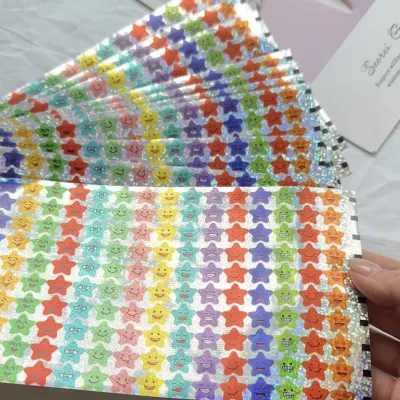
- Themed Reward Packs: Look for sticker sheets featuring colourful stars, encouraging animals, or simple motivational words (such as "Great Job!" or "Super Star!"). These can be applied directly to spelling books, homework sheets, or home-school communication diaries.
- Acid-Free Formulations: Ensure the reward stickers are acid-free. Acidic adhesives can break down paper fibres over time, causing the pages of school diaries to turn yellow, brittle, or stick together.
- Visual Balance: Choose stickers that are bright and encouraging but moderately sized (around 1.5 to 2 cm in diameter). Overly large, glittery, or noisy 3D stickers can become a distraction during quiet study time or class activities.
Upper Primary (Primary 3–6): Organisation and Subject Tracking
As students progress to upper primary, their academic workload increases significantly. They must manage multiple subjects, specialized notebooks, files, and a more demanding homework schedule, shifting their sticker needs toward structural organisation.
Subject Divider and Index Stickers for Notebooks
With separate notebooks and files for English, Mathematics, Science, and Mother Tongue, students need a quick way to locate the correct materials during short lesson transitions.
- Colour-Coded Tab Stickers: Use durable plastic or heavy-duty paper index tabs to mark the start of different terms, topics, or subjects within a single binder or multi-subject notebook. Assigning a specific colour to each subject (e.g., blue for Math, green for Science) speeds up retrieval.
- Edge Protection: Choose index stickers that fold over the edge of the page. This double-sided design reinforces the delicate paper edge, preventing the tab from tearing off when the notebook is pulled repeatedly from a packed school bag.
- Paper Compatibility: Avoid using heavy-duty, permanent adhesives on thin notebook paper (standard school exercise books often use lightweight 60gsm to 80gsm paper). High-tack adhesives can cause fiber pull, tearing the page if the tab is accidentally pulled or needs to be adjusted.
Basic Planner Stickers for Timetables and Deadlines
Primary 5 and 6 students often receive student planners to track their homework, spelling tests, and co-curricular activity (CCA) schedules. Basic planner stickers help highlight key priorities.
- Icon and Text Stickers: Look for functional sticker sheets containing small, clear icons or text labels such as "Exam," "Spelling," "Project," or "Due." These draw immediate visual attention to critical dates without cluttering the limited space of a daily planner layout.
- Repositionable Adhesives: Select stickers with low-tack, repositionable adhesive. School schedules and deadlines frequently change; repositionable stickers allow students to peel and move a reminder to a different day without ripping the planner page.
- Write-On Matte Surfaces: Ensure the planner stickers have a matte, uncoated paper finish. This allows students to write specific details (such as "Math Ch 3" or "Bring Art Folio") directly onto the sticker using standard ballpoint pens or fine gel liners without ink pooling.
Secondary and Pre-University: Advanced Planning and Journaling
For older students, academic life involves complex timetables, long-term project work, and preparation for major national examinations. At this level, stickers become essential tools for sophisticated time management, active revision, and creative self-expression.
Functional Planner Stickers for Study Schedules
Secondary and pre-university students must manage tight revision schedules alongside leadership roles and intensive CCA commitments. Functional planning stickers streamline this process.
- Time-Blocking and Habit Trackers: Use rectangular time-blocking stickers to map out study sessions, and grid-style habit trackers to monitor daily revision consistency. Small arrow flags are excellent for marking high-priority tasks in student diaries.
- Precise Grid Sizing: Before purchasing, check the dimensions of the stickers against your child's planner format (typically standard A5 or B5 sizes). Ensure the stickers fit neatly within the weekly or monthly columns without overlapping into adjacent days.
- Semi-Transparent Highlighting: Transparent or semi-transparent PET (polyethylene terephthalate) stickers are highly useful for active reading. They allow students to highlight key formulas or definitions in library books or expensive textbooks without marking the pages permanently.
Aesthetic and Decorative Stickers for Bullet Journals
Many older students use bullet journaling or personalised notebooks to manage their mental well-being and academic goals. Decorative stickers help make these journals inviting and engaging to maintain.
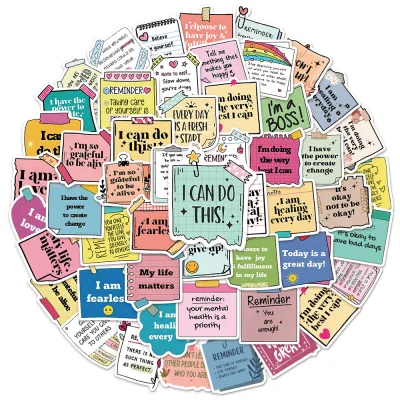
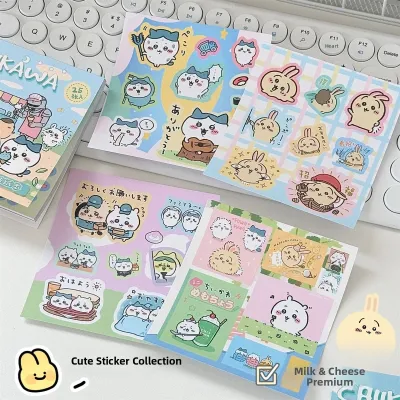
- Cohesive Sticker Themes: Encourage your child to select curated sticker packs with unified colour palettes (such as minimalist, botanical, or vintage themes). A clean, cohesive aesthetic keeps the notebook visually organized and prevents it from becoming a chaotic distraction.
- Thickness and Portability: Avoid thick, dimensional stickers, such as epoxy, puffy, or layered paper stickers. These add significant bulk to a notebook, preventing it from laying flat when open and causing the binding to strain when packed into a tight school bag.
- Lightfastness of Inks: Look for stickers printed with UV-resistant or lightfast inks. This ensures that decorative elements, motivational quotes, and color-coded keys do not fade over the course of the school year when exposed to classroom fluorescent lighting or sunlight.
Purchasing Strategies and Application Best Practices
To get the best value and performance from school supply stickers, parents should combine smart purchasing strategies with proper surface preparation and safe removal techniques.
Purchasing Channels
For high-volume items like name labels, ordering custom bulk packs from specialized online stationery stores is highly cost-effective. These services allow you to input your child’s name once and receive sheets of identical, durable vinyl labels in various sizes. For decorative, reward, or planner stickers, visiting local brick-and-mortar bookshops or stationery stores allows you to physically inspect the texture, paper weight, and adhesive properties before buying.
Surface Preparation for Maximum Adhesion
Even the highest-quality sticker will peel prematurely if applied to a dirty or oily surface. Follow these steps to ensure a long-lasting bond on plastic, metal, or laminated surfaces:
- Clean the Surface: Wash the area thoroughly with mild dish soap and water to remove dirt, grease, and fingerprint oils. For durable plastic or metal surfaces, a quick wipe with isopropyl alcohol can remove stubborn residues.
- Dry Completely: Wipe the surface with a lint-free microfiber cloth and let it air-dry completely. Any trapped moisture under the sticker will weaken the adhesive and cause bubbling.
- Apply and Press: Align the sticker carefully, starting from one edge and smoothing it down to the other to avoid trapping air bubbles. Press firmly across the entire surface, paying close attention to the edges and corners.
- Cure Time: Allow the adhesive to cure undisturbed for at least 24 hours before exposing the item to water, heavy handling, or washing.
Safe Sticker Removal
Removing old stickers at the end of the school year requires care to avoid damaging the underlying school supplies.
- For Plastic and Metal Surfaces: Use a handheld hairdryer on a low, warm setting to gently heat the sticker for 10 to 15 seconds. This softens the adhesive, allowing you to peel the sticker away smoothly. Wipe away any remaining sticky residue with a small amount of cooking oil or eucalyptus oil on a cloth, then wash with dish soap.
- For Paper Textbooks and Notebooks: Do not use heat, water, or liquid solvents, as these will warp the paper, stain the pages, or dissolve the printing ink. Instead, use gentle mechanical methods. Roll a clean fingertip over the residue to ball it up, or use a soft, clean art eraser to lift the adhesive gently. Always test your removal method on an inconspicuous corner of the page first to ensure it does not lift the paper fibers.
Frequently Asked Questions (FAQ)
Is vinyl safe for school water bottles and lunchboxes?
Yes, exterior-grade vinyl stickers are generally safe for labelling the outside of school water bottles and lunchboxes, provided they are made with non-toxic, lead-free materials. However, you must strictly avoid placing any stickers on the mouthpiece, inner rim, or interior surfaces of these containers where the adhesive or material could come into direct contact with food or water. Always check the drinkware manufacturer’s care instructions, as some materials or vacuum-insulated designs may have specific cleaning restrictions or should not be exposed to high heat if dishwasher-safe labels are applied.
How do I safely remove sticker residue from textbook pages?
To remove sticky residue from delicate paper textbook pages without causing damage, avoid all liquid solvents, oils, and chemical adhesive removers, which will permanently stain or warp the paper. Instead, use a soft, clean vinyl eraser and rub the sticky area very gently in one direction. Alternatively, you can take a piece of clean adhesive tape, wrap it around your finger with the sticky side facing out, and gently dab the residue repeatedly to lift it off the page. Always perform a quick test on an inconspicuous corner of the page first to verify that the paper fibers and printed ink remain intact.
Community discussion
Share your experience or ask a question. Comments are reviewed before publication.