
Selecting the right adhesive for your child’s school projects is more than just a matter of grabbing the first bottle on the stationery shelf. The ideal choice depends heavily on your child’s developmental stage—specifically their fine motor skills—and the structural demands of their school curriculum. For early years, washable glue sticks are the safest and most manageable option. As children progress to lower primary, they transition to precision-tip liquid glues and dry-adhesive runners for detailed paper crafts. By upper primary and secondary school, students require stronger, specialty adhesives like polyvinyl acetate (PVA) tacky glue, low-temperature hot glue, and specialized craft adhesives to build structural models for science and Design & Technology (D&T) projects.
Navigating school booklists and art requirements can be challenging, especially when trying to avoid messy school bags, warped project papers, and ruined uniforms. Understanding the physical properties, drying times, and safety profiles of different adhesives ensures your child has the right tool for every classroom task without unnecessary frustration.
Quick Reference: Matching Glue Types to Project Materials
School adhesives fall into three primary categories, each engineered for specific materials and user capabilities. Selecting the correct type prevents materials from falling apart and keeps paper from wrinkling.
Products mentioned in this guide
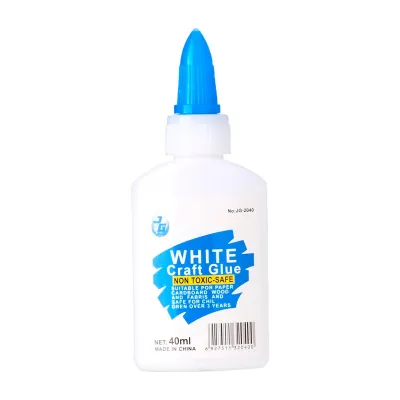
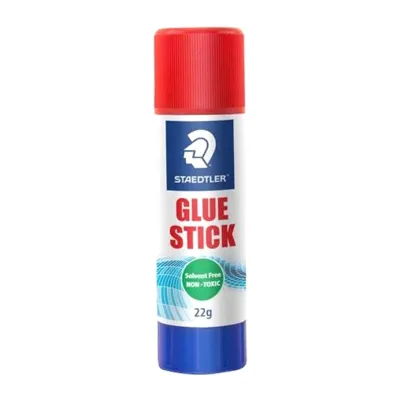
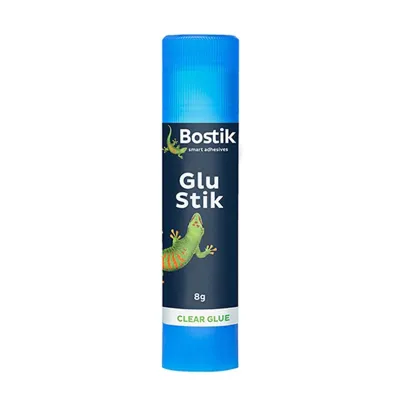
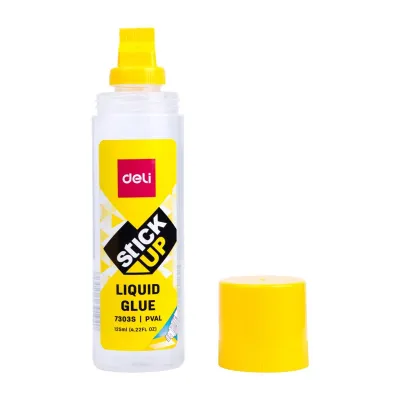
Prices are valid at publication and may change. Please refer to the product page for the latest price.
- Glue Sticks: These are solid, low-moisture adhesives designed for quick, flat paper bonding. Because they contain very little water, they dry rapidly and prevent thin paper from warping or wrinkling.
- Liquid School Glue: Typically water-based white or clear polyvinyl acetate (PVA) formulas, these offer high flexibility and a strong bond on porous surfaces. They allow a longer "open time" to reposition items but can warp thin paper if over-applied.
- Craft and Specialty Glue: This category includes thick tacky PVA, low-temperature hot melt adhesives, and solvent-free contact glues. These are formulated to bond heavier or non-porous materials like wood, felt, foam, and plastics.
When choosing an adhesive, you must balance your child’s physical dexterity with the structural needs of the project. Younger children often lack the hand control to manage liquid glue without creating puddles, while older students will find standard glue sticks insufficient for structural 3D builds.
No single adhesive can handle every school task. A standard school pencil case or art kit should ideally contain at least two options—typically a reliable glue stick for daily worksheet pasting and a liquid or tape adhesive for dedicated art projects.
Preschool and Kindergarten: Safety, Washability, and Mess Control
For toddlers and early learners in preschool and kindergarten, the primary focus when selecting stationery is safety, ease of use, and rapid cleanup. At this developmental stage, children are still refining their palmar and pincer grasps, making certain packaging designs much easier to handle than others.

Solid glue sticks should be the default adhesive for early years. Operating a glue stick requires a basic grip and swipe motion, which is far easier for young children than the precise bilateral coordination needed to squeeze a liquid bottle while directing a nozzle. Because glue sticks are solid and low-moisture, they prevent thin drawing paper from wrinkling or tearing. When shopping, look for glue sticks featuring a disappearing color indicator. These apply in bright purple or blue and dry completely clear, providing immediate visual feedback so children can see exactly where they have applied the adhesive without adult assistance.
While glue sticks handle most daily tasks, certain early crafts—such as sticking cotton wool balls, dried pasta, or heavy tissue paper collages—require a thicker bed of adhesive. For these activities, standard water-based liquid school glue is necessary. When purchasing liquid glue for young children, always verify that the label explicitly states “washable.” In warm, humid climates like Singapore, school children frequently wear light-colored cotton-poly blend uniforms that stain easily. Washable school glues are formulated with water-soluble polymers that dissolve readily in standard laundry cycles, preventing permanent fabric damage.
Packaging ergonomics play a significant role in reducing classroom frustration. Look for wide-barrel glue sticks that fit comfortably in a child’s palm, or small, teardrop-shaped liquid glue bottles (around 35ml to 50ml) that require minimal squeezing pressure. Avoid large 120ml bottles for young children, as they are heavy, difficult to control, and highly prone to accidental spills when squeezed with two hands.
Keep in mind that these early-years adhesives are strictly formulated for porous, lightweight materials. They rely on the adhesive penetrating the fibers of paper or cardboard to create a physical bond. They will fail completely on non-porous surfaces like plastic toys, metal foils, or heavy wooden blocks. Attempting to use a standard glue stick on these materials will only result in structural failure and a sticky residue.
Lower Primary (Grades 1–3): Precision Tips and Everyday Paper Crafts
As children transition to lower primary school (Primary 1 to 3), their academic and creative projects become more structured. They frequently paste worksheets into exercise books, assemble multi-layered paper designs, and create basic poster presentations.
For these tasks, upgrade to larger, high-capacity glue sticks (around 20g to 40g) that offer stronger initial tack. Children in this age bracket have developed the hand strength to operate standard twist-up mechanisms reliably and can apply consistent downward pressure without snapping the adhesive column. Larger sticks cover more surface area quickly, which is ideal for mounting larger sheets of construction paper or poster board.
This is also the stage to transition from wide, flat-topped liquid glue bottles to those equipped with fine, adjustable precision tips or dual-nozzle designs. Dual-nozzle bottles feature a fine tip on one end for detail work and a broad silicone spreader on the other for larger areas. This design allows students to apply tiny dots of glue to intricate paper cut-outs, map labels, and delicate borders. Controlling the flow prevents the “soggy paper” effect, where excess moisture warps the paper and causes water-based ink from pens or markers to bleed through the page.
Dry-adhesive glue runners are an excellent, mess-free alternative to traditional glues for lower primary students. These handheld devices apply a thin strip of double-sided adhesive tape instantly, requiring zero drying time. They are highly efficient for quick classroom tasks where worksheets must be pasted into exercise books immediately before the teacher moves to the next lesson, eliminating the issue of sticky pages clinging together and tearing when the notebook is closed.
Over-application remains the most common issue for lower primary students using liquid adhesives. You can help your child by teaching them the “pea-sized drop” or “dot-dot-not-a-lot” rule: applying small, spaced dots of liquid glue along the perimeter of the paper rather than a continuous thick line. If a paper project does warp due to excess moisture, let it dry completely, then place it under a heavy book overnight to flatten the fibers.
Upper Primary and Secondary (Grades 4–12): Complex Models and Mixed Media
Older students in upper primary (Primary 4 to 6) and secondary school tackle advanced science fair displays, geography dioramas, and Design & Technology (D&T) coursework. These projects involve diverse, heavy materials that standard school glue cannot hold.
For these applications, introduce premium polyvinyl acetate (PVA) craft glues and thick “tacky” glues. These formulations contain a higher solids-to-water ratio than standard white glue, giving them a much thicker consistency. They do not run or drip easily, dry completely clear, retain high flexibility, and provide the structural integrity needed to bond wood, thick cardboard, felt, and ceramics. This high initial “grab” prevents heavy materials from sliding out of alignment while the adhesive cures.
When rapid assembly is required—such as building cardboard bridge models or structural frames—waiting hours for liquid PVA to dry is impractical. Low-temperature hot glue guns are excellent tools for students aged nine and above, under proper supervision. These tools melt thermoplastic adhesive sticks at a lower temperature (around 120°C) compared to industrial high-temperature guns (which reach 190°C), significantly reducing the risk of severe burns.
Before operating any hot glue gun or bonding unfamiliar materials, check the applied product’s label and the treated item’s manufacturer instructions. If instructions conflict, the item is unidentified, or the use is not covered, stop and consult the manufacturer or a qualified professional. Always ensure students use an insulated nozzle, keep a cup of cold water nearby in case of accidental skin contact, and store the gun on a heat-resistant stand during use.
Secondary school students taking advanced art or D&T classes may also encounter specialized materials like acrylic plastics, balsa wood, and metal foils.
- Spray Adhesives: These are ideal for mounting large-format posters or design briefs onto foam board without wrinkling. Because they contain volatile organic compounds (VOCs), they must be used in well-ventilated areas, ideally outdoors or under a school workshop extraction hood.
- Cyanoacrylate (Super Glue): This provides instant, rigid bonds for non-porous materials. Because it bonds skin instantly, it should only be used by older, responsible students and always in accordance with school safety guidelines.
Specialty craft glues and hot glue sticks are highly sensitive to environmental conditions. In humid climates, open PVA bottles can mold or skin over if not sealed airtight, while unused hot glue sticks can become sticky if exposed to ambient moisture. Always store these adhesives in airtight containers in a cool, dark cupboard. Warn students against using heavy-duty tacky or hot glue on standard notebook paper, as the high density of these adhesives will bleed through thin paper fibers and ruin writing on the reverse side.
Reading the Label: Safety Certifications, Washability, and Drying Time
When shopping for school adhesives, reading the product label carefully helps you avoid low-quality formulations and ensures the product is safe for classroom use.
Always look for recognized safety marks on the packaging. The most common international standard is the AP (Approved Product) seal from the Art & Creative Materials Institute (ACMI), which certifies that the product is non-toxic and safe for children. In Europe and internationally, the CE mark and compliance with EN71 standards (specifically EN71-3, which limits the migration of heavy metals) indicate the product meets strict toy safety regulations. In Singapore, ensure products comply with local consumer safety guidelines. Clarify for your child that “non-toxic” means the product will not cause systemic harm if small amounts are accidentally inhaled or contact the skin during normal use, but it does not make the product edible or safe for intentional consumption.
Do not assume all products labeled “school glue” wash out easily. Look specifically for the word “Washable” on the front panel. Some formulas are “water-resistant” or “permanent” once cured, meaning they are designed to withstand washing machines. If a child gets permanent fabric glue or heavy-duty craft glue on their uniform, it will not wash out. Check whether the label specifies washability from “skin and most machine-washable clothing.”
Aesthetics are crucial for graded school presentations. Choose formulas that explicitly state “dries clear” to ensure that any excess squeeze-out does not leave unsightly white or yellow crusts on the finished piece. Additionally, consider “open time”—the window before the glue begins to skin and lose its tack. A longer open time (5 to 10 minutes) is beneficial for complex assemblies where students need to adjust and align multiple components. A fast-drying formula (1 to 2 minutes) is better for quick, single-step bonds.
For children with sensitive skin or contact allergies, review the ingredient list carefully. Some liquid glues and rubber cements contain natural rubber latex, which can trigger allergic contact dermatitis. Opt for solvent-free, gluten-free, and latex-free formulations to ensure safety in a shared classroom environment.
Frequently Asked Questions (FAQ)
How do I remove dried liquid glue from school uniforms?
First, check the uniform garment’s care label and the glue product’s packaging instructions. If instructions conflict, the fabric is delicate (such as silk or fine wool), or the material is unidentified, stop and consult a professional dry cleaner. For standard, machine-washable cotton-polyester uniforms stained with water-soluble washable school glue, allow the glue to dry completely before treating. Scraping wet glue will only spread the stain deeper into the fabric fibers. Once dry, gently scrape off the hardened crust using a blunt edge, such as a plastic spoon or the edge of a ruler. Soak the stained area in warm water mixed with a few drops of mild liquid laundry detergent for 30 minutes to break down the water-soluble polymers. Gently rub the fabric together to loosen the remaining adhesive, then wash the garment in a standard washing machine cycle. Avoid using harsh solvents like acetone (which can dissolve synthetic fibers) or applying high heat (such as a hot iron or tumble dryer) before the stain is completely gone, as heat will permanently set the polymer into the fabric.
Can I use a standard glue stick for papier-mâché projects?
No, standard glue sticks are entirely unsuitable for papier-mâché. Papier-mâché relies on a liquid medium to thoroughly saturate and soften paper fibers (usually newspaper or tissue paper), allowing them to conform to a mold and dry into a rigid, continuous shell. Glue sticks are solid, low-moisture adhesives designed to sit on the surface of paper. They do not have the liquid volume or penetration capability to saturate multiple layers of paper. For a successful papier-mâché project, use a simple, cost-effective mixture of equal parts water and washable liquid school glue, or a traditional flour-and-water paste. This liquid mixture provides the necessary moisture to saturate the fibers and creates a strong, continuous polymer matrix when dry.
Why does my child's liquid glue keep drying out in the bottle?
Liquid school glue is an emulsion of polymer particles suspended in water. When exposed to air, the water evaporates, causing the polymer chains to cross-link and solidify. If the bottle’s nozzle is left open or has a buildup of dried glue, it prevents an airtight seal, allowing air to continuously enter the bottle and dry out the remaining liquid. To prevent this, teach your child to wipe the nozzle clean with a damp cloth or tissue before closing it. Ensure the twist-cap is screwed down tightly or the snap-cap is fully clicked shut. Store the bottle upright in a cool, dry place away from direct sunlight or heat sources (such as window ledges or computer desks), which accelerate water evaporation. If a small clog forms in the nozzle, gently clear it with a paperclip or toothpick rather than squeezing the bottle excessively.
Community discussion
Share your experience or ask a question. Comments are reviewed before publication.