
Quick Answer: Essential Safety Features for a Child's Utility Knife
When selecting a utility knife for a primary school child’s school crafts, prioritize three core safety features: an auto-retracting blade mechanism, an ergonomic non-slip grip sized for smaller hands, and clear manufacturer age-grading. An auto-retracting blade uses a spring-loaded slider that automatically pulls the cutting edge back into the housing the moment the child releases pressure, preventing accidental cuts if the tool is dropped or set down open. The handle should feature a textured rubber or contoured composite grip to prevent small fingers from slipping forward onto the blade. Finally, look for explicit age recommendations on the packaging, ensuring the tool is engineered for younger users rather than industrial tasks. Spending S$5 to S$15 on a dedicated safety cutter rather than a standard utility knife provides peace of mind and protects your child during creative school projects.
Evaluating Blade Mechanisms and Housing Design
The mechanical design of a utility knife determines how much control a child has over the cutting edge. Standard utility knives often feature manual sliders that lock the blade in an exposed position. For primary school students, this design poses a significant risk, as children frequently forget to retract the blade before setting the tool aside or placing it in a pencil case. In contrast, auto-retract mechanisms require active, continuous pressure on a slider to keep the blade exposed. The moment the child finishes a cut and relaxes their grip, the blade springs safely back into the casing. If a project requires a manual lock, look for a multi-stage locking dial or a secure slide lock that prevents the blade from slipping forward or backward under pressure.

Beyond the retraction mechanism, the physical housing of the knife must be evaluated. Look for impact-resistant plastics, lightweight fiberglass-reinforced nylon, or composite materials. Avoid cheap, brittle plastics that can shatter if dropped onto hard classroom floors, which could expose the internal blade assembly. The housing should feature rounded edges and a smooth, seamless finish to prevent pinching or blisters during extended craft sessions. A contoured handle that fits comfortably within a child’s palm allows for a natural grip, reducing hand fatigue and the temptation to apply excessive, uncontrolled force.
Products mentioned in this guide
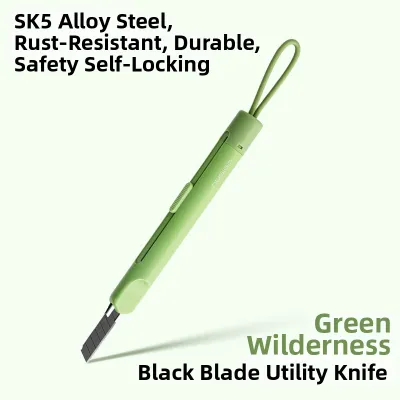
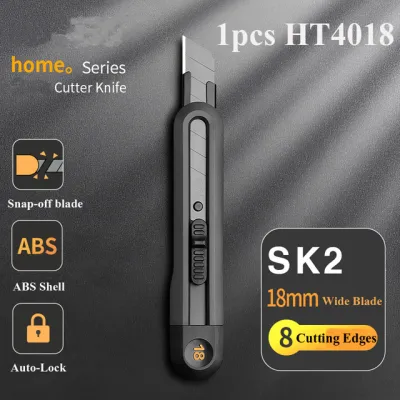
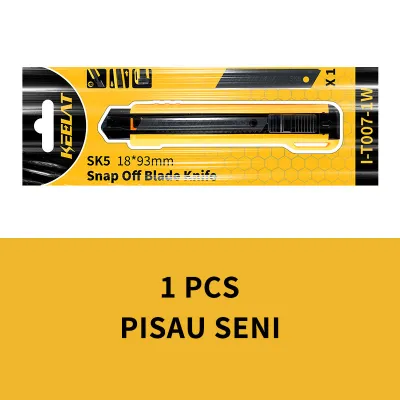
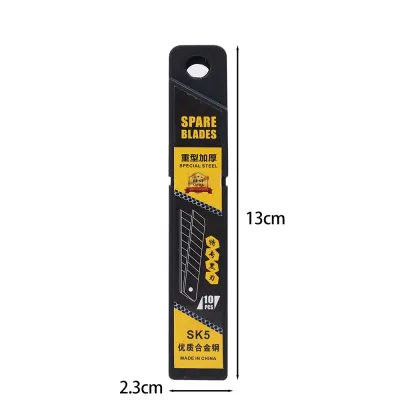
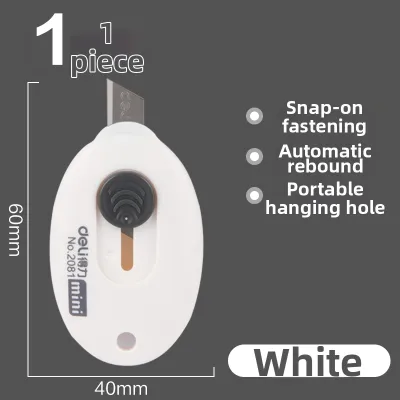
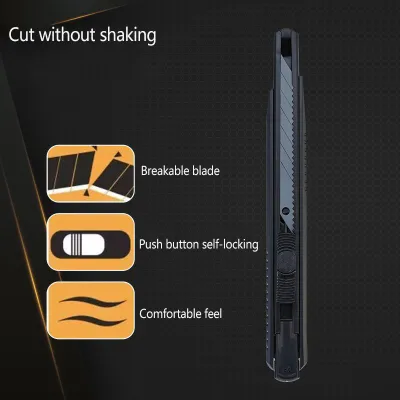

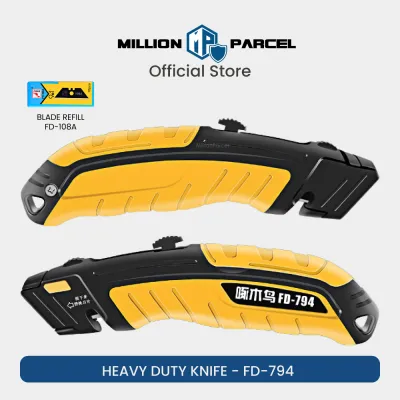
Prices are valid at publication and may change. Please refer to the product page for the latest price.
The blade itself requires careful consideration. Traditional utility knives use snap-off blades, where worn segments are snapped off to reveal a fresh edge. For primary school students, snap-off blades are highly hazardous; the segments can snap unexpectedly during heavy cutting tasks, or a child might attempt to snap them manually without proper tools. Instead, choose utility knives that use solid, non-segmented blades. Additionally, look for tools that limit blade exposure. For most school craft projects involving paper, thin cardboard, or felt, a blade exposure of just 2mm to 5mm is more than sufficient. Minimizing the exposed surface area of the blade dramatically reduces the depth of any accidental cut. Finally, examine the blade replacement process. A safe utility knife should feature a child-resistant lock on the blade compartment, requiring a coin, a specific tool, or a complex multi-step action that ensures only an adult can perform blade changes.
Safer Cutting Alternatives for Younger or Less Experienced Students
If a traditional utility knife feels too advanced or risky for your child’s current skill level, several highly effective safety-first alternatives exist. Hidden-blade safety cutters are an excellent option for straight cuts on paper and thin cardstock. These tools feature a recessed blade housed within a plastic guide slot. The slot is wide enough to allow paper or thin cardboard to slide through to the blade, but far too narrow for a child’s finger to make contact with the sharp edge. This design virtually eliminates the risk of lacerations, making it ideal for independent classroom work.
Another popular alternative is the precision pen-style cutter. These tools are shaped like standard pens and feature tiny, micro-ceramic or short steel tips. Because they are held exactly like a pen or pencil, they leverage the child’s existing fine motor skills and handwriting grip, offering superior control and maneuverability for intricate shapes. The microscopic tip limits the cutting depth naturally, allowing the child to slice through a single sheet of paper on a cutting mat without any risk of deep puncture wounds.
When selecting a tool, always match the cutting mechanism to the specific craft material. For thin origami paper, standard copy paper, or delicate cardstock, a precision pen cutter or high-quality safety scissors are the most appropriate choices. For thicker materials like corrugated cardboard or foam board, a specialized cardboard cutter with a blunt, serrated edge is far safer than a razor-sharp utility knife. These serrated tools saw through tough fibers rather than slicing them, requiring less downward pressure and reducing the likelihood of a sudden, uncontrolled slip. Heavy-duty safety scissors with spring-assisted handles should also be considered, as they keep the child’s hands well away from the cutting action while providing the leverage needed to cut through thick materials.
Reading Product Labels and Verifying Safety Claims
When shopping for school supplies, it is easy to be swayed by marketing buzzwords like “child-safe,” “kid-friendly,” or “ergonomic.” To ensure your child’s safety, look past these front-of-pack claims and critically evaluate the technical specifications and warnings printed on the back of the packaging. Look for official age-grading symbols, such as a warning indicating the tool is not suitable for children under a certain age, or an explicit recommendation for ages 8 and up. These guidelines are based on developmental milestones, hand strength, and cognitive ability, and should not be ignored.
High-quality stationery manufacturers provide clear, illustrated instructions on the packaging. These should detail how to operate the retraction mechanism, how to hold the tool correctly, and how to safely store it. Avoid unbranded or generic cutting tools sold in loose bins or on cheap online marketplaces that lack clear packaging, safety warnings, or manufacturer contact details. A reputable brand will also clearly state the type of replacement blades required and outline a safe protocol for changing them.
Distinguish between true safety cutters and standard utility knives that have simply been colored in bright pastel shades. A true safety cutter will list specific engineering standards, such as spring-loaded retraction, a recessed blade, or a finger-friendly edge design. If the packaging does not explicitly detail these mechanical safety features, treat the tool as a standard utility knife and assume it carries the same risks as an adult workshop tool.
Establishing Safe Handling, Supervision, and Storage Rules
No safety feature can replace proper training, clear boundaries, and consistent supervision. Before your child ever uses a utility knife or safety cutter, establish a dedicated cutting station at home. This station should consist of a flat, stable table, a self-healing cutting mat, and bright, shadow-free lighting. Cutting on a slippery, unprotected surface like a polished dining table or a lap tray increases the risk of the tool slipping. The textured surface of a cutting mat provides essential traction for both the material and the knife, ensuring a smoother, more controlled cut.
Teach your child the fundamental rules of safe tool handling. First, establish a strict “no-passing” rule: a utility knife should never be handed directly from one person to another. Instead, the user must retract the blade fully, place the tool flat on the table, and allow the other person to pick it up. Second, when carrying the tool across a room, the blade must be completely retracted, and the knife should be held pointing downwards by the side of the body. Third, enforce immediate retraction: the blade must go back into the housing the very instant a cut is completed, even if another cut is planned just moments later.
Finally, define clear stopping conditions. Teach your child to stop cutting immediately and seek help if the blade feels dull. A dull blade snags and tears the paper rather than slicing it, forcing the child to apply excessive pressure, which often leads to a sudden slip and injury. The smoothness of a cut and the resistance to tearing depend on the exact combination of blade sharpness and paper density; parents can perform a quick trial cut on a scrap piece of the same craft paper to verify if the blade glides cleanly without snagging. Other stopping conditions include a sticking or gritty retraction mechanism, feeling tired or distracted, or any violation of the established safety rules. Store all cutting tools in a secure, designated drawer out of reach of younger siblings when not in use.
Frequently Asked Questions (FAQ)
When is a child ready to use a utility knife?
A child’s readiness depends on their observable fine motor control, hand-eye coordination, and ability to follow multi-step safety instructions consistently. If your child can write legibly, use standard scissors with high precision, and maintain focus on a task without getting distracted, they may be ready to transition to a basic safety cutter. Always consult your child’s school guidelines and teacher recommendations before purchasing a utility knife for classroom use, as many primary schools have strict policies prohibiting students from bringing open-bladed tools to school.
Do ceramic blades offer better safety for school crafts?
Ceramic blades are often designed with a unique, finger-friendly edge that cuts through paper and cardboard easily but is less likely to slice skin upon accidental contact. This makes them a popular choice for school crafts. However, they are not completely safe and still require careful handling. Ceramic is more brittle than steel, meaning the blade can chip or shatter if dropped on a hard classroom floor or twisted during a heavy cut. Parents should verify the manufacturer’s specific guidelines and teach children that all blades, regardless of material, must be treated with the same level of care and respect.

Community discussion
Share your experience or ask a question. Comments are reviewed before publication.