
Selecting a reliable Chinese calendar for 2027 requires understanding that true accuracy is a blend of precise astronomical calculations and rigorous adherence to traditional compilation lineages. In Singapore, where planning major life events, business launches, and home renovations according to the lunar calendar remains a deeply respected practice, choosing the right brand is essential. To ensure your 2027 planning is grounded in authentic data, you must look for publishers that correctly calculate the year’s specific astronomical movements—including the rare 2027 Leap Second Month (闰二月)—and apply established compilation methodologies.
The most reliable Chinese calendar brands available in Singapore fall into three distinct groups: legacy Hong Kong and Taiwanese Tong Sheng publishers, modern editions curated by renowned regional Feng Shui masters, and localized publications from trusted Singaporean cultural or religious institutions. Depending on whether you require exhaustive, classical daily details or simplified, modern bilingual planning spaces, the ideal calendar choice will vary. By evaluating both the editorial authority behind the dates and the physical stationery characteristics of the calendar, you can find a reliable tool that seamlessly integrates traditional wisdom into your daily routine.
How to Evaluate the Accuracy of a Chinese Calendar
To judge the reliability of any Chinese calendar for the upcoming year, you must first understand that traditional calendars are not based on arbitrary predictions, but on a sophisticated lunisolar system. This system harmonizes the tropical solar year with the synodic lunar months. A highly accurate calendar must correctly align these two cycles, which requires precise astronomical calculations. For 2027, a primary test of astronomical correctness is the placement of the intercalary month. In the 2027 calendar, there is a Leap Second Month (闰二月), which occurs because the lunar month following the second normal lunar month does not contain a major solar term (Zhong Qi). A reputable publisher will have calculated this boundary precisely, ensuring that the leap month begins on March 22, 2027, and ends on April 19, 2027.
Products mentioned in this guide
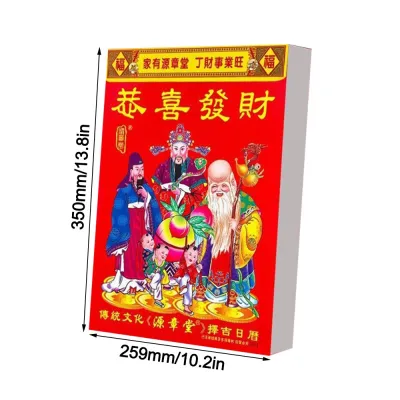
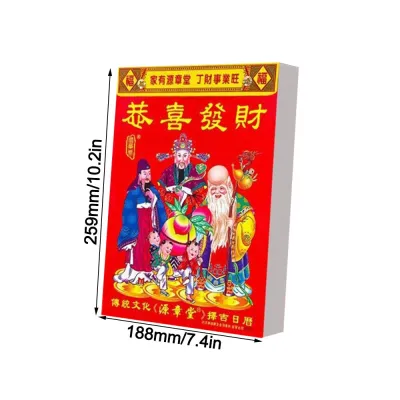
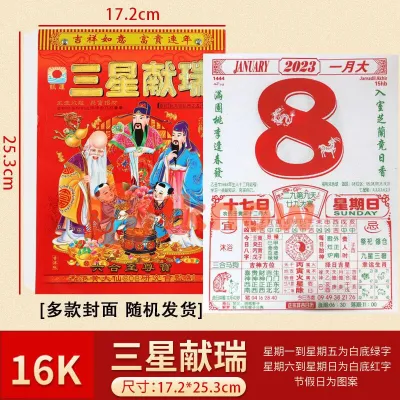
![2027 LUNAR CALENDAR 365 DAY [CHINESE] Traditional Hong Kong Small Medium Large Size(1 Pcs)](https://img.lazcdn.com/g/ff/kf/Sf877e99991d043d8bffaa7ae1f2186a2w.jpg_400x400q80.jpg_.webp)
![2027 LUNAR CALENDAR 365 DAY [CHINESE] Traditional Hong Kong Small Medium Large Size(1 Pcs)](https://img.lazcdn.com/g/p/17847228515b71064ed43937b64d9ece.jpg_400x400q80.jpg_.webp)
Prices are valid at publication and may change. Please refer to the product page for the latest price.
Beyond basic lunar dates, the accuracy of auspicious and inauspicious daily designations (Ze Ri, or date selection) depends on the compilation methodology used by the publisher. Traditional date selection is governed by classical almanac compilation systems, such as those documented in the Qing Dynasty’s Imperial Encyclopaedia of Auspicious Times (Xie Ji Bian Fang Shu). Reputable publishers employ trained scholars or lineage practitioners who meticulously calculate the daily clashing elements, planetary transits, and stellar influences. This ensures that the daily recommendations for activities like moving house, starting a business, or conducting renovations remain consistent with established classical texts rather than being randomized or simplified for convenience.
When shopping for a 2027 calendar, always look for explicit indicators of professional editorial standards. Trustworthy brands clearly print their publishing house imprint, the names of the consulting masters or editorial boards, and sometimes a brief preface explaining their compilation methodology. Avoid generic, unbranded calendars sold at exceptionally low prices on unverified online channels, as these frequently suffer from typographical errors, misaligned solar terms (Jie Qi), or skipped days. Remember that accuracy in a traditional calendar refers to its faithful adherence to astronomical truths and classical calculation lineages, rather than a guarantee of personal fortune.
Recommended Chinese Calendar Categories and Publishers in Singapore
The Singapore market offers a diverse range of traditional calendars, catering to different levels of familiarity with Chinese metaphysics. To choose the right one, you should understand the three primary categories of publishers available locally. Each category serves a specific purpose, offering unique benefits and distinct limitations in terms of layout, language, and depth of information.

Legacy Tong Sheng Publishers
For those who require the most comprehensive and traditional daily guidance, legacy Tong Sheng (通胜) publishers remain the gold standard. These publications carry centuries-old compilation lineages, with some of the most famous brands originating from historical houses in Guangdong, Hong Kong, and Taiwan. A prime example is the lineage of Master Choi Park Lai, whose family’s Choi Gen Po Tong almanac is widely recognized as a cultural heritage benchmark. These traditional calendars are characterized by their dense, red-and-black grids filled with classical Chinese characters, complex charts, and detailed daily analyses of planetary movements and directional influences.
The ideal user for a legacy Tong Sheng is someone planning major life milestones—such as weddings, commercial groundbreakings, or extensive home renovations—who requires highly specific, granular timing down to the auspicious hour. Traditionalists, older generations, and professional practitioners of Chinese metaphysics rely heavily on these editions because they do not simplify or omit the complex formulas of traditional date selection.
However, these legacy calendars have distinct practical limitations. They are almost exclusively printed in Traditional Chinese and utilize highly specialized, archaic terminology that can be difficult for modern readers to decipher without prior study. Furthermore, their physical formats are traditionally large, heavy wall-hanging books or thick, daily tear-off pads printed on thin, low-gsm newsprint paper, which are designed for quick reference rather than active writing or personal scheduling.
Renowned Feng Shui Masters' Editions
To bridge the gap between ancient wisdom and modern lifestyles, many renowned Feng Shui masters and consulting firms publish annual calendars and planners. Well-known regional practitioners—such as Singapore’s Way Fengshui Group, or international master compilers like Joey Yap—produce highly polished, user-friendly editions for the upcoming year. These calendars translate complex classical formulas into simplified, actionable daily advice, using modern graphic design and clear visual icons to indicate auspicious activities.
These editions are specifically designed for working professionals, younger demographics, and modern families who want to incorporate traditional date selection into their busy schedules. Instead of wading through dense classical text, users can quickly see at a glance whether a day is favorable for signing contracts, traveling, holding meetings, or resting. Many of these publications also include yearly zodiac forecasts, monthly flying star charts, and personalized luck pillars based on the user’s birth year.
The primary benefit of these masters’ editions is their highly accessible, bilingual layout (typically featuring both English and Simplified Chinese) and their functional stationery formats. They are frequently designed as stylish desk stand calendars or high-quality personal planners with dedicated spaces for daily notes. The trade-off is that they offer a more curated, simplified version of traditional date selection, omitting the highly technical astronomical data found in a full-scale Tong Sheng.
Singapore-Based Cultural and Feng Shui Institutions
Another highly reliable source of traditional calendars in Singapore consists of local Buddhist and Taoist temples, cultural clans, and established local Feng Shui centers. Institutions such as the Lian Shan Shuang Lin Monastery, Kwan Im Thong Hood Cho Temple, or local community-based heritage associations frequently publish or commission their own annual calendars. These editions are deeply trusted by the local community because they are compiled with local relevance in mind.
The standout feature of these institutional calendars is their integration of Singapore-specific context. They clearly mark Singapore public holidays, school term breaks, and the exact dates of local temple festivals and deity birthdays, making them incredibly practical for household scheduling. Furthermore, many of these calendars are distributed to support charitable causes, with proceeds from sales or voluntary donations going directly to temple maintenance, community welfare programs, or heritage preservation.
These calendars are typically designed in highly accessible, community-friendly formats, such as large-grid monthly wall calendars that are easy for the whole family to read. They are usually distributed directly at temple counters, local institutional offices, or specialized heritage bookstores in cultural hubs like Chinatown and Waterloo Street. While they may not contain the exhaustive astrological calculations of a professional almanac, they provide a reliable, community-oriented synthesis of essential lunar dates and key auspicious days.
Comparing Physical Formats and Stationery Features
When selecting a Chinese calendar for 2027, evaluating its physical design and stationery attributes is just as important as verifying its editorial accuracy. The calendar must fit seamlessly into your physical environment and accommodate your writing habits. Different formats offer distinct trade-offs in terms of visibility, durability, and paper quality.
The physical format you choose dictates how you will interact with the calendar daily. Large wall calendars provide excellent household visibility, allowing multiple family members to view lunar dates and public holidays at a glance, but they offer minimal space for writing. Desk stand calendars are highly portable and ideal for office desks, providing a clear monthly overview and a professional appearance, though they have limited space for detailed daily journaling. Daily tear-off pads offer a satisfying ritual of tearing away each passing day and display the maximum amount of daily traditional information, but they require a sturdy wall mount and generate daily paper waste.
For those who intend to write on their calendars, paper quality and binding durability are critical specifications to verify. Traditional daily tear-off calendars are printed on very thin newsprint (typically 45 to 60 gsm), which is highly prone to ink bleed-through, feathering, and ghosting. If you use gel pens, rollerballs, or fountain pens, these papers will not perform well; you must limit your writing to pencils or standard ballpoint pens. Conversely, modern desk stand calendars and planners are usually constructed with high-quality, uncoated or matte-coated cardstock (ranging from 180 to 250 gsm). To test paper compatibility, perform an observable trial by writing a few characters in an inconspicuous corner of the calendar using your preferred pen; check for ink absorption speed, feathering, and whether the ink bleeds through to the reverse side.
Binding styles also affect long-term durability. Desk calendars should feature a sturdy, double-loop wire-o (spiral) binding that allows the pages to turn smoothly and lay completely flat without tearing. For daily tear-off pads, inspect the top binding: it should feature a secure metal header or a heavily glued spine with high-quality perforations. Poorly perforated tear-off calendars often rip unevenly, leaving unsightly paper remnants at the top of the frame.
The following table summarizes the key stationery dimensions of the primary Chinese calendar formats available in Singapore:
| Format Type | Best Use Case | Primary Language Support | Note-taking Suitability | Binding Style |
|---|---|---|---|---|
| Daily Tear-Off Pad | Traditional daily tracking & quick reference | Traditional Chinese | Poor (thin newsprint paper; use ballpoint/pencil) | Glued top with metal header |
| Desk Stand Calendar | Office desks, monthly overview, and quick planning | Bilingual (Simplified Chinese & English) | Moderate to High (smooth, thick cardstock) | Wire-O / Spiral binding |
| Wall Calendar (Large) | Household visibility, family scheduling | Simplified/Traditional Chinese & English | Low to Moderate (glossy or matte paper) | Spiral or metal tin-slide hanger |
| Softcover Book Almanac | Deep traditional study & professional consulting | Traditional Chinese | Moderate (uncoated book paper; best for pencils) | Perfect bound (glue) |
Where to Buy Authentic Calendars in Singapore
To ensure your 2027 Chinese calendar is authentic and free from critical printing errors, you must purchase it through reliable retail channels. Counterfeit or poorly produced calendars are common on unverified online platforms, and these copies often contain miscalculated lunar dates, incorrect solar terms, or misaligned auspicious days that can completely disrupt your planning.
For physical shopping, Singapore offers several highly reputable locations. Major local bookstore chains, such as Popular Bookstore, stock a wide range of reliable calendars starting in the third quarter of the year. For specialized traditional almanacs and legacy Tong Sheng, the best physical destination is Bras Basah Complex. Historic bookshops here, such as Union Book Co. (联合书局) and Maha Yu Yi (友谊书斋), have imported authentic editions from Hong Kong and Taiwan for decades. Additionally, established Feng Shui and religious supply stores located around cultural landmarks—such as Waterloo Street and Chinatown—offer authentic calendars directly curated by reputable practitioners.
If you prefer online purchasing, exercise caution. Stick to official flagship stores or highly rated, long-standing sellers on reputable local ecommerce platforms and online marketplaces. Avoid purchasing from unbranded, third-party listings that do not clearly state the publisher’s name. Check customer reviews specifically for photos of the physical product to verify the print quality.
Before finalizing your purchase, perform a quick physical inspection to verify authenticity. First, check the covers and inner pages to ensure the calendar is explicitly printed for 2027 (the Ding Wei Year of the Goat, 丁未年). Second, verify the publisher’s imprint and contact details on the copyright page. Finally, flip to the spring months of 2027 and check for the presence of the Leap Second Month (闰二月), ensuring that the dates flow correctly from the second lunar month into the leap second month and then into the third lunar month without duplicate or skipped dates.
Frequently Asked Questions (FAQ)
Do all Chinese calendars show the exact same auspicious dates?
While the astronomical markers—such as the lunar phases, solar terms (Jie Qi), and the 2027 Leap Second Month—are scientifically fixed and identical across all accurate calendars, the designated auspicious and inauspicious activities (Ze Ri) can vary. This variation occurs because different publishers and Feng Shui masters follow different traditional schools of thought, such as Xuan Kong Da Gua, San Yuan, or San He systems. Each school weighs planetary alignments, stellar influences, and daily clashes differently. To avoid confusion and maintain planning consistency, it is highly recommended to select one trusted, reputable brand at the beginning of the year and stick to its guidance throughout 2027.
What is the difference between a standard lunar calendar and a Tong Sheng?
A standard lunar calendar is a basic date-tracking tool that displays the Gregorian dates alongside their corresponding lunar dates, major traditional Chinese festivals (such as Chinese New Year and Mid-Autumn Festival), and the current zodiac year. In contrast, a Tong Sheng (traditional Chinese almanac) is a comprehensive cosmological guide. Beyond basic date tracking, a Tong Sheng contains detailed daily astrological charts, auspicious and inauspicious hours, directional luck guides, the Spring Ox Diagram (Chun Niu Tu), and specific recommendations for daily actions ranging from medical treatments to travel, making it a highly technical planning manual rather than a simple calendar.
Community discussion
Share your experience or ask a question. Comments are reviewed before publication.