
Neither PVC nor polyolefin shrink wrap rolls provide meaningful shock absorption or cushioning on their own. While both materials excel at containment, tamper evidence, and surface protection, fragile items require dedicated cellular cushioning to survive drops and impacts. The choice between a PVC and polyolefin shrink wrap roll should be based on shrink force, tear resistance, and the heat sensitivity of your products, rather than an expectation of impact resistance. This guide compares their physical properties and explains how to integrate them into a complete protective packaging system.
When preparing delicate items for shipping or retail display, it is easy to mistake a tight, glossy plastic wrap for a protective shield. However, the physics of transit damage tell a different story. Shock protection relies on deceleration—slowing down the impact force over a distance using compressible materials. Because shrink wrap conforms tightly to the contours of an object, it has no room to compress. Consequently, any external force is transmitted directly to the item underneath. Understanding this limitation is the first step in designing a packaging strategy that actually prevents breakage.
The Reality of Shrink Wrap for Shock Protection
To select the right packaging materials, you must first distinguish between surface protection and shock absorption. A shrink wrap roll is designed to shrink tightly around an object when heat is applied, creating a form-fitting plastic skin. This skin serves several critical functions: it unitizes multiple items into a single bundle, provides a clear barrier against dust and moisture, and offers immediate evidence of tampering. For retail items, it also keeps product packaging clean and pristine during handling.
Products mentioned in this guide
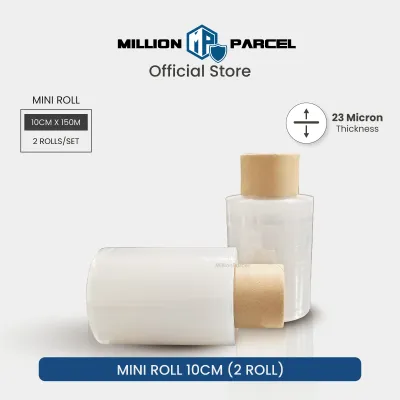
![🏅[CHEAPEST] Stretch Film/ Shrink Wrap / Cling Wrap /Pallet wrapping /Moving Supplies/pallet Wrap/Pallet wrapping](https://img.lazcdn.com/g/p/c69357eb04f4e35ac9ee2d124f108fda.jpg_400x400q80.jpg_.webp)
Prices are valid at publication and may change. Please refer to the product page for the latest price.
However, neither polyvinyl chloride (PVC) nor polyolefin (POF) films possess the physical structure required to absorb kinetic energy from drops, vibrations, or collisions. True shock protection requires a cellular or fibrous structure, such as bubble wrap, expanded polystyrene, or engineered cardboard inserts. These materials contain air pockets or compressible fibers that deform under pressure, absorbing the energy of an impact before it reaches the fragile item. Without these underlying layers, a shrink-wrapped ceramic vase or glass bottle remains highly vulnerable to shattering, even if the plastic film itself remains completely intact after a fall.
Shrink wrap is appropriate for fragile items only when used as a secondary stabilizing layer. Its primary role in protective packaging is to prevent internal movement. When items shift inside a shipping box, they collide with each other or the box walls, which is a leading cause of transit damage. By wrapping a fragile item tightly, you lock its primary cushioning in place and prevent any shifting. This makes shrink wrap an excellent component of a multi-layered packaging system, but it should never be relied upon as the sole line of defense against physical impacts.
PVC vs Polyolefin: Core Material Differences
When choosing between PVC and polyolefin shrink wrap rolls, you must evaluate how their physical properties interact with your fragile goods. The most critical difference lies in their shrink force, which is the amount of tension the film exerts on the product as it contracts. PVC films exert a high, rigid shrink force. While this is excellent for creating a tight, drum-like seal on sturdy items, it can easily warp, bend, or crush delicate or flexible products. Polyolefin, on the other hand, exerts a much gentler, more uniform shrink force, making it the safer choice for structurally delicate items.

Tear and puncture resistance is another vital point of comparison. Polyolefin is a highly durable, cross-linked polymer that resists punctures from sharp corners and edges. Even if a small puncture occurs, polyolefin is highly resistant to tearing further, ensuring the package remains secure. PVC is significantly more brittle. Once a PVC film is shrunk, it becomes rigid and susceptible to cracking or tearing, especially when exposed to cold temperatures during transit. If your fragile items have sharp edges or complex geometries, PVC is much more likely to fail under stress.
Temperature sensitivity during the shrinking process is also a key consideration for fragile goods. Polyolefin typically requires higher temperatures to shrink, usually ranging from 150°C to 180°C, whereas PVC shrinks at lower temperatures, typically between 120°C to 150°C. However, polyolefin shrinks much faster and more uniformly, meaning the actual dwell time under heat is often shorter. Furthermore, heating PVC releases small amounts of hydrogen chloride gas, which requires a well-ventilated workspace and can leave a chemical odor on the packaged goods. Polyolefin is completely odorless and does not emit hazardous fumes, making it highly preferred for consumer-facing products.
Finally, clarity and presentation differ markedly between the two materials. Polyolefin offers exceptional optical clarity and a high-gloss finish, allowing customers or quality control inspectors to clearly see the fragile item inside. This makes it easy to inspect the product for pre-existing damage without opening the package. PVC tends to have a slight bluish tint, can appear hazy, and is prone to yellowing and becoming increasingly brittle over time when exposed to ambient light.
Building a Complete Protective System for Fragile Goods
To achieve true shock protection, you must integrate your shrink wrap roll into a comprehensive, multi-layered packaging system. The process begins with selecting the appropriate primary cushioning material. Bubble wrap with large air bubbles, polyethylene foam sheets, or custom-molded pulp inserts are excellent choices for absorbing impact energy. Wrap the fragile item generously in these materials, ensuring that all vulnerable edges, corners, and protrusions are fully covered by at least several centimeters of cushioning.
Once the primary cushioning is applied, use the shrink wrap roll as the secondary outer layer. Wrap the film around the cushioned item and apply heat to shrink it tightly. The shrink wrap acts as a stabilizing corset, compressing the cushioning material slightly to lock it firmly in place. This prevents the bubble wrap or foam from sliding off the item during handling. It also prevents multi-part fragile items, such as a ceramic teapot and its lid, from knocking against each other inside the box.
Before proceeding with this method, you must check the compatibility between the heat application process and the structural integrity of both the fragile item and its cushioning. Some low-density foam wraps or delicate plastic components can melt or deform when exposed to the heat required to shrink the film. To prevent thermal damage, ensure that the heat source is applied quickly and evenly, and verify that your primary cushioning material is rated to withstand brief exposure to shrink temperatures.
The final step is to verify the stability of the completed package through simple, observable checks. Gently shake the wrapped item; there should be absolutely no movement or shifting inside the cushioning. Inspect the shrink wrap seals to ensure they are fully fused, smooth, and free of holes or weak spots. If the film has shrunk unevenly or created ‘dog-ears’ at the corners, reapply gentle heat or adjust your wrapping technique to ensure a uniform, secure seal that will hold up throughout the shipping journey.
Decision Framework: Choosing Your Shrink Wrap Roll
Selecting the right shrink wrap roll involves matching the physical characteristics of your fragile items with the specific strengths of each material. Use the following guidelines to make an informed decision:
Choose polyolefin if your fragile items are moderately heat-sensitive, have delicate structures that could be crushed by high tension, or require high optical clarity for retail display. Polyolefin is also the ideal choice if you are packaging items that will be handled frequently, as its high tear resistance prevents the wrap from failing. Because it is odorless and non-toxic, it is the standard choice for cosmetics, toys, and any items that come into direct contact with hands or food.
Choose PVC if your fragile items are highly rigid and robust enough to withstand significant shrink tension without warping, such as heavy ceramic mugs, wooden frames, or thick glass bottles. PVC is often preferred when material cost is the primary driver and you are operating a simple, manual packaging setup with basic heat guns, as PVC shrinks easily at lower temperatures. It is also highly effective when you require a very stiff, tamper-evident seal that clearly shows if a package has been opened.
Always verify the heat tolerance of your product before finalizing your choice. If the fragile item contains components that are highly sensitive to heat—such as wax candles, delicate electronics, or heat-sensitive adhesives—the lower shrink temperature of PVC may seem appealing, but the rapid shrink time of polyolefin often results in less heat transfer to the product itself. If neither material can be safely applied due to extreme heat sensitivity or if the items are exceptionally heavy with sharp, puncture-prone edges, you should bypass shrink wrap entirely and opt for heavy-duty stretch film or custom corrugated packaging.
Frequently Asked Questions (FAQ)
Can I use a heat gun on fragile items without damaging them?
Using a manual heat gun on fragile items carries inherent risks because it is difficult to control and distribute the heat evenly. Unlike automated heat tunnels, which provide consistent, ambient heat from all directions, a heat gun concentrates high temperatures on a localized area. This concentrated heat can easily cause localized melting of plastic cushioning, warp delicate components, or cause thermal shock in materials like glass or ceramics. To minimize these risks, always maintain a safe distance of at least 15 to 20 centimeters between the gun nozzle and the film, keep the heat source in constant motion, and perform a test run on a non-essential sample to calibrate your technique.
Does the thickness of the shrink wrap roll improve shock protection?
Increasing the thickness of your shrink wrap roll—measured in gauge or microns—does not improve its ability to absorb shock or cushion impacts. A thicker film (such as 100 gauge compared to 60 gauge) will significantly improve the package’s resistance to punctures, tears, and abrasions, which is highly beneficial for items with sharp corners. However, because the film still conforms tightly to the product without any compressible air space, it cannot decelerate an impact. Furthermore, thicker films require higher heat settings or longer exposure times to shrink fully, which increases the risk of thermal damage to heat-sensitive fragile items. True impact protection must always be provided by the underlying cushioning layer.
Community discussion
Share your experience or ask a question. Comments are reviewed before publication.