
Selecting the right shrink wrap plastic for your packaging needs is not about finding a universally superior material, but rather matching the physical properties of the film to your specific products. PVC (polyvinyl chloride) and Polyolefin (POF) are the two most common options, each offering distinct protective qualities. While one excels at providing a rigid, crisp shell for uniform items, the other offers high puncture resistance and flexibility for irregular shapes. Understanding how these materials behave under heat, stress, and environmental exposure ensures your goods remain pristine from the warehouse to the customer’s hands.
Understanding PVC and Polyolefin Shrink Plastics
To make an informed decision, you must first understand the baseline physical and visual characteristics of both shrink wrap plastics. PVC is a traditional packaging material known for its high rigidity and stiffness. When you handle a roll of PVC film, it feels relatively brittle and produces a distinct crinkling sound. Once heated and cooled, it forms a tight, hard shell around the product. This stiffness makes it highly effective for keeping flat items completely flat, but it also means the film has less give when subjected to external pressure.
In contrast, Polyolefin is a highly flexible, softer polymer. It feels more like a traditional plastic bag before shrinking, with a smooth, elastic texture. When shrunk, POF retains a degree of flexibility, allowing it to absorb impacts without splitting.
Products mentioned in this guide
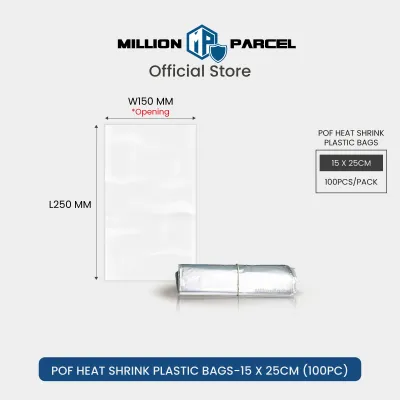
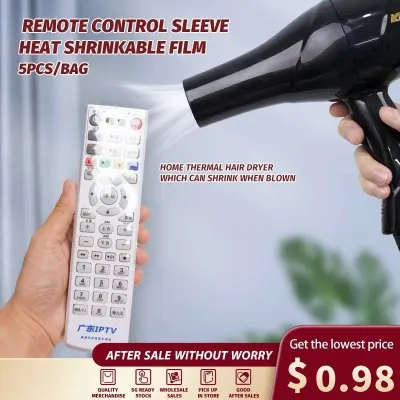
![🏅[CHEAPEST] Stretch Film/ Shrink Wrap / Cling Wrap /Pallet wrapping /Moving Supplies/pallet Wrap/Pallet wrapping](https://img.lazcdn.com/g/p/c69357eb04f4e35ac9ee2d124f108fda.jpg_400x400q80.jpg_.webp)
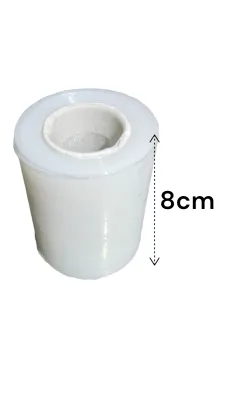
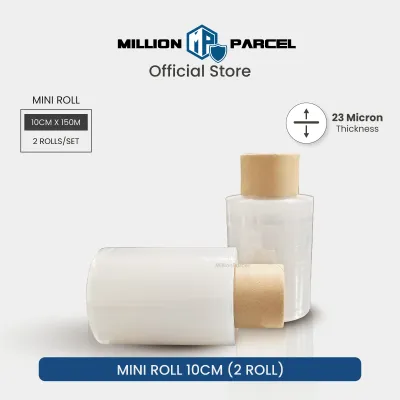
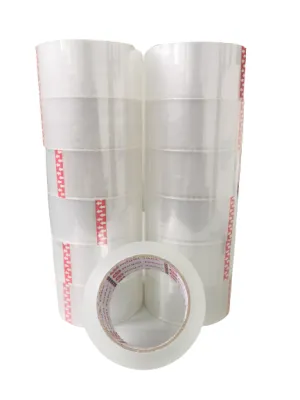
Prices are valid at publication and may change. Please refer to the product page for the latest price.
Visually, the two materials present products differently. Polyolefin typically offers exceptional clarity and a high-gloss finish, making it excellent for retail display items where visual appeal is paramount, such as premium stationery sets or gift boxes. PVC also provides good clarity, but it can sometimes exhibit a slight bluish or yellowish tint, especially when viewed in thick layers or rolls. Over time, PVC may lose some of its luster if exposed to light, whereas Polyolefin tends to maintain its optical clarity over longer storage periods.
Structurally, these films react differently to heat. PVC is often a mono-directional or low-ratio bi-directional shrink film, meaning it shrinks primarily in one direction. This can cause distortion if used on highly irregular shapes. Polyolefin is typically a bi-directional shrink film, shrinking evenly in both width and length, which results in a more uniform contour around complex items.
Comparing Protective Qualities for Your Products
Puncture Resistance and Edge Protection
When packaging items with sharp corners, rigid boxes, or irregular profiles, puncture resistance is a critical factor. Polyolefin excels in this area due to its cross-linked molecular structure, which allows the film to stretch and distribute tension evenly. If a sharp corner presses against POF, the film yields slightly rather than tearing, making it highly reliable for multi-packs, heavy books, or items with protruding parts.

PVC, on the other hand, is more prone to tearing once a puncture occurs. Because of its rigid nature, a small tear can quickly run across the entire length of the package under tension. However, this rigidity is highly beneficial when you require structural support. For lightweight, uniform paper boxes or flat notebook sets, PVC acts as a supportive outer skeleton. It prevents the contents from bending or warping during transit, offering excellent edge protection for items that already have a standard, flat shape.
To determine the exact capability of a specific film, you should not rely solely on general material categories. Always check the manufacturer’s specification sheets for puncture resistance ratings, tensile strength, and tear propagation limits. These metrics will give you a precise indication of how the film will perform under the physical stresses of your shipping cycle.
Moisture Barrier and Environmental Stability
Protecting your inventory from environmental factors like humidity, dust, and temperature fluctuations is essential, particularly for paper-based stationery and sensitive electronics. Both PVC and Polyolefin provide an effective barrier against moisture and dust when properly sealed. However, their performance diverges significantly when exposed to varying environmental conditions over time.
PVC is sensitive to temperature changes. In cold storage environments or during transit in air-conditioned cargo holds, PVC can become increasingly brittle. This brittleness makes the packaged items highly susceptible to cracking and splitting if dropped or handled roughly. Additionally, under high-temperature conditions, PVC can continue to shrink slightly, which may warp delicate paper goods or cause the film to split at the seams.
Polyolefin remains highly stable across a much wider temperature range. It retains its flexibility in cold conditions and does not become brittle, making it a safer choice for items stored in unconditioned warehouses or shipped through varying climates.
When selecting a film for long-term storage or retail display, you should also observe the product labels for specialized treatments. If your items will be displayed near windows or under intense retail lighting, look for films with UV-resistance ratings. For items packaged in high-humidity environments, verify if the film has anti-fog properties to prevent condensation from clouding the display.
How to Choose the Right Shrink Wrap for Your Items
Selecting the correct shrink wrap plastic requires a systematic evaluation of your product’s physical form, display needs, and budget. By matching these factors to the strengths of each material, you can optimize both protection and presentation.
Choose PVC if you are wrapping rigid, uniform items where a stiff, crisp finish is desired. Standard notebook sets, boxed pens, board games, and flat-packed stationery are ideal candidates for PVC. The material’s rigidity helps maintain the flat structure of these items, preventing bowing or warping. Furthermore, PVC is often a highly cost-effective option for high-volume, simple packaging operations where budget constraints are tight. If your packaging process involves straightforward, rectangular items and does not require food-contact certification, PVC offers a practical and economical solution to keep your packaging costs within your target budget.
Choose Polyolefin if you are packaging irregular shapes, multi-packs, or items with sharp, protruding corners. If you are bundling together items of different sizes, such as a notebook with a pen and a roll of tape, POF’s superior flexibility and even bi-directional shrink will conform to the uneven contours without tearing or leaving large, unsightly ears of excess plastic at the corners. It is also the preferred choice for premium retail items where maximum clarity and gloss are required to showcase the product’s design.
Before making a final purchase, you must verify several critical compliance and safety factors. If your packaging will come into direct contact with food, cosmetics, or items intended for young children, check the manufacturer’s data sheets to ensure the film is certified for direct food contact. Polyolefin is generally the standard for food-contact applications as it does not contain plasticizers or chlorine. Additionally, if your products are sensitive to specific chemical interactions, or if they will be subjected to extreme temperature sterilization, consult the manufacturer’s technical data sheets to confirm compatibility.
Verifying Equipment Compatibility and Storage Conditions
Even the highest-quality shrink wrap plastic will fail to protect your products if it is incompatible with your packaging machinery or stored incorrectly before use. Before ordering large quantities of film, you must conduct a thorough audit of your existing equipment and storage facilities.
First, verify that your heat sealer and shrink tunnel can operate within the specific temperature window required by your chosen film. PVC typically requires a lower shrinking temperature than Polyolefin. If you attempt to run Polyolefin through a tunnel calibrated solely for PVC, you may experience incomplete shrinking or weak seals. Conversely, running PVC at temperatures meant for POF can cause the film to burn, release unpleasant odors, or split. Consult both your machinery manuals and the film manufacturer’s guidelines to ensure your equipment can achieve and maintain the correct heat profile.
Next, check the physical specifications of the film rolls. Ensure the roll width, core size (typically 2-inch or 3-inch cores), and total roll weight are fully compatible with your film dispensers and sealing machines. Using a roll that is too heavy or has an incorrect core size can cause tension issues, leading to uneven sealing or mechanical strain on your equipment.
Finally, establish proper storage conditions for your unused film rolls. Both PVC and Polyolefin should be stored in a cool, dry warehouse away from direct sunlight and localized heat sources, such as heaters or steam pipes. PVC is particularly sensitive to ambient heat and can begin to shrink or stick to itself (a phenomenon known as blocking) if stored in hot environments. Keep rolls stored horizontally on their original racks or packaging to prevent flat spots from developing, which can cause feeding issues during production.
Frequently Asked Questions (FAQ)
Can I use the same heat settings for both PVC and Polyolefin?
No, you should not use the same heat settings for both materials without adjustment. PVC and Polyolefin are composed of different polymers with distinct melting and shrinking points. PVC generally requires lower temperatures to shrink effectively, while Polyolefin typically demands higher heat and faster airflow to achieve a tight, clear seal. Attempting to use identical settings can result in scorched, brittle PVC or under-shrunk, loose Polyolefin. Always consult the technical specifications provided by your film supplier and adjust your heat tunnel or sealer settings accordingly.
Which shrink wrap is safer for indoor packaging environments?
When packaging indoors, ventilation is a key consideration. Heating PVC can release trace amounts of hydrogen chloride gas and other odors, which can be irritating in poorly ventilated spaces. Polyolefin releases fewer odors and byproducts during the heating process, making it generally easier to manage in standard indoor workspaces. Regardless of the material you choose, you should verify local workplace safety guidelines, ensure your packaging area has adequate ventilation or exhaust systems, and carefully review the film’s Safety Data Sheet (SDS) for specific handling and ventilation requirements.
Community discussion
Share your experience or ask a question. Comments are reviewed before publication.