
When preparing items for shipping, storage, or a major move, selecting the right wrapping material is the difference between a secure arrival and costly transit damage. For robust packing protection, shock absorption, and load retention, Polyethylene (PE) wrap—specifically Linear Low-Density Polyethylene (LLDPE)—is the superior choice over Polyvinyl Chloride (PVC). PE wrap possesses the elastic recovery and puncture resistance required to bind items tightly and absorb transit vibrations, whereas PVC is a more rigid, legacy material that lacks the dynamic recovery needed for heavy-duty shipping.
While PVC remains highly valued in specific retail display environments due to its exceptional optical clarity, it has largely been phased out of modern industrial packaging. Understanding the physical differences between these two polymers will help you choose the right wrap to secure your goods, protect your inventory, and prevent shifting during transport.
Material Basics: What Are PVC and PE Stretch Films?
To make an informed decision, it is important to clarify terminology. In the logistics, shipping, and stationery industries, “cling wrap” used for packing is professionally referred to as stretch film, stretch wrap, or pallet wrap. This industrial-grade material is engineered for structural containment and is distinct from the thin, highly plasticized cling film found in household kitchens.
Products mentioned in this guide
![[SG Stock] Stretch Film | Heavy Duty Shrink Wrap Packaging | Pallet Wrap | Cling Wrap | Furniture Wrap | 2.5/3kg](https://img.lazcdn.com/g/p/7c4636ed40f09d680825c6d01a74b8f8.png_400x400q80.png_.webp)
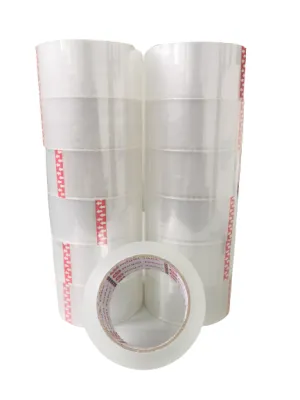
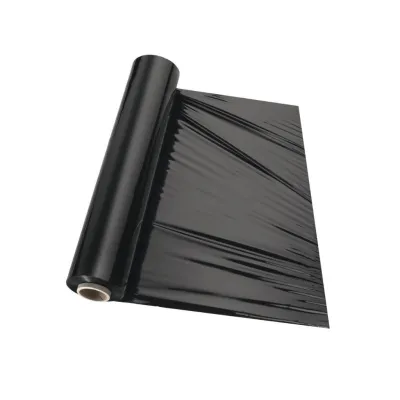
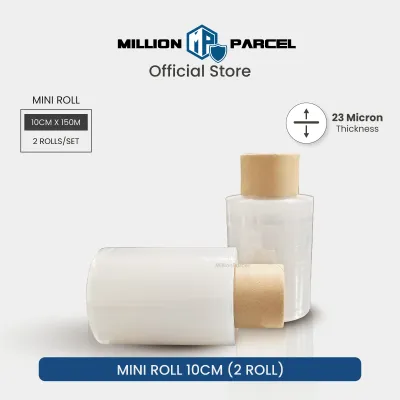
Prices are valid at publication and may change. Please refer to the product page for the latest price.
Polyvinyl Chloride (PVC) wrap was historically the standard for various wrapping applications. It is characterized by its high stiffness, immediate surface tack, and glass-like clarity. However, to make PVC flexible enough to wrap around objects, manufacturers must add significant amounts of plasticizers, such as phthalates. Over time, these plasticizers can migrate out of the film, leaving the wrap brittle, prone to cracking, and less effective at maintaining tension.
Polyethylene (PE) wrap, particularly Linear Low-Density Polyethylene (LLDPE), represents the modern standard for shipping and packaging protection. LLDPE is synthesized through the polymerization of ethylene with short-chain alpha-olefins, resulting in a molecular structure with substantial short-chain branching. This unique molecular architecture gives the film its signature elasticity, high tensile strength, and remarkable resistance to tearing under high tension.
When you stretch a PE film, its coiled polymer chains uncoil and align parallel to the direction of the stretch. Once the stretching force is released, these chains naturally attempt to return to their original, tangled state. This physical phenomenon, known as elastic recovery, creates a continuous, dynamic compressive force that holds wrapped items together far more securely than rigid materials.
Core Comparison: How PVC and PE Protect Packed Items
Evaluating how these materials perform under real-world transit conditions requires looking closely at key physical properties: stretch memory, puncture resistance, and load containment.

Stretchability and Load Retention (Memory)
Stretch memory, or load retention, is a film’s ability to maintain its holding force after being stretched over a load. When items are transported, they are subjected to constant vibrations, sudden stops, and shifting forces. A wrapping material with high stretch memory acts like a continuous rubber band, constantly pulling inward to keep the load unified.
PE stretch film excels in load retention. High-quality LLDPE hand wraps can easily stretch 100% to 150% during manual application, while machine-grade PE wraps can achieve stretch rates exceeding 300% without breaking. More importantly, once applied, the film retains a high percentage of its holding force, preventing individual boxes or components from sliding or tilting.
In contrast, PVC has relatively poor stretch memory. While it can be stretched to fit tightly around an object initially, it exhibits a high rate of stress relaxation. This means that under constant tension, the polymer chains permanently deform rather than pulling back. Over hours or days, a PVC wrap will loosen, especially when exposed to temperature fluctuations in transit, leaving the packed items vulnerable to shifting.
Before purchasing wrap for heavy-duty packing, look for the manufacturer’s specified stretch percentage and elastic recovery ratings on the product label. This ensures you select a film engineered to maintain its holding force over long distances.
Puncture and Tear Resistance
During handling and transit, wrapped packages frequently encounter sharp corners, wooden pallet splinters, metal strapping, and rough concrete surfaces. A reliable packing wrap must resist punctures and, if punctured, prevent the tear from spreading.
LLDPE is highly resistant to puncture propagation. Because of its branched molecular structure, any localized puncture remains isolated. The surrounding film distributes the stress outward, allowing the wrap to maintain its overall structural integrity even if a sharp corner pierces a single layer. This high tear threshold is critical for securing irregular loads with sharp or protruding edges.
PVC wrap is inherently more brittle and has very low tear propagation resistance. If a sharp corner or splinter punctures a PVC wrap, the film tends to “zipper”—meaning the tear rapidly spreads across the entire width of the wrap under tension. This catastrophic failure can completely compromise the stability of the entire load, leading to spilled goods and damaged inventory.
For shipments containing irregular items, multi-box pallets, or goods with sharp plastic or metal edges, PE wrap provides the necessary physical barrier to prevent localized punctures from turning into complete wrap failures.
Shock Absorption and Cushioning
There is a common misconception that wrapping an item in multiple layers of cling wrap provides direct cushioning against impacts. In reality, neither PE nor PVC stretch wrap is a primary cushioning material; they do not possess the trapped air cells of bubble wrap or the physical compression depth of foam inserts.
Instead, stretch wrap provides shock absorption indirectly through load containment and dynamic stabilization. When a palletized load or a bundle of boxes is wrapped tightly, the individual units are immobilized and forced to act as a single, cohesive mass. This prevents items from colliding with one another when the vehicle experiences sudden shocks, drops, or vibrations.
PE wrap provides superior dynamic stabilization because of its elasticity. When a sudden force acts on a PE-wrapped load, the film stretches slightly to absorb the kinetic energy and then pulls the load back into its original position. This elastic give cushions the items against the harshness of sudden impacts.
PVC’s stiffness offers very little dynamic give. Because it does not stretch and recover elastically, a sudden impact will either cause the rigid PVC wrap to snap completely or cause it to stretch permanently, leaving a loose gap. Once this gap forms, items inside can move freely, colliding with each other and increasing the risk of breakage.
PVC vs PE Cling Wrap: Feature Comparison Table
This table summarizes the physical and operational differences between PVC and PE stretch wraps to assist you in selecting the correct material for your packaging workflow.
| Feature / Dimension | PVC Cling Wrap | PE (LLDPE) Cling Wrap |
|---|---|---|
| Material Base | Polyvinyl Chloride with plasticizers | Linear Low-Density Polyethylene |
| Stretch Capacity | Low to Moderate (typically under 50%) | High to Excellent (100% to 300%+) |
| Puncture Resistance | Low (prone to tearing) | High (stretches around sharp edges) |
| Load Retention (Memory) | Poor (relaxes and loosens over time) | Excellent (maintains continuous tension) |
| Optical Clarity | Exceptional (glass-like, high gloss) | Moderate to High (slight haze at high layers) |
| Tear Propagation | High (punctures zipper easily) | Low (punctures remain localized) |
| Primary Packing Use Case | Lightweight retail display wrapping | Heavy-duty shipping, moving, and palletizing |
Decision Guide: When to Choose PE or PVC Wrap
Selecting the right wrap depends on the specific requirements of your items, the shipping method, and the environmental conditions they will encounter.
Choose PE (LLDPE) if:
- You are palletizing goods: Securing multiple heavy cardboard boxes onto a wooden or plastic pallet requires the high stretch memory and holding force that only PE can provide.
- You are moving furniture or bulky items: Wrapping household goods, office furniture, or appliances during a move protects surfaces from scratches while keeping drawers and doors securely closed.
- You are shipping irregular loads: Items with protruding parts, sharp corners, or varied dimensions require the puncture-stretch properties of LLDPE to prevent tearing.
- You are storing items in warm or humid environments: PE maintains its structural integrity and tension in tropical climates, making it ideal for warehousing and shipping in regions like Singapore.
Choose PVC if:
- You require high optical clarity: If you are wrapping high-end retail gift baskets, cosmetics, or display items where the customer needs to see the product clearly through the film, PVC's gloss and clarity are unmatched.
- You are wrapping very light, uniform items: Items that do not exert outward pressure and have no sharp edges can be wrapped in PVC, provided high tension is not required to keep them stable.
- You are using specialized heat-shrink tunnels: Some retail packaging systems use PVC shrink film, which shrinks tightly when exposed to heat, though this is distinct from standard stretch wrapping.
When neither material is sufficient:
- If you are packing highly fragile items, such as glassware, delicate electronics, or ceramics, stretch wrap alone will not prevent impact damage. You must first wrap the individual items in primary cushioning materials, such as bubble wrap, foam sheets, or corrugated cardboard inserts. Once the items are safely boxed, use PE stretch wrap on the exterior of the box or pallet to secure the entire shipment and keep it moisture-resistant.
How to Verify Wrap Specifications Before Buying
To ensure you purchase high-quality wrap that performs reliably under tension, always verify the technical specifications on the product packaging or manufacturer data sheet.
First, check the resin type. Look explicitly for “LLDPE” or “Polyethylene” rather than generic terms like “plastic wrap.” Additionally, look for terms like “Cast” or “Blown” PE. Cast PE film is extruded quietly, offers high clarity, and is easy to stretch, making it excellent for general warehouse use. Blown PE film is tougher, offers superior puncture resistance, and has high one-sided cling, making it ideal for heavy, irregular, or sharp loads, though it is noisier to apply.
Second, verify the thickness, which is typically measured in microns (micrometer / µm) or gauge. Standard hand stretch wraps generally range from 15 microns (60 gauge) for light loads to 23 microns (90 gauge) for heavy-duty applications. While a thicker gauge provides more physical resistance to punctures, remember that a high-performance, multi-layer co-extruded thin PE film can often outperform a thicker, low-grade film in stretch memory.
Third, check the environmental and adhesive properties. In hot, humid tropical climates like Singapore, some low-grade adhesives used in cheap stretch wraps can become overly sticky, leaving a gummy residue on wrapped furniture or boxes. Ensure the manufacturer specifies that the film has high-quality, stable cling properties (ideally one-sided cling to prevent adjacent wrapped pallets from sticking together in transit) and is rated for tropical storage conditions.
Frequently Asked Questions (FAQ)
Can I use kitchen PVC cling wrap for packing and shipping boxes?
No, you should not use kitchen PVC cling wrap for packing or shipping. Kitchen cling wrap is engineered to be extremely thin—typically between 8 to 12 microns—and is designed solely for food preservation and short-term adhesion to smooth containers. It lacks the tensile strength, thickness, puncture resistance, and stretch memory required to hold shipping boxes together. Attempting to use kitchen wrap for packing will result in immediate tearing under tension and will fail to secure your items during transit.
Does thicker cling wrap always mean better shock absorption?
Not necessarily. While a thicker gauge (higher micron count) provides more physical resistance to sharp edges and punctures, the overall shock absorption and load containment depend heavily on the material’s elastic memory and how tightly it is applied. A high-performance, thinner LLDPE wrap that is properly pre-stretched during application will hold a load far more securely and absorb transit vibrations better than a thicker, low-grade PVC wrap that stretches out permanently and becomes loose.
Community discussion
Share your experience or ask a question. Comments are reviewed before publication.