
Selecting the right stationery is a subtle but impactful way to support a student’s academic journey. Among the diverse tools available, sticki rolls have emerged as a highly versatile alternative to traditional paper blocks. However, the ideal roll depends heavily on the student’s educational stage. Primary school students, who are developing their fine motor skills and learning through visual and tactile methods, require very different features compared to secondary school students, who must manage dense textbooks, complex study schedules, and high-volume note-taking. By matching the roll’s width, color, and adhesive properties to the child’s grade level, parents can provide a practical tool that enhances organization without creating unnecessary clutter in the school bag.
Understanding the distinct academic demands of primary and secondary school helps narrow down the choices. While a younger child might use adhesive paper for hands-on spelling practice or creative labeling, an older student relies on it for systematic color-coding and non-destructive textbook annotation. This guide breaks down how to choose the most useful sticki rolls for each age group, ensuring your stationery budget is spent on tools that will actually be used in the classroom.
Understanding Sticki Rolls: The Roll-Style Alternative to Sticky Pads
Traditional sticky note pads have been a classroom staple for decades, but they present distinct challenges for students. Loose pads easily get crumpled at the bottom of a school bag, collect dust on their exposed adhesive edges, and often limit writing space to a single, fixed square. Sticki rolls offer a modern, roll-style alternative designed to address these daily inconveniences. Housed either in a compact dispenser or wound tightly as a self-contained roll, this format provides continuous adhesive paper that can be customized to any length.
Products mentioned in this guide
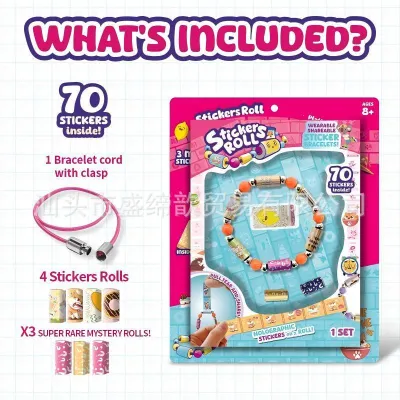
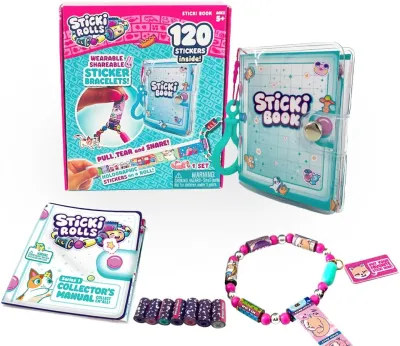
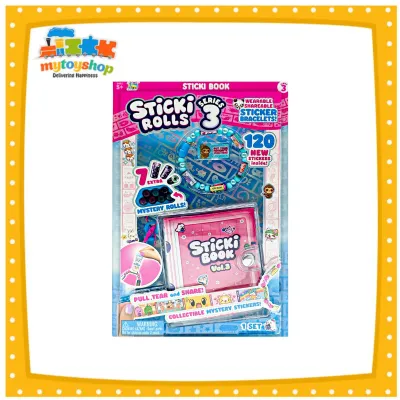

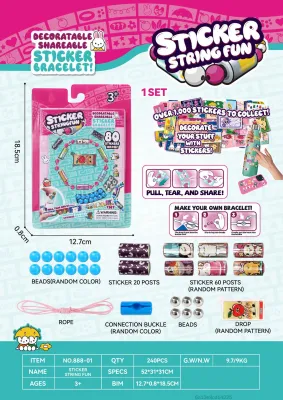
Prices are valid at publication and may change. Please refer to the product page for the latest price.
The core appeal of sticki rolls lies in their adaptability and portability. Many designs feature pre-cut, micro-perforated lines at regular intervals, allowing students to tear off standard-sized notes with a quick, clean pull. Alternatively, non-perforated rolls allow users to pull and cut the exact length of tape they need for a specific diagram or long sentence. This flexibility significantly reduces paper waste, as students no longer need to waste a large square note for a single-word reminder.
For students carrying heavy school bags, space is always at a premium. A single sticki roll takes up minimal space in a pencil case compared to a bulky stack of traditional sticky note pads. Furthermore, because the roll format keeps the adhesive layer protected until it is unrolled, the paper remains clean and sticky, preventing the frustration of notes peeling off and getting lost before they are even used. The market offers these rolls in various widths, paper weights, and visual styles, making it easy to tailor the tool to specific educational tasks.
Primary School Needs: Choosing Sticki Rolls for Younger Learners
Primary school students are at a stage where learning is highly visual, tactile, and active. From Primary 1 to Primary 6, children develop foundational literacy, numeracy, and organizational habits. Stationery for this age group should not only be functional but also engaging and easy to manipulate. When selecting sticki rolls for younger learners, the focus should be on physical accessibility and visual stimulation to support their developing motor skills and cognitive growth.

Ideal Features for Primary School
For younger children, wider rolls are highly recommended. Students in early primary levels are still developing their fine motor control, which typically results in larger, broader handwriting. A wider roll—typically between 50mm and 75mm—provides ample space for them to write clearly without feeling restricted by narrow margins.
Visual design plays a significant role in keeping younger students engaged. Bright, vibrant colors such as neon yellow, pink, and sky blue, along with fun patterns like stars, animals, or simple borders, turn routine tasks into interactive activities. These visual elements help children categorize information and make key concepts stand out in their notebooks.
Additionally, ease of use is critical to prevent classroom frustration. Parents should look for sticki rolls with high-quality, easy-tear perforations. If the paper requires too much force or a precise angle to tear, younger children may accidentally rip the note or stretch the adhesive backing. A gentle, low-resistance perforation allows children to work independently, boosting their confidence during hands-on classroom activities.
Typical Use Cases in Primary School
In a primary school setting, sticki rolls serve as excellent tools for active learning. Teachers and parents can use them for sight word practice and vocabulary building. By writing individual words or phonics components on torn segments of a roll, children can physically arrange and rearrange the paper strips on their desks to construct full sentences, making grammar lessons interactive.
Labeling is another highly practical application. Young students frequently misplace their personal items, from lunchboxes to art folders. Using a durable, brightly colored sticki roll allows parents or students to quickly label belongings. Because the adhesive is repositionable, these labels can be updated or removed at the end of the school term without leaving a stubborn, gummy residue on plastic or paper surfaces.
Finally, these rolls are ideal for creating simple reward charts or interactive reading logs. Children can stick a colorful paper strip onto a poster or bedroom wall for every book they complete. This physical action provides a tangible sense of accomplishment, encouraging positive reading habits and helping students track their personal academic goals in a highly visual format.
Secondary School Needs: Choosing Sticki Rolls for Advanced Study
As students transition into secondary school, their academic landscape changes dramatically. The curriculum demands analytical thinking, rapid note-taking, and the management of multiple subjects, each with its own set of textbooks and lecture notes. For these older students, stationery is no longer a play-based learning aid; it is a critical tool for high-volume organization, exam preparation, and precise time management.
Ideal Features for Secondary School
Secondary school students benefit most from narrow, flag-style sticki rolls. These thin strips, often ranging from 10mm to 25mm in width, are designed for precision. They allow students to index textbook chapters, highlight specific lines of text, and write brief marginalia without covering up the underlying printed material.
Unlike the bright, patterned rolls favored by primary students, secondary students generally prefer solid, muted, or pastel tones. A palette of soft sage green, dusty blue, and pale lavender supports a sophisticated, multi-subject color-coding system. This approach allows students to categorize information by priority or topic without creating visual clutter that might distract them during intense study sessions.
Textured options are also highly beneficial for advanced study. Rolls featuring grid, ruled, or dot-grid patterns provide the necessary structure for drawing small mathematical graphs, writing out complex chemical formulas, or keeping bullet journal entries neat. These patterns keep handwriting aligned, which is essential when reviewing dense study notes before major examinations.
Typical Use Cases in Secondary School
One of the most common tasks in secondary school is annotating dense literature texts and science textbooks. Since school-issued or library books cannot be permanently marked, sticki rolls offer a non-destructive way to study. Students can place a strip directly over a paragraph, write their analysis or translation, and peel it off when returning the book, leaving the pages pristine.
During exam preparation, these rolls are invaluable for creating comprehensive mind maps and study summaries. Students can write key concepts on different colored paper strips and arrange them on a large poster board or whiteboard. Because the adhesive is repositionable, they can easily reorganize the flow of ideas as their understanding of the topic evolves, making study sessions highly dynamic.
Time management is another area where older students can utilize these rolls. In their planners or bullet journals, students can use customizable lengths of adhesive paper to block out study times, track homework deadlines, or create daily habit trackers. If a study schedule changes, the student can simply peel off the strip and move it to a different day, keeping their planner clean and free of messy pen crossings.
Feature Comparison: Matching the Right Roll to the Grade Level
To help parents and students make an informed purchasing decision, it is helpful to compare the physical specifications and practical applications of these rolls side-by-side. Choosing the wrong size or paper type can lead to issues like ink bleeding or notes falling off, so understanding these details ensures a successful purchase.
| Feature Dimension | Primary School Recommendation | Secondary School Recommendation |
|---|---|---|
| Typical Roll Width | Broad (50mm to 75mm) for large handwriting | Narrow/Flag (10mm to 25mm) for indexing |
| Visual Design | Bright colors, fun patterns, and animal motifs | Solid, muted, pastel, or clear translucent tones |
| Paper Texture | Plain matte paper for easy pencil/crayon use | Ruled, grid, dot-grid, or smooth matte finish |
| Primary Function | Active vocabulary games, labeling, reward charts | Textbook annotation, mind mapping, planning |
| Adhesive Strength | Standard repositionable (gentle on school paper) | Standard to medium-high (for long-term indexing) |
When shopping, always check the product packaging for exact dimensions in millimeters and the paper weight, which is measured in grams per square meter (GSM). For standard writing with ballpoint pens or pencils, a paper weight of 70 to 80 GSM is typically sufficient. However, if the student prefers using liquid ink gel pens or heavy highlighters, look for rolls with a higher GSM (such as 90 GSM or above) to prevent ink from bleeding through to the other side of the roll.
Furthermore, the drying speed and smoothness of writing depend heavily on the exact combination of paper material and ink type. Matte paper rolls absorb ink quickly and are highly resistant to smudging, making them suitable for left-handed students. Conversely, translucent plastic-based film rolls, while excellent for keeping underlying text visible, require permanent markers or specific ballpoint pens, as water-based gel pens will smudge easily on their non-porous surfaces.
Everyday School Tips: Using and Storing Sticki Rolls Effectively
To get the most value out of your stationery and prevent common issues like curling edges or lost stickiness, proper usage and storage techniques are essential. Following a few simple guidelines can significantly extend the lifespan of each roll.
- The Correct Tearing Technique: Many students pull adhesive notes upward when tearing them from a roll, which stretches the paper fibers and causes the note to curl away from the page once applied. To keep the note perfectly flat, hold the roll firmly and tear the paper downward and slightly to the side along the perforated line. This preserves the flat profile of the adhesive strip, ensuring it remains securely attached to the notebook page.
- Verify Surface Compatibility: While high-quality sticki rolls are designed to be highly repositionable, performance can vary depending on the surface material. Before applying a note to a delicate surface—such as an expensive, vintage textbook, a glossy plastic folder, or a painted wall—test the adhesive on a small, inconspicuous corner first. This simple check ensures the paper can be removed cleanly without tearing the fibers of the book page or leaving a gummy residue behind.
- Proper Storage Solutions: Leaving adhesive rolls loose in a school bag is a quick way to ruin them. The exposed sticky edges easily attract dust, lint, and pencil shavings, which degrades the adhesive quality. Keep your rolls inside a dedicated plastic dispenser, a zippered pencil case pocket, or a small stationery organizer. Storing them away from direct sunlight and high humidity is also crucial, as prolonged exposure to heat can cause the adhesive backing to dry out or become overly sticky and difficult to unroll.
Frequently Asked Questions (FAQ)
Can sticki rolls be used on whiteboards or plastic folders?
Yes, standard paper-based sticki rolls can temporarily adhere to smooth, non-porous surfaces like whiteboards, glass, and plastic folders. However, because they are primarily designed for paper-to-paper contact, their long-term adhesion on plastic may vary. For temporary labeling or classroom brainstorming sessions, they work exceptionally well, but they should be checked periodically if used in high-humidity environments, as moisture can cause the edges to lift over time.
How many rolls should I buy for a full school term?
For most students, starting with a moderate multipack of three to five rolls in varying widths is the most practical approach. This allows the student to test different sizes and find what fits their specific study routine without the risk of over-purchasing. Primary school students generally go through rolls more slowly as they use them for specific projects, whereas secondary school students preparing for major exams may require a steady supply of narrow indexing rolls throughout the academic year.
Do sticki rolls leave residue on textbook pages?
High-quality, reputable sticki rolls are engineered with a gentle, pressure-sensitive adhesive designed to peel away cleanly from standard book paper without leaving any sticky residue. To ensure damage-free removal, avoid leaving the adhesive notes in the same spot for extended periods, such as several years. Over time, environmental factors like humidity and heat can cause the adhesive to bond more permanently with the paper fibers, making clean removal more difficult.
Community discussion
Share your experience or ask a question. Comments are reviewed before publication.