
Preparing a child for the school year in Singapore requires a carefully curated stationery set that evolves with their academic journey. From the tactile beginnings of Primary 1 to the high-stakes exam preparation of Primary 6, the tools in a student’s pencil case directly impact their learning comfort, handwriting development, and focus. A well-planned stationery set ensures your child has exactly what they need for daily lessons without unnecessary distractions.
How to Build a Grade-Appropriate Stationery Set
Start by consulting the official booklist provided by your child’s school. Each school in Singapore maintains specific guidelines regarding acceptable tools, often restricting mechanical pencils, multi-colored novelty pens, or distracting toy-like stationery in lower primary classrooms. These rules are designed to maintain classroom focus and support fundamental skill development, such as proper pencil grip and consistent line weight.
When selecting items for younger children, prioritize ergonomic designs and safety features. Look for non-toxic, solvent-free adhesives and scissors with rounded plastic-covered blades that cut paper but protect small fingers. Ergonomic triangular barrels on pencils and pens can guide early hand positioning, reducing muscle fatigue during long writing sessions.
Products mentioned in this guide
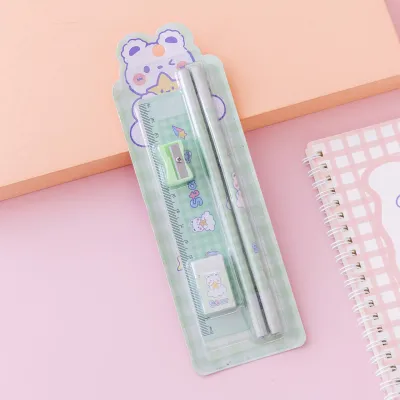
![[Wholesale] 7pcs Stationery set for children kids. Pencil Cartoon Notebook Goodie Bag Birthday party Childrens Day gift](https://img.lazcdn.com/g/p/f8e59a46e2750238fcf04bfc32135590.jpg_400x400q80.jpg_.webp)
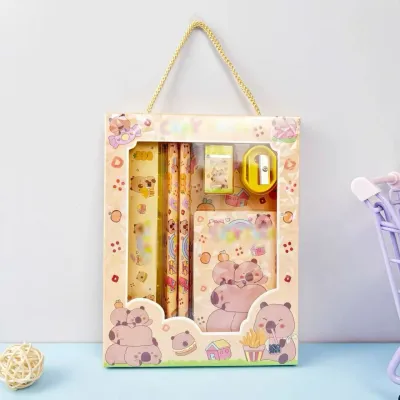
![[Ready Stock] 6 Piece Stationery Gift Set](https://img.lazcdn.com/g/p/0d1e0324208e229dc30d506053d460c8.jpg_400x400q80.jpg_.webp)
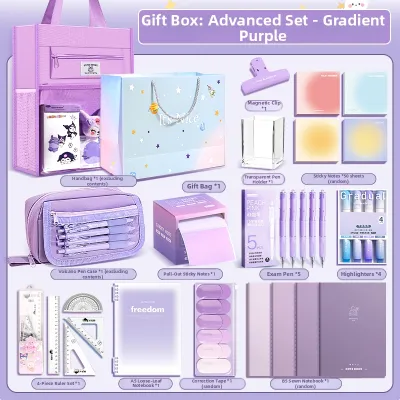
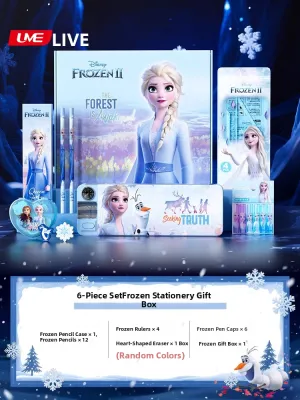
Prices are valid at publication and may change. Please refer to the product page for the latest price.
It is also helpful to divide your child’s supplies into two distinct categories: mandatory daily items and supplementary home tools. Daily items, such as pencils, erasers, and a ruler, should fit compactly into a school bag. Specialized tools like compasses, protractors, and heavy-duty staplers are often better kept at home or brought to school only on specific days to lighten the physical load of the school bag.
Primary 1 and 2: Building the Foundation
In the lower primary years, the primary focus is on developing fine motor skills, correct pencil grip, and neat handwriting. Standard wooden pencils, particularly those with a 2B hardness rating, are highly recommended for this stage. The softer 2B lead requires less downward pressure to produce a dark, legible line, which helps prevent hand strain as children learn to control their strokes. Triangular-shaped wooden pencils are especially beneficial, as they naturally guide fingers into the correct tripod grip.

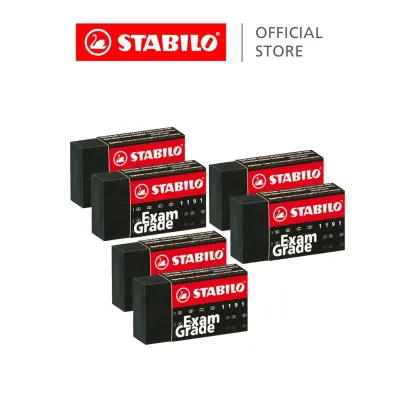
A high-quality, soft eraser is equally critical for Primary 1 and 2 students. Look for non-abrasive, dust-free erasers that lift graphite cleanly without tearing the thin paper of standard school exercise books. Avoid heavily scented or novelty-shaped erasers, which tend to smudge the page, break easily under pressure, and distract young learners during lessons.
For measurement, a basic 15cm transparent plastic ruler is ideal. This length fits easily inside standard pencil cases and is highly manageable for small hands. Ensure the markings are clear, with distinct centimeter and millimeter lines, and opt for a shatter-resistant material to withstand accidental drops.
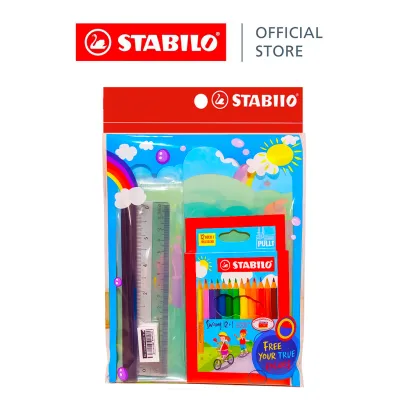
Coloring and art activities are frequent in lower primary, requiring a reliable set of colored pencils or washable crayons. Choose colored pencils with thick, break-resistant cores that do not require constant sharpening. Ensure the coloring medium fits comfortably in a standard school pouch and is labeled clearly with your child’s name to prevent mix-ups during shared art sessions.
To keep these items organized, select a simple, single-compartment pencil case made of soft fabric or durable canvas. Hard plastic or metal tins can be noisy when dropped and often double as toys, whereas a quiet, zippered pouch keeps the focus on learning. Apply durable, waterproof name labels to every individual item, from pencils to rulers, as stationery frequently goes missing in bustling lower primary classrooms.
Primary 3 and 4: Transitioning to Independence
As students enter Primary 3, their academic workload increases, and they begin transitioning from pencils to pens for daily writing. This transition depends heavily on individual school policies, with many teachers introducing blue or black ballpoint or gel pens once a student’s handwriting is deemed consistent. When choosing a first pen, look for a medium tip (typically 0.7mm) that provides a smooth ink flow without excessive bleeding.
Because ink performance varies significantly based on the paper quality of school worksheets, it is wise to perform a quick trial. Have your child test a few pens on standard school paper to check the drying speed and bleed resistance. Fast-drying gel pens or reliable ballpoint pens are generally preferred to prevent smudging, especially for left-handed writers who drag their hands across the page.
Primary 3 and 4 also introduce more complex mathematical concepts, requiring specialized geometry and measurement tools. A basic geometry set containing a protractor, set squares, and a compass is essential for these lessons. Choose a compass equipped with a secure safety lock to hold the pencil firmly in place, preventing slips and ensuring accurate circle measurements. Ensure the protractor is clear and easy to read from both left to right.
With the addition of pens, geometry tools, and highlighters, a single-compartment pencil case may no longer suffice. Transition your child to a multi-compartment pencil case or an expandable pouch. This allows them to separate their daily writing instruments from their mathematical tools, making it easier to locate specific items quickly and maintaining classroom efficiency.
Primary 5 and 6: Preparing for Exams and Advanced Tasks
In the upper primary years, the focus shifts toward exam readiness, writing speed, and meticulous organization. For major examinations like the Primary School Leaving Examination (PSLE), students must use reliable black or blue pens that write smoothly under timed conditions. It is highly recommended to verify the ink type and tip size; a 0.5mm or 0.7mm gel pen with quick-drying, water-resistant ink is ideal to ensure exam scripts remain legible even if they come into contact with moisture.
Correction tape becomes a highly debated tool at this stage. While some schools permit correction tape for daily work, national examinations may have strict rules regarding its use. Always check the latest school and exam guidelines. If correction tape is allowed, choose a model with a protective cap and a reliable winding mechanism to prevent the tape from looping or snapping mid-exam. Ensure your child also carries a high-quality eraser for any pencil work on optical answer sheets.
Study aids become indispensable for managing the dense curricula of science, social studies, and mathematics. Highlighters in pastel or standard fluorescent shades help students annotate textbooks and identify key terms during revision. Sticky notes and page flags are excellent for marking important chapters, mapping out revision schedules, and organizing notes without writing directly on school-owned materials.
To accommodate this comprehensive toolkit, opt for a durable, professional-style pencil pouch. Look for a design with dedicated slots for pens, a separate mesh pocket for small items like correction tape refills, and a quiet zipper. A quiet, soft-sided pouch is crucial during exams, as it minimizes noise when searching for a spare pen or eraser, helping your child and their classmates maintain focus.
Smart Shopping and Organization Tips for Parents
Managing school stationery can become expensive if items are constantly lost or replaced individually. To optimize your budget, consider buying high-consumption items in bulk. Pencils, erasers, glue sticks, and blue or black pen refills are much more cost-effective when purchased in multi-packs from local bookstores or online marketplaces, allowing you to assemble a complete set for around S$15 to S$30. Save individual, specialized purchases for durable items like geometry sets or high-quality pencil cases.
Establishing a home inventory system is an excellent way to avoid last-minute morning rushes before school. Dedicate a small storage box at home for backup stationery supplies. Periodically check this inventory with your child to track depleted items, ensuring you have spare pen refills, pencil leads, and erasers ready to go before the school term begins or during mid-year exam preparation.
Finally, involve your child in the daily maintenance of their stationery set to foster a sense of responsibility. Encourage a simple routine every evening: sharpening wooden pencils, ensuring markers and glue sticks are capped tightly to prevent drying, and checking that pens have sufficient ink for the next day. This simple habit not only extends the lifespan of their stationery but also teaches valuable organizational skills that support their academic journey.
Frequently Asked Questions (FAQ)
Are mechanical pencils allowed in lower primary classes?
Most primary schools in Singapore discourage or explicitly ban mechanical pencils for Primary 1 and Primary 2 students. This restriction is practical: young children are still developing their fine motor skills and hand-eye coordination, and they often apply too much downward pressure, causing thin mechanical pencil leads to snap repeatedly. This leads to frequent distractions and interrupted lessons. Standard wooden pencils help children learn to regulate their writing pressure and build a stable, foundational grip. Always consult your child’s form teacher or refer to the school handbook before introducing mechanical pencils.
How often should I replace my child's stationery set?
Rather than waiting for the end of the school year, assess your child’s stationery set quarterly for signs of wear and tear. Look for visual and functional cues: erasers that have become hard and smudge paper, rulers with chipped edges that prevent straight lines, or glue sticks that have dried out. A mid-year restock is highly recommended, particularly for high-use items like wooden pencils, pen refills, and correction tape. Ensuring these tools are in optimal condition before major assessments helps reduce unnecessary stress and keeps your child focused on their academic performance.
Community discussion
Share your experience or ask a question. Comments are reviewed before publication.