
Selecting the ideal calendar planner in Singapore is not a matter of finding a single, universally superior brand. Instead, it requires matching specific manufacturing specifications to your writing instruments, daily transit habits, and organizational style. Every planner is a compromise between competing physical attributes.
High-grammage paper (such as 100 to 120 GSM) prevents ink bleed-through but results in a heavy, thick book that is difficult to carry on daily commutes. Thread-sewn bindings lay perfectly flat for comfortable writing but offer zero layout flexibility. Conversely, modular ring or disc systems allow page customization but require regular maintenance and can snag in a crowded bag. This guide breaks down the physical characteristics of popular planners, giving you the objective criteria needed to evaluate options at local stationery retailers and online marketplaces.
Evaluating Paper Quality: Weight, Texture, and Ink Compatibility
Paper quality is the foundation of any writing experience, yet it is often obscured by vague marketing terms like “premium feel” or “silk finish.” To make an objective comparison, you must look at the technical specifications of the paper, starting with its weight, measured in Grams per Square Meter (GSM).
Products mentioned in this guide
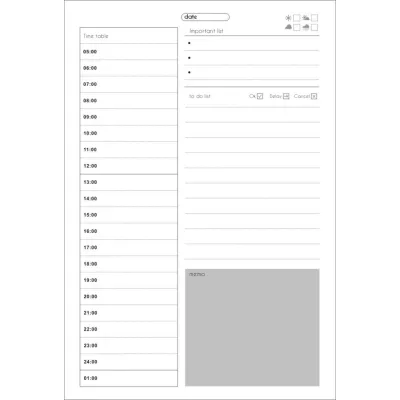
![[SG]Acrylic Magnetic Calendar Board Transparent Acrylic Board Planner Daily Weekly Schedule For Home School Office](https://img.lazcdn.com/g/p/f0e755b0d498c8c431756c5b5cc7dc63.jpg_400x400q80.jpg_.webp)
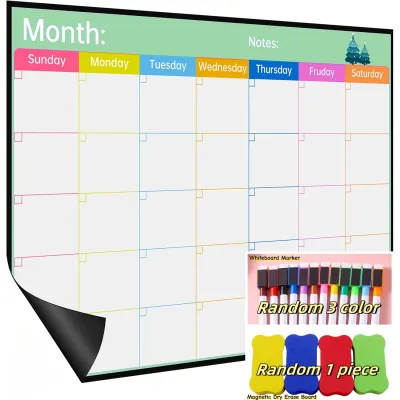
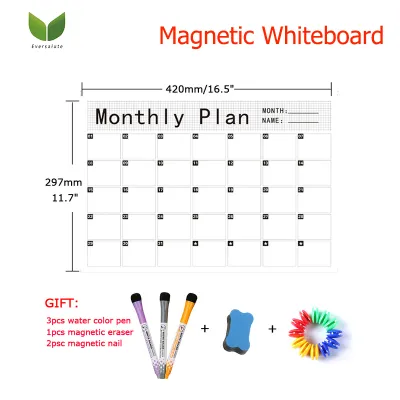
Prices are valid at publication and may change. Please refer to the product page for the latest price.
Paper Weight (GSM) and Opacity
Standard office printer paper typically ranges from 70 to 80 GSM. Calendar planners generally use paper weights ranging from 52 GSM up to 120 GSM or more.
Low-grammage paper (52 to 70 GSM) is highly specialized. While it allows a 400-page daily planner to remain incredibly thin and lightweight, it has high translucency. This results in “ghosting” or “show-through,” where writing is visible on the reverse side of the page. While high-quality low-GSM papers can resist actual ink bleed-through (where the ink physically saturates and leaks through the sheet), they require fine-nibbed pens or specialized inks to remain legible on both sides.
Medium-weight paper (80 to 90 GSM) is the industry standard for daily and weekly planners. It offers a balanced compromise, providing decent opacity for standard ballpoint and gel pens while keeping the planner’s overall weight manageable for daily carry.
Heavyweight paper (100 to 120+ GSM) provides excellent opacity and structural stiffness. It is highly resistant to both ghosting and bleed-through, making it the ideal choice if you use wet writing instruments such as fountain pens, broad gel pens, rollerballs, or artistic markers. The primary trade-off is physical bulk; a daily planner using 120 GSM paper will be twice as thick and heavy as one using 60 GSM paper, making it less practical for carrying in a backpack or tote bag during a daily commute.
Texture, Sizing, and Drying Speeds
The feel of the pen on the page is determined by the paper’s surface texture and “sizing”—the chemical treatment applied during manufacturing to control liquid absorption.
Coated or highly sized paper is exceptionally smooth. This smooth surface prevents ink from soaking rapidly into the paper fibers, which allows fountain pen inks to pool slightly on top, showcasing unique properties like color shading and metallic sheen. However, because the ink must dry via evaporation rather than absorption, drying times are significantly longer. This can lead to smudging, particularly for left-handed writers or those who need to close their planner quickly after jotting down a note.
Toothy, uncoated paper has a micro-textured surface that provides tactile feedback (referred to as “tooth”) as the pen tip moves across it. This paper absorbs ink almost instantly, making it highly practical for rapid writing with standard ballpoint pens or quick-drying gel pens. The downside is that wet inks may “feather”—spreading out along the paper fibers to create fuzzy, imprecise lines—and colors may appear more muted.
Climate Considerations in Singapore
Singapore’s tropical climate, characterized by high relative humidity that frequently exceeds 80% indoors without air conditioning, directly impacts paper behavior. Paper is a hygroscopic material, meaning it naturally absorbs moisture from the surrounding air.
When paper absorbs ambient humidity, its cellulose fibers swell, and the chemical sizing agents can begin to break down. This can cause paper that performed beautifully in a dry climate to suddenly exhibit increased feathering, slower drying times, and a limp, warped texture. Planners with uncoated, low-GSM papers are particularly susceptible to these changes, whereas highly sized or coated papers tend to maintain their structural integrity better in humid conditions.
Observable Quality Checks
Before purchasing a calendar planner, you can perform several simple, non-destructive checks to verify paper compatibility:
- Verify Specifications: Look for the exact GSM rating on the product packaging or the manufacturer's official website. Avoid brands that omit the GSM rating.
- The Light Test: Hold a single page up to a bright light source in-store. The clearer you can see the text or grid lines from the page behind it, the more ghosting you will experience with wet inks.
- In-Store Tester Inspection: Locate a display model or tester in a physical stationery boutique. Turn to the very back pages, which are often used by other shoppers for pen tests. Inspect these pages for ink feathering on the front and bleed-through on the back.
- Pre-Purchase Sample: If you are planning to purchase an expensive planner online, buy a pocket-sized memo pad from the same brand first. This allows you to run a complete ink test with your own writing tools at home before investing in the full-size calendar planner.
Assessing Binding Durability: Thread, Wire, and Disc Systems
The binding determines how a planner opens, how flat it lies on a desk, and how well it survives a year of being pulled in and out of bags. There are three primary binding systems used by major planner brands.

Thread-Sewn (Bookbound) Planners
Thread-sewn binding (often called case-bound or Smyth-sewn) is the gold standard for durability and archival quality. In this system, pages are folded into small booklets called signatures, which are then sewn together with physical thread along the fold before being glued to the outer spine.
This method allows the planner to lay completely flat (a 180-degree opening) without any bulky rings or wires obstructing your hand. This is highly beneficial for writing comfort, especially when working across a two-page monthly or weekly spread. Because the pages are physically sewn in, they are incredibly secure and highly unlikely to fall out over time.
However, thread-sewn bindings require proper care. You must avoid forcing the spine backward beyond its flat position (a 360-degree fold), as this can crack the adhesive backing, tear the threads, and permanently compromise the structural integrity of the planner.
Wire-O and Spiral Bindings
Wire-O bindings use a series of double-loop metal wires threaded through pre-punched holes along the edge of the pages, while spiral bindings use a single continuous plastic or metal coil.
The primary functional advantage of these systems is their ability to fold completely back on themselves (a 360-degree opening). This cuts the planner’s physical footprint in half, making it highly efficient for writing on small desks, during transit, or while holding the planner in one hand.
However, wire bindings carry distinct durability risks. Over months of heavy use, the individual metal loops of a Wire-O binder can open slightly or become bent if crushed inside a tightly packed bag. This can cause pages to catch or slip out of the binding. Furthermore, the exposed metal coils can snag on delicate clothing or the fabric lining of your bag, and writing near the inner margin can be physically uncomfortable as your hand bumps against the raised wire loops.
Disc-Bound and Ring Systems
Disc-bound systems utilize individual plastic or metal discs with raised rims, paired with pages that have specialized mushroom-shaped punches along the edge. Ring systems utilize a traditional metal binder mechanism (typically six-ring or three-ring configurations) built into a protective cover.
These systems offer unparalleled modularity. You can easily pull pages out and snap them back in elsewhere, allowing you to rearrange your schedule, insert custom tracking sheets, or remove completed months to keep the planner lightweight.
This modularity comes with a maintenance cost. To prevent pages from tearing out accidentally, you must turn them carefully, gripping them close to the binding rather than pulling from the outer edge. Heavyweight paper (typically 100 to 120 GSM) is virtually mandatory for these systems to ensure the punched holes do not wear out and tear under regular friction. Additionally, you must periodically check that the rings align perfectly or that the paper is fully seated on the discs to prevent pages from falling out during transit.
Cover Materials and Structural Protection
The cover acts as the primary shield for both the binding and the internal pages.
- Hardcovers: Constructed from thick, rigid greyboard wrapped in bookcloth, paper, or synthetic materials. They provide a sturdy, built-in writing surface that allows you to write comfortably on your lap or while standing. They offer maximum protection against bent page corners but add noticeable weight and bulk to your bag.
- Softcovers: Made from flexible cardstock, thin plastic, or polyurethane (PU/vegan leather). They are lightweight, flexible, and easily compress inside a crowded bag. However, soft cardstock covers offer minimal protection against impacts, and the edges of PU leather covers can curl or delaminate over time when exposed to friction and high humidity.
Navigating Layout Designs: Daily, Weekly, and Monthly Structures
A planner’s internal layout directly dictates how you organize your time. Choosing the right layout requires analyzing your daily routine and time-management style.
Monthly Overviews
Monthly layouts present an entire month across a two-page grid. They are designed for high-level project mapping, tracking long-term deadlines, noting travel dates, and logging habits.
When comparing brands, pay attention to where these monthly spreads are located. Some planners group all twelve monthly spreads together at the very front of the book, which is highly efficient for quick future planning and cross-referencing. Other brands intersperse the monthly spreads directly before their corresponding weekly or daily pages. While this chronological layout provides a logical flow, it requires more flipping back and forth if you need to compare dates across different months.
Weekly Spreads
Weekly layouts are the most popular choice for general time management, offering a comprehensive view of seven days across a single two-page spread.
- Vertical Layouts: Days are arranged in vertical columns side-by-side. These columns often feature printed hourly increments (e.g., 7:00 AM to 9:00 PM). This structure is ideal for time-blocking, scheduling back-to-back meetings, and visualizing open blocks of time throughout the week. It is highly favored by professionals and students with strictly scheduled appointments.
- Horizontal Layouts: Days are arranged in horizontal blocks stacked down the page. This format provides long, uninterrupted horizontal lines, making it far better suited for task-based planning, writing detailed to-do lists, or micro-journaling, where sentence-length writing is preferred over hourly scheduling.
- The Weekly Notebook Format: This hybrid layout places the seven days of the week on the left-hand page (usually in a horizontal format) and a blank, lined, or grid page on the right-hand page. This design is highly versatile, providing a structured area for daily appointments alongside a large, freeform space for meeting notes, mind-mapping, or weekly checklists.
Daily Pages
Daily layouts dedicate a full page (or sometimes two pages) to a single day. This provides immense space for detailed scheduling, extensive meeting notes, daily journaling, and comprehensive task tracking.
This layout is highly beneficial if you have a high volume of daily tasks or prefer to use your planner as a hybrid work diary. However, the physical trade-off is substantial. A 365-day planner with dedicated daily pages is exceptionally thick and heavy, making it highly impractical for daily carry. Many users of daily planners choose to leave them permanently on their desks or opt for multi-volume systems (such as split half-year volumes) to reduce transit weight.
Dated vs. Undated Formats
- Dated Planners: These come pre-printed with specific dates, holidays, and calendar structures for the year. They offer immediate, friction-free usability out of the box and help maintain planning consistency. The downside is rigidity; if you go several weeks without using the planner, those pages remain blank, resulting in wasted paper and a sense of planning guilt.
- Undated Planners: These feature blank templates where you write in the dates, months, and years yourself. While this demands initial setup time, it offers complete flexibility. You can pause using the planner during vacations, busy periods, or quiet weeks without wasting any pages, making it a highly sustainable and cost-effective option for inconsistent or seasonal planners.
Specification Checklist for Comparing Planner Brands
When evaluating a calendar planner in-store or online, use this specification checklist to cross-reference product descriptions and verify key physical attributes. Do not rely solely on brand reputation; instead, look for these specific indicators to ensure the planner matches your technical requirements.
| Attribute | What to Look For / Verify | Ideal For | Potential Drawbacks |
|---|---|---|---|
| Paper GSM | Look for exact rating (e.g., 52 to 120+ GSM). Check for acid-free or fountain-pen-friendly certifications. | 100+ GSM: Wet inks, markers, double-sided writing.<br>52–80 GSM: Lightweight, high-page-count portability. | 100+ GSM: Heavy and bulky.<br>52–80 GSM: Prone to ghosting and ink bleed-through. |
| Binding Type | Inspect spine construction. Look for sewn signatures, Wire-O loop count, or ring alignment. | Thread-Sewn: Flat-lay writing, archival durability.<br>Wire-O: Small desks, folding cover 360 degrees.<br>Rings/Discs: Modular customization. | Thread-Sewn: Cannot add/remove pages.<br>Wire-O: Can snag fabrics or bend in bags.<br>Rings/Discs: Pages can tear; bulky binding. |
| Layout Format | Check column widths, hourly increments, grid spacing (e.g., 5mm), and monthly page distribution. | Vertical: Time-blocking.<br>Horizontal: Task lists, journaling.<br>Daily: High-volume notes, hybrid diaries. | Vertical: Restricts long text.<br>Horizontal: Lacks hourly structure.<br>Daily: Creates a very thick, heavy book. |
| Cover Material | Inspect cover thickness, stiffness, and corner reinforcement. | Hardcover: Lap writing, maximum page protection.<br>Softcover/PU: Lightweight, flexible transit. | Hardcover: Adds significant weight.<br>Softcover: Corners can curl in humid conditions. |
Use this checklist to cross-reference product descriptions on official brand websites or authorized retailer listings. If a manufacturer does not list these technical specifications, treat it as a signal to test a physical sample or purchase a smaller notebook from the same brand before committing to a full-year planner.
Decision Framework: Which Planner Fits Your Routine?
To make your final purchase decision, align your daily habits, writing tools, and transit routine with the physical attributes compared above. Use the following scenarios to identify your ideal planner configuration.
Choose thread-sewn, high-GSM paper if:
You primarily write with fountain pens, liquid ink gel pens, or creative markers, and you cannot tolerate ink ghosting or bleed-through. You value a premium, lay-flat writing experience and use your planner as a permanent, archival record of your year. Your planner will spend most of its time on a dedicated desk, or you do not mind carrying a heavier, thicker book in your bag.
Choose wire-bound, medium-GSM paper if:
You work in confined spaces, such as small cafe tables, lecture halls, or while standing during a commute, and you need a planner that can fold completely flat to save space. You primarily use standard ballpoint pens or quick-drying gel pens that do not require highly sized paper to prevent smudging. You prioritize a lightweight, highly portable book over archival longevity.
Choose disc-bound or ring systems if:
Your planning needs fluctuate throughout the year, and you require the ability to insert custom project trackers, budget sheets, or meeting templates. You want a single system that can hold both your calendar and your loose-leaf notes, and you do not mind performing regular page maintenance or handling your planner carefully to prevent pages from tearing out.
Choose undated layouts if:
You travel frequently, have an inconsistent planning habit, or experience seasonal workloads where some weeks require intense planning and others require none. This format ensures you do not waste paper or feel the psychological pressure of blank, dated pages during your off-weeks.
Practical Purchasing Advice
When buying a planner in Singapore, always verify the retailer’s return policy. Because planners are highly seasonal products, most physical boutiques and online stores will only accept returns or exchanges if the item is completely unused, undamaged, and still sealed in its original shrink-wrap. If you are transitioning to a completely new layout or brand for the first time, consider purchasing a half-year (6-month) or quarterly planner. This allows you to test the paper quality, binding durability, and layout ergonomics in your daily routine before committing to a full 12-month system.
Frequently Asked Questions (FAQ)
How can I prevent my planner pages from warping in humid weather?
To protect your calendar planner from Singapore’s high relative humidity, store it in a dry, air-conditioned room when not in use. Avoid leaving it in damp environments, such as a wet gym bag, or near open windows during rainstorms. For added protection, place a small, food-safe silica gel packet inside your planner’s storage sleeve or carrying pouch to absorb excess ambient moisture and keep the pages crisp.
What is the best way to test a planner's paper before committing to a full-year purchase?
To avoid buyer’s remorse, check if the brand sells smaller, cheaper pocket notebooks or memo pads that use the exact same paper stock. Alternatively, visit specialty stationery boutiques in Singapore that provide open display models. Bring your favorite daily writing instruments and perform a discreet pen test on the very last pages of the display unit to check for ink dry time, feathering, and bleed-through.
Community discussion
Share your experience or ask a question. Comments are reviewed before publication.