
Choosing the right polymailer bag size is a balance between product protection, presentation, and shipping efficiency. To find the perfect fit, you must measure your product’s maximum length, width, and depth in its final, folded shipping state, then add appropriate clearances for seams and thickness. Selecting a bag that is too small risks seam splits and damaged goods, while an oversized bag looks unprofessional and can unnecessarily increase your shipping costs.
Understanding Polymailer Dimensions and Material Thickness
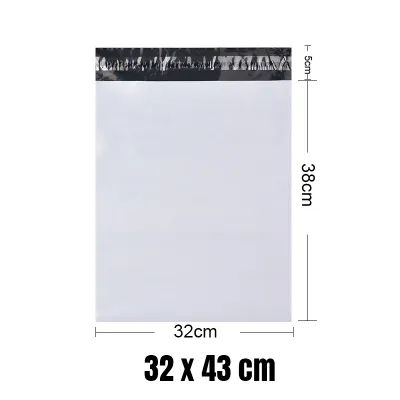
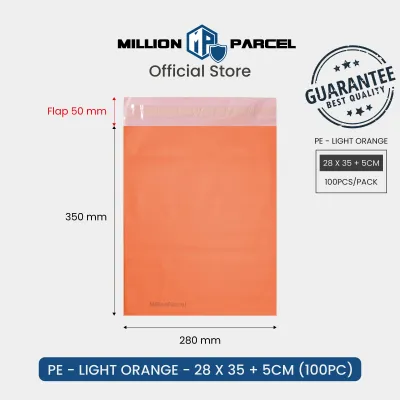
Polymailers are typically listed by flat external dimensions, formatted as width by length (for example, 250 mm x 350 mm). Always verify whether the manufacturer’s stated length includes the adhesive sealing flap. In most standard sizing, the flap is excluded, meaning the usable length is slightly shorter than the total physical length.
Material thickness also dictates protection. Thickness is measured in mils (thousandths of an inch) or microns, with standard mailers ranging from 1.5 mils (38 microns) to 3 mils (76 microns). Lightweight items like t-shirts perform well in standard 2-mil bags, whereas heavier goods or items with sharp corners require a thicker 3-mil barrier to prevent punctures. Check manufacturer specifications to confirm the exact usable interior space, as side-weld seams can reduce internal width by a few millimeters.
Products mentioned in this guide

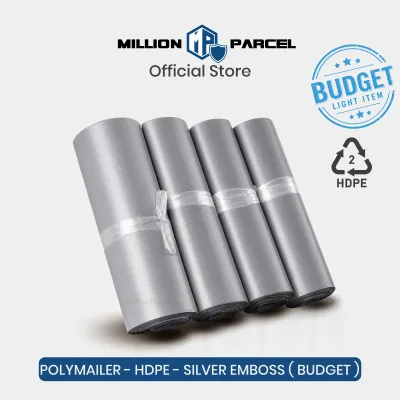
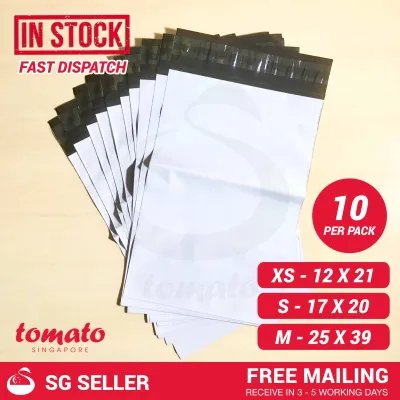
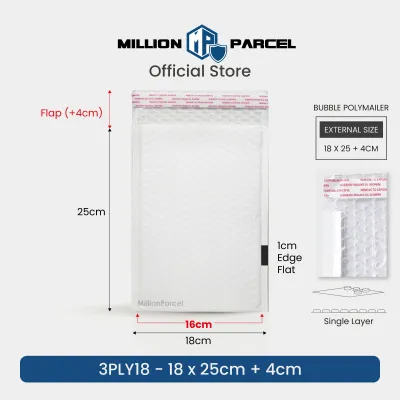
Prices are valid at publication and may change. Please refer to the product page for the latest price.
How to Measure Your Products for a Proper Fit
To determine the minimum bag size, measure your product in its final, fully prepared shipping state. If you are shipping apparel, fold the garment exactly as it will sit inside the package; if you are shipping stationery, bundle the items together. Measuring the item in its loose, unfolded state will lead to inaccurate calculations and a bag that is too small.

Once you have the flat dimensions, account for the product’s thickness, which pulls the sides of the polymailer inward. A reliable formula to calculate the minimum required bag width is to add the product’s width, its thickness, and an additional 20 mm of clearance. For the bag length, add the product’s length, its thickness, and about 25 mm of clearance, ensuring you do not rely on the sealing flap to cover any of the product’s main body.
If your chosen polymailer features a bottom gusset—an expandable fold at the base—the calculation changes slightly. Gussets allow the bag to expand three-dimensionally, making them excellent for bulky items, but you must still verify that the top opening is wide enough to accommodate the widest part of the product without straining the seams.
Sizing Guidelines for Common Product Categories
When selecting packaging, separate flexible, compressible items from rigid, non-compressible goods. Flexible items can conform to the shape of the bag, allowing for a slightly snugger fit, whereas rigid items require precise, generous measurements to prevent the corners from puncturing the plastic.
Because physical dimensions can be deceptive on paper, it is highly recommended to purchase a small sample pack containing various sizes before committing to a bulk order. This allows you to perform physical fit tests with your actual inventory, ensuring that your folding methods and presentation style align perfectly with the bag dimensions.
Apparel and Textiles
Apparel is highly compressible, making it the most common candidate for polymailers. To size these correctly, fold the garment into a tight, uniform rectangle that matches your desired retail presentation.
Allow extra width to accommodate the natural loft and bulk of folded fabrics, especially for thicker items like knitwear or denim. While you can compress these items slightly, over-compressing can cause the seams of the polymailer to burst during transit or make the package difficult for the customer to open safely.
Documents and Stationery
Flat, semi-rigid paper goods such as notebooks, art prints, and office documents require a precise fit to prevent sliding and corner damage. Match standard paper sizes (such as A4 or A5) to polymailers that offer at least 20 mm of clearance on all sides to ensure easy loading without bending the edges.
Because standard polymailers offer no structural rigidity, you must insert a thick cardboard backing board or use a dedicated rigid mailer if your stationery items must remain completely flat. Ensure the adhesive flap seals flat against the back of the package without pulling or warping the contents inside.
Small Accessories and Hard Goods
Non-compressible items like cosmetics, small electronics, or boxed hardware require careful volume calculations. Because these items cannot deform to fit the bag, their three-dimensional volume will significantly reduce the usable flat width and length of a standard polymailer.
For these hard goods, a standard flat polymailer is often insufficient unless it is sized significantly larger than the item itself. In many cases, switching to a gusseted polymailer or a padded bubble mailer is necessary to provide both the physical space and the impact protection these items require.
Adjusting for Fragile, Bulky, or Oddly Shaped Items
Standard polymailers are designed primarily for non-fragile, pre-packaged, or soft goods. If your product has sharp edges, protruding parts, or is highly susceptible to crushing, a basic plastic film bag will not provide adequate protection.
For fragile items, size up your polymailer to accommodate internal protective packaging, such as bubble wrap or foam sleeves. Adding these protective layers increases the overall dimensions of the product, meaning you will need a significantly larger bag than the product’s raw measurements suggest.
If an item requires extensive void fill or is highly sensitive to pressure, transition to a rigid corrugated box. This is the safest choice to ensure the product arrives undamaged, as boxes distribute external crushing forces much better than any flexible bag can.
Balancing Protection with Shipping Costs and Material Waste
Optimizing your polymailer size is not just about protection; it also directly impacts your bottom line and environmental footprint. Using excessively large bags can trigger dimensional weight pricing from shipping carriers, leading to higher postage fees for shipping empty air.
To manage inventory efficiently, compare stocking multiple highly specific bag sizes against stocking two or three versatile, slightly larger sizes. While multiple sizes minimize material waste, stocking fewer versatile sizes allows you to buy in larger bulk quantities and simply fold over and tape down any excess plastic on smaller shipments.
Before finalizing your packaging suite, conduct a test shipment by sending a packaged item to a colleague. This trial allows you to evaluate how well the bag holds up to real-world handling, check if the product shifts excessively, and observe the unboxing experience from the customer’s perspective.
Frequently Asked Questions (FAQ)
How much extra space should I leave for the sealing flap?
The sealing flap typically requires an allowance of 30 mm to 50 mm of length, which is separate from the main body of the bag. This space ensures that the adhesive strip can fold over cleanly and bond securely to the back of the mailer without compressing or distorting the product inside. Always check the manufacturer’s specifications, as peel-and-seal flaps with double adhesive lines or heavy-duty tamper-evident seals may require different fold-over clearances.
Can I use a standard polymailer for fragile items if I size it correctly?
No, a standard polymailer should not be used for fragile items, regardless of how perfectly it is sized. While a snug fit prevents the item from shifting inside the bag, the thin plastic film offers zero cushioning against drops, impacts, or heavy pressure during transit. For fragile goods, you must use a padded bubble mailer or pack the item inside a rigid box with appropriate cushioning materials.
Community discussion
Share your experience or ask a question. Comments are reviewed before publication.