
Selecting the right poly mailer bag size is a balancing act between cost efficiency and product protection. If the bag is too small, the seams can burst under pressure during transit; if it is too large, excess material increases shipping weight and creates an unprofessional presentation. For businesses and independent sellers in Singapore, optimizing packaging dimensions is key to keeping shipping costs manageable while ensuring items arrive in pristine condition. By understanding how to translate three-dimensional products into flat packaging dimensions, you can streamline your fulfillment process and minimize waste.
Understanding Poly Mailer Bag Dimensions
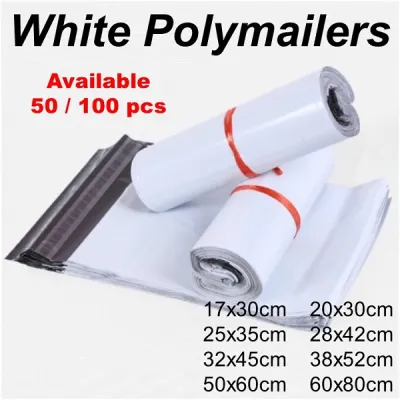
When browsing packaging suppliers, you will notice that poly mailer bag dimensions are always listed as flat, two-dimensional measurements, typically formatted as width by length (for example, 250 mm x 330 mm). It is crucial to recognize that these numbers represent the external boundaries of the completely flat, empty bag. They do not reflect the actual volume or the maximum size of a three-dimensional object that can fit inside.
Additionally, the listed length usually excludes the adhesive seal flap, which is the extra strip of plastic folded over to close the bag. The usable internal length is slightly shorter than the total flat length because of the space required to fold the flap over the opening. You must also account for the side seams, which are heat-sealed and can slightly reduce the flexible width of the bag. Checking the manufacturer’s detailed specifications for material thickness (often measured in microns or mils) and seal margins will give you a clearer picture of the true usable space.
Products mentioned in this guide
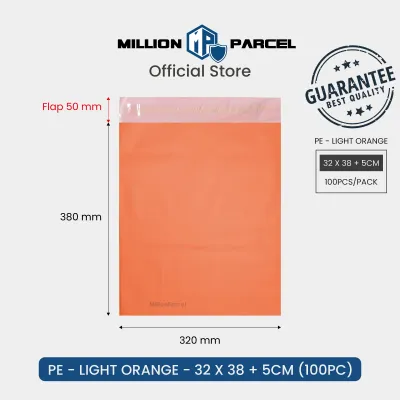
![[SG] ⭐CHEAPEST⭐ Rose Pink Polymailers / Courier Bag / Mailer bag 100pcs shipping mailing](https://img.lazcdn.com/g/p/3ae4169151b5911445ec0160a91b2a22.png_400x400q80.png_.webp)
![[SG] ⭐CHEAPEST⭐ Pink Polymailer / Courier Bag / Mailer bag 100pcs shipping mailing](https://img.lazcdn.com/g/p/3124650e1fa61797e6935719cfbf1d98.png_400x400q80.png_.webp)
Prices are valid at publication and may change. Please refer to the product page for the latest price.
How to Measure Your Products for Shipping
Before you can select the ideal poly mailer bag, you must obtain precise measurements of the item in its final, ready-to-ship state. This means folding apparel as tightly and neatly as possible, or placing items in their primary retail packaging first. Use a reliable measuring tape or ruler to record the maximum length, width, and height (or thickness) of the product.

If your item is soft or irregularly shaped, such as a plush toy or a thick winter jacket, do not measure it where it is flattest. Instead, identify the bulkiest, most protruding section and measure the thickness at that exact point. A common mistake is measuring a garment laid completely flat, only to find that once it is folded for shipping, the stacked fabric layers double or triple the overall height.
Furthermore, remember to include any additional materials that will go inside the mailer with the product. If you plan to wrap the item in tissue paper, place it inside a protective inner poly bag, or include promotional inserts, thank-you cards, and product catalogs, stack these items together and measure the entire bundle as a single unit. This ensures your calculations reflect the true volume of the shipment.
Calculating the Right Poly Mailer Size
To convert your product’s three-dimensional measurements into the correct flat poly mailer bag dimensions, you can use a straightforward mathematical formula. This formula ensures the flat bag has enough physical material to wrap around the thickness of the item without splitting.
To find the minimum required width of the mailer, use the following calculation: Product Width + Product Thickness + 25 mm (1 inch) of buffer. The thickness of the product must be added directly to the width because as the bag expands to accommodate the depth of the item, it pulls material from the sides, effectively narrowing the usable width.
To find the minimum required length of the mailer, apply a similar formula: Product Length + Product Thickness + 50 mm (2 inches) of buffer. While the adhesive flap provides the final closure, adding this buffer to the main length ensures that the opening of the bag can fold over smoothly without putting tension on the adhesive strip. This extra length also prevents the item from sliding too close to the opening, which can compromise the seal during rough handling.
Adjusting for Product Shape and Material Limits
While formulas provide an excellent baseline, you must adjust your final size selection based on the physical properties of the product and the mailer material. Rigid, unyielding items like boxed board games, books, or plastic cases require a more generous size allowance than soft, compressible goods like t-shirts or socks. Soft goods can be gently squeezed to fit into a snugger mailer, whereas rigid corners will stretch the plastic to its absolute limit, increasing the risk of seam failure.
Overstretching a poly mailer bag is a primary cause of transit damage. When the plastic is pressed too tight, the heat-sealed side seams are subjected to constant outward tension. During transit, when packages are stacked or dropped, this tension can cause the seams to split instantly.
For heavier or sharp-edged products, you must also verify the mailer’s weight capacity and puncture resistance. Standard mailers are typically around 50 to 60 microns thick, which is suitable for lightweight apparel. However, heavier items or products with sharp retail packaging corners require heavy-duty mailers of 75 microns or more to prevent punctures and tears.
Frequently Asked Questions (FAQ)
Can I use a standard poly mailer for fragile items?
Standard poly mailers are made from thin, single-layer or co-extruded plastic film that offers virtually no impact protection. They are designed to protect items from dust, dirt, and moisture, but they cannot absorb shocks, drops, or pressure from heavier packages in a delivery van. Therefore, standard poly mailers are highly unsuitable for fragile items like glassware, electronics, or delicate plastics on their own.
If you must use a poly mailer for a fragile item due to its water-resistant properties, you must provide robust internal cushioning. Wrap the item securely in multiple layers of bubble wrap or place it inside a sturdy cardboard box before sliding it into a larger poly mailer. Alternatively, consider using padded bubble mailers, which feature an integrated layer of bubble cushioning. Always check the packaging guidelines of your local courier or postal service to ensure your fragile shipments meet their specific safety and compensation standards.
What should I do if my product falls between two bag sizes?
If your calculated dimensions fall between two standard poly mailer bag sizes, the best practice is always to size up to the larger option. Attempting to squeeze a product into a mailer that is slightly too small will compromise the adhesive seal, put excessive stress on the seams, and increase the likelihood of the package bursting open during transit.
A slightly larger mailer is highly versatile because any excess plastic can easily be folded over and taped down flat against the package. This creates a snug, secure fit and prevents the contents from shifting around inside. While choosing a larger size may result in a negligible increase in material cost—often just a fraction of a cent (S$0.01 to S$0.05) per bag—it completely eliminates the high cost of replacing a damaged, lost, or soiled product due to a packaging failure.
Community discussion
Share your experience or ask a question. Comments are reviewed before publication.