
Selecting the perfect fastener for a sewing, crafting, or garment repair project requires balancing aesthetics, durability, and fabric compatibility. Among the various fastening options available, snap buttons stand out for their convenience and clean appearance. However, choosing between metal, plastic, and resin snap buttons can quickly become overwhelming, especially when matching them to different fabric weights. Selecting the wrong material can lead to ruined garments, torn fabrics, or fasteners that fail to stay secure. To achieve professional results, matching your fabric to the correct fastener and utilizing a high-quality snap button kit is essential.
Quick Guide: Choosing the Right Snap Button Material
To streamline your decision-making process, you can evaluate your project requirements against a few straightforward criteria. The right material ensures your fastener performs reliably without damaging the underlying textile.
- Choose metal if… you are working with heavyweight, rugged, or non-stretch fabrics such as denim, canvas, thick leather, or heavy outerwear. Metal snaps provide the maximum tensile strength and durability required to withstand heavy pulling and structural tension.
- Choose plastic if… you are sewing lightweight garments, baby wear, or items that will be frequently laundered and exposed to moisture. Plastic is exceptionally lightweight, hypoallergenic, and entirely rust-proof, making it ideal for tropical or high-humidity climates like Singapore where metal is prone to oxidation.
- Choose resin if… you need a versatile, durable middle ground. Resin offers significantly higher wear resistance and strength than standard plastic while remaining completely rust-proof, lightweight, and available in a vast array of colors.
The material you select directly dictates the type of snap button kit and specific setting dies you will need, as different materials require distinct tools and pressure levels to install successfully.
Products mentioned in this guide
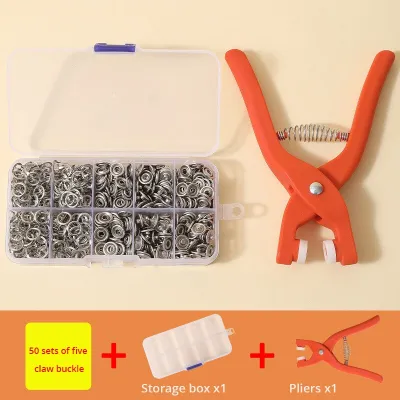
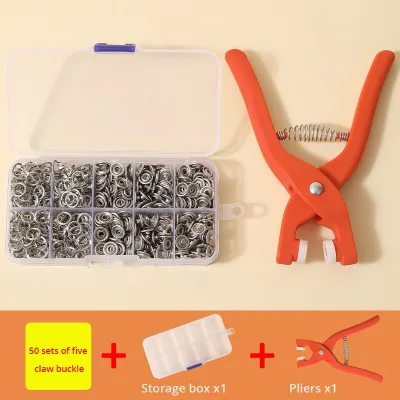
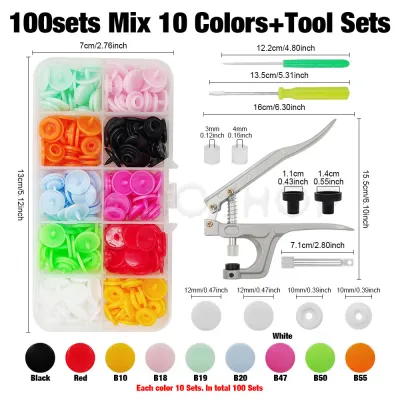
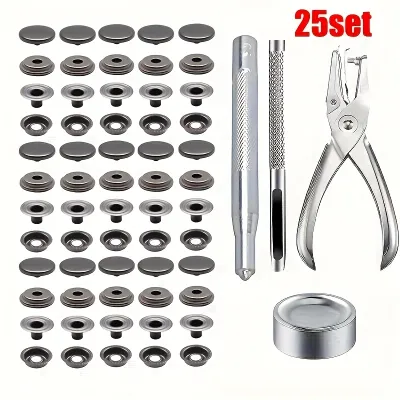
Prices are valid at publication and may change. Please refer to the product page for the latest price.
Material Breakdown: Metal, Plastic, and Resin Snap Buttons
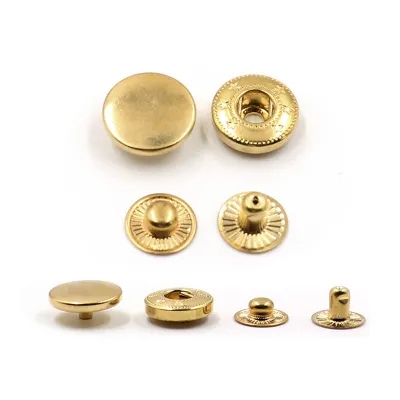
Before selecting a snap button kit, it is helpful to understand how these fasteners are constructed. Regardless of the material, a standard snap button consists of four distinct parts: the cap, the socket, the stud, and the post (or prong). The cap and socket form the female side of the fastener, while the stud and post form the male side. When pressed together, the socket grips the stud to create a secure closure. The material of these four components determines the overall weight, flexibility, durability, and fabric compatibility of the finished fastener.

Metal Snap Buttons
Metal snap buttons are the traditional choice for heavy-duty applications due to their exceptional tensile strength and mechanical durability. They are designed to withstand significant pulling force without separating or deforming, making them the standard choice for workwear, heavy winter coats, denim jackets, and utility gear like backpacks and canvas tents.
However, the primary drawback of metal fasteners is their vulnerability to environmental factors. In hot, humid, or coastal environments, untreated metal snaps can rust or corrode over time. This oxidation not only ruins the mechanical function of the snap but can also leave permanent orange or brown stains on your fabric. To mitigate this risk, always verify that your metal snaps are made from corrosion-resistant materials such as solid brass, stainless steel, or specially coated alloys.
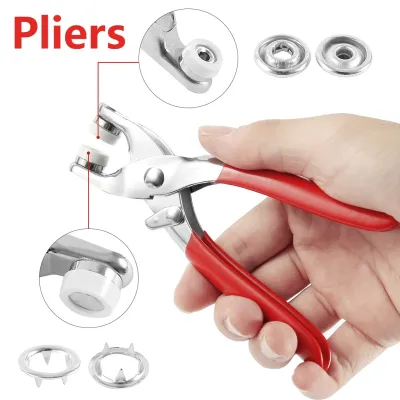
Additionally, metal snaps are heavier than their synthetic counterparts and require a substantial amount of physical force to install. A standard hand plier may not always provide enough leverage for larger metal snaps, often requiring a heavy-duty table press or specialized setting dies to roll or crimp the metal prongs securely without distorting the decorative cap.
Plastic Snap Buttons
Plastic snap buttons offer a highly lightweight, soft-grip alternative that is gentle on delicate textiles. Because they are completely immune to rust and corrosion, they are highly favored for items that undergo frequent washing or constant exposure to moisture, such as baby clothing, bibs, rainwear, and activewear. Their smooth, rounded edges make them comfortable against sensitive skin, which is why they are a staple in infant apparel.
Despite these benefits, standard plastic snaps have clear limitations in terms of structural strength. Under high tensile stress or heavy pulling, plastic snaps can crack, warp, or pull apart. They are also susceptible to environmental extremes; while not a common issue in tropical climates, standard plastics can become brittle and crack in freezing temperatures.
A crucial consideration when working with plastic snaps is their low heat tolerance. Direct contact with a hot household iron will quickly melt or deform the plastic, ruining the snap’s ability to interlock. When pressing garments fitted with plastic snaps, you must iron around the fasteners or use a protective pressing cloth to shield them from direct heat.
Resin Snap Buttons
Resin snap buttons represent a modern engineering solution that bridges the gap between metal and standard plastic. Often manufactured from polyacetal (POM) resin—a high-performance engineering thermoplastic—resin snaps offer remarkable dimensional stability, high stiffness, and exceptional wear resistance. They are significantly tougher than standard soft plastics, allowing them to endure thousands of snap cycles without losing their grip or cracking.
Because resin is a synthetic polymer, it remains completely rust-proof, making it highly suitable for outdoor gear, sportswear, and marine applications. It is also much lighter than metal, which prevents garments from sagging under the weight of their hardware. Resin snaps are widely used for mid-weight fabrics, cloth diapers, and casual apparel where durability and low maintenance are required.
Installing resin snaps requires precision. Because POM resin is highly rigid, using incorrect tools or uneven pressure during installation can easily crack the decorative cap or fail to flatten the center prong sufficiently. Consequently, a compatible snap button kit equipped with specialized, rubber-cushioned resin dies is necessary to distribute the setting force evenly across the surface of the cap.
How to Compare Snap Buttons for Your Specific Project
When planning a project, comparing these three materials side-by-side helps clarify which option aligns best with your fabric choice, care routine, and environmental conditions.
| Material | Best Fabric Weight | Rust Resistance | Heat Tolerance | Tool Requirement |
|---|---|---|---|---|
| Metal | Heavyweight (Denim, Canvas, Leather) | Moderate to Low (unless stainless/brass) | High (can withstand direct ironing) | Heavy-duty press or specialized metal dies |
| Plastic | Lightweight (Fine cotton, Knit, Baby wear) | High (completely rust-proof) | Low (melts under direct iron heat) | Standard plastic snap pliers |
| Resin | Light to Medium (Fleece, Flannel, Sportswear) | High (completely rust-proof) | Moderate (avoid direct high heat) | Specialized resin dies with cushioned bases |
Washing and care routines play a major role in fastener longevity. Metal snaps, if left damp after washing, can slowly corrode and weaken. If you choose metal, ensure the finished item is dried thoroughly, preferably in a well-ventilated space or a tumble dryer on an appropriate setting. Conversely, while plastic and resin snaps handle wet environments beautifully, they can warp or lose their structural integrity if subjected to the extreme heat of commercial dryers.
Environmental factors are equally critical. In humid climates, the moisture in the air is a constant threat to untreated ferrous metals. For everyday garments or outdoor gear used in coastal areas, resin or high-grade plastic snaps are often the more practical, low-maintenance choice.
From an aesthetic standpoint, metal snaps provide a classic, polished, or industrial finish that elevates the perceived value of outerwear and leather goods. Plastic and resin snaps, however, excel in design versatility. They are available in hundreds of vibrant colors, matte or glossy finishes, and even playful shapes, allowing them to blend seamlessly into the fabric or serve as a colorful design accent.
Matching Snap Buttons to Fabric Weights and Types
To prevent fabric damage and ensure your fasteners work smoothly, you must match the snap button’s material, size, and holding power to the specific weight and structure of your fabric. Installing a heavy, rigid snap on a delicate fabric will cause the fabric to tear when pulled open, while a small, weak snap on heavy canvas will simply pop open under the slightest movement.
Lightweight & Delicate Fabrics (e.g., silk, thin cotton, baby wear)
Delicate and lightweight fabrics lack the structural density to support heavy hardware. For these materials, small plastic or resin snaps (typically size T3 or 10mm) are highly recommended. The gentle, low-friction grip of these synthetic snaps ensures that the force required to open them does not exceed the tensile strength of the fabric fibers. If you attempt to use heavy metal snaps on lightweight cotton or silk, the rigid metal will drag the fabric down, distort the drape, and eventually rip through the delicate weave after only a few uses.
Medium-Weight Fabrics (e.g., quilting cotton, flannel, light fleece)
Medium-weight fabrics offer excellent versatility, accommodating either resin snaps or standard metal snaps. When working with these textiles, the key specification to verify is the post length of your snap button. The post must be long enough to penetrate all layers of the fabric (including any facings or linings) and still protrude far enough to be flattened securely by your setting tool. If the post is too short, the snap will fail to grip and will quickly pop off the fabric. If the post is too long, the snap will sit loosely on the fabric, causing it to wobble, spin, and fail to create a flush, secure closure.
Heavyweight & Stretch Fabrics (e.g., denim, canvas, knits)
Heavyweight materials like denim, canvas, and thick wool require heavy-duty metal snaps or reinforced resin snaps (such as size T8 or 15mm) to match their thickness and structural stiffness. However, stretch fabrics like jersey, rib-knits, and spandex present a unique challenge. Because knit fabrics stretch dynamically, the localized stress of pulling a rigid snap open can easily stretch the fabric fibers to their breaking point, causing the snap to pull right through the knit.
To prevent this, you must apply a stabilizer or fusible interfacing behind the fabric where the snap will be installed. The stabilizer reinforces the area, distributing the pulling force across a wider surface area of the fabric rather than concentrating it on a single point. For stretch fabrics, a non-stretch fusible stabilizer patch is highly effective at keeping the snap securely anchored.
How to Choose the Right Snap Button Kit for Your Material
A successful installation depends heavily on using the correct tools. Investing in a comprehensive snap button kit is the most efficient way to ensure you have the necessary equipment for your projects. A standard kit typically includes setting pliers or a hand press, interchangeable dies (molds) of various sizes, and a sharp awl for piercing precise holes in your fabric.
It is crucial to understand that setting dies are highly material-specific and size-specific. Metal snaps usually require hard, concave steel dies that can curl and crimp the metal post without flattening the decorative outer cap. On the other hand, plastic and resin snaps require softer, flat-bottomed dies—often lined with silicone or rubber—that cradle the synthetic cap gently, preventing it from cracking or shattering under pressure. Attempting to install resin snaps using metal setting dies will almost certainly crush the resin cap, rendering the fastener useless.
Before purchasing a snap button kit, verify its compatibility with the specific sizes of snaps you plan to use (such as T3, T5, or T8). Many entry-level kits come with a standard set of dies, but you may need to purchase specialized adapters or molds separately if you plan to switch between metal and resin.
Finally, always perform a trial run on fabric scraps that match the exact thickness and layers of your final project. This allows you to calibrate the physical pressure required to set the snap. For plastic and resin, too much pressure can crack the cap, while too little pressure will leave the center prong unflattened, preventing the socket and stud from interlocking. A quick test ensures your alignment is perfect and your pressure is balanced before you work on your finished garment.
Frequently Asked Questions (FAQ)
Can I use metal snap buttons on stretchy knit fabrics?
Yes, but you must take precautionary steps to protect the fabric. Because stretchy knit fabrics expand dynamically, the heavy physical force required to pull a metal snap open can easily tear or stretch the knit fibers, causing the snap to pull through the material over time. To prevent this, always apply a small patch of stable, non-stretch fusible interfacing or a woven stabilizer fabric behind both the cap and the stud locations. This distributes the mechanical tension across a wider area. Alternatively, consider using lightweight resin snaps, which place significantly less physical stress on flexible, draping fabrics.
Do plastic and resin snap buttons require the same setting tool?
While the hand pliers or press body itself can often be used for both materials, the individual setting dies (the molds that hold the caps and studs) are usually different. Hard resin snaps require precise, flat-bottomed dies that apply uniform pressure across the rigid POM polymer to prevent cracking. Standard soft plastic snaps are more forgiving but still require dies that match their exact diameter and profile. Always check your snap button kit’s specifications to ensure you have the correct, size-matched dies for the specific material you are installing to avoid damaging your fasteners.
Community discussion
Share your experience or ask a question. Comments are reviewed before publication.