
Determining whether Paul Rubens watercolor sets offer the best value for a new artist requires looking beyond the initial price tag and vibrant packaging. While Paul Rubens is highly visible on online art supply retailers for its comprehensive kits and aesthetic designs, “best value” ultimately depends on your specific need for portability, accessory inclusion, and pigment transparency. This guide outlines the objective criteria you need to evaluate Paul Rubens against other entry-level brands, ensuring you select a set that supports your learning curve without unnecessary compromises.
Choosing your first watercolor set can feel overwhelming with the sheer volume of options available on ecommerce platforms. Paul Rubens has carved out a distinct niche by offering sets that look and feel premium, often featuring vibrant pigments, elegant metal tins, and complete accessory bundles. However, a beginner must distinguish between visual appeal and the actual performance of the paint on paper. By understanding how these paints are formulated and how they compare to legacy student-grade brands, you can make an informed investment that truly enhances your artistic journey.
Identifying Your Watercolor Requirements
Before comparing specific brands, you must define where and how you plan to paint. If you intend to work primarily at a dedicated desk or home studio, a set of watercolor tubes or large, stationary pans will serve you best. Tubes allow you to squeeze out fresh, highly concentrated paint onto a large palette, which is ideal for mixing wash after wash of consistent color. Conversely, if you plan to paint outdoors, sketch in local cafes, or join urban sketching groups, a compact pan set with a built-in mixing area is far more practical.
Products mentioned in this guide
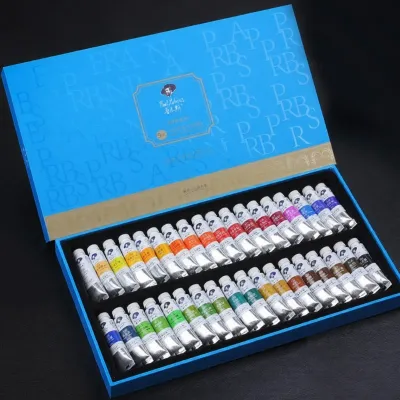
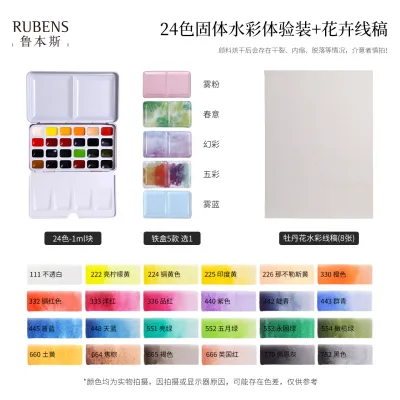
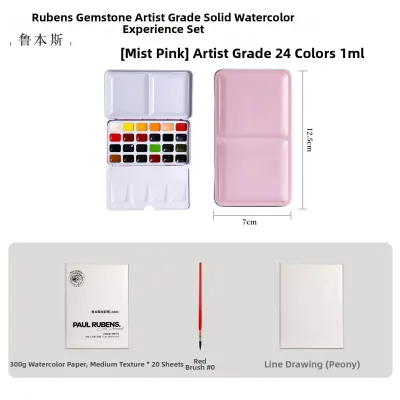
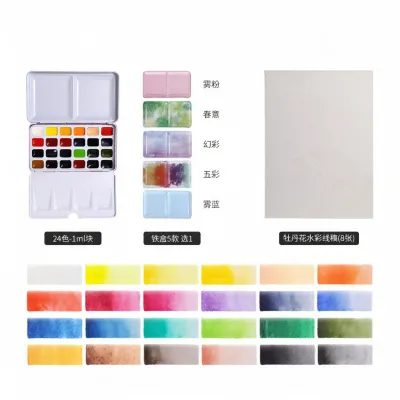
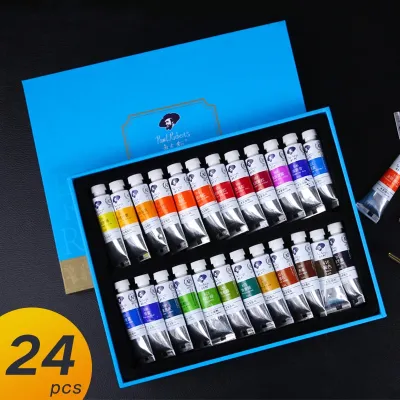
Prices are valid at publication and may change. Please refer to the product page for the latest price.
You should also evaluate whether you need an all-in-one kit or just the paint itself. Many beginners already own a selection of synthetic brushes, mixing wells, and watercolor paper. If you already have these basics, paying extra for a set that includes low-quality brushes or plastic water cups is a poor use of your budget. However, if you are starting entirely from scratch, a comprehensive bundle can save you the hassle of sourcing individual tools.
Finally, consider the size of the color palette. While a 48-color set looks exciting, it can actually hinder a beginner’s progress. Learning color theory and how to mix clean secondary and tertiary colors is much easier with a limited palette of 12 to 24 essential shades. A massive array of pre-mixed colors often leads to muddy paintings and prevents you from mastering the relationships between primary hues.
Core Dimensions for Comparing Beginner Sets
To evaluate any watercolor brand objectively, you must look past the marketing descriptions and examine the physical properties of the paint. Watercolors are fundamentally made of finely ground pigment particles suspended in a binder, which is typically gum arabic. The ratio of pigment to binder, along with the presence of additives and fillers, determines how the paint behaves when mixed with water and applied to paper.

Student-grade watercolors are formulated to be budget-friendly, which means manufacturers often replace expensive natural pigments with synthetic alternatives, labeled as “hues.” They also tend to use more fillers, such as chalk or dextrin, to stretch the paint volume. While this keeps the retail price low, it can result in a chalky finish, reduced transparency, and colors that do not blend as smoothly as professional-grade equivalents.
Pigment Grade and Lightfastness Labels
When evaluating a watercolor set, turn the packaging over and look for the technical specifications. Reputable manufacturers print the Pigment Index codes directly on the wrapper or include a color chart in the box. These codes consist of letters and numbers, such as PY43 (Pigment Yellow 43) or PR101 (Pigment Red 101). If a color is made from a single pigment, it will mix much more predictably than a “hue” made from a blend of three or four different synthetic pigments.
Lightfastness is another critical factor, indicating how well the paint resists fading when exposed to light over time. Look for ASTM international ratings on the packaging; ASTM I denotes excellent lightfastness, while ASTM II indicates very good resistance. If a brand does not disclose its lightfastness ratings or pigment codes, it is difficult to verify how your artwork will look in a few years, making it a risky choice for serious study.
The presence of fillers in student-grade sets also affects how the paint behaves during advanced techniques. To test this yourself, paint a concentrated swatch on a sheet of 100% cotton paper and let it dry completely. Once dry, run a damp brush over the surface; a paint with high filler content will often lift off the paper too easily or leave a dusty residue, whereas a high-quality binder will keep the pigment locked into the paper fibers.
Format, Portability, and Included Tools
The physical design of the watercolor container plays a major role in your daily painting experience. Metal tins are highly durable and offer a classic feel, but they can be prone to rust along the hinges if you pack them away wet in humid climates. Plastic cases are lightweight and immune to rust, but cheaper plastics can crack easily if dropped or exposed to direct sunlight over time.
If a beginner set includes a brush, inspect its construction before painting. A good synthetic watercolor brush should have a strong “snap,” meaning the bristles spring back to a sharp point immediately after being bent. If the brush loses its shape when wet or sheds bristles onto your paper, it will cause more frustration than utility, and you should plan to replace it with a dedicated round brush from a local art store.
The mixing palette integrated into the lid of the set should also be functional. Look for deep, distinct wells that prevent your mixed washes from running into neighboring colors. A removable metal or plastic mixing tray is highly advantageous, as it allows you to wash away dried paint under a tap without exposing the actual watercolor pans to running water.
Evaluating Paul Rubens Against Market Alternatives
When comparing Paul Rubens to legacy student-grade brands on online marketplaces, you must calculate the true value rather than relying on the initial price tag. For example, if a Paul Rubens set costs S$45 and contains 24 half-pans, compare this to a legacy brand costing S$35 for 12 half-pans. By breaking down the cost-per-pan, you can determine if you are paying for high-quality pigment or simply paying for decorative packaging and extra accessories.
Paul Rubens sets are widely recognized for their unique, user-friendly packaging designs. Many of their travel sets feature integrated water brush storage, expandable mixing palettes, and even small cleaning sponges built directly into the case. This level of functional design often surpasses traditional legacy competitors, which frequently package their student lines in basic, non-removable plastic trays that offer very little mixing space.
However, paint performance remains the most critical metric. Before purchasing, cross-reference user reviews and community forums specifically looking for feedback on how easily the pans re-wet. Some budget brands dry into hard, glass-like blocks that require extensive scrubbing with a wet brush to activate, which can quickly ruin your brush tips. Paul Rubens paints generally use gum arabic and honey as binders, which helps the pans remain slightly soft and re-wet instantly with a single drop of water.
Decision Framework: Which Set Should You Buy?
Your final choice should align with your long-term artistic goals and how you prefer to work.
Choose a Paul Rubens watercolor set if you prioritize a highly portable, visually appealing kit that comes with everything you need to start painting immediately. These sets are excellent for hobbyists, journalers, and urban sketchers who value convenience, quick re-wetting, and a wide variety of vibrant colors in a single purchase. The inclusion of functional travel cases and accessories makes them highly practical for painting on the go without needing to buy separate tools.
Choose a traditional legacy student brand if you are a serious student aiming to transition to professional-grade painting in the future. These established brands offer highly standardized pigment disclosures, reliable lightfastness data, and—most importantly—easy access to individual replacement pans. When you run out of a specific color in a legacy set, you can easily walk into a local Singapore art supply shop and buy a single replacement pan, whereas finding individual open-stock pans for Paul Rubens can be much more difficult.
Regardless of the brand you choose, always verify your paper compatibility first. Watercolor paint behaves entirely differently depending on the surface; cheap cellulose paper will cause the paint to pool and dry with harsh edges, while 100% cotton paper allows for smooth gradients and complex glazing techniques. Investing in a small pad of quality cotton paper will do more to improve your painting experience than upgrading to the most expensive paint set on the market.
Frequently Asked Questions (FAQ)
How long do beginner watercolor pans typically last?
The lifespan of a watercolor pan depends heavily on your painting frequency, the size of your brushes, and how much water you use. A standard half-pan used for daily sketching can easily last between six months to a year, as watercolor pigment is highly concentrated and only a small amount is needed for each wash.
However, student-grade pans that contain higher ratios of fillers may wear down faster because you need to use more physical paint to achieve the same color intensity as a professional-grade pan. To maximize the lifespan of your pans, avoid leaving them pooling with excess water after a painting session, and let them air-dry completely before closing the lid to prevent mold growth.
Can I mix student-grade and professional-grade watercolors?
Yes, you can safely mix student-grade and professional-grade watercolors on the same palette and use them together in a single painting. Because both grades typically use gum arabic as a binder, they are chemically compatible and will not cause any adverse reactions or damage your paper and brushes.
However, you should be aware that professional-grade paints have a much higher pigment concentration. When mixing a professional color with a student-grade color, the professional pigment can easily overpower the student paint, requiring you to adjust your mixing ratios. Additionally, the areas of your painting done with student-grade paints may fade faster over time if those specific colors have lower lightfastness ratings.
Community discussion
Share your experience or ask a question. Comments are reviewed before publication.