
When choosing a paper shredder for your home or office, navigating the technical specifications can feel overwhelming. The two most critical factors that determine a shredder’s performance and suitability are its cut type and its security level. These specifications dictate not only how secure your destroyed documents will be, but also how fast the machine operates, how much waste it holds, and how much maintenance it requires. Understanding these elements is essential to avoid overpaying for unnecessary security or, conversely, risking a data breach with an inadequate machine.
Understanding Paper Shredder Cut Types
The physical way a paper shredder cuts paper determines its efficiency and security. The three primary cut types—strip-cut, cross-cut, and micro-cut—each offer a distinct trade-off between speed, waste volume, and maintenance requirements.
Strip-cut shredders slice paper vertically into long, continuous strips, typically producing around 30 to 40 strips per A4 sheet. While this is the fastest method, it offers the lowest security. Because the strips remain intact, a determined individual could reassemble the document with enough patience. Strip-cut machines are best reserved for non-sensitive drafts.
Products mentioned in this guide
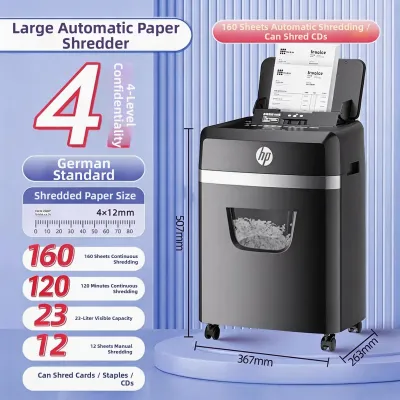
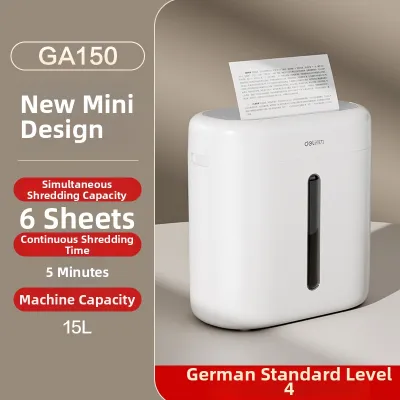
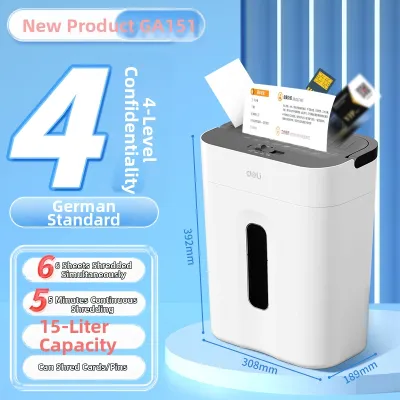
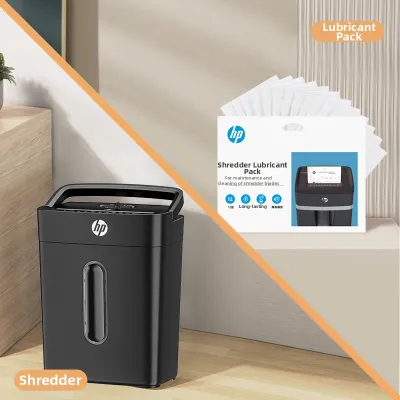
![[SG] A4 Multi-Functional Electric Paper Shredder with Built-in Basket](https://img.lazcdn.com/g/p/e13a5b4a0cd7800074c9a408a1f0b8e7.jpg_400x400q80.jpg_.webp)
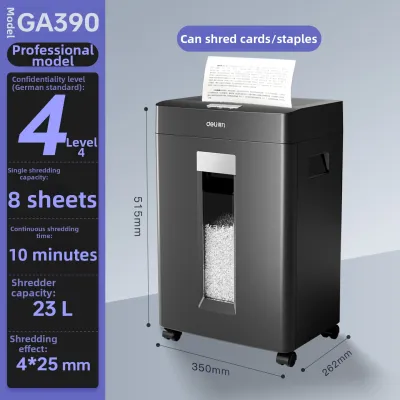
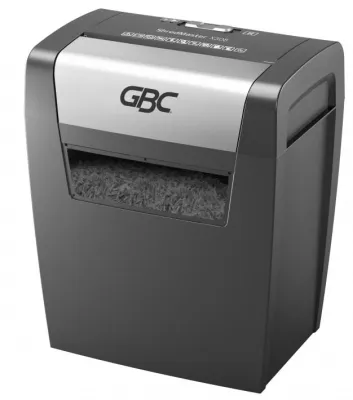
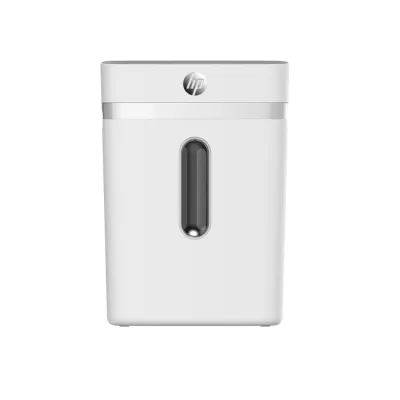
Prices are valid at publication and may change. Please refer to the product page for the latest price.
Cross-cut shredders, or confetti-cut models, offer a practical middle ground by cutting paper diagonally from two directions. This turns an A4 sheet into hundreds of short, rectangular pieces, making reconstruction exceptionally difficult. They provide sufficient security for most household and business needs, and their compressed waste fills bins much slower than long strips.
Micro-cut shredders represent the highest tier of physical destruction, reducing a single sheet into thousands of tiny, confetti-like particles. Reconstruction is virtually impossible, making this ideal for highly confidential data. However, because the blades perform significantly more cuts, these machines typically operate at slower speeds, carry a higher purchase price, and require more frequent maintenance.
Cut type directly impacts daily maintenance and bin capacity. Because micro-cut and cross-cut machines generate fine paper dust and operate under high friction, their blades require regular lubrication to prevent jams and motor strain. Conversely, because micro-cut particles compact so tightly, a micro-cut shredder can hold up to four times more shredded paper than a cross-cut model with the same bin volume.
Decoding Security Levels (P-1 to P-7)
While cut types describe particle shape, security levels provide a standardized measurement of document protection. Governed by the international DIN 66399 standard, these levels range from P-1 to P-7 based on the maximum surface area of a single shredded particle. The ‘P’ prefix specifically denotes paper-based media.

To simplify your decision-making process, these seven levels can be grouped into three practical tiers: low, medium, and high security.
P-1 to P-2 (Low Security): These levels are typically associated with strip-cut shredders, producing strips up to 12 mm (P-1) or 6 mm (P-2) wide. They are suitable only for low-risk materials like junk mail, generic drafts, and clean paper recycling, failing to protect personally identifiable information.
P-3 to P-4 (Medium Security): This standard tier for everyday personal and business use almost always utilizes cross-cut technology. A P-3 shredder produces particles smaller than 320 square millimetres, while P-4 reduces paper to particles smaller than 160 square millimetres. P-4 is the baseline security level for protecting sensitive personal data, financial records, and commercial operations.
P-5 to P-7 (High/Top Security): These levels require micro-cut technology to achieve incredibly small particle sizes. P-5 produces particles under 30 square millimetres, P-6 goes under 10, and P-7 reduces a single A4 page into over 15,000 microscopic particles measuring less than 5 square millimetres. These levels are mandatory for government, medical, and legal departments handling strictly regulated data.
A higher P-level does not automatically make a shredder better for every user. While a P-7 machine offers maximum peace of mind, its slow speed, low sheet capacity, and high maintenance requirements make it highly impractical for casual home use.
Matching Shredder Specs to Your Environment
Selecting the right paper shredder requires balancing your security requirements with your physical environment, budget, and daily document volume. Overbuying leads to unnecessary maintenance headaches, while underbuying leaves sensitive data vulnerable.
For personal use, a P-2 or P-3 shredder is generally sufficient. If you only need to destroy utility bills and shipping labels, a basic strip-cut or entry-level cross-cut machine works well. In Singapore, entry-level models typically cost between S$40 and S$100, making them highly accessible for occasional use.
For standard home offices and small businesses, a P-4 cross-cut shredder is the ideal sweet spot. It provides robust protection for tax records, client lists, and invoices. These machines offer a reliable balance of speed, capacity, and security, with prices generally ranging from S$120 to S$300.
For corporate, medical, and legal environments, compliance laws often dictate your choice. If you handle patient records or proprietary research, you should look at P-5 to P-7 micro-cut shredders. These high-security machines ensure compliance with data protection regulations, though they require a larger budget, typically ranging from S$400 to over S$1,000.
When evaluating cost versus need, consider the operational impact. High-security micro-cut shredders require frequent oiling, have shorter run times due to heat, and cost more upfront. Unless you are legally required to destroy documents to a microscopic level, a P-4 cross-cut machine offers a more satisfying, efficient user experience.
Secondary Specs: What Actually Impacts Daily Use
Beyond cut types and security levels, several secondary specifications heavily influence your daily experience. It is important to understand which specs truly matter and which are mostly marketing fluff.
The most critical secondary spec is sheet capacity per pass. Treat the advertised maximum as an absolute limit rather than a recommended daily average; feeding a 10-sheet shredder 7 or 8 sheets at a time extends motor life. Additionally, because Singapore’s humid climate causes paper to absorb ambient moisture—making it tougher to cut—reducing your feed size slightly helps prevent motor strain.
Continuous run time is another vital metric. Shredder motors heat up during operation and require cooling-off periods to prevent burnout. A basic home shredder might only run for 3 to 5 minutes before needing a 30-minute cool-down, whereas commercial-grade machines can run for 30 to 60 minutes. If you regularly purge large filing cabinets, a longer run time is essential.
Conversely, specifications like decibel ratings should be taken with a grain of salt, as they are recorded in ideal laboratory settings and will feel louder in a quiet room. Similarly, auto-start sensors are convenient but can sometimes be finicky with thin paper or small receipts.
Finally, prioritize safety and maintenance. Because blades are sharp and powerful, look for models with safety locks or sensors that disable the motor if hands get too close. Always consult the manufacturer’s manual for specific oiling schedules and staple-removal policies.
Frequently Asked Questions (FAQ)
Can I shred credit cards and CDs in any paper shredder?
No, not all shredders handle hard media. Standard cutting cylinders designed for paper can chip or break when forced to cut thick plastic. If you need to destroy these items, verify that the shredder has a dedicated media slot or an explicit DIN rating for optical media and plastics (often marked with an ‘O’ or ‘E’). Forcing plastic cards through a standard paper slot can permanently damage the cutting cylinders, so always check the manufacturer’s instructions first.
Does a higher security level mean the shredder jams less?
No. Micro-cut (P-5 and above) shredders have much tighter blade tolerances to achieve tiny particles, making them more prone to jamming if you exceed the sheet capacity, feed paper at an angle, or attempt to shred paper with heavy staples. To prevent jams, always adhere strictly to the maximum sheet limit and feed paper straight into the slot.
Community discussion
Share your experience or ask a question. Comments are reviewed before publication.