
Finding the perfect paper box requires looking beyond a simple visual estimate. Whether you are shipping products to customers, organizing household items, or preparing archival storage, understanding how box dimensions are measured ensures your items remain secure, undamaged, and cost-effective to handle. Standardizing your approach to box measurements prevents shipping surcharges, minimizes packaging waste, and protects your valuable contents.
Selecting the wrong size can lead to broken items, bloated shipping fees, or wasted storage space. By learning to decode dimension labels and calculate the necessary buffer room for protective padding, you can confidently choose the right packaging for any application.
Decoding Paper Box Dimension Labels: Inner vs. Outer Measurements
To choose the correct paper box, you must first understand how manufacturers list their packaging products. The packaging industry uses a standard, universal format to express dimensions: Length (L) x Width (W) x Height (H), sometimes referred to as Depth. These measurements are always presented in this specific order, and misinterpreting them can lead to ordering the wrong configuration.
Products mentioned in this guide
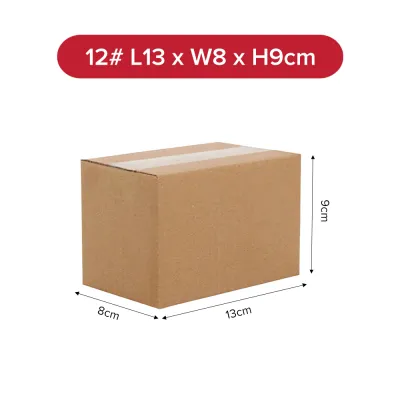
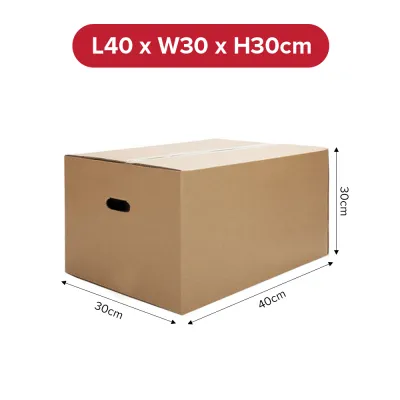
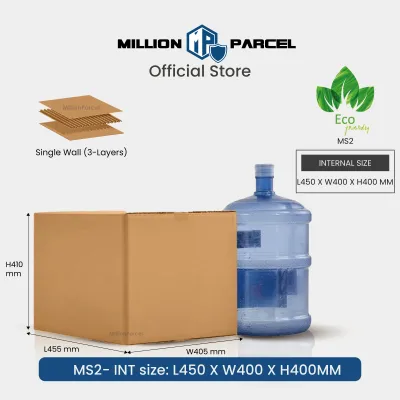
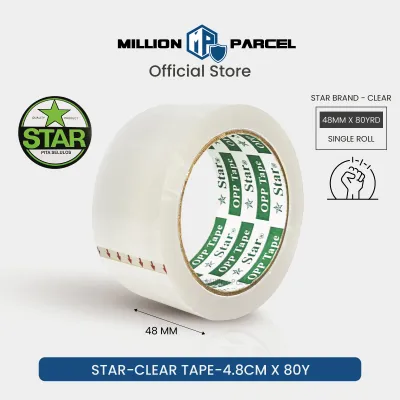
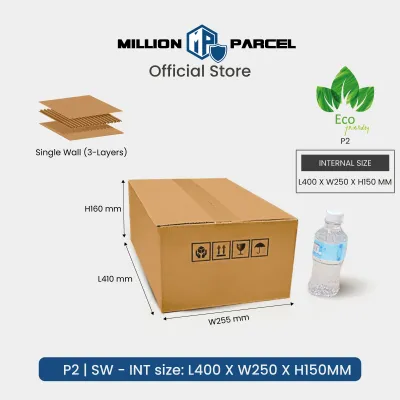
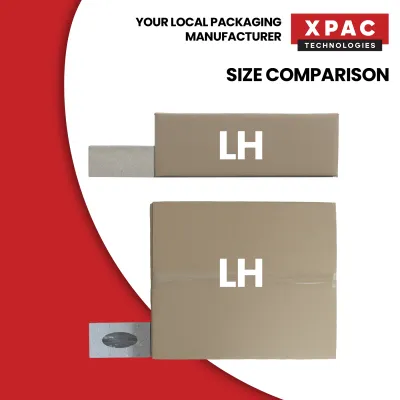
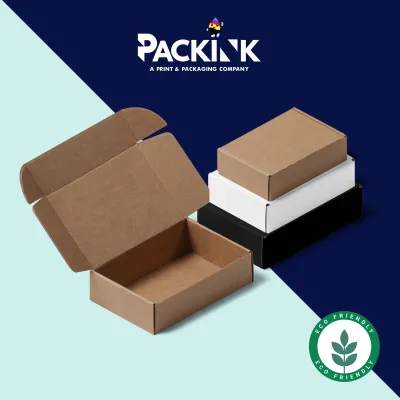
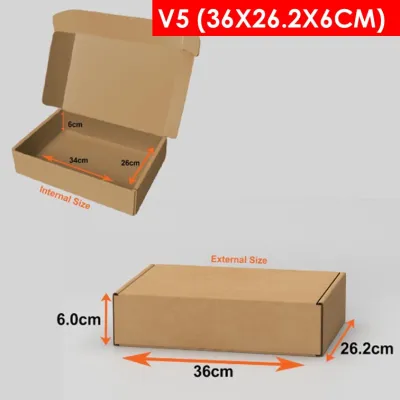
Prices are valid at publication and may change. Please refer to the product page for the latest price.
- Length (L): This is typically the longest dimension of the box's opening.
- Width (W): This is the shorter dimension of the box's opening.
- Height (H): This is the vertical distance measured from the inside bottom of the box to the top opening, perpendicular to the length and width.
The most critical distinction to make when purchasing a paper box is the difference between inner and outer dimensions. Inner dimensions measure the usable space inside the box. These are the numbers that dictate whether your item will physically fit inside the packaging. Outer dimensions, on the other hand, measure the entire exterior of the box, which determines the physical space the package will occupy on a warehouse shelf, in a storage closet, or inside a delivery vehicle.
Material thickness plays a major role in the discrepancy between inner and outer measurements. A standard single-wall corrugated box, which consists of a fluted paper layer sandwiched between two flat liners, might only add a few millimeters to the exterior. However, heavy-duty double-wall corrugated boxes, designed for heavy or fragile items, have much thicker walls. This extra material can reduce the usable inner space by up to 10 millimeters or more compared to the outer dimensions.
Before finalizing any purchase, always check the product specifications to verify whether the listed dimensions are inner or outer measurements. If a manufacturer’s listing does not explicitly state which measurement is used, it is safest to assume they are outer dimensions. In such cases, contact the supplier directly to confirm the exact inner clearances, especially if you are purchasing in bulk.
How to Measure Your Items and Calculate the Ideal Box Size
Determining the correct box size begins with obtaining precise measurements of the items you plan to pack. Using a firm tape measure or ruler, you can easily calculate the minimum space required for your goods.

For regular, rectangular items, measure the three primary axes: the longest side (length), the widest side (width), and the tallest side (height). Ensure you measure at the absolute widest points, including any protruding features like lids, handles, or decorative elements.
For irregularly shaped items, you must determine the “bounding box.” This is the smallest imaginary rectangular box that the item could fit into. To find these measurements, place the item on a flat surface and measure the maximum distance from end to end along all three axes. For example, if you are packing a ceramic mug, your width measurement must extend from the outer edge of the handle to the opposite side of the rim.
Once you have the base measurements of your item, you must calculate the necessary buffer space for protective packaging. Placing an item directly against the hard walls of a paper box leaves it highly vulnerable to drop impacts and vibration. As a general rule of thumb, add 2 to 5 centimeters (approximately 1 to 2 inches) to each of your item’s three dimensions. This extra space accommodates protective cushioning materials such as bubble wrap, crumpled kraft paper, honeycomb wrap, or packing peanuts.
While physical dimensions dictate whether an item fits, the item’s weight dictates the required structural strength of the paper box. Heavy items require boxes made from denser paperboard or double-wall corrugated cardboard to prevent the bottom from bursting during handling. Always cross-reference your item’s weight with the manufacturer’s rated weight capacity, which is typically printed on the box’s bottom certification stamp or listed in the product specifications.
Selecting the Right Size for Shipping, Storage, and Fragile Goods
The ideal box size depends heavily on how the package will be used. Balancing protection, spatial efficiency, and cost requires different strategies for shipping, long-term storage, and handling fragile items.
- Shipping and Mailing: When sending packages through postal networks or courier services, keeping the outer dimensions as small as possible is essential. Most logistics providers calculate shipping costs using volumetric weight (also known as dimensional weight) rather than actual weight. In Singapore, local couriers and delivery networks impose strict size tiers. Exceeding a tier by even a single centimeter can push your shipment into a higher pricing bracket or trigger manual handling surcharges.
- Storage and Archiving: For organizing inventory or archiving documents, uniform box sizes are the priority. Standardized, identical boxes stack together efficiently on shelving units, maximizing vertical space and preventing overhang. In Singapore's compact home and office environments, uniform stacking prevents boxes from tilting, sliding, or collapsing under uneven weight distribution.
- Fragile or High-Value Items: For delicate goods, prioritize protective inner space over shipping economy. A larger box that allows for thick, comprehensive cushioning on all sides is a necessary investment. The minor increase in shipping fees is far lower than the cost of replacing damaged goods or processing customer returns.
When choosing a box size, you must also navigate the trade-off between a snug fit and a loose fit. A snug fit keeps the item from moving during transit, which is excellent for sturdy, non-fragile items and minimizes the need for extra packing materials. However, a snug fit offers very little impact protection. A loose fit allows for ample protective padding but requires more void-fill material, which increases both packaging costs and the volumetric weight of the shipment.
Common Sizing Mistakes and a Quick Selection Checklist
Avoiding simple packaging errors can save your business significant money and protect your items from damage. Many buyers fall into predictable traps when selecting paper boxes.
The first common mistake is confusing outer dimensions for inner dimensions. This error results in purchasing boxes that are too tight, leaving no room for protective wrap or preventing the item from fitting inside entirely. The second mistake is choosing an excessively large box. This leads to items shifting and colliding inside the box during transit, requires excessive amounts of expensive void-fill materials, and incurs unnecessarily high courier fees.
To ensure you choose the correct box size every time, use this quick selection checklist:
- Measure the item's bounding box: Find the maximum length, width, and height of your item at its widest points.
- Add buffer space: Add 2 to 5 centimeters to each dimension to accommodate bubble wrap, foam, or paper padding.
- Match to inner dimensions: Ensure the paper box's listed inner dimensions are equal to or slightly larger than your cushioned item measurements.
- Verify outer dimensions: Check the box's outer dimensions against courier size limits, storage shelf depths, or vehicle capacities to ensure compatibility.
Frequently Asked Questions (FAQ)
How do I calculate the volumetric weight of a paper box?
Volumetric weight, or dimensional weight, is a pricing method used by logistics companies to account for the space a package occupies. To calculate it, multiply the outer length, width, and height of the box in centimeters, then divide the result by a specific shipping divisor. The standard formula is: (Length x Width x Height) / Divisor. While 5000 is the most common divisor used by international and local Singapore couriers, some budget carriers may use 4000 or 6000. Always verify the exact divisor with your specific shipping provider to estimate your delivery costs accurately.
Can I use a box that is slightly smaller than my item if the paper is flexible?
You should never force an item into an undersized paper box. Although paperboard and corrugated cardboard possess slight flexibility, forcing an item inside causes the box walls to bulge. Bulging severely compromises the corrugated board’s structural integrity, reducing its vertical stacking strength and making it highly susceptible to crushing or tearing during transit. Furthermore, a tight fit leaves no room for protective padding, meaning any external shock or vibration will transfer directly to your item, significantly increasing the risk of breakage.
Community discussion
Share your experience or ask a question. Comments are reviewed before publication.