
To choose the right shipping bag size, you must calculate the total volume of your product—including its length, width, and depth—and add a safety margin for seam allowances and protective wrapping. Selecting the correct dimensions ensures your items fit securely without stretching the seams or sliding excessively during transit. This simple calculation prevents damaged goods, reduces material waste, and helps manage shipping costs for local and international deliveries. For e-commerce sellers and businesses handling daily dispatches, mastering this sizing process is a straightforward way to streamline fulfillment operations.
Decoding Shipping Bag Dimensions and Specifications
When browsing packaging supplies, dimensions are typically listed as Width x Length (for example, 250 mm x 350 mm). It is vital to clarify if the manufacturer includes the adhesive sealing flap in this length. Usually, the flap is excluded, meaning you get an additional 40 mm to 50 mm of material at the top specifically for sealing. However, some budget suppliers include the flap in the total length, which reduces the actual usable space inside the bag.
Flat bags are made from two flat sheets sealed on three sides, making them highly efficient for flat items like documents, catalogs, or single t-shirts. Gusseted bags feature folded pleats along the sides or bottom that expand outward when filled, allowing them to accommodate three-dimensional or bulky items without putting excessive stress on the side seams. If you pack a thick item into a flat bag, the usable width and length shrink dramatically as the plastic stretches around the product’s depth.
Products mentioned in this guide
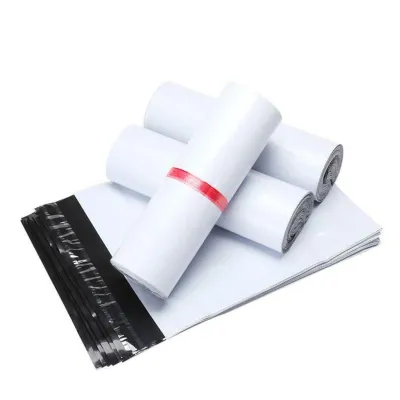
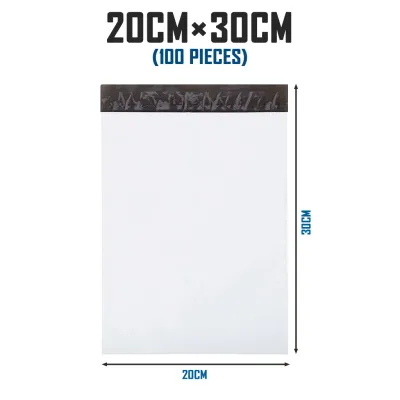
Prices are valid at publication and may change. Please refer to the product page for the latest price.
Material thickness is another key specification, commonly measured in microns. Standard shipping bags usually range from 40 to 80 microns. Thicker bags offer superior puncture resistance but are stiffer, which can slightly reduce flexibility and usable space around irregular shapes compared to thinner, highly stretchable alternatives.
Measuring Your Products for Optimal Packaging
Determining the correct bag size requires precise physical measurements of your products in their final shipping state. For rigid items like books or boxed stationery, measure the maximum length, width, and height. For flexible items like folded apparel, measure them in their naturally folded state without compressing them too tightly, as over-compression can cause seams to burst during transit.

If your process involves protective wrapping, always measure the item after these layers are applied. Wrapping a product in bubble wrap or tissue paper adds noticeable bulk. A double layer of standard bubble wrap can easily add 20 mm to both the width and thickness of an item, which can quickly push your packaging requirements into a larger bag category.
To find the minimum bag dimensions, apply a simple formula. For bag width, add the product’s width and thickness, then add 20 mm for ease of insertion. For bag length, add the product’s length and thickness, then add 10 mm of clearance. Ensure this total fits within the bag’s usable length, excluding the flap, to guarantee a secure seal.
Matching Standard Bag Sizes to Your Product Types
To simplify inventory, categorize your products and match them to standard bag sizes. Small items like pens, sticker sheets, and jewelry boxes generally fit in compact bags around 150 mm x 220 mm. Medium goods, including A4 documents, single t-shirts, and novels, align with medium bags around 250 mm x 350 mm. For bulkier textiles or multiple clothing items, larger bags measuring 400 mm x 500 mm are usually necessary.
While shipping bags are highly versatile, they are not suitable for every product. Bags are ideal for non-fragile, flexible items or products with robust primary packaging. However, if an item is fragile, pressure-sensitive, or has sharp corners that could puncture plastic, you should transition to a corrugated cardboard box to provide structural crush resistance.
These categories serve as baseline recommendations rather than absolute rules. Because product shapes and folding styles vary, you must verify the physical fit for your specific inventory before purchasing in bulk. Relying solely on generic size charts without physical verification can lead to inconsistent packaging quality.
Preventing Overpacking and Underpacking Issues
Using the wrong shipping bag size introduces operational risks and unnecessary expenses. Underpacking occurs when a product is forced into a bag that is too small, leading to stretched side seams, distorted shapes, and corners that press sharply against the plastic. This tension makes the package vulnerable to tearing or bursting open during sorting.
Overpacking involves using a bag that is far too large, leaving excess plastic flapping around. This loose material can get caught in conveyor belts or sorting rollers, leading to ripped packaging. Furthermore, loose items shifting inside an oversized bag are more prone to surface scuffing.
To avoid these issues, order a small sample pack from your supplier before making a bulk purchase. Conduct physical fit tests by packing your actual products and simulating handling to ensure a secure, professional, and cost-effective fit.
Frequently Asked Questions (FAQ)
Can I use a shipping bag for fragile items?
Standard shipping bags offer virtually no crush protection against the heavy impacts of automated sorting systems and transit stacking. If you must use a shipping bag for semi-fragile items, you must wrap the product in multiple layers of heavy-duty bubble wrap or insert a rigid cardboard stiffener inside the bag. However, for truly fragile goods like glassware, ceramics, or delicate electronics, a rigid corrugated box filled with loose-fill packaging is the mandatory choice to ensure safe delivery.
How does bag size affect courier shipping costs?
Courier services calculate shipping fees based on either the actual weight or the volumetric weight of the package, whichever is higher. Volumetric weight is calculated using the package’s external dimensions. If you use a shipping bag that is far too large for your product, the excess loose material can fold over or bunch up, creating artificial height or width when measured by automated courier scanners. This can inadvertently bump your package into a higher pricing tier, increasing your delivery expenses unnecessarily.
Community discussion
Share your experience or ask a question. Comments are reviewed before publication.