
Choosing between original Niimbot B21 labels and third-party alternatives comes down to balancing convenience, app integration, and print reliability against upfront cost savings. Original labels feature built-in RFID chips that the printer and companion app recognize instantly, automatically setting the correct template size and print parameters. Third-party labels offer a more economical path for high-volume, temporary labeling tasks, but they require manual template selection and carry a risk of compatibility errors or uneven print quality.
For users in warm, humid climates like Singapore, label durability is a major factor. High humidity can cause low-quality thermal coatings to degrade prematurely, and weak adhesives may fail on plastic storage bins or kitchen containers. Understanding how these materials behave under local environmental conditions will help you avoid wasted rolls and frustrating misprints.
Print Quality and Clarity
Thermal printing relies on a heat-sensitive chemical coating applied to the paper surface. When the B21’s thermal print head applies heat, a chemical reaction occurs, turning the heated areas black to form text, graphics, or barcodes. Original Niimbot rolls feature a highly uniform thermal layer designed to react precisely to the printer’s default heat settings. This consistency ensures that fine lines remain sharp and solid black areas are filled evenly without gray patches.
Products mentioned in this guide
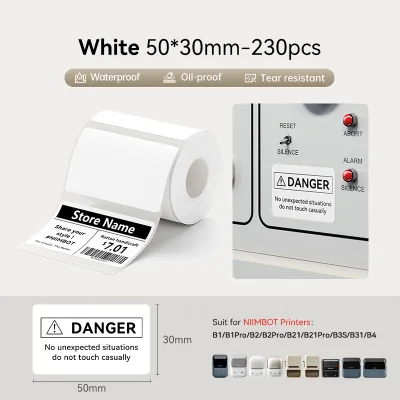
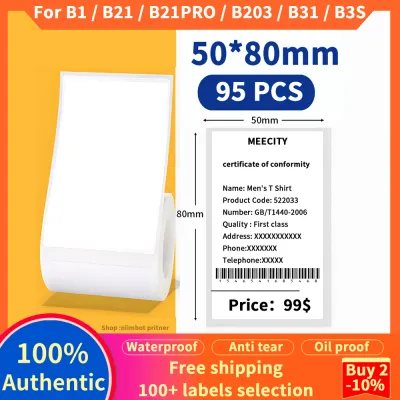
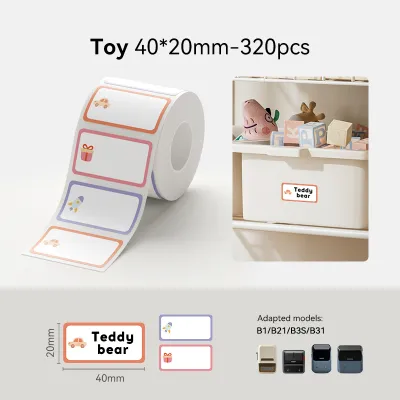
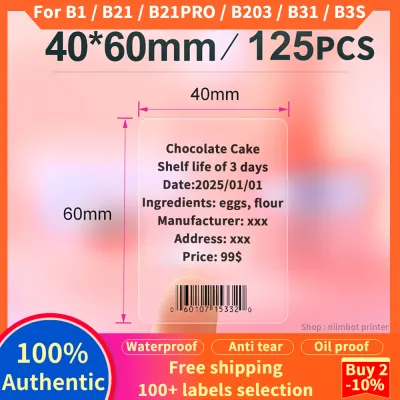
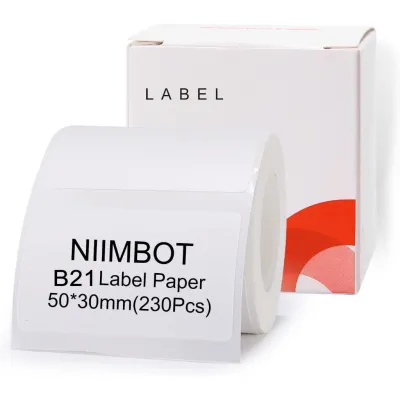
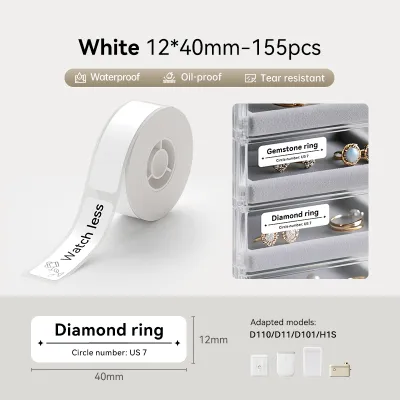
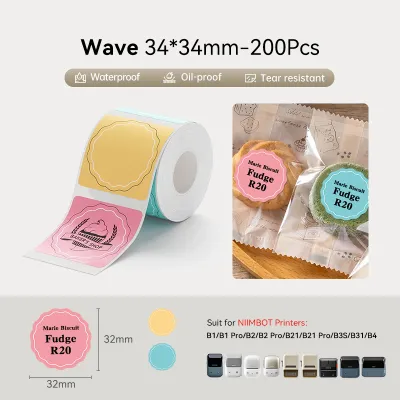
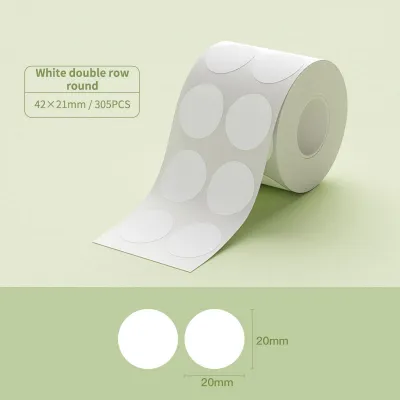
Prices are valid at publication and may change. Please refer to the product page for the latest price.
Third-party labels, on the other hand, vary widely in their coating formulations. Some budget alternatives use thinner or less sensitive thermal coatings that require higher heat settings to achieve a dark print. If the coating is uneven, you may notice horizontal streaks, faded text, or light spots across the label. These defects are not just cosmetic; they can make small fonts illegible and render barcodes unscannable by standard optical readers.
To verify print quality, perform a visual inspection of a newly printed batch. Look closely at the edges of letters and numbers; they should be crisp and free from bleeding or smudging. If you notice a fuzzy halo around the text or if the ink appears to rub off easily when swiped with a finger, the thermal coating or the protective topcoat may be insufficient. This is particularly common in low-grade thermal papers that lack a protective barrier against friction and moisture.
For business owners using the B21 for retail pricing or inventory tracking, barcode scannability is critical. A barcode relies on precise contrast ratios and exact line widths to be read accurately by laser or camera-based scanners. If a third-party label suffers from heat bleeding, the black bars may expand into the white spaces, causing scanning failures at checkout or in the warehouse.
Before committing to a bulk purchase of third-party rolls, always test a small sample batch. Print a sheet containing various font sizes, bold text, and several standard barcodes. Scan the printed barcodes using a smartphone camera and a dedicated scanning app under different lighting conditions. If the scanner struggles to register the code within two seconds, the label material is likely unsuitable for professional or retail applications.
Adhesion and Durability
The effectiveness of a label depends heavily on its adhesive backing and how it interacts with different surface materials. Original labels are typically engineered with a versatile acrylic adhesive that bonds well to common smooth surfaces, including plastic storage boxes, glass jars, and metal shelving. Third-party manufacturers may use cheaper hot-melt adhesives, which can perform well on cardboard but struggle on low-surface-energy plastics or curved glass containers.

Environmental factors play a massive role in adhesive longevity, especially in tropical climates. High ambient humidity and warmth can soften low-grade adhesives, causing the edges of the label to curl upward or slide out of position over time. If you plan to use your B21 for labeling kitchen containers, pantry items, or bathroom organizers, the labels must withstand moisture and occasional splashes without peeling.
To evaluate adhesive performance, apply a test label to your target surface and leave it for twenty-four hours to allow the bond to cure fully. Check the edges for any signs of lifting or separation. For labels applied to curved surfaces, such as small bottles or cables, observe whether the stiffness of the paper backing forces the label to spring open, a common issue with thicker, less flexible third-party materials.
Another critical factor is the clean removal of the label. High-quality labels should peel away without tearing into shreds or leaving a stubborn, sticky residue that requires chemical solvents to clean. This is especially important for organizing reusable containers, retail items, or rented equipment. Many budget third-party labels use aggressive, non-refined adhesives that bond permanently over time, making future removal a frustrating chore.
Determine whether your specific workflow requires permanent, removable, or repositionable properties. If you are labeling temporary shipping boxes, a basic, high-tack third-party adhesive is often sufficient. However, for long-term home organization, asset tracking, or retail display where labels might need to be updated or replaced, investing in labels with reliable, clean-peeling adhesives will save significant time and effort.
Printer Compatibility and Hardware Safety
The Niimbot B21 utilizes an internal RFID reader to detect the specific roll installed in the paper chamber. When you load an original roll, the printer reads the embedded chip and transmits the label’s dimensions, color, and layout directly to the companion mobile app. This automatic recognition eliminates the need to manually measure the label or search through endless templates in the software, streamlining the printing process significantly.
Many third-party label rolls do not contain these proprietary RFID chips, or they use cloned chips that may not be recognized by newer firmware updates. Without a valid chip, the printer may trigger an error light, or the app may restrict certain design features, forcing you to manually input dimensions or work within a generic printing mode. This manual setup can lead to alignment issues, where the printed text is offset or cut off at the margins.
Beyond software convenience, the physical characteristics of the label roll can directly impact the lifespan of your printer’s thermal print head. The print head is a delicate, expensive component that relies on a smooth, low-friction surface to glide over as it heats the paper. Poorly manufactured third-party rolls may have rough, abrasive surfaces or uneven paper thickness, which can scratch the print head or cause premature wear, leading to permanent vertical lines in your prints.
Furthermore, incorrect roll tension or poorly cut backing paper can lead to frequent mechanical issues. If a roll is wound too tightly, the printer’s feed motor must work harder, potentially causing paper slips and misaligned prints. If the backing paper is too thick or has rough edges, it can leave paper dust inside the printer mechanism, clogging the optical sensors and causing frequent paper jam errors.
Using non-genuine consumables can also have implications for your device’s warranty. While manufacturers generally cannot void a warranty solely for using third-party supplies, any physical damage directly caused by those supplies—such as a scratched print head from abrasive paper or motor damage from a severe jam—is typically not covered. If you decide to use third-party rolls, monitor your printer closely for any unusual noises, resistance during feeding, or residue buildup, and clean the print head regularly with isopropyl alcohol.
Cost Analysis and Long-Term Value
When comparing original and third-party labels, looking only at the price per roll can be misleading. To find the true cost, you must calculate the price per individual label. Divide the total cost of the roll by the number of labels it contains. Often, third-party rolls appear significantly cheaper upfront but contain fewer labels per roll or use thinner backing paper, reducing the overall value proposition.
You must also factor in the cost of wasted materials. If a third-party roll suffers from frequent alignment drift, you may end up discarding several labels at the start of every print job. Similarly, if the print quality is inconsistent, labels with faded text or smudged barcodes must be reprinted, doubling your material cost and wasting valuable time. These hidden costs can quickly erode the initial savings of buying cheaper alternatives.
Thermal paper also has a limited shelf life, typically ranging from one to three years depending on storage conditions. Bulk purchasing third-party labels to secure a lower unit price is only cost-effective if you can use them before the thermal coating degrades. Unused rolls stored in warm, humid environments can lose their sensitivity, resulting in faint prints when you finally load them into the printer.
For high-volume, low-stakes applications—such as temporary labeling for organizing a garage sale, marking moving boxes, or printing short-lived shipping slips—the lower upfront cost of third-party labels makes financial sense. In these scenarios, minor print defects or slight fading over time do not impact the success of the task, allowing you to prioritize budget over absolute perfection.
Conversely, for professional branding, product packaging, or long-term asset tracking, the reliability of original labels offers better long-term value. The time spent troubleshooting jams, reprinting faded labels, or cleaning sticky residue off returned products often far outweighs the few dollars saved on a non-genuine roll. Balancing your immediate budget against the operational cost of errors is key to making the right financial decision.
Decision Framework: Which Labels Fit Your Workflow?
To finalize your choice, evaluate your daily workflow and the specific environment where the labels will be used. If your primary goal is a seamless, frustration-free experience, original Niimbot labels are the clear choice. They are highly recommended for retail businesses, professional offices, and anyone who relies on barcode scanning or needs labels to remain legible for years under varying conditions. The automatic RFID detection saves time and ensures consistent print alignment every time.
Opt for third-party labels if you are managing a high-volume project with tight budget constraints and low-stakes requirements. If you are labeling temporary files, organizing household items that sit in a climate-controlled room, or printing simple text labels that do not require high-contrast barcodes, the cost savings of generic rolls can be substantial. Just be prepared to spend a bit more time manually configuring templates in the app.
Before purchasing any third-party brand, perform a quick verification check. Look for sellers on online marketplaces that explicitly state compatibility with the Niimbot B21 and mention whether their rolls include working RFID chips. Check customer feedback specifically for mentions of paper jams, print head residue, or adhesive failure in humid conditions. Starting with a single test roll before buying in bulk is the safest way to protect your printer and your budget.
Frequently Asked Questions (FAQ)
Can I use generic thermal paper rolls without RFID chips in the Niimbot B21?
Yes, but with significant limitations. The Niimbot B21 is designed to detect the RFID chip embedded in original rolls to automatically load the correct label template in the app. If you insert a generic roll without a chip, the printer may flash an error light, and the app will require you to manually enter the label dimensions. Additionally, some firmware versions may restrict printing altogether or limit print speed and density when a non-genuine roll is detected, so it is crucial to verify your printer’s current firmware behavior before purchasing generic paper.
How long do thermal labels last before the text fades?
The lifespan of a thermal label depends heavily on its exposure to environmental elements. Standard thermal labels typically remain legible for six to twelve months under normal indoor conditions. However, exposure to direct sunlight, high temperatures, humidity, and friction will accelerate fading, sometimes causing the text to disappear in a matter of weeks. Original labels often feature a protective topcoat that shields the thermal layer from moisture and light, whereas budget third-party options may lack this protection, making them more susceptible to rapid fading in challenging environments.

Community discussion
Share your experience or ask a question. Comments are reviewed before publication.