
Finding the perfect notebook for your daily to-do lists is not about chasing a single, universally acclaimed brand. The truth is that paper quality is highly conditional, depending almost entirely on the specific pen and ink you use to cross off your tasks. A notebook that performs flawlessly with a standard ballpoint pen might feather and bleed when paired with a wet gel pen or a fountain pen.
To find the right match, you must look beyond brand names and focus on paper specifications. Wet inks require coated or heavily sized paper to prevent the ink from spreading through the fibers, whereas dry inks and pencils are highly compatible with standard, uncoated options. By matching your notebook’s paper characteristics to your primary writing tool, you can ensure a smooth, smudge-free planning experience every day.
Core Paper Specifications to Check Before Buying
When shopping for a to-do list notebook, the product label and specifications sheet are your most reliable guides. The most common metric you will encounter is paper weight, measured in grams per square meter (GSM). Standard office paper typically ranges from 70 GSM to 80 GSM, which is sufficient for basic ballpoint pens but highly susceptible to ghosting or bleeding with wetter inks.
Products mentioned in this guide
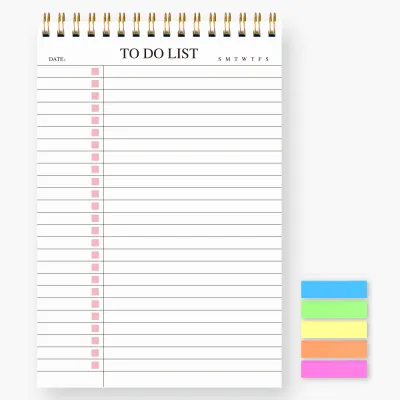
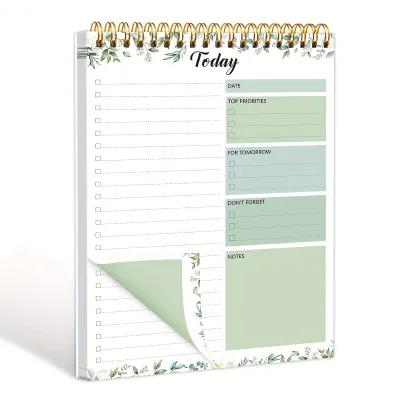
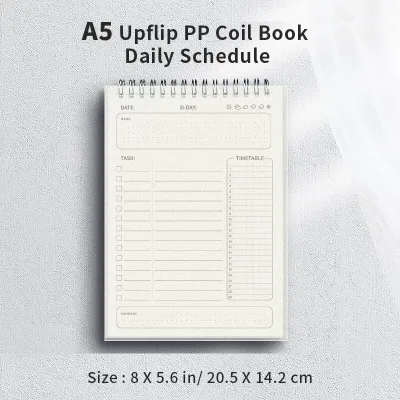
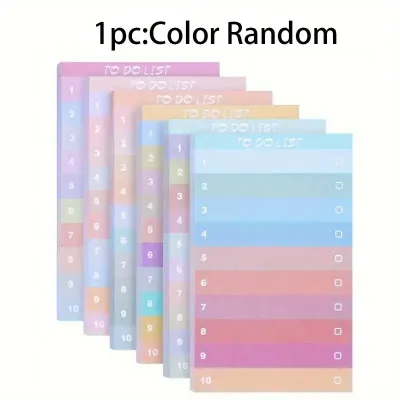
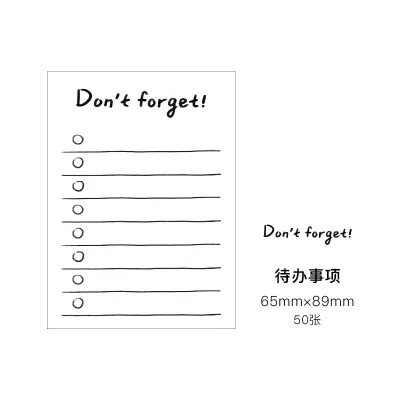
Prices are valid at publication and may change. Please refer to the product page for the latest price.
For a reliable daily planner that handles gel pens, look for paper weights between 90 GSM and 120 GSM. Heavier paper provides a physical barrier that prevents ink from easily penetrating to the other side of the sheet. This weight range offers a sturdy feel that resists tearing when you flip pages quickly during a busy workday.
Beyond weight, the surface finish of the paper plays a critical role in how ink behaves. Uncoated paper, such as standard vellum or sketch paper, has a textured, toothy surface that absorbs ink quickly. While this rapid absorption prevents smudging, it can cause wet inks to spread outward, a phenomenon known as feathering.
Coated paper, on the other hand, features a smooth, treated surface that keeps the ink on top of the page longer. This results in crisp, sharp lines, though it requires a slightly longer drying time. Understanding this trade-off is essential for matching your writing speed to your paper type.
The hidden hero of paper manufacturing is “sizing,” which refers to chemical additives applied during production to control absorbency. Internal sizing reduces the paper’s tendency to act like a sponge, preventing ink from bleeding through the fibers. While manufacturers rarely list the exact sizing formula on the packaging, you can often identify highly sized paper by looking for labels indicating compatibility with fountain pens or wet media.
How Different Paper Types Handle Daily To-Do List Pens
Your choice of writing instrument should directly dictate the type of paper you select for your daily organization. Gel and rollerball pens are incredibly popular for to-do lists because of their vibrant colors and smooth flow. However, because these pens use water-based or acid-based wet inks, they require paper that can handle a higher volume of liquid.

On highly absorbent, unsized paper, gel ink will quickly saturate the fibers, leading to noticeable bleed-through on the reverse side and fuzzy, illegible task descriptions. This can make your carefully organized planner look messy and unprofessional.
If you prefer the classic feel of a fountain pen for your daily planning, your paper requirements become even stricter. Fountain pens deposit a significant amount of liquid ink onto the page, making “fountain pen friendly” paper a necessity. This specialized paper features heavy sizing and a smooth finish that prevents the ink from feathering or bleeding.
Without these specific properties, a fountain pen will turn your neat checklist into a blurry, illegible mess, rendering the back of the page completely unusable. Investing in high-quality, fountain-pen-friendly paper ensures that your writing remains sharp and elegant.
For those who rely on standard ballpoint pens or mechanical pencils, paper compatibility is much broader. Ballpoint pens use viscous, oil-based inks that dry almost instantly and rarely bleed, even on thin, low-weight paper. This allows you to use lightweight, highly portable notebooks without worrying about ruining subsequent pages.
The primary trade-off here is writing comfort; highly textured, low-GSM paper can feel scratchy under a ballpoint tip, whereas smoother, slightly heavier paper offers a much more pleasant tactile experience. If you write quickly and frequently throughout the day, a smoother surface can significantly reduce hand fatigue.
Practical Tests to Verify Paper Quality In-Store or At Home
Before committing to a new notebook for your daily routine, performing a simple, non-destructive paper test can save you time and money. If you are testing a notebook you already own or have access to a sample copy in a local stationery shop, turn to the very last page or an inconspicuous index page.
Draw a series of small swatches or write a few test words using the exact pens, highlighters, and markers you plan to use for your daily tasks. Let the ink dry completely before making your assessment. This step is crucial because some inks may look fine initially but bleed as they settle into the fibers over several minutes.
Once the ink is dry, examine the reverse side of the page carefully. Look for two distinct issues: ghosting and bleed-through. Ghosting is the faint shadow of your writing visible through the paper, which is common in thinner notebooks but still allows you to write on both sides.
Bleed-through occurs when the ink physically penetrates the paper fibers, creating spots or lines on the back. If you see actual ink spots on the reverse side, the paper is incompatible with that specific pen. This means you will only be able to use every other page, effectively cutting your notebook’s capacity in half.
Additionally, observe the drying time during your test. Write a quick line and immediately run your finger across it. If the ink smudges easily, the paper’s coating may be too slick for fast-paced, on-the-go planning.
A good to-do list notebook must strike a balance between ink resistance and drying speed. If a notebook fails to handle your primary pen during this initial test, it is best to set it aside and choose an alternative rather than struggling with smudged tasks and ruined pages.
Decision Framework: Match Your Notebook to Your To-Do List Workflow
To select the ideal notebook, you must align its physical characteristics with your personal writing habits and daily workflow. If your routine involves detailed, color-coded lists written with gel pens, fountain pens, or fine-liners, prioritize heavily sized, coated paper of at least 100 GSM. This ensures that your tasks remain crisp, clear, and perfectly legible, allowing you to use both sides of every sheet without any visual distraction.
Conversely, if your priority is a lightweight, pocket-sized notebook that you can carry everywhere, standard uncoated paper between 70 GSM and 80 GSM is often the most practical choice. When paired with a reliable ballpoint pen or pencil, these notebooks offer excellent portability and quick drying times at a budget-friendly price point, often costing under S$10. This setup is ideal for rapid, disposable daily lists where long-term archiving is not a priority.
Finally, consider how you interact with your completed lists. If you prefer to tear out your daily tasks and discard them once finished, look for notebooks with spiral bindings or clean page perforations. For those who prefer to keep a running archive of their productivity, a durable, thread-bound notebook that lays completely flat on your desk will provide the most comfortable writing surface. By evaluating these physical features alongside paper quality, you can find a notebook that seamlessly integrates into your daily routine.
Frequently Asked Questions (FAQ)
What is the difference between bleed-through and ghosting?
Bleed-through occurs when ink physically penetrates through the paper fibers, appearing as distinct spots or lines on the reverse side of the page. This makes writing on the back of the sheet impossible. Ghosting, also known as show-through, is simply the shadow of your writing visible through a translucent page. While ghosting can be visually distracting, the surface of the paper remains intact, allowing you to write on both sides if you do not mind the faint background shadow.
Can I use highlighters on standard to-do list notebooks without ruining the next page?
Most standard highlighters use wet, water-based inks that carry a high risk of bleeding through thin or uncoated paper. To prevent ruining the next page, look for notebooks with a paper weight of 100 GSM or higher, or opt for dry highlighters and mild-liner style pens which deposit less liquid. It is always best to perform a quick test on a back page before highlighting your active tasks to ensure the ink does not seep through.
Community discussion
Share your experience or ask a question. Comments are reviewed before publication.