
Finding the right notebook paper in Singapore comes down to a simple formula: matching the surface treatment of your page to the ink delivery of your pen. Because Singapore’s tropical climate brings high relative humidity, paper can absorb ambient moisture over time, which naturally alters how ink behaves on the surface. Therefore, there is no single “best” notebook paper on the market. Instead, the ideal selection depends entirely on whether you prioritize fast drying times, zero ink bleed-through, or a smooth writing glide.
If you primarily write with fountain pens, heavy gel pens, or liquid ink rollerballs, your best option is high-GSM, coated, or highly calendered paper. This type of paper resists ink absorption, keeping the lines sharp and preventing feathering. Conversely, if you rely on standard ballpoint pens, mechanical pencils, or quick-dry gel inks for rapid note-taking, standard 70 to 80 GSM uncoated paper is superior. It offers a tactile grip and absorbs ink almost instantly, preventing smudging during fast-paced meetings or lectures.
How to Evaluate Notebook Paper Quality for Daily Use
To make an informed decision when browsing stationery shops or online marketplaces, you must understand the key physical properties of notebook paper. These characteristics directly influence how your pen glides, how quickly the ink dries, and how readable your notes remain over time.
Products mentioned in this guide
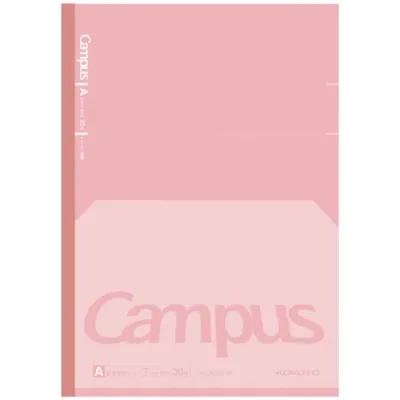
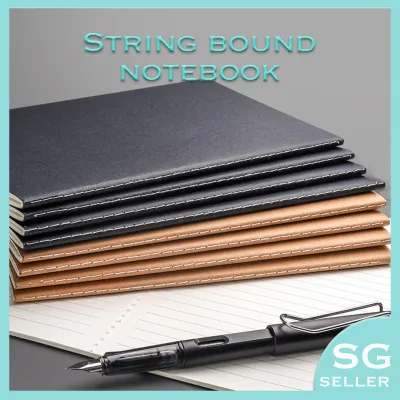
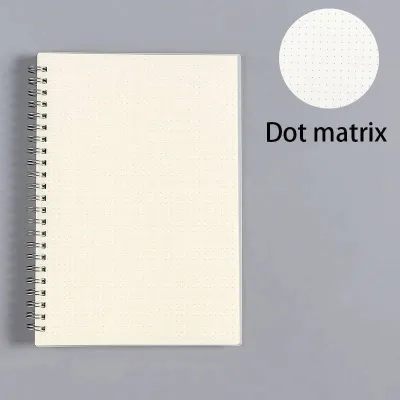
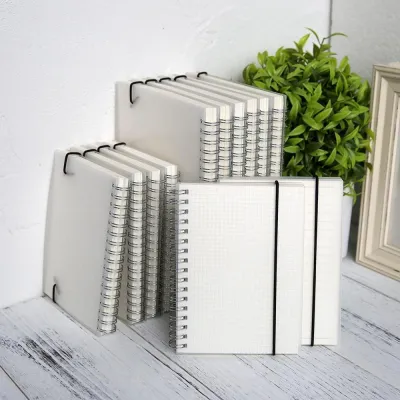
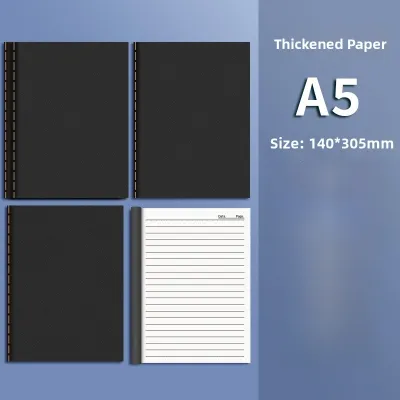
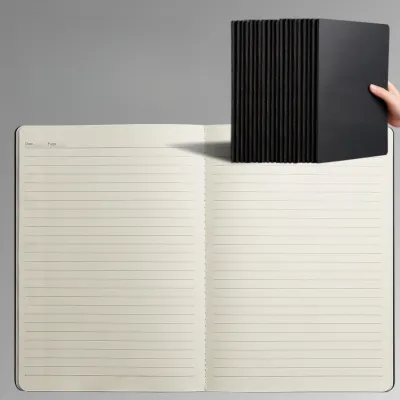
Prices are valid at publication and may change. Please refer to the product page for the latest price.
Grams per Square Meter (GSM) GSM is the standard metric used to measure paper density. It represents the weight of a single square meter of the paper in grams. While a higher GSM often correlates with thicker, more opaque sheets, it is not a direct measure of quality. Standard notebook paper typically ranges from 70 GSM to 120 GSM. Lower-weight papers (70–80 GSM) are lightweight and allow for slimmer, highly portable notebooks, but they are more susceptible to ghosting—where writing on one side is visible on the reverse. Higher-weight papers (90–120 GSM or more) provide a substantial, premium feel and excellent resistance to ink bleed-through, though they make the notebook heavier to carry in your daily bag.
Paper Color and Contrast The color of your notebook paper heavily impacts visual comfort and readability. Bright white paper offers the highest level of contrast, making your ink colors pop and rendering pages exceptionally easy to scan or photograph with a smartphone. However, this high contrast can reflect significant glare under the bright fluorescent or LED lighting common in Singaporean offices and classrooms, leading to eye strain over long sessions. Cream, ivory, or off-white papers absorb more light and offer a softer contrast. This makes them highly popular for journaling, creative writing, and extended study sessions where comfort is the primary concern.
Surface Texture and Coating The tactile sensation of writing is determined by the paper’s surface texture, which ranges from ultra-smooth to highly textured (often referred to as “toothy”). Coated or highly calendered papers undergo a manufacturing process that presses the fibers tightly together, creating a silky surface. This coating prevents ink from soaking deep into the paper fibers, which preserves the crispness of your lines and allows specialized fountain pen inks to display unique shading or metallic sheen. The trade-off is a significantly longer drying time. Uncoated papers retain their natural fiber texture, providing a satisfying grip and resistance for your pen tip. They absorb ink rapidly, which virtually eliminates smudging but can cause wetter inks to spread outward (feather) or bleed through the sheet.
Ruling Formats and Print Quality Whether you prefer ruled, grid, dotted, or blank pages, the print quality of these guides plays a subtle but critical role in paper usability. High-quality notebooks feature faint, precisely printed lines or dots, often in light grey or soft blue ink. These guides provide structural support for your writing without cluttering the page or distracting your eyes. Low-quality notebooks often feature thick, dark black lines that can bleed through the page themselves or visually overpower your handwriting, making the layout feel chaotic and difficult to read.
Paper Profiles of Popular Notebook Categories in Singapore
Singapore’s stationery market is highly diverse, offering everything from affordable regional school supplies to premium European and Japanese imports. Finding the right balance between performance and budget requires understanding how these different options are manufactured and categorized.

To help you navigate your choices, the table below compares the general characteristics of the three main notebook paper categories available in local stores and online.
| Category | Typical Paper Feel | Best Pen Match | General Price Tier |
|---|---|---|---|
| Premium and Archival | Smooth, substantial, slightly toothy | Ballpoints, pencils, standard rollerballs | Mid-to-High (S$20 – S$45) |
| High-Performance / Fountain Pen-Friendly | Ultra-smooth, coated, crisp | Fountain pens, wet gel pens, rollerballs | Mid-to-High (S$15 – S$40) |
| Standard Everyday / Student | Toothy, lightweight, highly absorbent | Ballpoint pens, pencils, fast-dry gel pens | Budget (S$2 – S$10) |
Please note that paper specifications can vary widely between individual models. Always check the specific product label or manufacturer datasheet for exact GSM and treatment details before purchasing.
Premium and Archival Notebooks
Premium and archival notebooks are designed with longevity and durability as their primary goals. These notebooks, often associated with heritage European brands, typically feature acid-free paper. Acid-free manufacturing ensures that the paper will not yellow, become brittle, or degrade over decades, making them the ideal choice for permanent records, personal journals, and professional archives.
The paper in this category is usually a warm cream or ivory color, offering an elegant aesthetic and a highly comfortable reading experience. In terms of texture, these papers often provide a balanced, slightly toothy feel that works beautifully with high-quality ballpoint pens, rollerballs, and graphite pencils. However, because archival paper is designed to absorb ink to secure it permanently, some standard premium papers may experience mild feathering or ghosting when paired with highly wet fountain pens or heavy-flowing liquid inks. If you plan to use wet pens, look for specific product lines within this category that are explicitly rated for fountain pen compatibility.
High-Performance and Fountain Pen-Friendly Notebooks
High-performance notebooks are engineered specifically to cater to stationery enthusiasts who use wet writing instruments. Most commonly produced by specialized Japanese and European manufacturers, these notebooks utilize highly calendered, coated papers that feel exceptionally smooth to the touch.
Because the paper surface is sealed, ink sits on top of the page rather than soaking into the fibers. This unique characteristic prevents feathering entirely, keeps line widths precise, and allows fountain pen inks to show off their full range of shading, sheen, and color depth. The paper is also highly resistant to bleed-through, allowing you to write on both sides of a very thin sheet (often as low as 52 to 68 GSM) without issue. However, this lack of absorption means that drying times are significantly longer. If you are a fast note-taker, a left-handed writer, or someone who closes their notebook immediately after writing, you must exercise caution to avoid smearing your work.
Standard Everyday and Student Notebooks
Standard everyday and student notebooks represent the most widely available and cost-effective options in Singapore. Found in local supermarkets, school bookshops, and neighborhood convenience stores, these notebooks are designed for high-volume, practical writing tasks where long-term archival preservation is not a priority.
These notebooks typically feature 70 to 80 GSM uncoated paper. The natural, toothy texture of the paper provides excellent tactile feedback, making it highly satisfying to write on with standard ballpoint pens and mechanical pencils. Because the paper is highly porous, it absorbs liquid ink almost instantly. This rapid drying time is incredibly convenient for students taking fast lectures or professionals jotting down quick phone messages, as it virtually eliminates the risk of smudging. The primary drawback is that wet gel pens, rollerballs, and markers will easily ghost or bleed through to the other side, often limiting you to writing on only one side of each leaf.
Match Your Notebook Paper to Your Pens and Writing Style
Selecting the perfect notebook paper requires a clear understanding of your personal writing habits, your preferred tools, and the environment in which you work. By identifying your primary writing style, you can easily match it to the correct paper specifications.
Choose high-GSM, coated paper if you write with fountain pens, broad gel pens, or liquid ink rollerballs and prioritize pristine page presentation. Coated paper ensures that your ink lines remain sharp and distinct, with zero feathering or spreading. The high density of the paper prevents ink from bleeding through to the reverse side, allowing you to maximize the use of every single page in your notebook. This combination is ideal for slow, deliberate writing, such as creative journaling, calligraphy practice, or formal letter drafting.
Choose standard uncoated, slightly toothy paper if your daily writing kit consists of ballpoint pens, mechanical pencils, or quick-dry gel pens. The natural texture of uncoated paper provides a helpful amount of friction, giving you better control over your pen strokes. Because the absorbent fibers pull ink in immediately, you can write at rapid speeds and turn pages instantly without worrying about ink transferring or smudging. This setup is highly recommended for students, journalists, and busy professionals who need to capture information quickly on the go.
Choose cream or ivory paper if you spend a significant amount of time reviewing, reading, or studying your handwritten notes. Under the bright overhead LED or fluorescent lighting common in Singaporean study hubs and offices, white paper can reflect a harsh glare that tires your eyes quickly. Off-white tones absorb a portion of this light, creating a softer, more ergonomic contrast that allows you to read for hours without visual fatigue.
Choose bright white paper if you frequently digitize your handwritten notes. If you use mobile scanning applications, take photos of your sketches to share with team members, or rely on optical character recognition (OCR) software to search your handwritten text, bright white paper is essential. The stark contrast between the white background and dark ink ensures that camera sensors and scanning algorithms can easily distinguish your writing, resulting in clean, professional digital copies.
Verify first if you are a left-handed writer. Because a left-handed writer’s hand naturally drags across the newly written line, using smooth, slow-drying coated paper can lead to immediate smudging, regardless of how high the paper quality is. If you write left-handed, you should prioritize slightly more absorbent uncoated paper, or pair coated paper with specialized quick-drying gel inks to ensure your notes remain clean and legible.
How to Verify Paper Quality Before Buying
Investing in a high-quality notebook is a personal decision, and verifying the paper’s performance beforehand can save you from the frustration of incompatible tools. There are several practical, low-risk steps you can take to evaluate a notebook’s paper quality before committing to a purchase.
First, always examine the product packaging, label, or online product description for technical specifications. Look for the explicit GSM rating to understand the paper’s density. If you have specific writing needs, look for manufacturer certifications or descriptive terms such as “acid-free,” “fountain pen friendly,” “bleed-resistant,” or “high-opacity.” These terms indicate that the manufacturer has engineered the paper to meet higher performance standards.
If you are shopping in a physical stationery store in Singapore, take advantage of any available display models or tester notebooks. Bring your favorite daily writing pens with you. Turn to the very last page or the inside back cover of the tester notebook and write a few test sentences. Draw a small, solid block of ink to test the paper’s limits. Observe how quickly the ink dries, whether the lines spread or feather, and check the reverse side of the page to see if any ink has bled through or created distracting ghosting.
When purchasing notebooks online through brand websites or digital marketplaces, customer reviews are an invaluable resource. Search the review section specifically for keywords related to your writing style, such as “fountain pen,” “bleed,” “ghosting,” or “smudging.” Other stationery enthusiasts frequently share detailed feedback on how the paper handles different ink types. Finally, always verify the retailer’s return and exchange policies for stationery items. Because opened or written-on paper products are rarely eligible for returns, performing your research upfront is the best way to ensure a satisfying purchase.
Frequently Asked Questions (FAQ)
Does higher GSM always mean better paper quality?
No, a higher GSM does not automatically guarantee superior paper quality. While a higher weight (such as 100 or 120 GSM) makes the paper thicker and more resistant to ink bleed-through, it also makes the notebook significantly heavier and bulkier to carry around Singapore daily. Furthermore, some lower-GSM papers (around 52 to 68 GSM) are engineered with specialized coatings that resist fountain pen ink beautifully while keeping the notebook incredibly slim. The best paper weight depends entirely on your pen choice and portability needs.
Is cream-colored paper better for everyday writing than white paper?
Cream-colored paper is generally better for long, continuous writing and reading sessions because it reduces eye strain and glare under bright overhead lights. It offers a warm, classic aesthetic that many find appealing for journaling or creative writing. However, bright white paper remains superior if you need maximum color accuracy for colored inks, high contrast for quick reading, or if you plan to scan and digitize your pages.
Community discussion
Share your experience or ask a question. Comments are reviewed before publication.